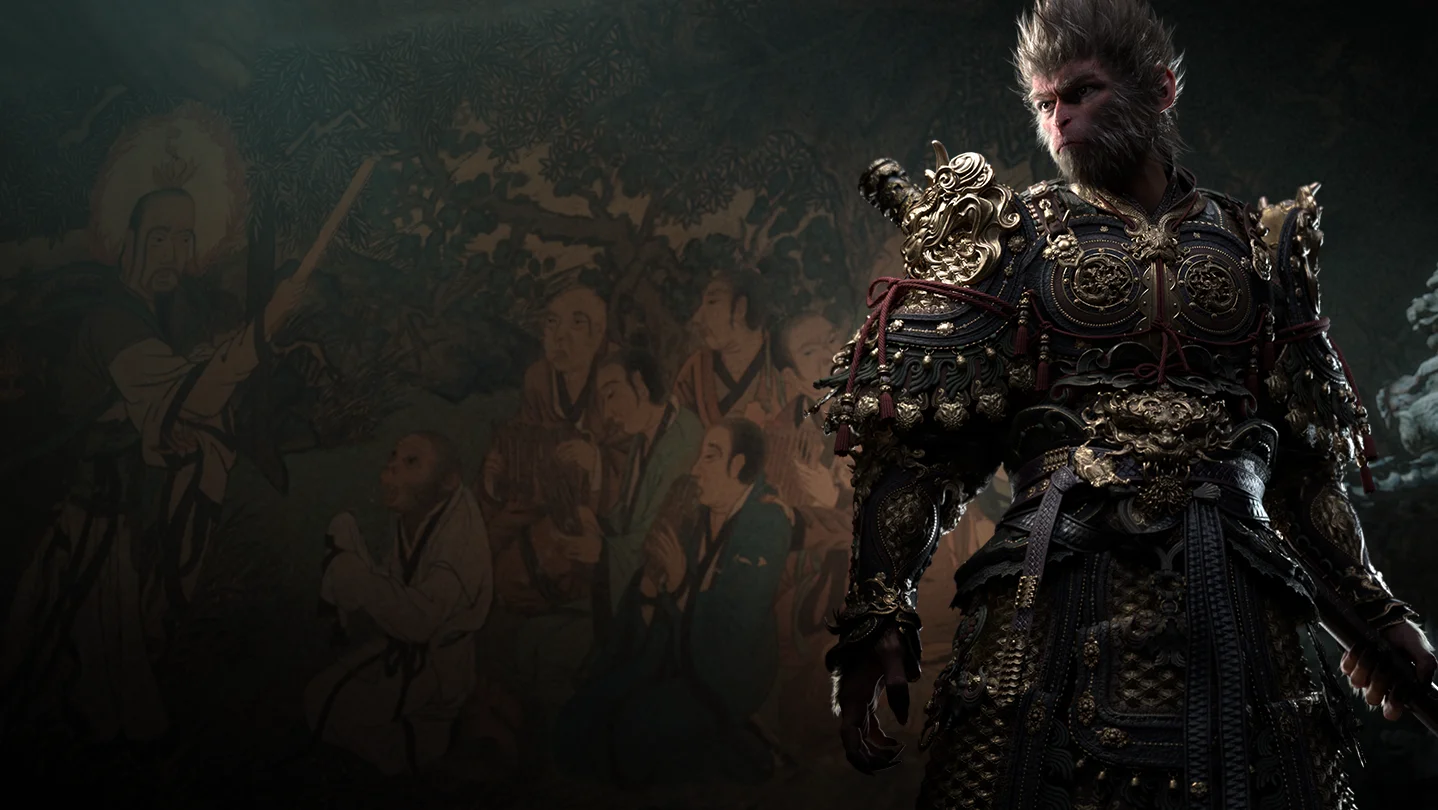
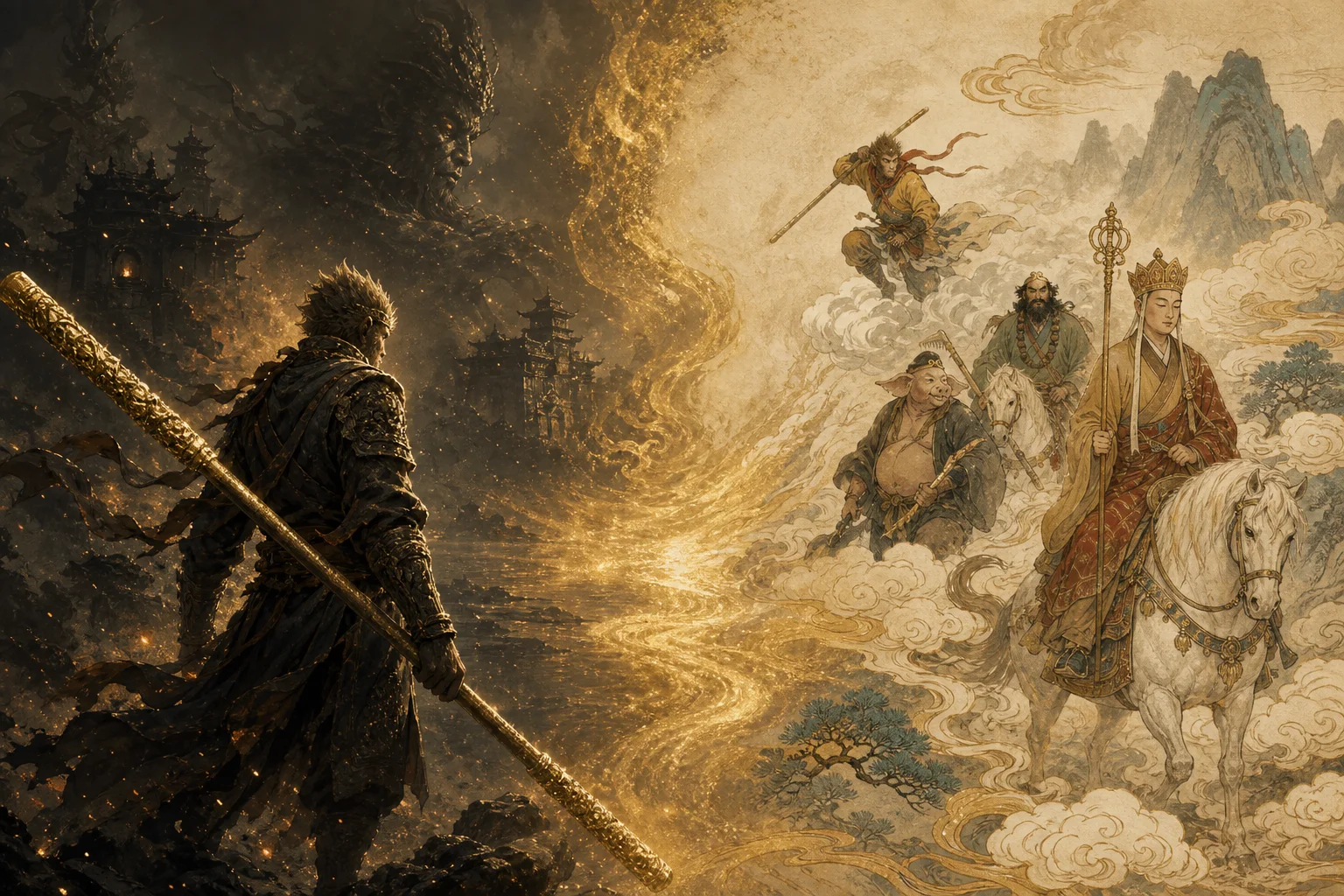
Use Ctrl/Cmd+F while playing. This quick reference pairs Black Myth: Wukong terms and motifs with their Journey to the West roots. For pure definitions (English, Chinese, pinyin), see the glossary. For the full adaptation philosophy, see How Black Myth Reimagines the Novel.
How to read this page
Match type: Echo
Strong novel parallel — name, visual, or role clearly borrowed
Match type: Riff
Same myth pool, new story beat — inspired, not identical
Match type: Original
Game Science invention — enjoy without forcing a novel chapter
Unless a row says otherwise, assume riff. Black Myth is built from Wukong's legend and the novel's symbol set, not a scene-by-scene retelling.
Core identity
| In Black Myth | Novel concept | What to expect |
|---|---|---|
| Sun Wukong / the Monkey King | 孙悟空 / 美猴王 | Echo. Stone-born hero, staff fighter, trickster — the game's center of gravity |
| Yaoguai (label & enemy type) | 妖怪 | Echo. Supernatural beings — not always “evil,” but otherworldly in Chinese myth |
| Great Sage / celestial defiance | 齐天大圣 / 大闹天宫 | Echo. Pre-pilgrimage rebel Wukong — see Havoc in Heaven |
| Player story framing | Full 81-chapter pilgrimage | Riff. Game focuses on Wukong's mythic past and legacy, not escorting Tang Sanzang chapter by chapter |
| Tang Sanzang / the monk | 唐三藏 / 取经 | Riff. May appear in memory, lore, or motif — the novel's main quest is not always the game's main quest |
| Dark, fragmented tone | Picaresque comedy + satire | Riff. Same myth world, different storytelling contract — tragedy and grandeur over banter |
Combat & abilities
| In Black Myth | Novel concept | What to expect |
|---|---|---|
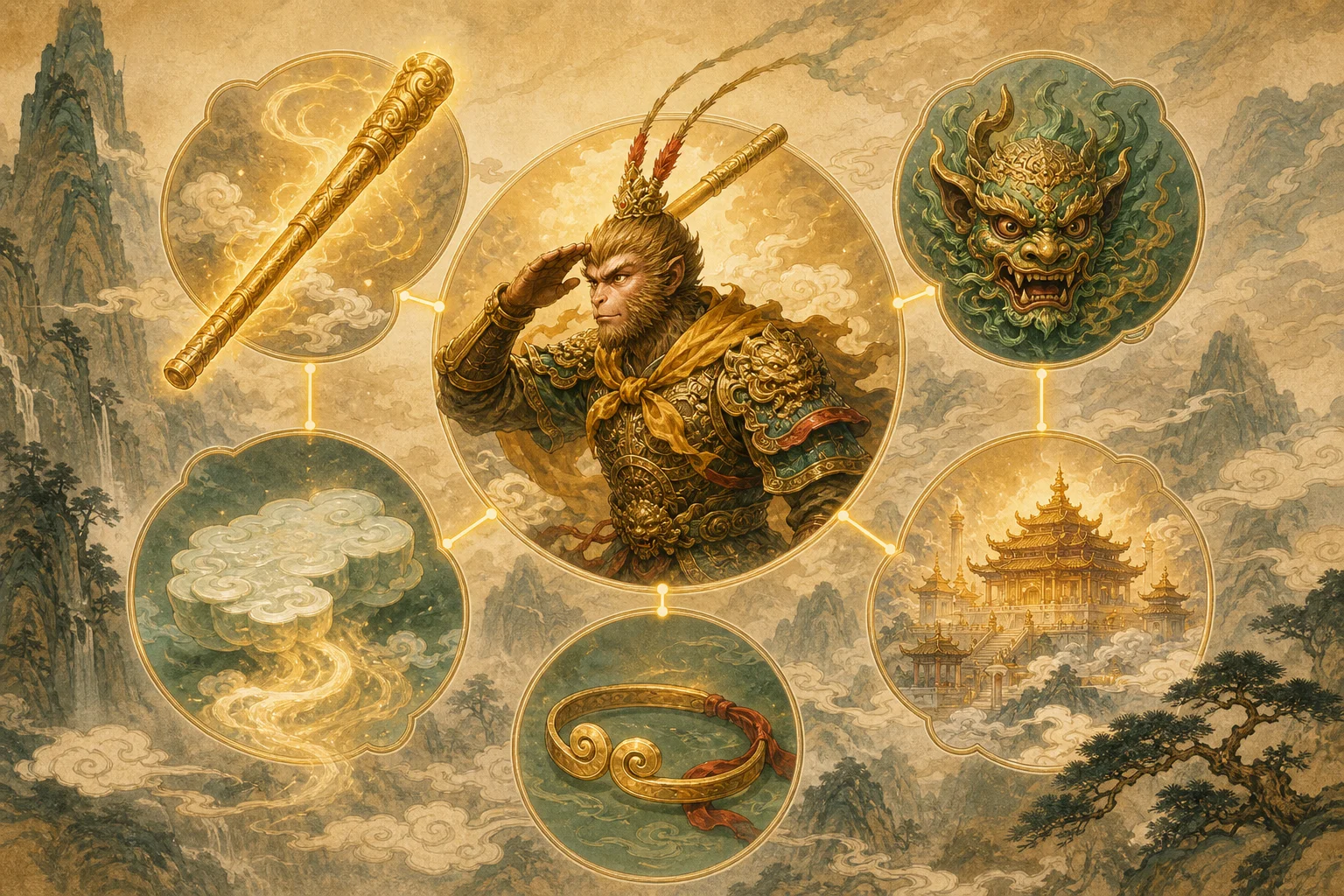
| Staff combat / heavy rod | 如意金箍棒 (Ruyi Jingu Bang) | Echo. Size-changing divine staff — Wukong's signature weapon; see Divine Weapons |
| Transformations / alternate forms | 七十二变 (72 Transformations) | Echo. Shape-shifting taught by Subhuti — combat, espionage, escape |
| Cloud movement / fast travel | 筋斗云 (Somersault Cloud) | Echo. One flip, 108,000 li — myth-scale mobility |
| Spells / pluck-of-hair clones | 毫毛 / 身外身 | Echo–riff. Body-hair clones and minor magic — classic Wukong tricks, expanded for action |
| Stances / skill trees | Mixed cultivation arts | Riff. Game systems layer on immortality lore — not one named novel technique per button |
| Immortality / healing items | 蟠桃 / 金丹 / 长生 | Echo. Peaches, elixir pills, and longevity cheats from Havoc in Heaven |
World & locations
| In Black Myth | Novel concept | What to expect |
|---|---|---|
| Misty mountains / monkey homeland vibes | 花果山 (Flower-Fruit Mountain) | Echo–riff. Wukong's birthplace — paradise before the quest |
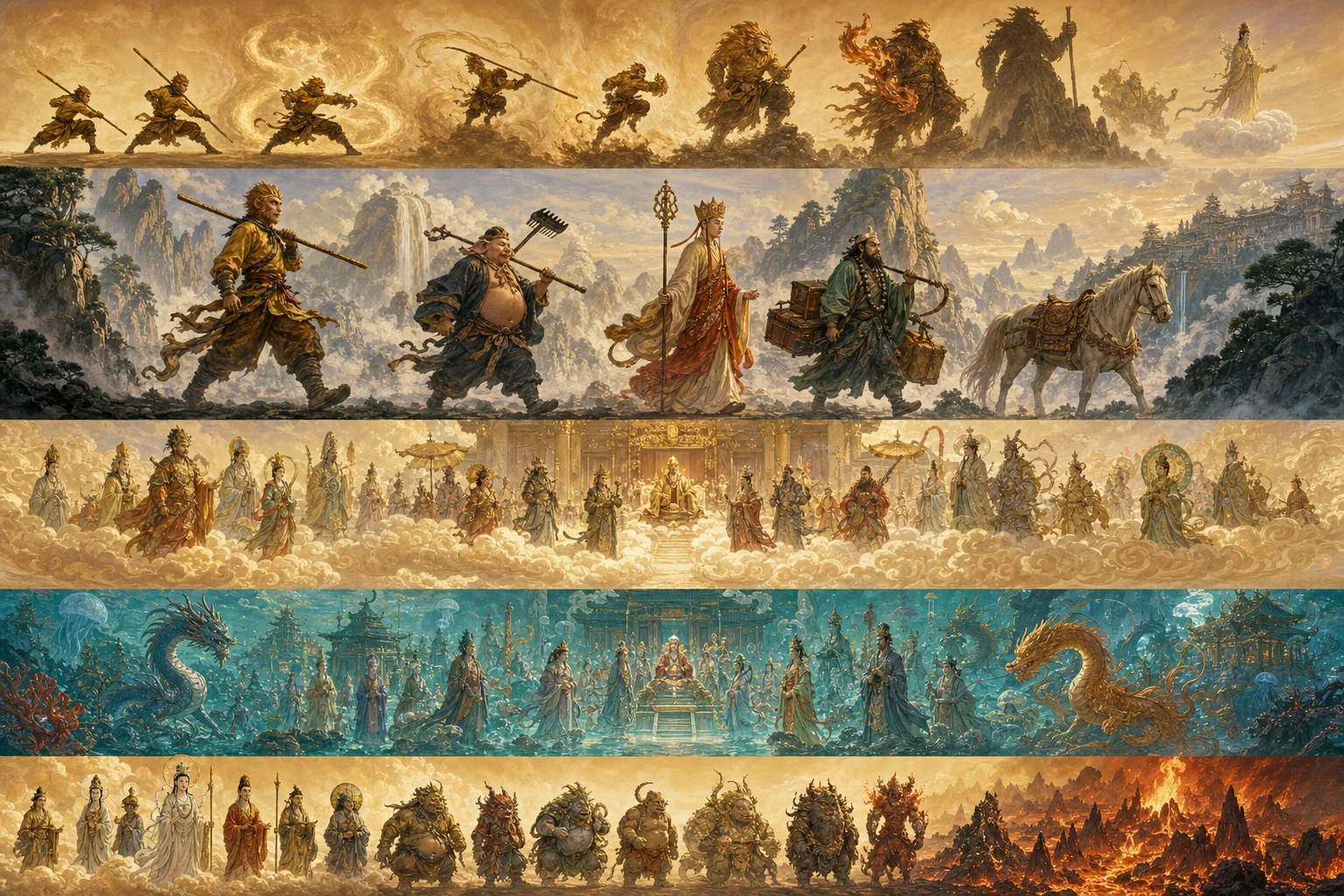
| Celestial ruins / golden halls | 天庭 (Heavenly Court) | Echo. Jade Emperor's bureaucracy — rebellion target; see Heaven, Hell, and the Buddhist Cosmos |
| Underworld / judgment motifs | 地狱 (Diyu) / 生死簿 | Echo–riff. Book of Life and Death, kings of hell — Wukong crossed his name out early |
| Scorched / red mountain regions | 火焰山 (Flaming Mountains) | Riff. Heat trials, Bull Demon family lore — mood more than map |
| Temples, false sanctuaries | 假寺庙 / 妖王洞府 | Echo. Classic trial shape — sacred space turned predator trap |
| Named game regions & bosses | Specific novel chapters | Riff–original. Treat as new compositions in the myth pool — verify in our Landmarks and Iconic Episodes articles |
Items, titles & story beats
| In Black Myth | Novel concept | What to expect |
|---|---|---|
| Relics / craft materials / named gear | 法宝 (fabao) | Echo–riff. Divine treasures with rules — gourds, fans, rings; see Divine Weapons |
| Headband / control motif | 紧箍 (Tightening Fillet) | Echo. Tang Sanzang's leash on Wukong — mercy vs violence conflict |
| Spirits / lingering bosses | 妖怪 / 天庭旧部 | Riff. Fallen immortals, cultivated beasts, heaven's rejects — see Yaoguai |
| Buddha / bodhisattva imagery | 如来 / 观音 / 西天 | Echo. Higher powers who assign trials and judge Wukong — see Buddhas & Bodhisattvas |
| Victorious Fighting Buddha (title) | 斗战胜佛 | Echo. Wukong's post-pilgrimage Buddhist rank — late-novel identity |
| Disguise / transformation bosses | 三打白骨精等 | Riff. Trust vs perception trials — see Iconic Episodes (major spoilers) |
Common mismatches — don't force these
Western players often expect a direct translation. These three gaps cause the most confusion:
Expectation trap
Every boss = one chapter
The novel is episodic, but Black Myth recomposes episodes. A spider-cave mood might nod to 盘丝洞 without retelling that chapter.
Expectation trap
The monk must be present
The pilgrimage party drives the book; Wukong's solo legend drives the game. Tang Sanzang is context, not always co-star.
Expectation trap
Yaoguai = random monster
In Chinese usage yaoguai marks supernatural category — sometimes enemy, sometimes tragic king, sometimes future ally in the novel.
Expectation trap
Happy ending vibes
The novel ends in enlightenment titles; the game trades picaresque warmth for mythic tragedy. Same symbols, different emotional contract.
While you play
- → See a Chinese name? → Glossary first.
- → Recognize a motif but not a name? → search this page for staff, yaoguai, heaven, fan, fire.
- → Want deeper context? → follow the linked Culture articles in each row.
- → Treat every match as likely inspired by unless the game text confirms it.
Where to go next
- Journey to the West in 10 Minutes — if you need the plot skeleton.
- How Black Myth Reimagines the Novel — adaptation philosophy in prose.
- What to Read (and Watch) After You Play — when you want the novel or 1986 TV series.