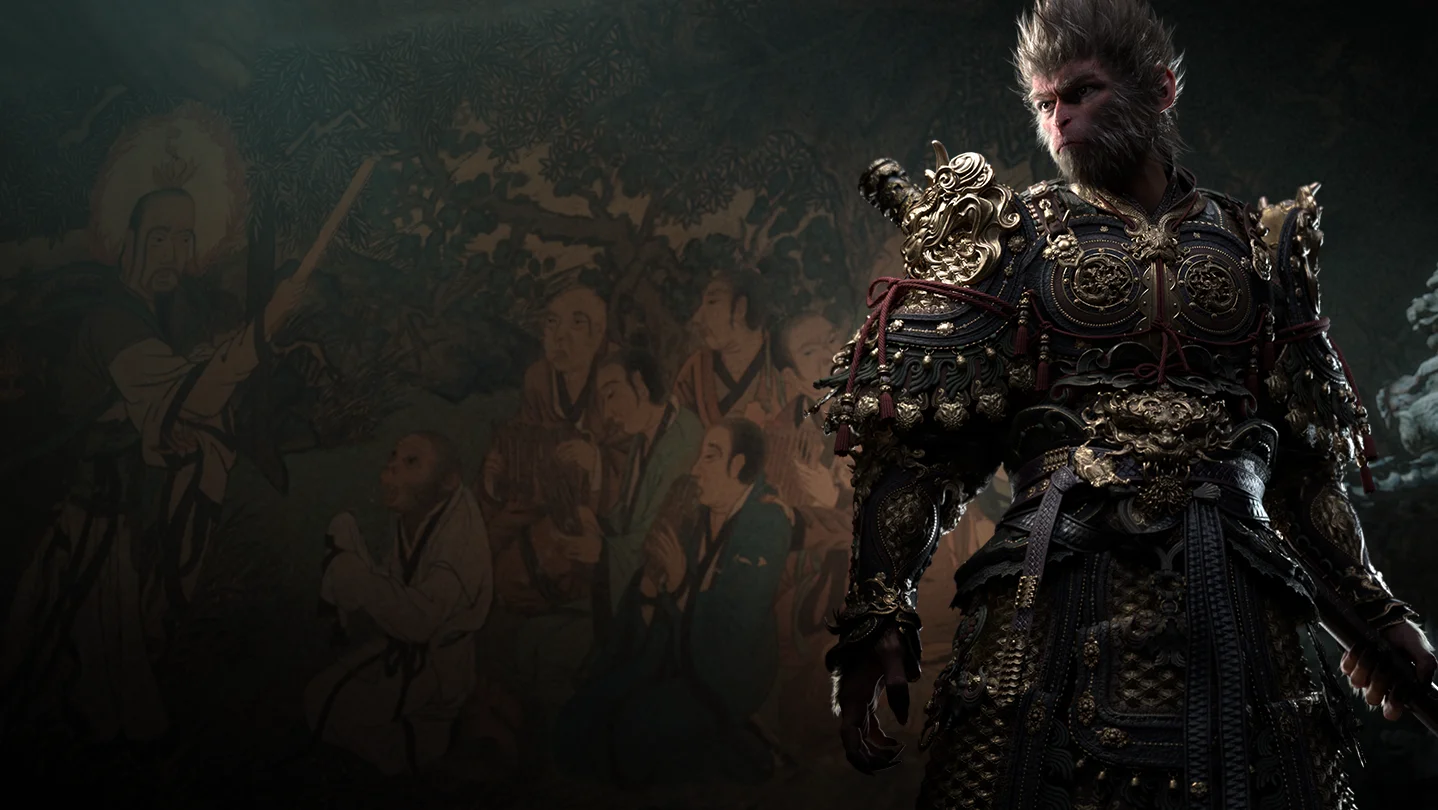
Journey to the West (西游记, Xīyóu Jì) is the epic that sits behind Black Myth: Wukong. This ten-minute primer gives you the plot, the pilgrims, and the vocabulary you will keep seeing in-game — no homework required.
What is Journey to the West?
Journey to the West is a 16th-century Ming dynasty novel, usually attributed to Wu Cheng'en. It is one of the Four Great Classical Novels of Chinese literature — alongside Romance of the Three Kingdoms, Water Margin, and Dream of the Red Chamber.
The book blends adventure, comedy, Buddhist allegory, and folk religion into a long pilgrimage story that Chinese readers have loved for centuries. Think of it as a road-trip fantasy where every rest stop might be a demon, a god in disguise, or a moral test dressed as hospitality.
Genre
Fantasy adventure + satire + spiritual allegory
Length
100 chapters in standard editions — you do not need all of them to start
Core hook
A monk walks west; monsters want to eat him; Sun Wukong hits things with a staff
The basic plot
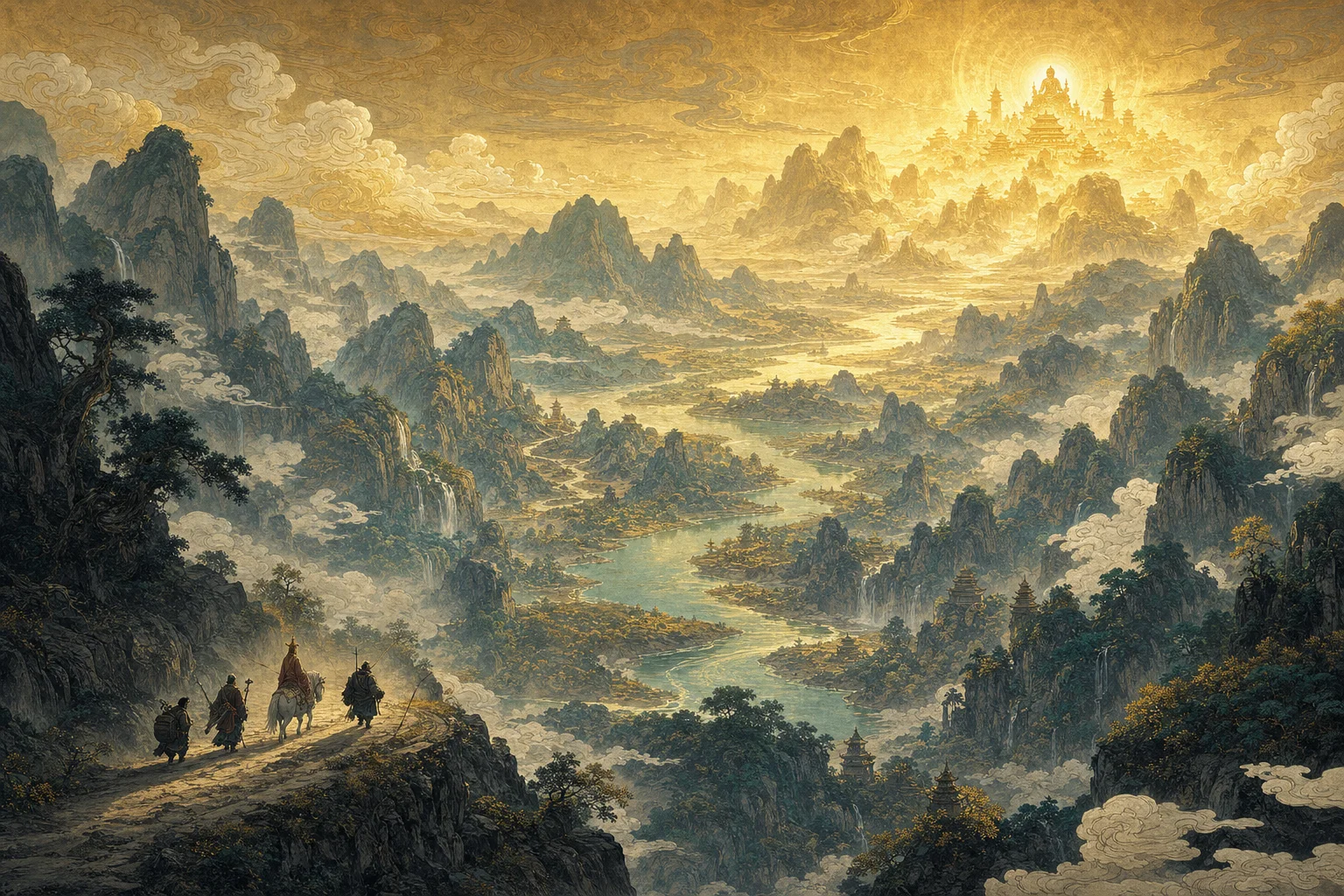
A Buddhist monk named Tang Sanzang (唐三藏) is tasked by the Tang emperor with traveling to India — called "the Western Heaven" (西天) in the story — to fetch sacred scriptures that can save the land.
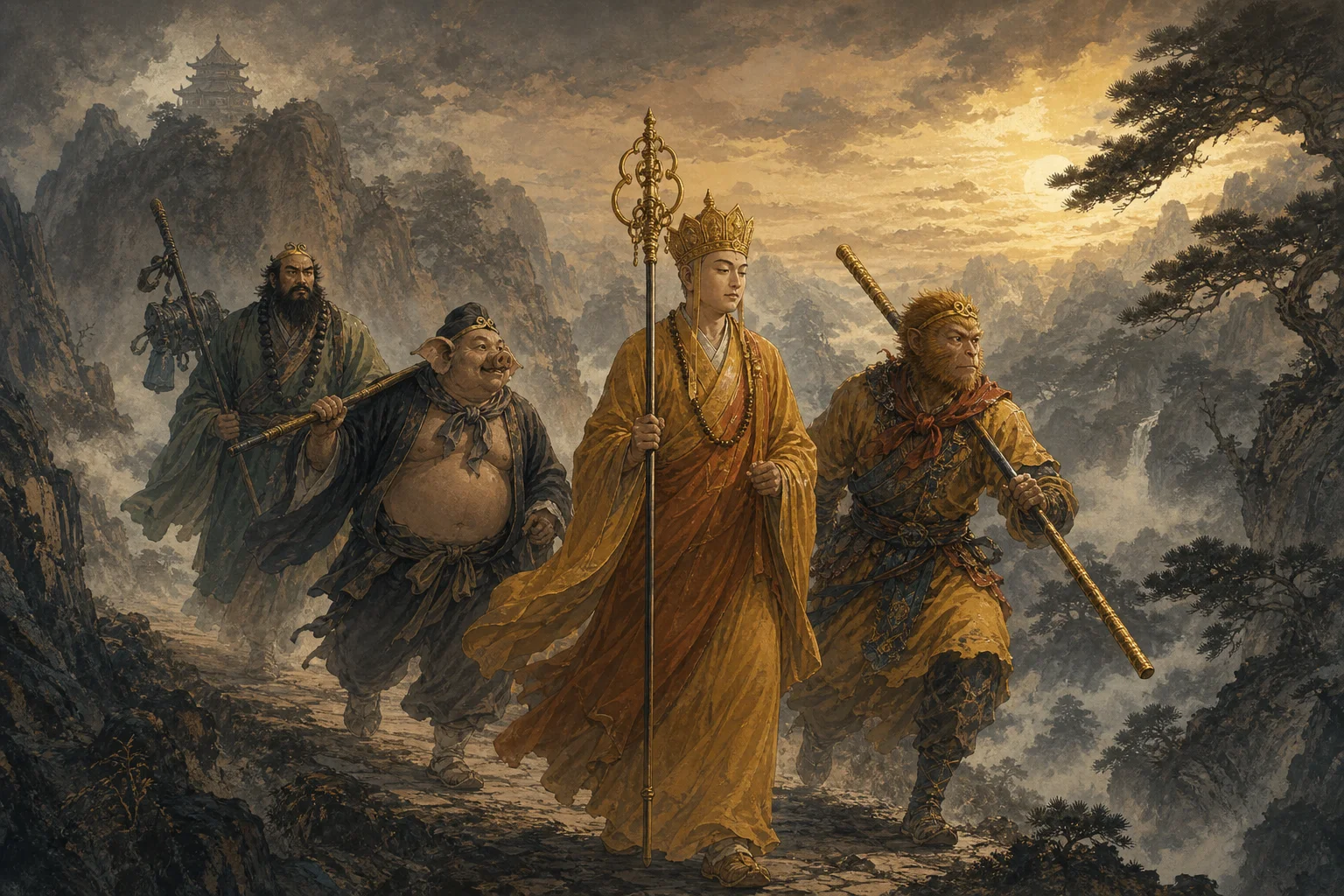
He cannot survive the journey alone. Guanyin (观音), the bodhisattva of compassion, assigns three disciples to protect him. Together they face 81 tribulations — demons, illusions, heavenly politics, and moral tests — on the road west.
The pilgrimage party
Disciple 1
Sun Wukong 孙悟空
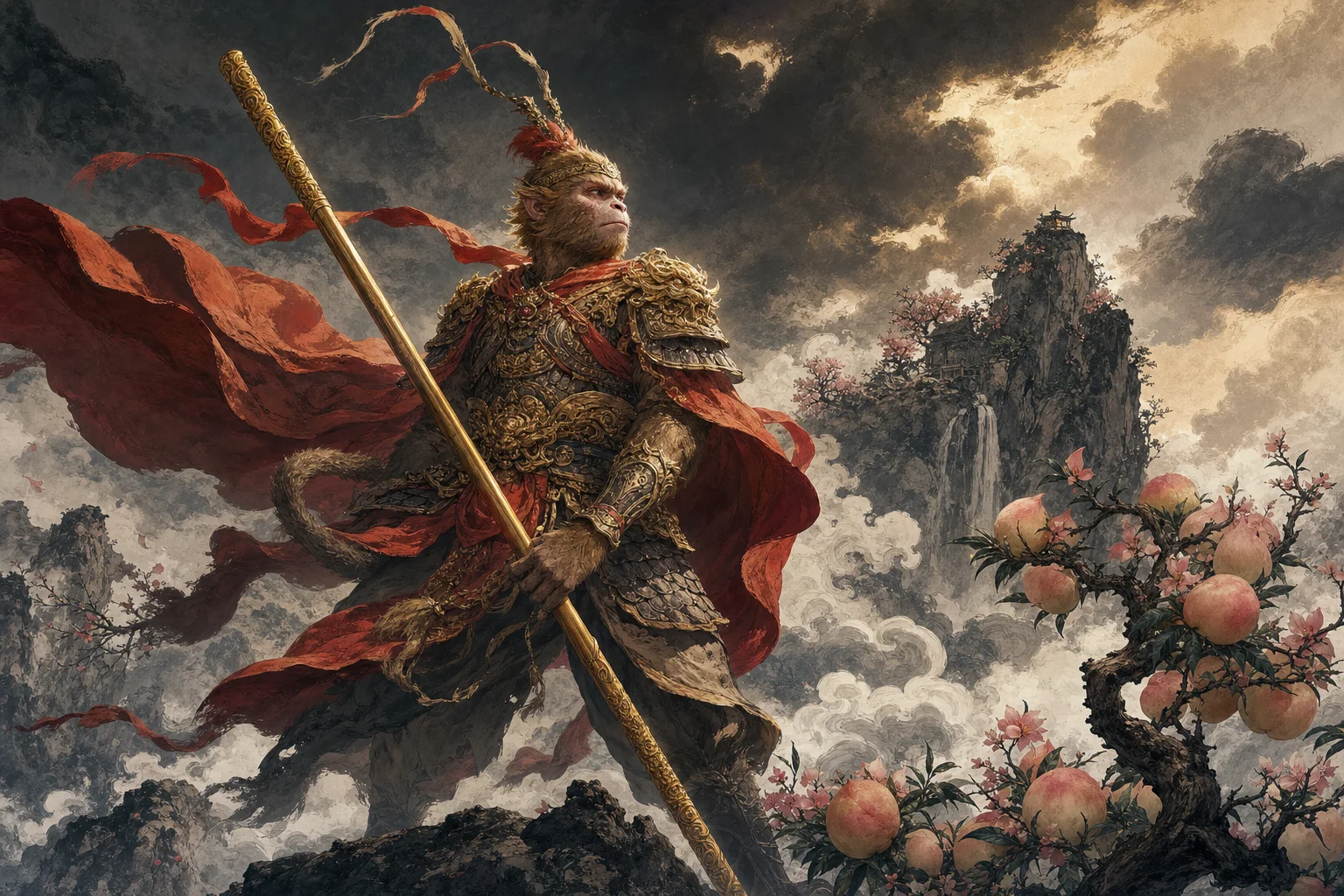
The Monkey King, born from a stone on Flower-Fruit Mountain. Rebellious, brilliant, and armed with the Ruyi Jingu Bang staff. Black Myth centers his legend more than any other figure.
The monk
Tang Sanzang 唐三藏
The scripture-seeker and moral center of the party. In folk belief, eating his flesh grants immortality — which is why so many yaoguai want him dead.
Disciple 2
Zhu Bajie 猪八戒
A pig-like former heavenly marshal — comic relief, reluctant fighter, and constant reminder that enlightenment is a long road with detours.
Disciple 3
Sha Wujing 沙悟净
A river ogre turned loyal follower. He carries the luggage, keeps the peace, and represents steady devotion after punishment and redemption.
Why it matters for Black Myth
Black Myth: Wukong focuses on Wukong's mythic past and legacy, not a straight retelling of the full 81-chapter pilgrimage. Game Science chose to center the Monkey King's legend — his origin, rebellion, punishment, and enduring myth — rather than walk the novel page by page.
Many bosses, locations, and motifs echo episodes from the novel, often with a darker, more cinematic tone. Knowing the source material helps you recognize names, symbols, and story beats the game reinterprets.
How to read along as you play
- → Treat connections as "likely inspired by" unless the game confirms them.
- → When a name sounds familiar, check our glossary.
- → Continue with the next primer on heaven, hell, and Buddhist cosmology.
Key terms to remember
Bookmark these three — they appear constantly in both the novel and Black Myth marketing, item names, and boss lore.
| English | Chinese | Meaning |
|---|---|---|
| Great Sage Equal to Heaven | 齐天大圣 | One of Wukong's titles after rebelling against heaven |
| Havoc in Heaven | 大闹天宫 | Wukong's famous rebellion against the Jade Emperor |
| Scripture pilgrimage | 取经 | The monk's quest for Buddhist texts in the Western Heaven |
| Yaoguai | 妖怪 | Supernatural beings — central to both the novel and Black Myth's identity |