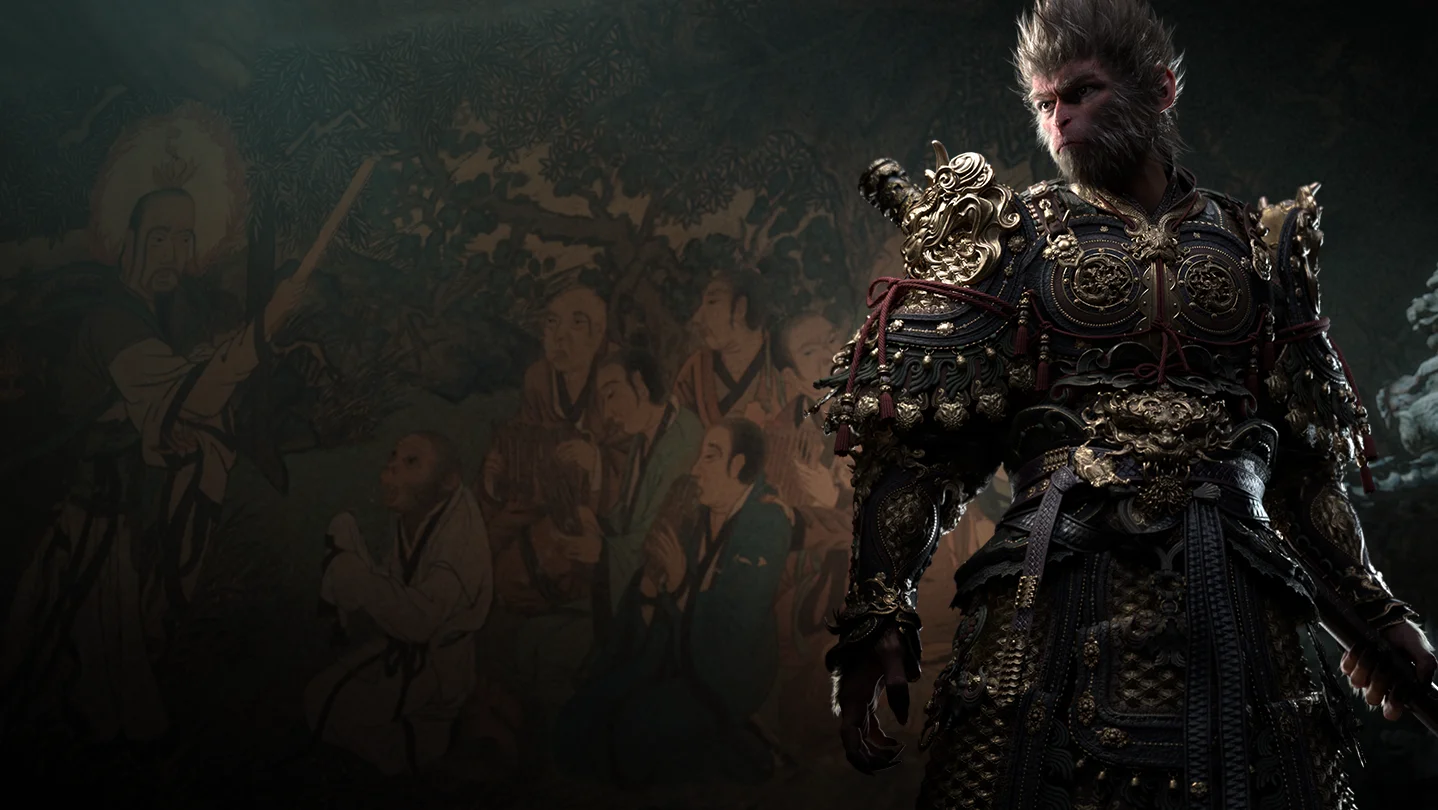
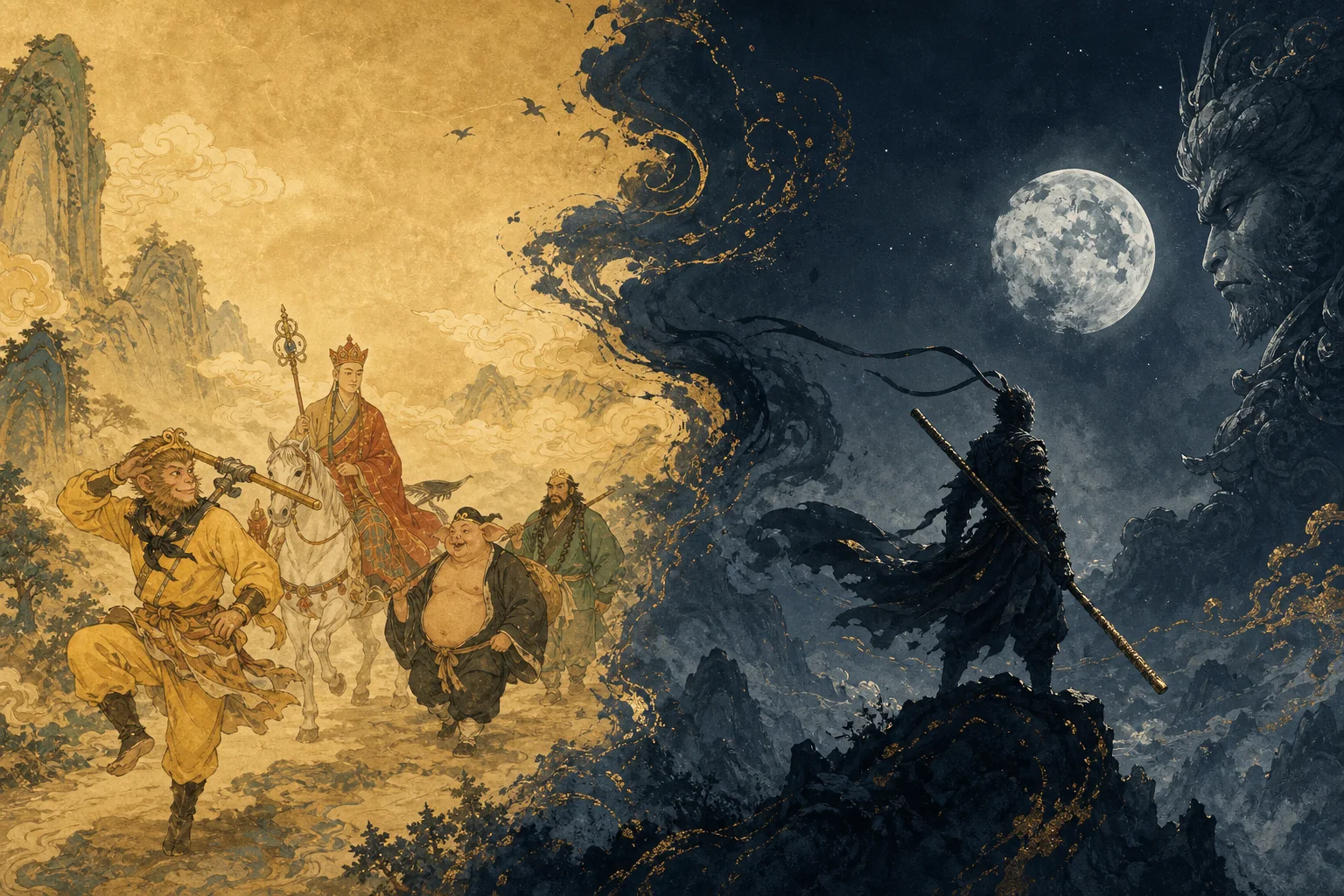
You have the plot and the cosmos from the earlier primers. Now the practical question: what does the game actually borrow, what does it rewrite, and how should you enjoy both?
Not a chapter-by-chapter adaptation
Black Myth: Wukong is built around Sun Wukong's legend — his origin, rebellion, punishment, and enduring myth — rather than the full 81-chapter pilgrimage. Game Science wanted room to invent bosses, regions, and story beats while still speaking the language of Journey to the West.
That choice matters for how you play. You are not "catching up" on missed novel chapters when a boss appears. You are encountering a creative response to the same myth pool Chinese audiences have known for centuries.
The novel
Long picaresque pilgrimage — comedy, satire, Buddhist trials, episodic adventure
The game
Focused mythic action — Wukong's legacy, darker tone, original narrative framing
Your job
Spot echoes, enjoy surprises, and treat links as "likely inspired by" unless confirmed
What carries over
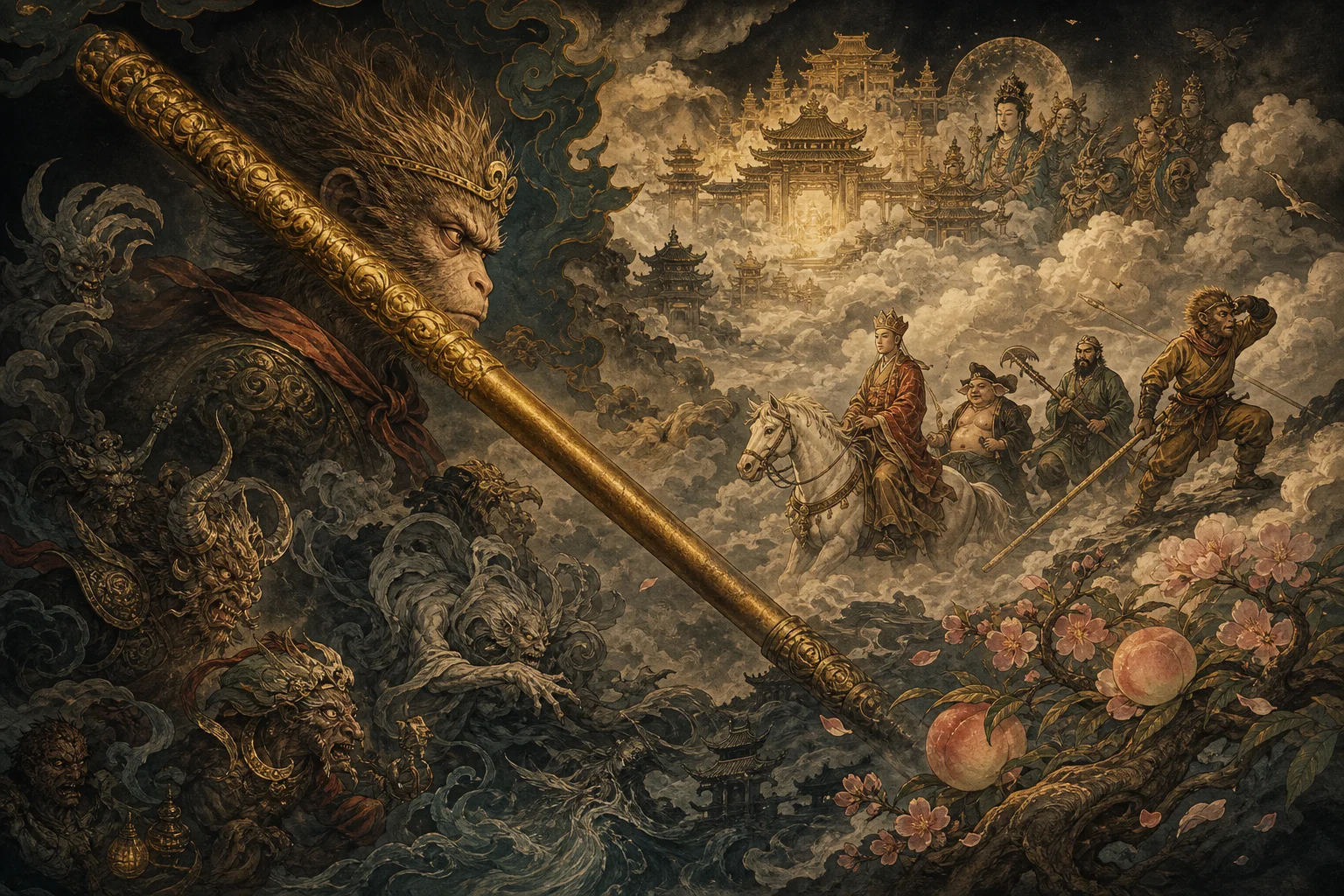
Even when the plot diverges, the game keeps returning to symbols and identities readers already know. These are the anchors — the things worth recognizing when names, places, or motifs feel familiar.
Identity
Sun Wukong 孙悟空
Stone-born monkey, staff-wielding fighter, trickster hero. The game's center of gravity — not a side character in someone else's quest.
Scale
Heavenly conflict 天界
Celestial palaces, divine rank, and the aesthetics of cosmic war. The novel's loudest set pieces become visual DNA.
Creatures
Yaoguai 妖怪
Supernatural beings of folk religion and fantasy. The game wears "yaoguai" as identity — not just enemy filler.
Episodes
Iconic trials 典故
Echoes of famous novel episodes — some direct nods, some distant riffs. The fun is in recognizing the shape, not forcing a one-to-one map.
What changes
Adaptation is not photocopying. Black Myth makes deliberate breaks from the novel's tone and structure. Knowing these upfront saves frustration when the monk's party is not always center stage.
| Dimension | In the novel | In Black Myth |
|---|---|---|
| Narrative framing | Episodic road story with comedy and satire | Darker, more fragmented mythic storytelling |
| The monk's party | Tang Sanzang and disciples drive most chapters | Wukong's legend first; other figures may appear in new roles |
| Tone | Often playful — jokes, banter, moral fables | Action-forward, tragic grandeur, cinematic weight |
| Goal | Fetch scriptures; complete 81 tribulations | Explore Wukong's past, legacy, and reinterpreted fate |
How to read along as you play
A light-touch approach
- → Start with the primer if you are new to the setting.
- → When a name or place rings a bell, check the glossary.
- → Treat connections as "likely inspired by" unless the game confirms them — surprise is part of the design.
- → Enjoy the game on its own terms first; use these articles to deepen curiosity, not as a checklist.
The best outcome is not "I predicted every reference." It is the moment a boss name lands and you think: oh — that is probably from the novel's world, let me look it up after this fight.