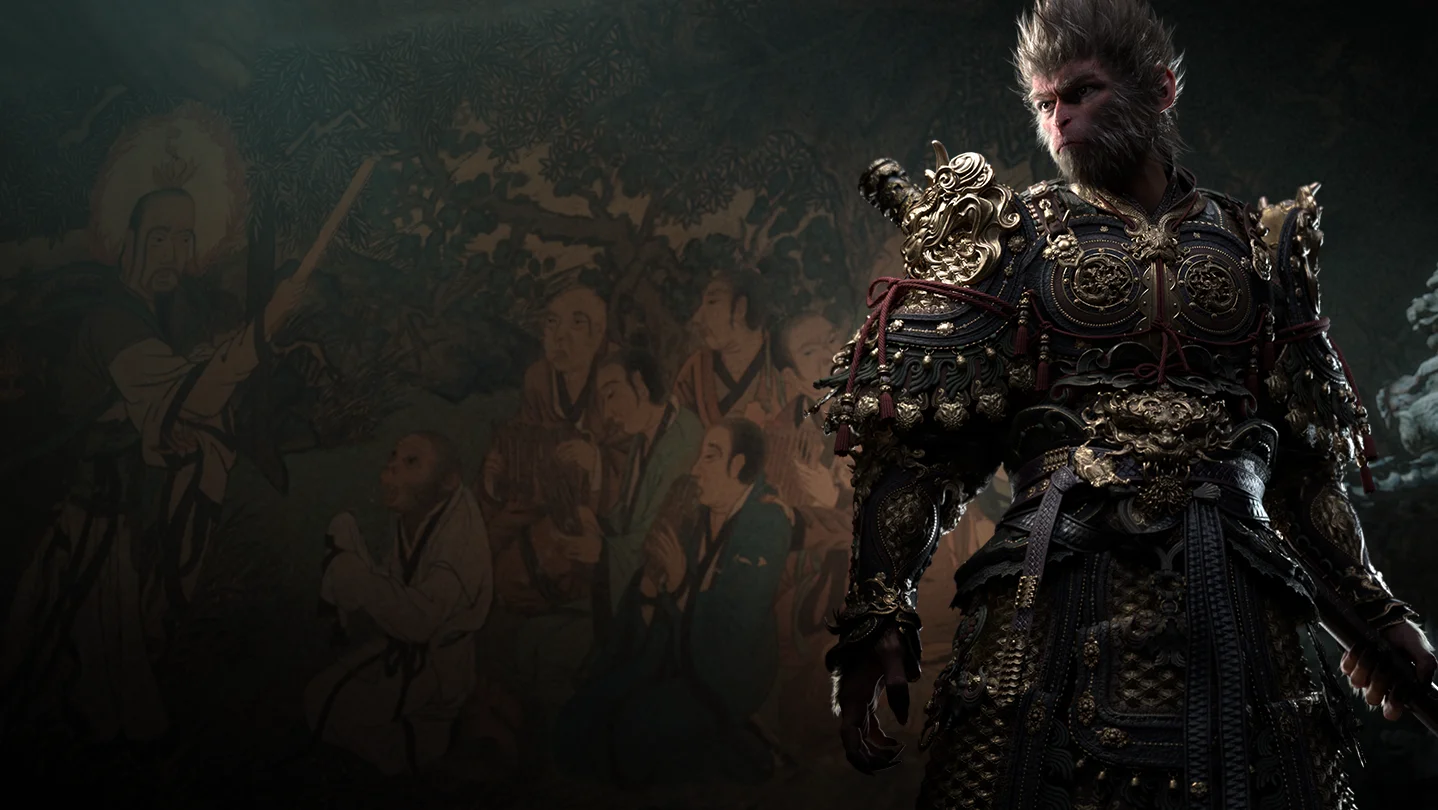
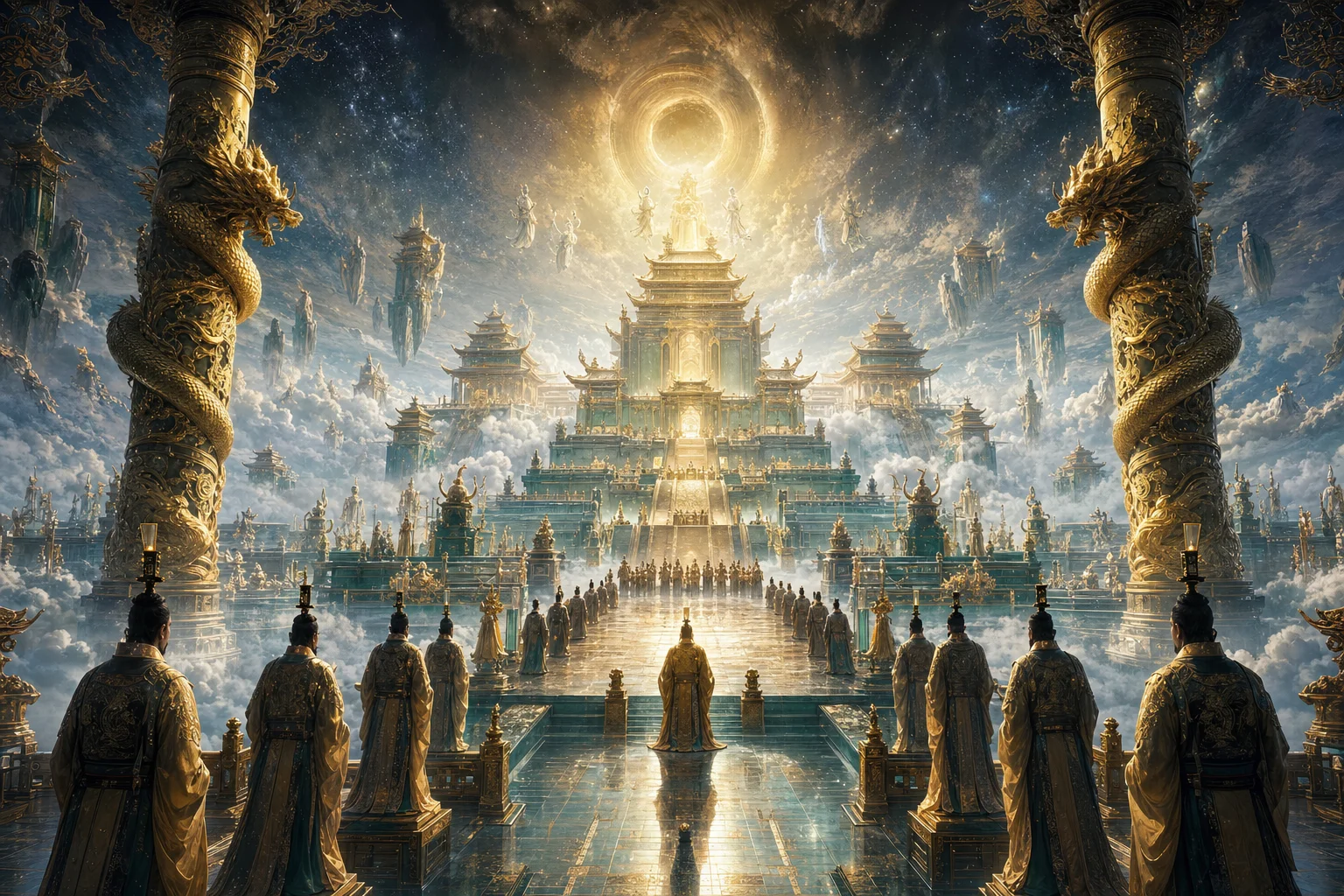
If the primer gave you the plot, this article maps the cosmos behind it: who rules heaven, what the pilgrimage is really for, and why demons keep chasing a monk across three worlds.
Two worlds in one story
Journey to the West sits at the crossroads of Taoist and Buddhist cosmology. The novel uses both freely — not as a tidy theology textbook, but as a storytelling toolkit.
Taoist gods run the day-to-day bureaucracy of heaven: ranks, titles, armies, and celestial administrators. Buddhist figures represent enlightenment, mercy, and the ultimate purpose of the scripture quest. Folk beliefs about ghosts, judgment, and hungry spirits fill in the underworld.
Taoist layer
Heavenly Court, Jade Emperor, celestial bureaucracy, divine weapons
Buddhist layer
Scriptures, bodhisattvas, karma, the Western Heaven as spiritual destination
Folk layer
Yaoguai, Diyu (underworld), immortality through forbidden means
The Heavenly Court (天庭)
At the top sits the Jade Emperor (玉皇大帝, Yùhuáng Dàdì), ruler of the Taoist heaven. Below him is a vast bureaucracy of deities, marshals, and celestial soldiers — think of it as a divine government with departments, promotions, and grudges.
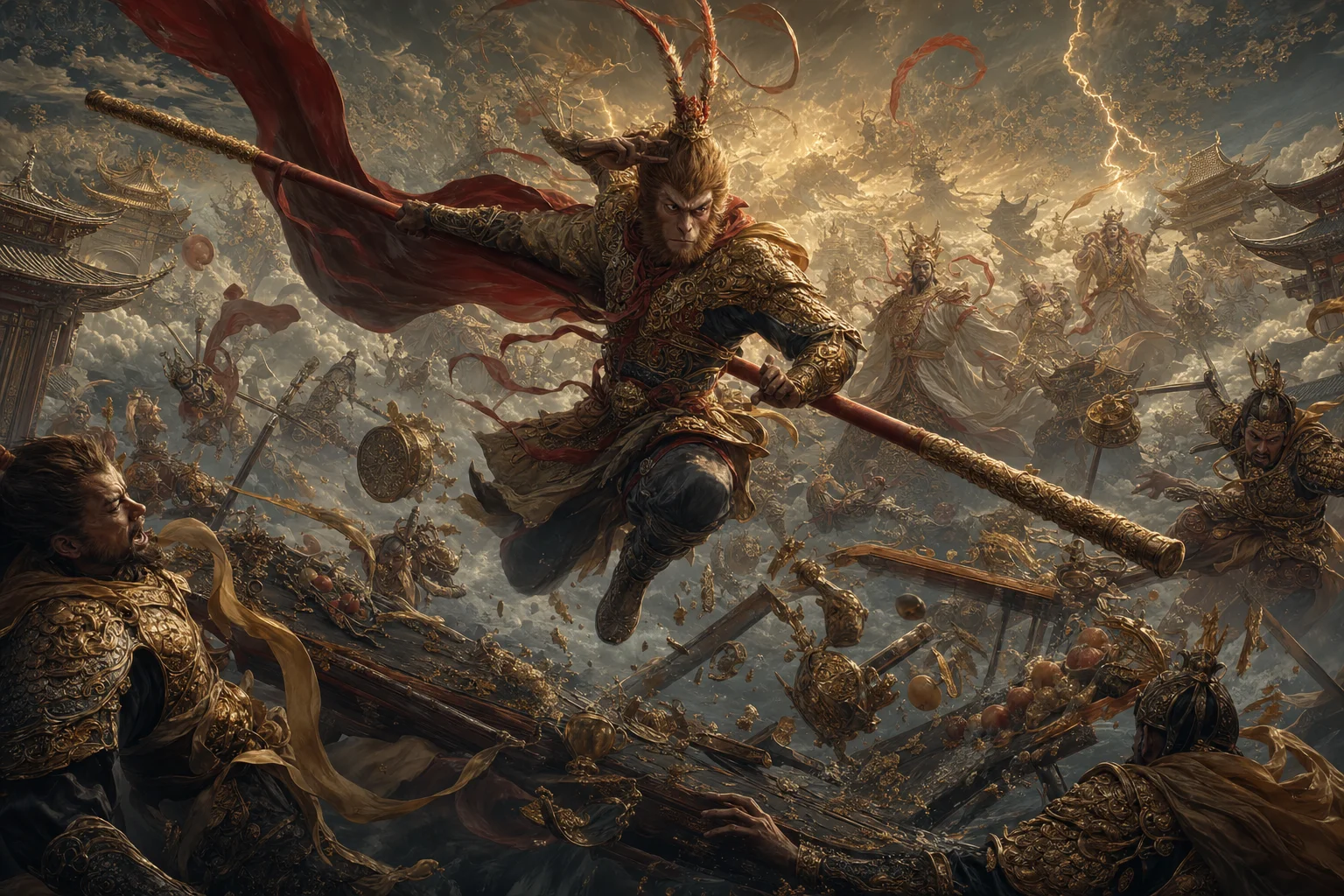
Sun Wukong's Havoc in Heaven (大闹天宫) is a direct challenge to this order. He defeats generals, crashes banquets, demands the title Great Sage Equal to Heaven (齐天大圣), and only the Buddha can finally stop him. That rebellion is the novel's loudest statement about pride, power, and cosmic limits.
Why this matters in Black Myth
- → Celestial palaces, golden armor, and divine rank echo the Heavenly Court's visual language.
- → Wukong's defiance of heaven is central to his identity — not a side note.
- → Many boss names and titles sound like court officials or marshals from the novel's heaven arc.
Buddhist layers
The pilgrimage itself is a Buddhist mission. Tang Sanzang travels to the Western Heaven (西天) for scriptures that can redeem the world. Along the way, Buddhist powers guide, test, and sometimes punish the party.
Key figures to recognize
Bodhisattva
Guanyin 观音
Compassionate guide who recruits the disciples, assigns trials, and intervenes when the pilgrims stray. Often the "adult in the room" of the story.
The Enlightened One
Tathagata / Buddha 如来
Ends Wukong's rebellion with a wager and a palm — the moment that defines the Monkey King's limits and sets up his later redemption arc.
Underworld salvation
Ksitigarbha / Dizang 地藏
Bodhisattva often linked to hell realms and vows to save all beings. Appears in folk religion and some novel episodes tied to judgment and mercy.
The goal
Western Heaven 西天
Not just geography — the Buddhist paradise where true scriptures live. The pilgrimage is spiritual travel dressed as a road trip.
The underworld
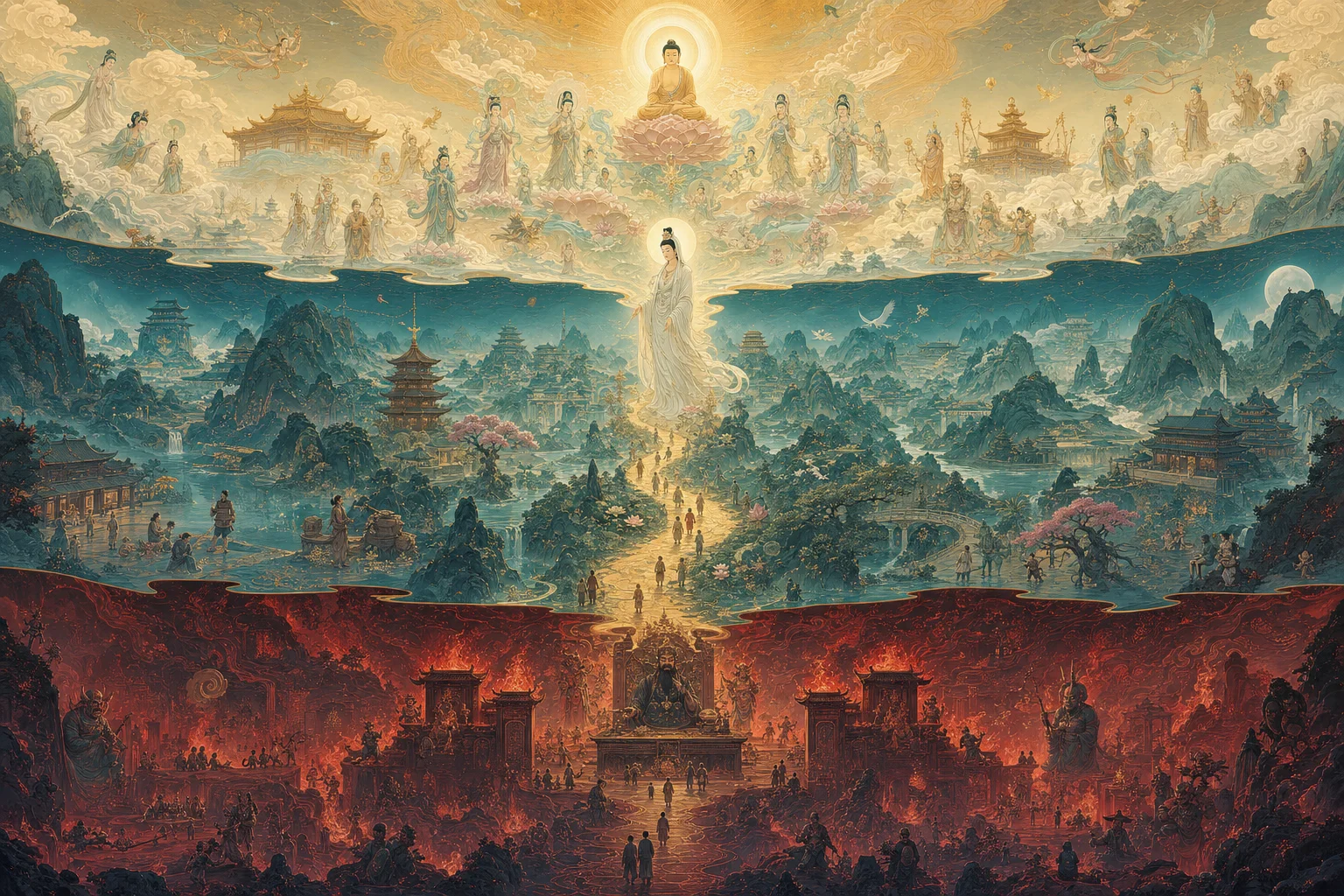
Chinese folk belief also includes Diyu (地狱) — realms of judgment and punishment after death. Kings of hell, ledgers of sin, and bureaucratic torment mirror heaven's paperwork in a darker register.
In Journey to the West, demons often want the monk because eating his flesh is said to grant immortality. That ties earthly greed to cosmic stakes: the same world contains salvation, rebellion, and predatory hunger. Yaoguai (妖怪) sit in between — not always evil, but always dangerous when they want power.
| Realm | Chinese | Role in the story |
|---|---|---|
| Heavenly Court | 天庭 | Taoist bureaucracy; Wukong rebels against it |
| Western Heaven | 西天 | Buddhist destination of the scripture quest |
| Diyu (underworld) | 地狱 | Judgment, punishment, folk horror undertones |
| Mortal world | 人间 | Where pilgrims walk and yaoguai hunt |
In Black Myth
The game's opening and marketing lean heavily into mythic scale: celestial palaces, divine weapons, and Wukong at the center of a conflict that spans heaven and earth. That tone matches the novel's biggest set pieces, even when the plot diverges from a straight pilgrimage.
You do not need to memorize every deity's rank. Watch for three recurring ideas: defiance of heaven, the pull of Buddhist order, and monsters who want what the pilgrims carry — body, scripture, or legend.