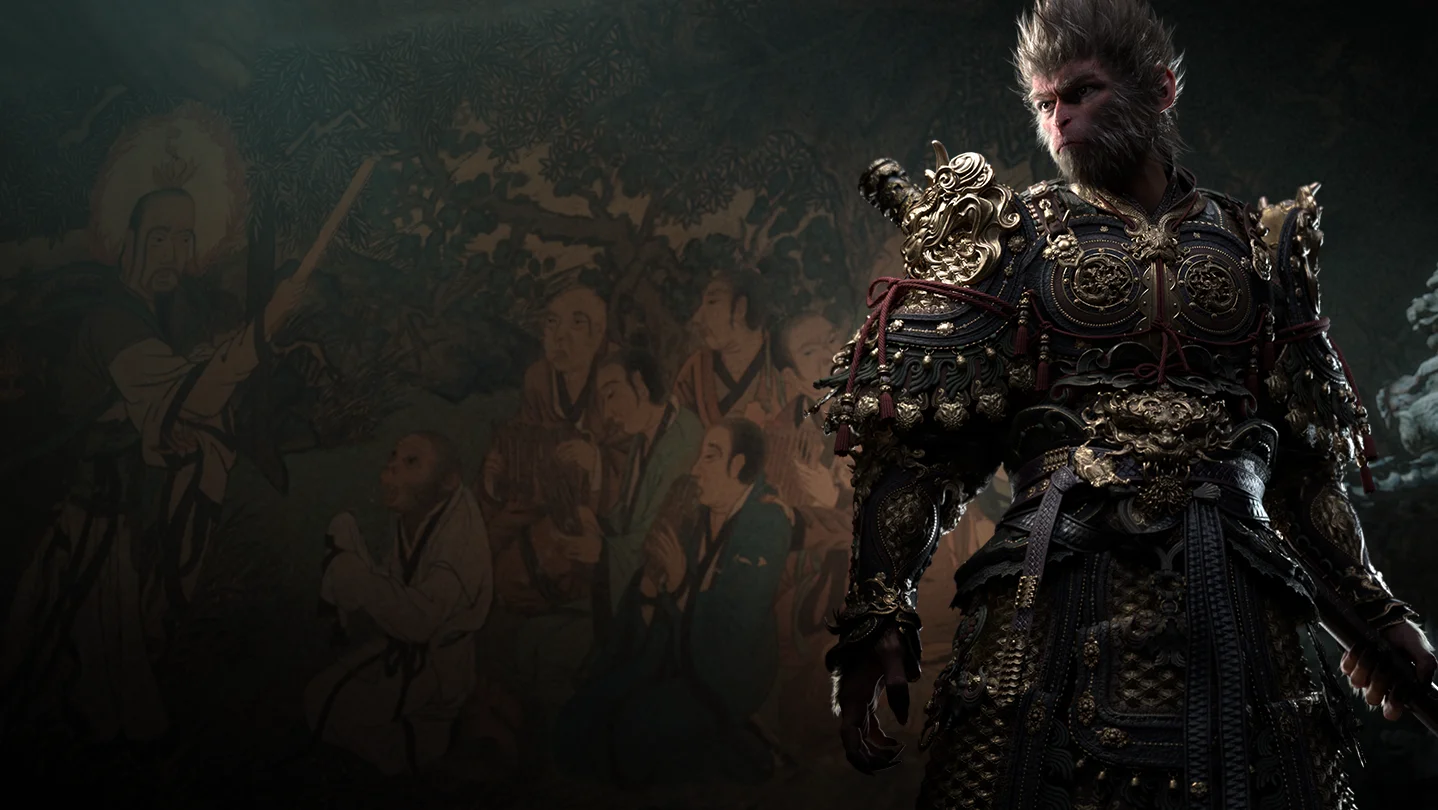
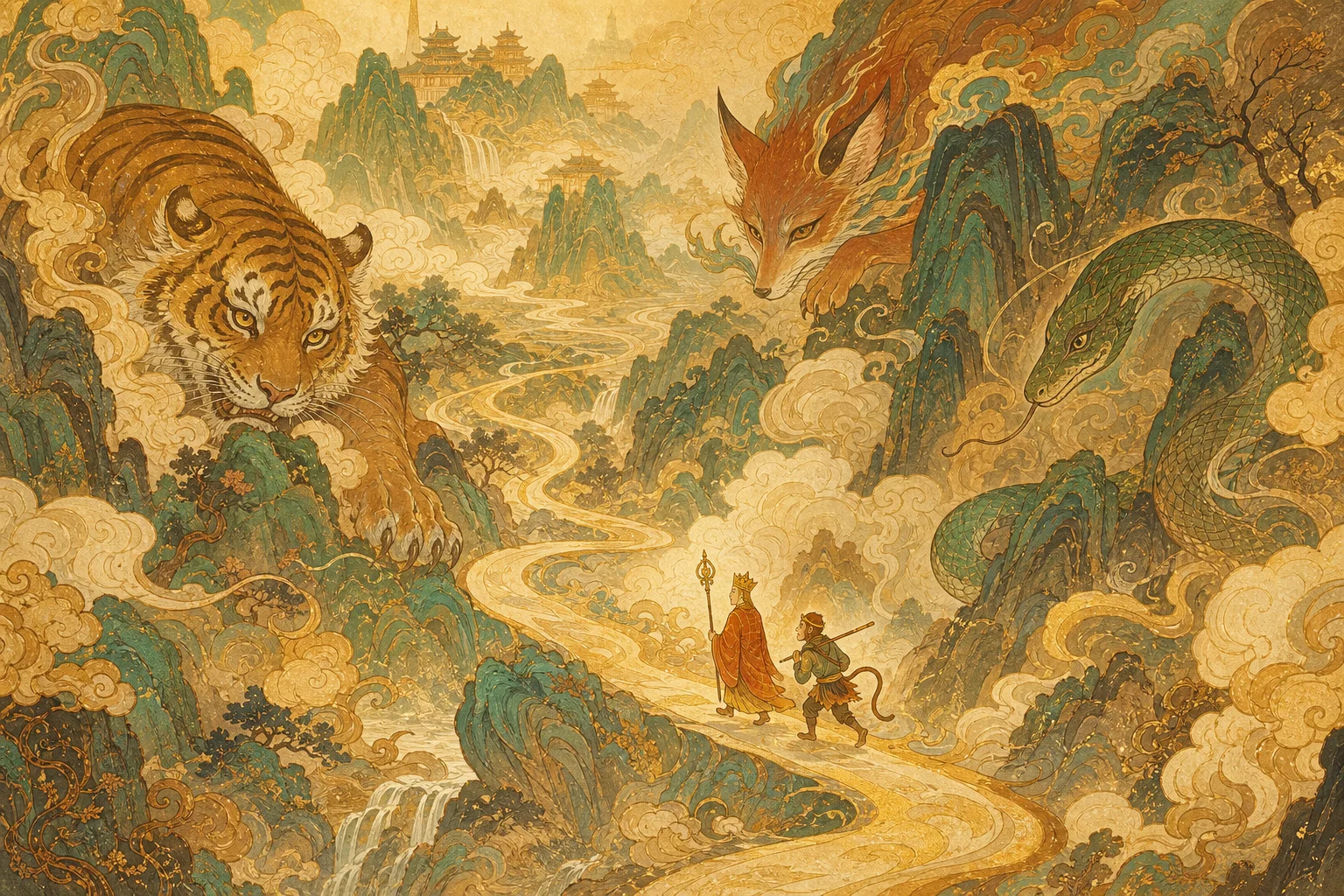
Black Myth: Wukong wears the word yaoguai on its sleeve. In the novel, monsters are not filler — they are the reason the pilgrimage exists as a story. This article explains what yaoguai actually means, why so many beings want Tang Sanzang (唐三藏), and how to read demon names and motives when a boss blocks your path.
What is a yaoguai?
Yaoguai (妖怪, yāoguài) is the broad Chinese term for supernatural creatures — spirits, transformed animals, oddities of heaven and earth. It is not a synonym for “evil.” Many yaoguai are greedy, violent, or cruel, but the word marks otherness, not moral judgment.
The term combines yao (妖) — often a cultivated spirit or beast — and guai (怪), meaning strange or uncanny. In folk logic, animals and objects can absorb qi over centuries, gain powers, and take human form. That makes yaoguai a category of being, like “fae” or “yokai” in other traditions. Sun Wukong himself begins life as a stone-born yaoguai before he earns Buddhist titles.
Yaoguai (妖怪)
General supernatural beings — the umbrella term you will see most often, including in Black Myth.
Mo (魔)
Demon or mara — often heavier, more destructive; used in names like Bull Demon King (牛魔王).
Gui (鬼)
Ghost or restless dead — tied to underworld judgment and haunting, less common as chapter bosses.
Why everything wants the monk
The novel's simplest conflict engine: in folk belief spread through the story, eating Tang Sanzang's flesh grants immortality. Yaoguai do not chase the monk for sport or ideology — they chase him because he is the most valuable meal in the cosmos.
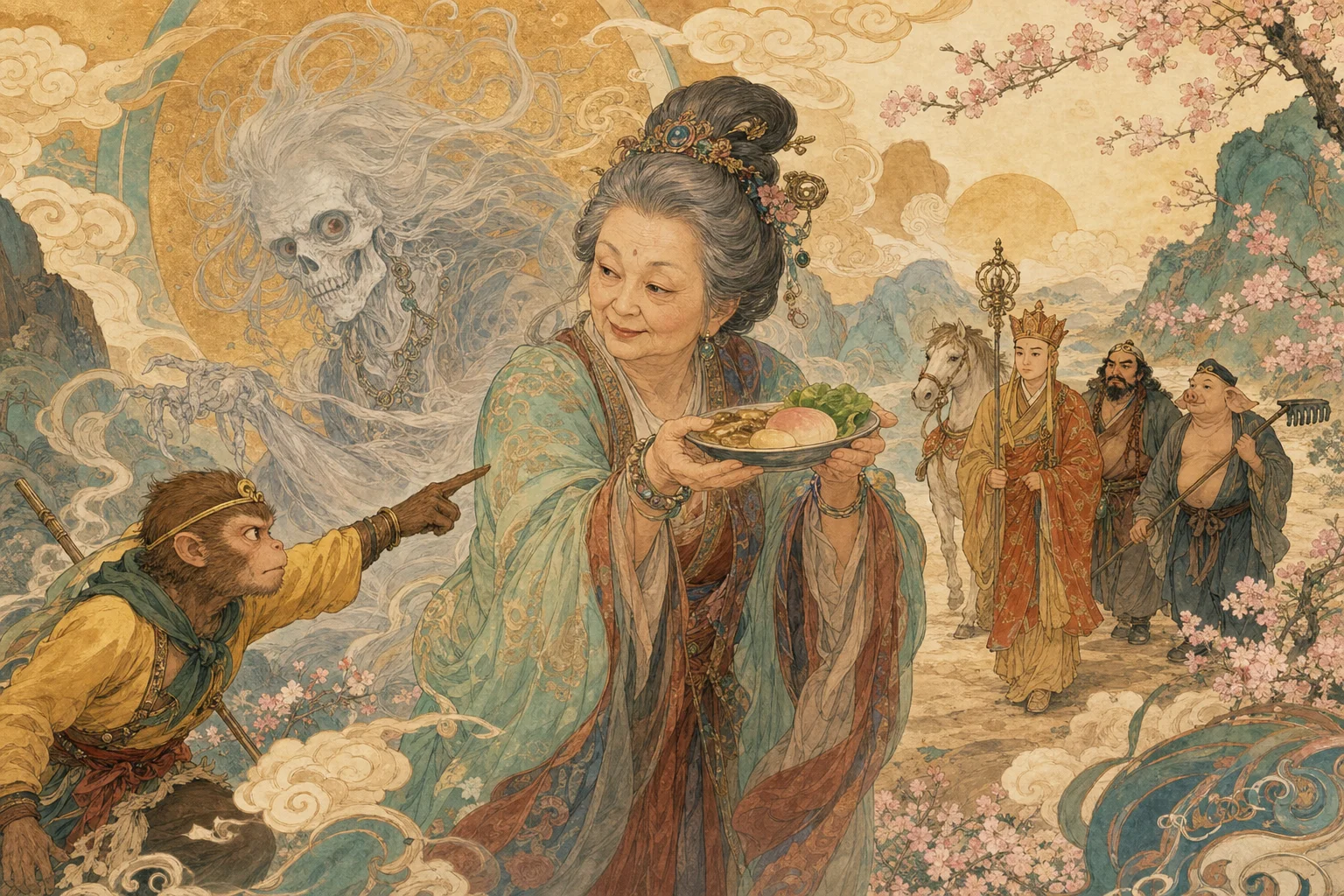
That premise turns a scripture quest into a survival horror road trip. Every village might hide a predator. Every kindly old woman might be a disguise. Wukong's job is to see the truth; Sanzang's flaw is trusting surface appearances. The same dynamic repeats across 100 chapters because the moral mismatch never resolves.
Why this belief exists in the story
- → Sanzang is a ten-lifetime holy man (十世修行的金蝉子) — his spiritual merit makes his body cosmically potent.
- → Yaoguai often failed cultivation — immortality through violence is a shortcut around righteous practice.
- → Higher powers sometimes allow the hunt because tribulations are part of the pilgrimage curriculum.
Where yaoguai come from
Not all yaoguai share one origin story. The novel uses several templates — recognizing them helps when a boss name sounds like a place, an animal, or a fallen god.
Most common
Cultivated beasts 修炼成精
Animals or objects that absorbed spiritual energy over centuries and learned human form. Tiger spirits, spider demons, and river serpents usually belong to this type — local predators scaled up to myth.
Powerful lords
Mountain kings 妖王
Yaoguai who rule a territory with armies and captains — Bull Demon King (牛魔王) is the famous example. They have politics, marriages, and grudges, not just hunger.
Heaven's rejects
Fallen immortals 下凡 / 被贬
Former heavenly officials exiled to earth — sometimes corrupt, sometimes tragic. The pig and river ogre disciples started here before Guanyin recruited them.
Master's pets
Escaped mounts & servants 坐骑 / 童子
A surprising number of late-game “bosses” are actually someone's golden-haired dog or bronze boy who ran away from a bodhisattva or sage. Defeat them and their master arrives to collect.
Classic demon patterns in the novel
Journey to the West repeats a few trial shapes so often that they become genre rules. When Black Myth echoes the novel, it often echoes these patterns rather than one specific chapter.
| Pattern | What happens | Why it matters |
|---|---|---|
| The disguise | Yaoguai pose as harmless humans — old women, young maidens, lost children | Tests Sanzang's compassion vs Wukong's perception; drives the headband conflict |
| The false temple | Demons build a fake monastery or invite the party to a lavish feast | Religious imagery turned predatory — trust in sacred symbols becomes dangerous |
| The hostage trap | Yaoguai capture Sanzang first; disciples must siege a mountain fortress | Shifts the story from travelogue to rescue mission and boss rush |
| The family drama | Powerful demon lords have spouses, children, and in-laws who join the fight | Red Boy (红孩儿) and the Bull Demon clan — politics, not just hunger |
| The recall | After defeat, a higher power reveals the yaoguai was a permitted trial | Explains why Guanyin does not clear the road in advance |
Famous yaoguai worth knowing
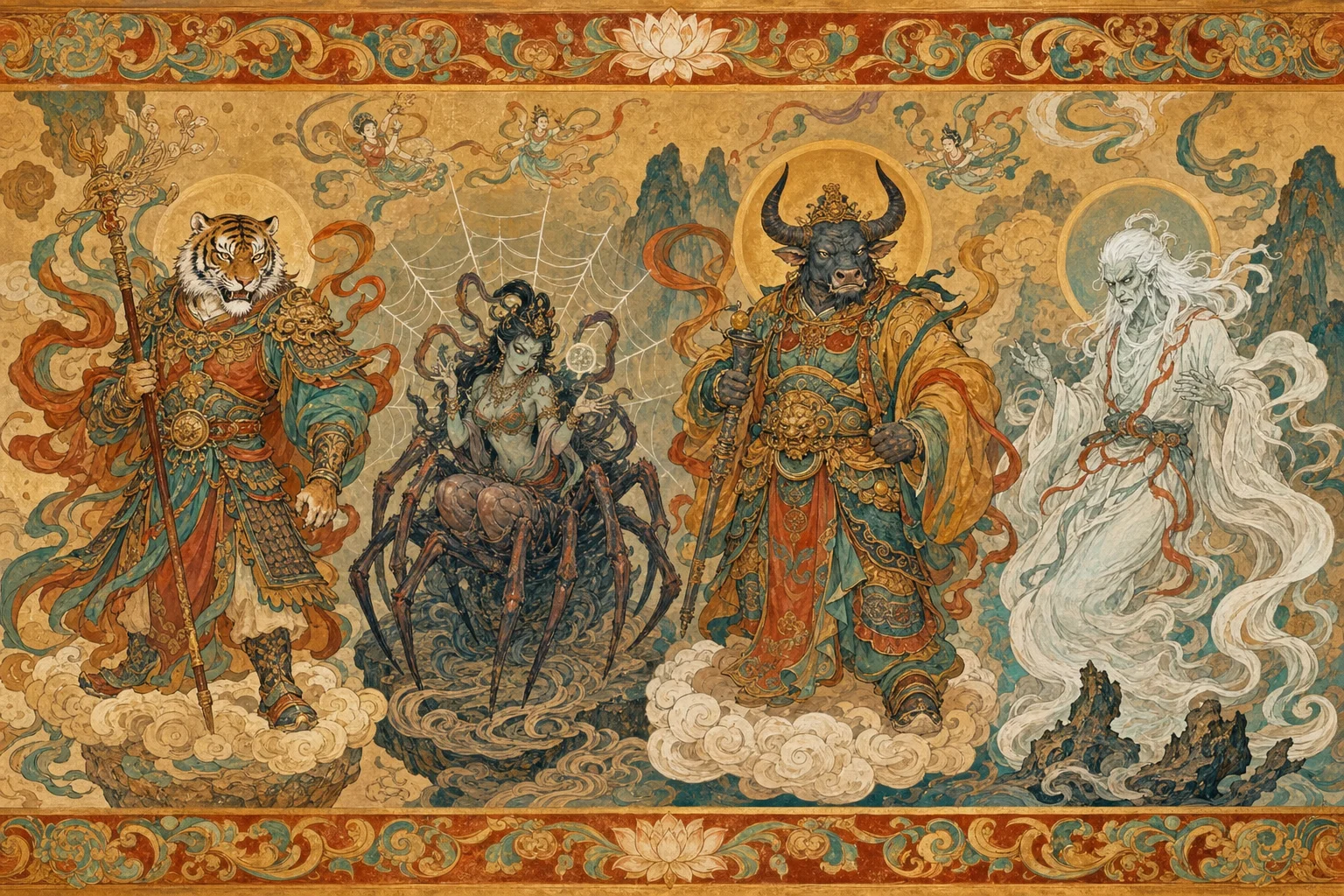
You do not need to memorize a hundred names. These anchors cover many fan discussions, adaptation references, and the kind of mythic figures a Wukong-centered game might invoke.
| Name | Chinese | Why players hear about them |
|---|---|---|
| White Bone Spirit | 白骨精 | The ultimate disguise villain — three transformations, three beatings, one furious monk |
| Red Boy | 红孩儿 | Flame-spewing child demon; son of Bull Demon King; tests even Wukong's limits |
| Bull Demon King | 牛魔王 | Wukong's old sworn brother turned rival — power, family, and tragic scale |
| Spider spirits | 蜘蛛精 | Seduction-and-trap episode; often cited for its folk-horror tone |
| Yellow Wind Great Sage | 黄风怪 | Wind magic and blinding sand — early example of a cultivated beast with a title |
| Golden, Silver Horn Kings | 金角 / 银角 | Hold powerful borrowed treasures; comedy and danger in one arc |
Not every yaoguai is a villain
The novel keeps moral categories messy on purpose. Some yaoguai are man-eaters; others are merely odd locals. A few become allies. The disciples themselves were yaoguai or ogres before recruitment.
That ambiguity matters for Black Myth too. When the game labels something yaoguai, it may signal “supernatural being in the myth world” rather than “faceless enemy to kill.” The novel often asks whether power without discipline deserves destruction or redemption — Wukong, Bajie, and Wujing are the proof that the answer can be redemption, if the right master appears.
For the Buddhist side that assigns and sometimes permits trials, see Buddhas, Bodhisattvas & Enlightened Beings. For the monk the demons hunt, see Tang Sanzang & the Pilgrimage Party.
Yaoguai and the underworld
Some antagonists connect to Diyu (地狱) — the Chinese underworld of judgment and punishment. Kings of hell keep ledgers; sinners face bureaucratic torment. Yaoguai who escaped death, traded lifespan, or harvest souls sit at the overlap between folk horror and Buddhist morality.
In the wider cosmos — Taoist heaven above, Buddhist Western Heaven beyond, mortal road in between — yaoguai usually belong to the mortal layer, the messy borderland where cultivation, greed, and hunger collide. That is why they feel so grounded even when they shoot fire or summon wind.
In Black Myth
Game Science made yaoguai a core identity word — not just “monsters,” but a cultural category with weight. Enemy designs, item names, and environmental storytelling lean into Chinese folk horror and the novel's bestiary: animal spirits, corrupted immortals, and tragic kings in mountain ruins.
Black Myth is darker and more fragmented than the novel's picaresque adventure, but the logic carries over: Wukong moves through a world where supernatural beings want power, and his legend intersects with theirs. When a boss name combines an animal, a mountain, and a title like Great Sage or King, you are usually looking at yaoguai grammar, not random fantasy naming.
While you play
- → Yaoguai on screen usually means “supernatural being” — not every one maps to a novel villain.
- → Animal + place names (Tiger, Wind, Web, Bull) often signal a cultivated beast archetype.
- → Look up unfamiliar terms in our glossary.
Further reading
- Heaven, Hell, and the Buddhist Cosmos — where yaoguai sit between heaven, earth, and Diyu.
- How Black Myth Reimagines the Novel — why the game centers yaoguai and Wukong's legend.
- Anthony C. Yu, Journey to the West, vol. 2 — the White Bone Spirit arc and early disguise trials.