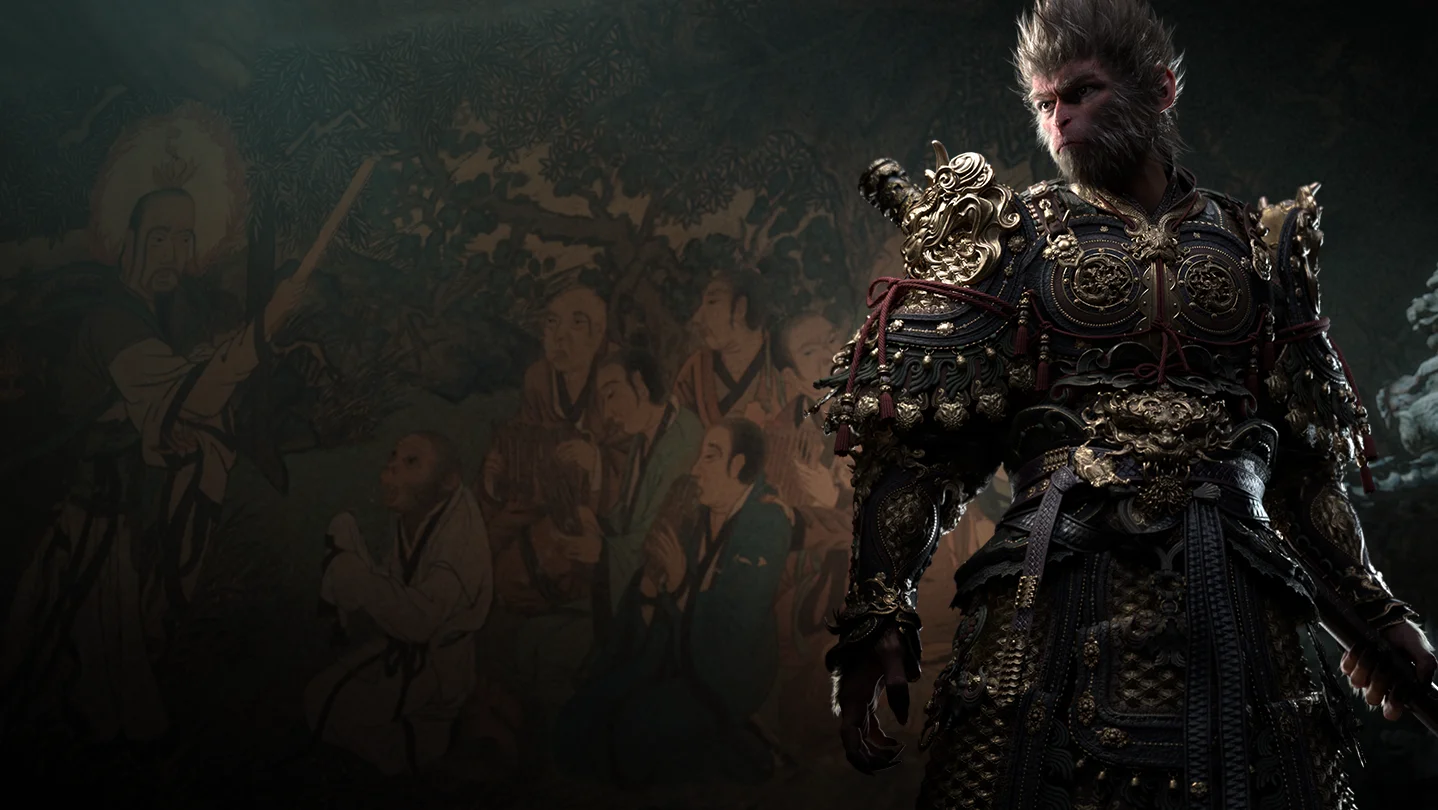
Black Myth: Wukong does not hand you a map of Journey to the West — but its regions, ruins, and boss arenas keep whispering novel place-names. This article maps the landmarks Western players hear most often: from Flower-Fruit Mountain (花果山) and the Heavenly Court (天庭) to the road west and the Flaming Mountains (火焰山). Think of it as a travel guide to the myth, not a geography textbook.
How place works in the novel
Journey to the West mixes real Silk Road echoes with pure fantasy. Chang'an (长安) and India-adjacent Western Heaven (西天) anchor the plot in history; most stops in between are mythic set pieces — a mountain ruled by a spider demon, a river guarded by a ogre, a kingdom built by a tiger spirit.
Locations are story engines. A place appears because a trial belongs there: the Flaming Mountains need a fan; Flowing Sand River needs a converted disciple. When Black Myth echoes a landmark, it is usually invoking that trial's mood — heat, trap, family feud, or sacred parody — not claiming a GPS coordinate.
Origin realm
Flower-Fruit Mountain, Dragon Palace, underworld — where Wukong becomes himself
Cosmic realm
Heavenly Court, Western Heaven — Taoist and Buddhist capitals above the mortal road
Pilgrimage road
81 tribulations across rivers, mountains, and demon kingdoms on the way west
Where Wukong comes from
Before the monk, before the headband, the legend is rooted in a few unforgettable places.
Birthplace
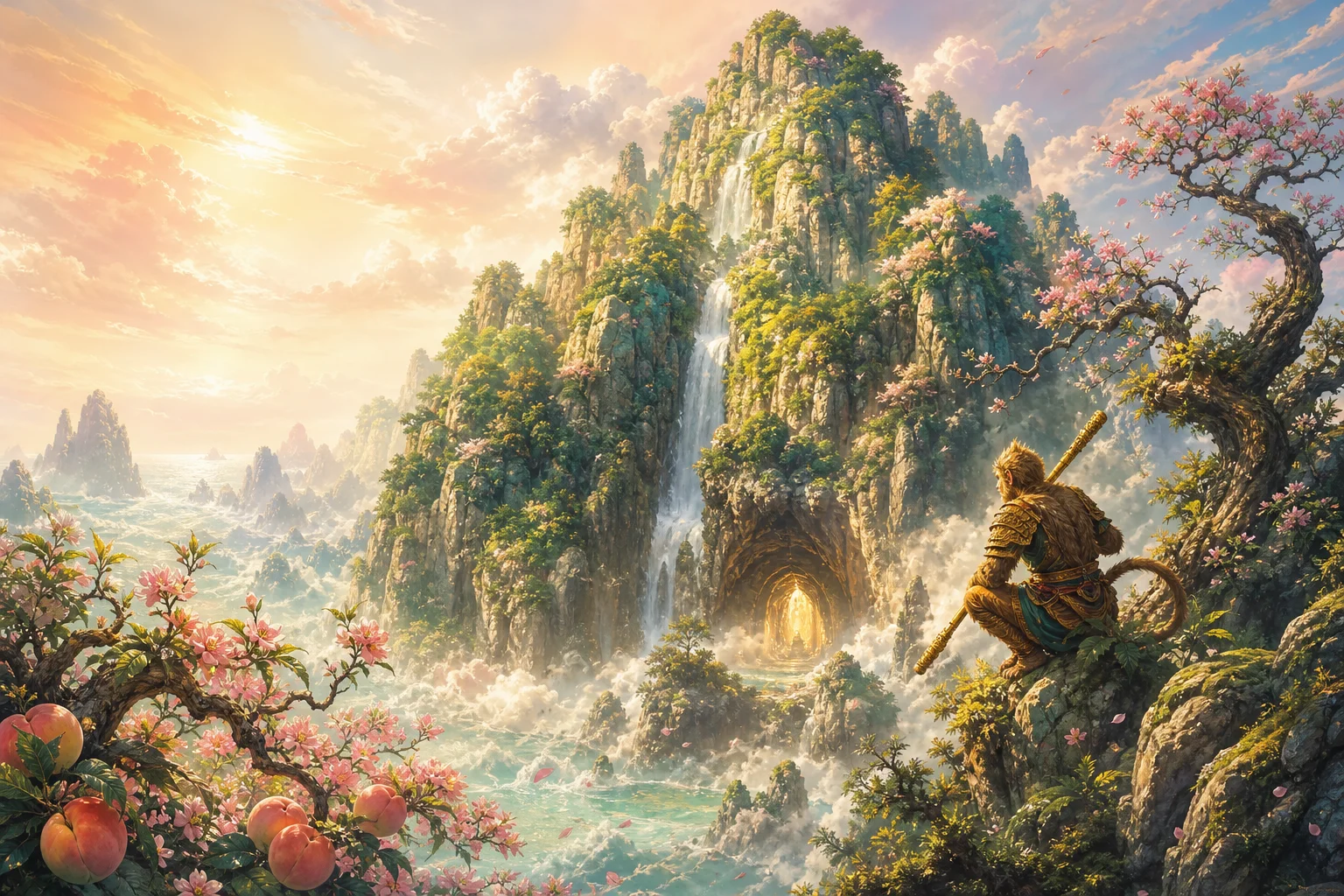
Flower-Fruit Mountain 花果山
A blessed peak in the Eastern Sea where a stone splits open and a monkey walks out. Home of the monkey troop, the Water-Curtain Cave (水帘洞), and Wukong's first kingship. Paradise before mortality scares him into seeking immortality.
Treasury
Eastern Sea Dragon Palace 东海龙宫
Underwater court of the Dragon King — where Wukong claims the Ruyi Jingu Bang and a full set of divine armor. See Ruyi Jingu Bang & Divine Weapons.
Rebellion
Heavenly Court 天庭
Jade Emperor's Taoist capital in the clouds — bureaucratic, martial, and the target of Havoc in Heaven. Golden halls and celestial ranks define its visual language.
Prison
Five Elements Mountain 五行山
The Buddha's palm turned mountain — Wukong trapped for five centuries until the pilgrimage needs him. Also called Five Finger Mountain in many English versions.
For the full origin arc across these places, see Sun Wukong: From Stone to Monkey King.
The road west
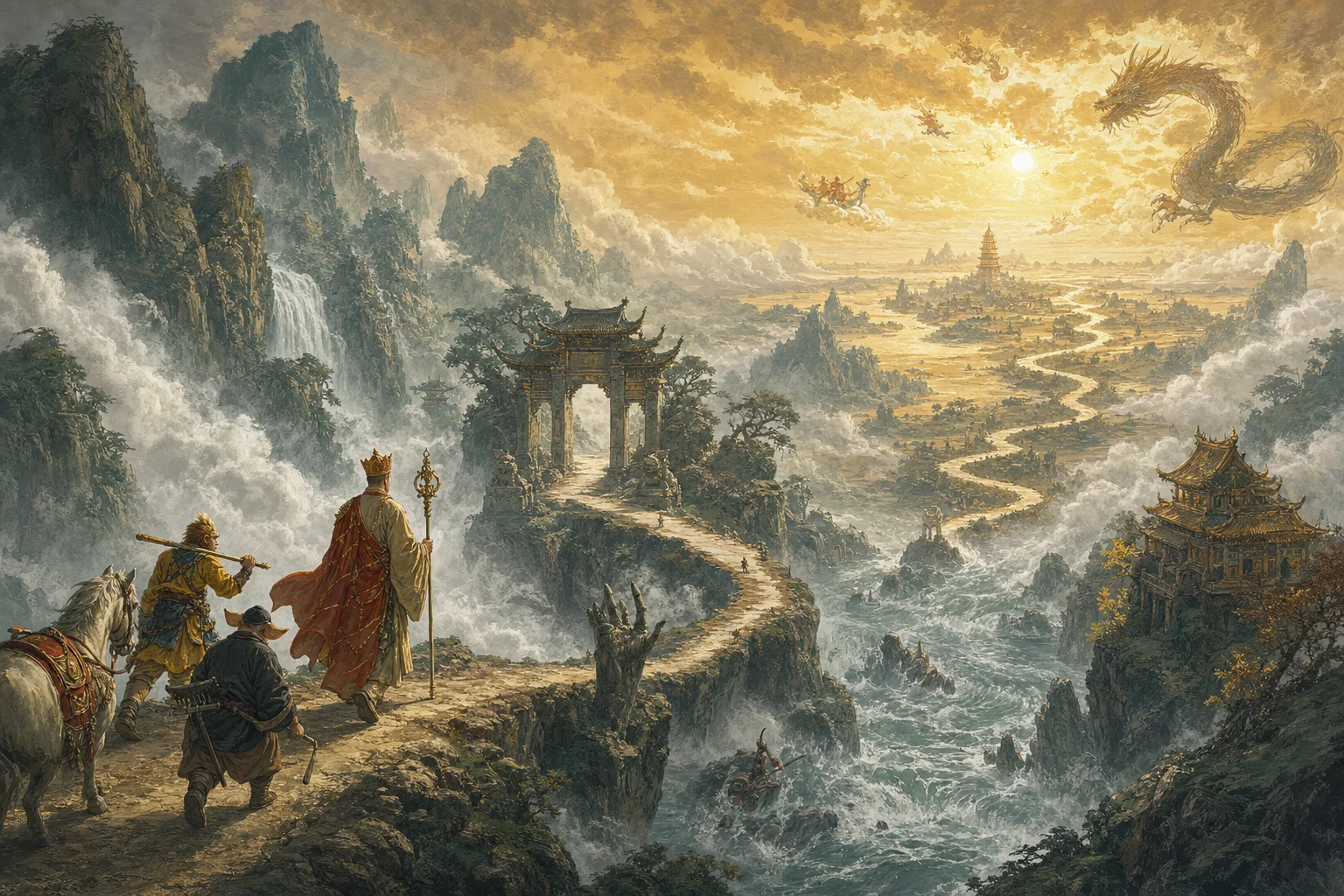
The pilgrimage runs from Tang China toward the Western Heaven (西天) — the novel's Buddhist endpoint, loosely mapped to India. Tang Sanzang cannot fight; every landmark is something the party must survive, outwit, or convert. The journey is famous for repeating shapes: cross a river, enter a false temple, rescue the monk from a mountain fortress.
Landmarks players keep hearing about
| Location | Chinese | Why it matters |
|---|---|---|
| Flowing Sand River | 流沙河 | Home of Sha Wujing (沙悟净) before Guanyin recruits him — river guardian turned disciple |
| Five Villages Abbey | 五庄观 | Immortal fruit grove; Wukong offends Zhenyuan Daxian — comedy and cosmic debt |
| Flaming Mountains | 火焰山 | Unpassable heat; Bull Demon King family arc; needs the Banana Leaf Fan (芭蕉扇) |
| Spider Web Ridge | 盘丝洞 | Spider spirits' lair — folk-horror seduction-and-trap episode |
| Chechi Kingdom | 车迟国 | Taoist vs Buddhist contest — rain, sacrifice, and political satire |
| Western Heaven | 西天 / 灵山 | Scripture destination; Buddha's realm at journey's end — merit and titles await |
The Flaming Mountains — a landmark with its own saga
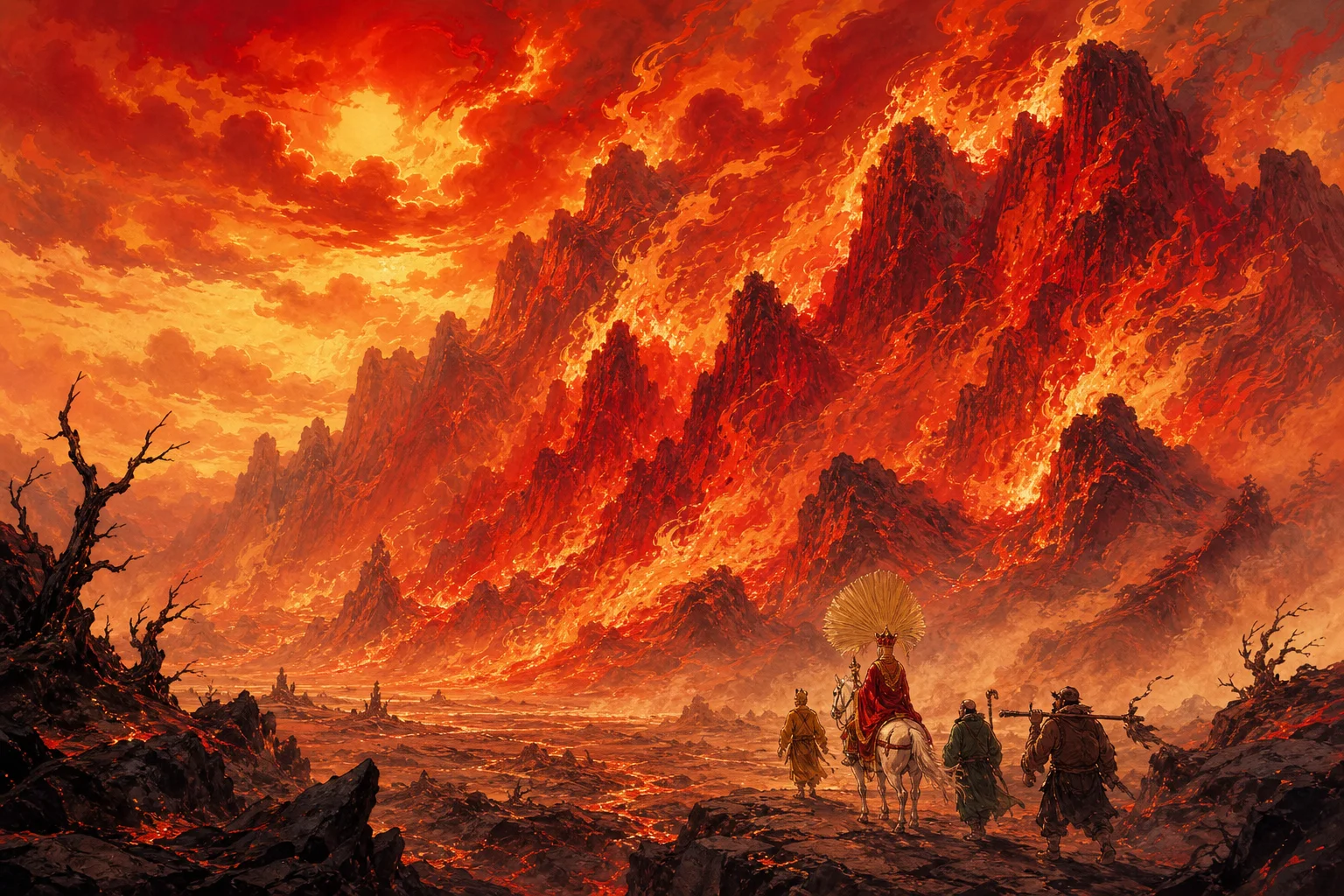
If one mortal location rivals Flower-Fruit Mountain in fame, it is the Flaming Mountains (火焰山, Huǒyàn Shān). The novel explains the heat as leftover from a furnace accident in heaven; the party cannot pass until they borrow the right magical fan — three times, with family drama between Wukong and the Bull Demon King (牛魔王) clan.
The arc ties together place, item, and character: mountains as obstacle, fan as divine weapon, demon king as old sworn brother. That density is why the Flaming Mountains still appear in games, cartoons, and tourism branding across China — the novel made the landscape a character.
Heaven, hell, and the in-between
Major places also define cosmic layers. The Heavenly Court sits above; Diyu (地狱) — the underworld of judgment — sits below. Wukong visits both early: he crosses out names in the Book of Life and Death, then later storms the court above. The mortal road where most yaoguai live sits between them.
For how these layers connect, see Heaven, Hell, and the Buddhist Cosmos. Black Myth's darkest regions often feel like collapsed borders between those layers — sacred places gone wrong.
Reading a place-name in the novel
- → Mountain + cave (山 / 洞) usually means a yaoguai lord's fortress — a boss arena in game terms.
- → River (河 / 江) often marks a recruitment or transformation — a guardian who becomes a disciple.
- → Kingdom (国) signals political satire — demons posing as rulers, false temples as government.
- → Heaven / Western Heaven (天 / 西天) mark cosmic authority — Taoist bureaucracy vs Buddhist enlightenment.
In Black Myth
Game Science built a world that feels like mythic China collapsed into combat spaces — temples, mountains, forests, and palaces that rarely name themselves on screen but borrow from the novel's location vocabulary. Flower-Fruit Mountain energy appears in origin flashbacks; celestial ruins echo the Heavenly Court; scorched or red-lit regions nod to Flaming Mountains heat without requiring a faithful re-creation of the map.
The game is not a walking tour of the novel's route. Treat each region as a refracted landmark: the emotional and symbolic weight of a famous place, adapted for a darker action epic — as discussed in How Black Myth Reimagines the Novel.
While you play
- → 花果山 / Flower-Fruit Mountain signals Wukong's origin — freedom, monkeys, stone-born myth.
- → 火焰山 / Flaming Mountains often implies heat trials, bull-demon family lore, or fan-shaped magic.
- → Temples and 天庭-style golden architecture point to heavenly bureaucracy and fallen divinity.
- → Look up unfamiliar place names in our glossary.
Further reading
- Tang Sanzang & the Pilgrimage Party — who walks the road and why the monk cannot fight.
- Yaoguai, Demons & Why Everything Wants the Monk — why every landmark seems to hide a predator.
- Anthony C. Yu, Journey to the West — vol. 1 for origin locations; vol. 3 for Flaming Mountains arc.