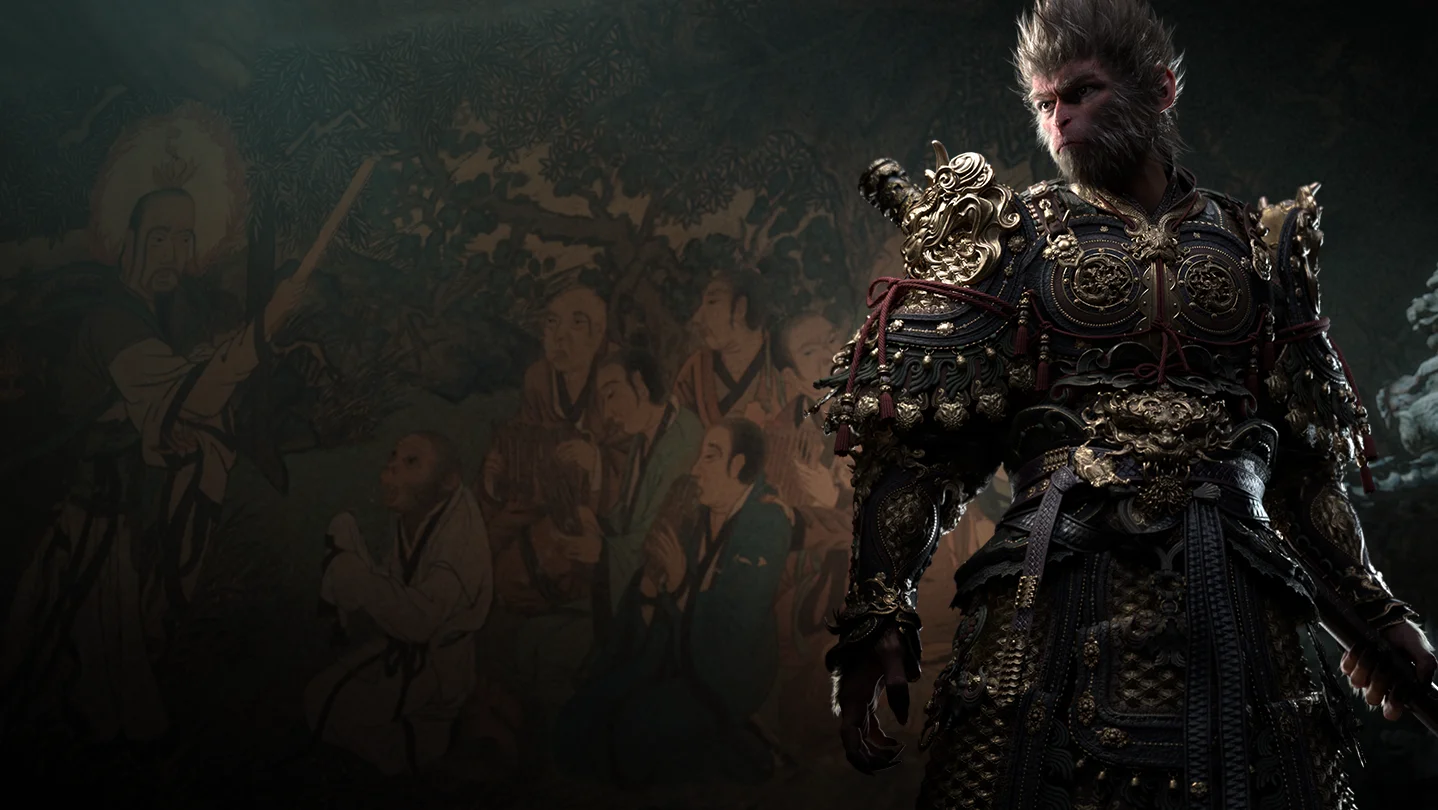
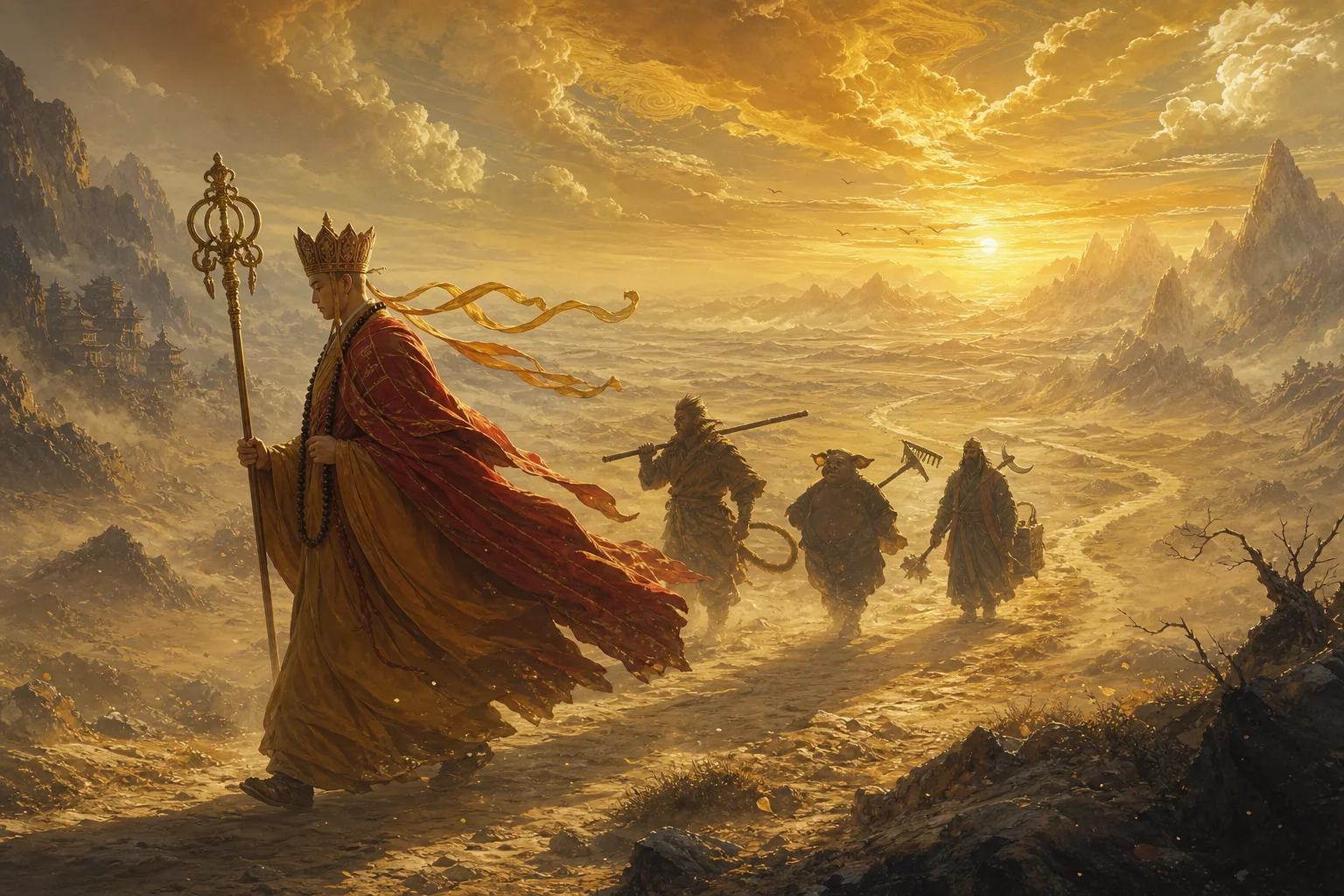
Black Myth: Wukong is built on the Monkey King's legend, but the novel's full story is a team quest: a monk walks west, demons want his flesh, and four companions keep him alive long enough to fetch the scriptures. This article introduces Tang Sanzang (唐三藏, Táng Sānzàng) and the pilgrimage party — who they are, what each one does, and why the group matters even when Wukong steals the spotlight.
Who is Tang Sanzang?
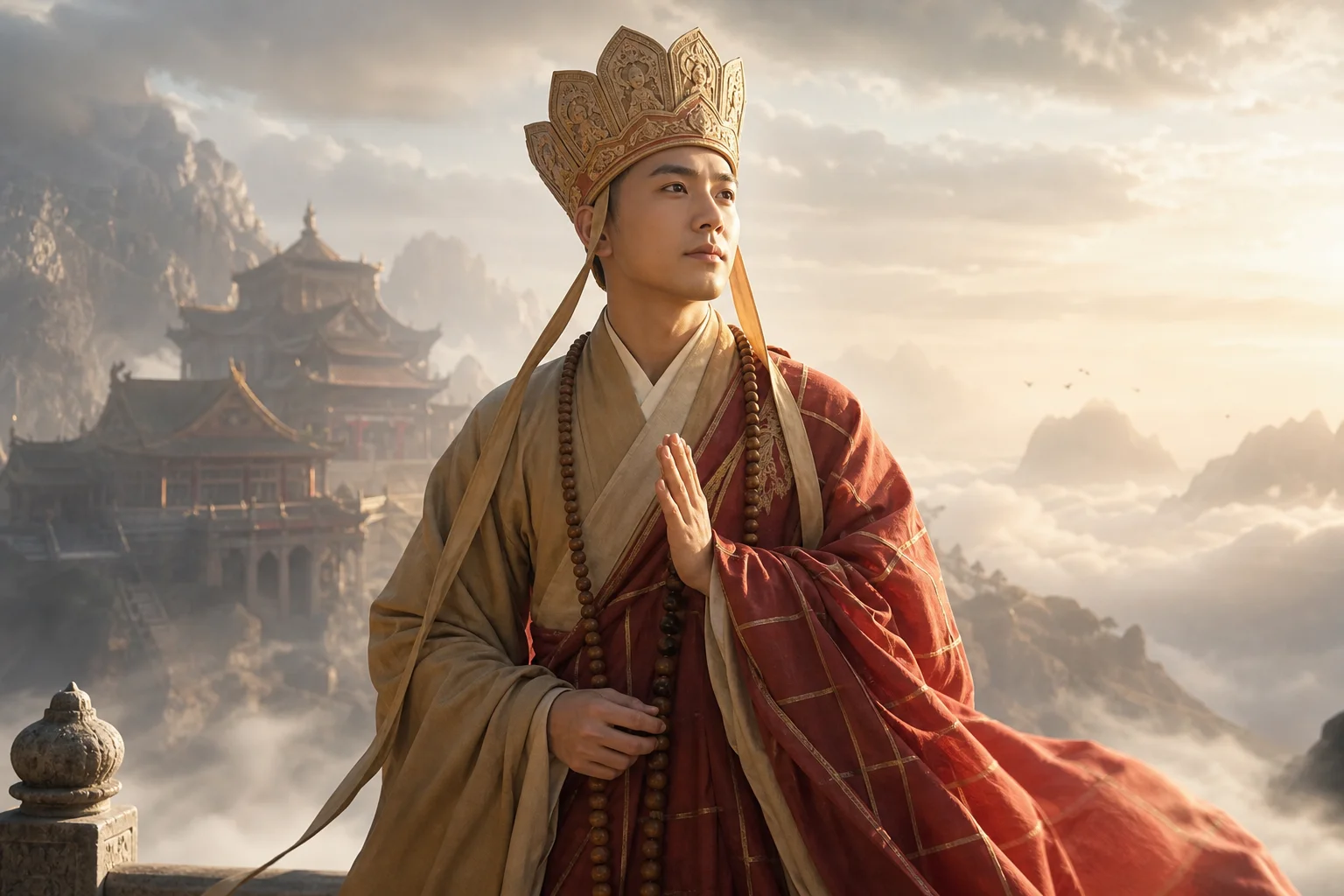
Tang Sanzang is a Buddhist monk sent from Tang-dynasty China to the Western Heaven (西天) to retrieve sacred scriptures. His name points to his role: Sanzang (三藏) means “three collections” — the Tripitaka, the core Buddhist canon. In English he is often called Tripitaka or simply the Tang Monk.
The character is loosely based on the real historical monk Xuanzang (玄奘, Xuánzàng), who traveled to India in the 7th century and returned with Sanskrit texts that shaped Chinese Buddhism. The novel turns that journey into myth: every river crossing might hide a demon, and every kindness might be a trap.
Role
Scripture-seeker and moral center — he does not fight; he endures
Mission
Fetch true Buddhist texts from the Western Heaven and bring them east
Weakness
Too compassionate — demons exploit his mercy again and again
The scripture quest
The Tang emperor commissions the journey after a vision of salvation. Guanyin (观音), the bodhisattva of compassion, has already scouted disciples in heaven and earth who can protect the monk through 81 tribulations (八十一难). The number is symbolic — Buddhist trials on the road to enlightenment — but in practice it means endless danger.
Sanzang cannot defend himself. His purity is the point: the pilgrimage tests faith, patience, and the disciples' loyalty as much as it tests combat skill. When Wukong solves problems with a staff, the monk often scolds him for violence — comedy and philosophy in the same argument.
How Guanyin assembles the party
Guanyin (观音, Guānyīn) is the pilgrimage's architect. She recruits each disciple as a conditional parole: serve the monk, earn redemption. Each one failed heaven or broke cosmic law before the journey began.
The recruitment logic
- → Sun Wukong — trapped under Five Elements Mountain; needs a path back to freedom.
- → Zhu Bajie — exiled marshal reborn as a pig-spirit; wants to escape his curse.
- → Sha Wujing — punished river ogre; seeks restoration through service.
- → White Dragon Horse — dragon prince who destroyed a heavenly gift; must carry the monk as penance.
The four companions
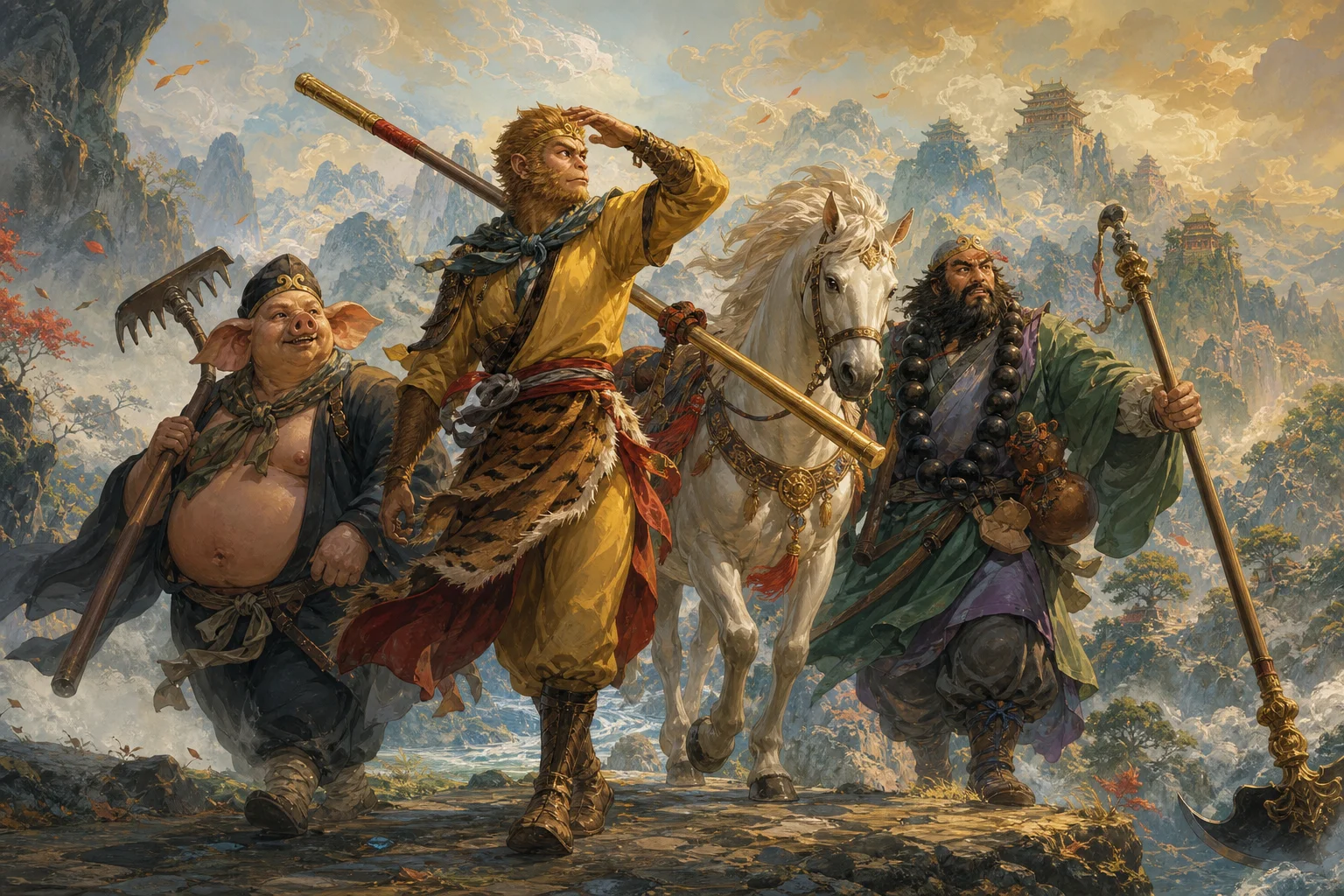
Western summaries often call them “three disciples plus a horse.” In Chinese tradition the horse counts as the fourth member of the party — a transformed dragon prince, not a mere mount.
Disciple 1
Sun Wukong 孙悟空
The fighter, scout, and problem-solver. Wears the golden headband (紧箍) so the monk can restrain him with the Tightening Spell. For his full origin arc, see Sun Wukong: From Stone to Monkey King.
Disciple 2
Zhu Bajie 猪八戒
Former Marshal Tian Peng (天蓬元帅) of heaven, reborn as a pig-like spirit. Comic relief, reluctant warrior, and walking warning against greed and lust — especially when food or pretty faces appear.
Disciple 3
Sha Wujing 沙悟净
A river ogre who haunted the Flowing-Sand River (流沙河). Carries luggage, mediates disputes, and represents steady loyalty after punishment. Less flashy than Wukong, but the party falls apart without him.
Disciple 4
White Dragon Horse 白龙马
The third son of the Dragon King of the West Sea, transformed into a white horse after a heavenly offense. He rarely speaks in the novel but saves the monk at critical moments.
Why demons want the monk
Here is the engine of the novel's conflict: in folk belief spread through the story, eating Tang Sanzang's flesh grants immortality. Yaoguai (妖怪) do not chase him for sport — they chase him because he is the most valuable meal in the cosmos.
That belief creates a permanent tension. The monk must stay pure; the disciples must stay violent. Wukong sees through disguises; Sanzang keeps trusting them. Bajie wants to quit; Wujing keeps the group moving. The dynamic repeats for 100 chapters because the moral mismatch never fully resolves.
| Member | Chinese | What they contribute |
|---|---|---|
| Tang Sanzang | 唐三藏 | Spiritual purpose; the quest exists because he walks |
| Sun Wukong | 孙悟空 | Combat, reconnaissance, shape-shifting, cosmic connections |
| Zhu Bajie | 猪八戒 | Secondary fighter, comic tension, occasional surprising bravery |
| Sha Wujing | 沙悟净 | Logistics, mediation, reliable backup in fights |
| White Dragon Horse | 白龙马 | Transport; hidden dragon power in emergencies |
Names and titles you will hear
Characters accumulate Buddhist dharma names during the journey. These appear in subtitles, item flavor text, and fan discussions.
| Common name | Dharma name | Meaning |
|---|---|---|
| Sun Wukong | 行者 (Pilgrim) | Also called Douzhansheng Fó (斗战胜佛) after enlightenment at journey's end |
| Zhu Bajie | 悟能 (Wuneng) | “Awakened to ability” — ironic given his laziness |
| Sha Wujing | 悟净 (Wujing) | “Awakened to purity” — matches his steady character |
| White Dragon Horse | 玉龙三太子 | Third prince of the Dragon King; horse form is penance, not identity |
In Black Myth
Black Myth: Wukong focuses on the Monkey King's mythic past and legacy rather than a straight retelling of every pilgrimage chapter. Tang Sanzang and the other disciples may appear in new roles, as echoes, or not at all in certain arcs — the game appears to treat the full party as part of the wider legend pool, not the daily plot engine.
Still, knowing the party helps you read the world. When you see a monk figure, a pig-spirit design, or a river guardian motif, you are usually looking at pilgrimage DNA. The headband, the scripture quest, and the “eat the monk” premise remain cultural shorthand even when the game goes darker and more fragmented than the novel.
While you play
- → Wukong without a monk often signals pre-pilgrimage or alternate-timeline storytelling.
- → A headband or Tightening Spell reference usually points to the disciple-era Wukong.
- → Look up unfamiliar names in our glossary.
Further reading
- Journey to the West in 10 Minutes — quick plot and party overview.
- Sun Wukong: From Stone to Monkey King — the disciple's backstory in depth.
- Anthony C. Yu, Journey to the West, vol. 1 — chapters on Guanyin's recruitment and the early tribulations.