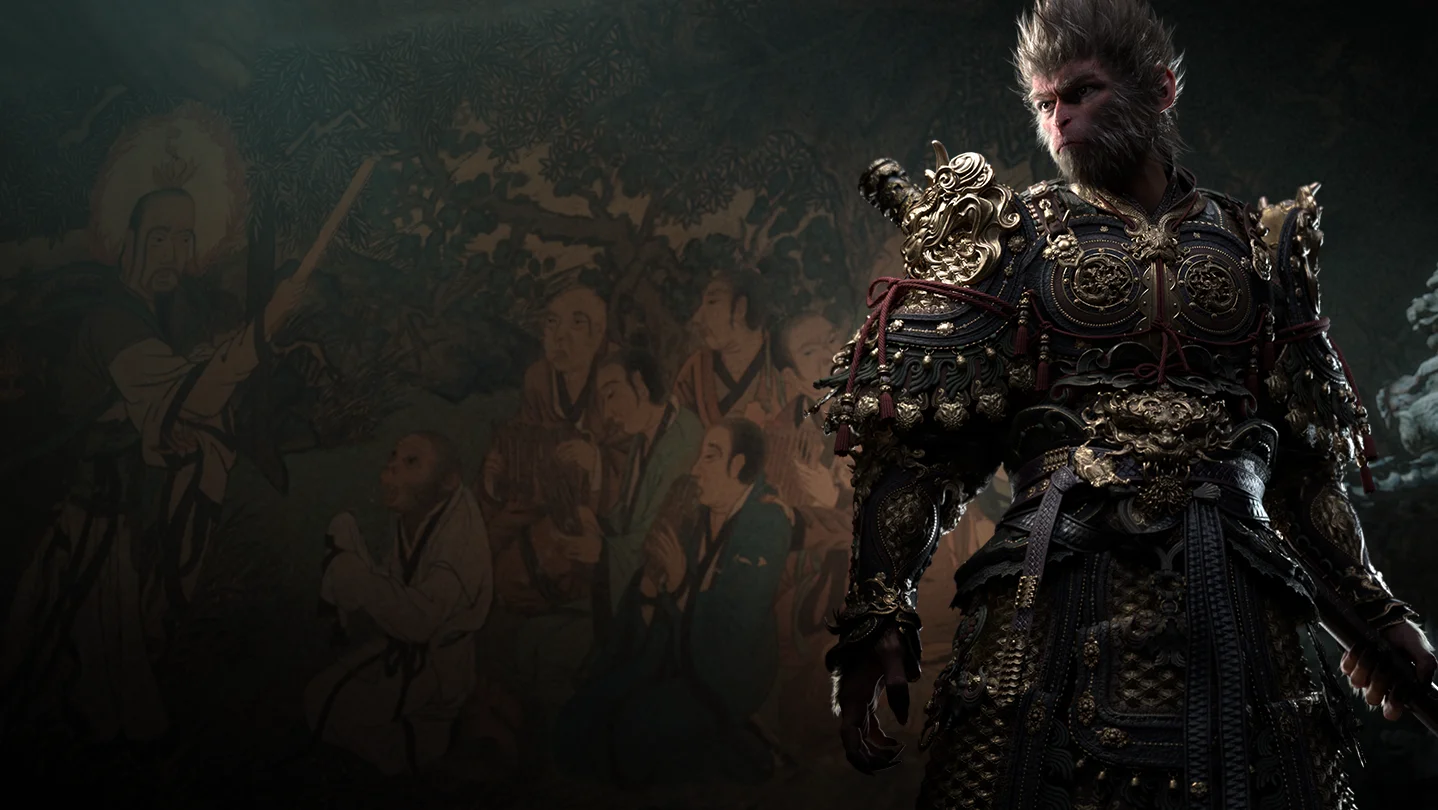
Black Myth: Wukong is built around one figure — Sun Wukong (孙悟空, Sūn Wùkōng), the stone-born trickster who becomes the Monkey King (美猴王, Měi Hóuwáng). This article walks through his origin story in Journey to the West: how he gains his powers, picks fights with heaven, loses to the Buddha, and ends up on the road west — so you can recognize the legend behind the game.
Stone-born on Flower-Fruit Mountain
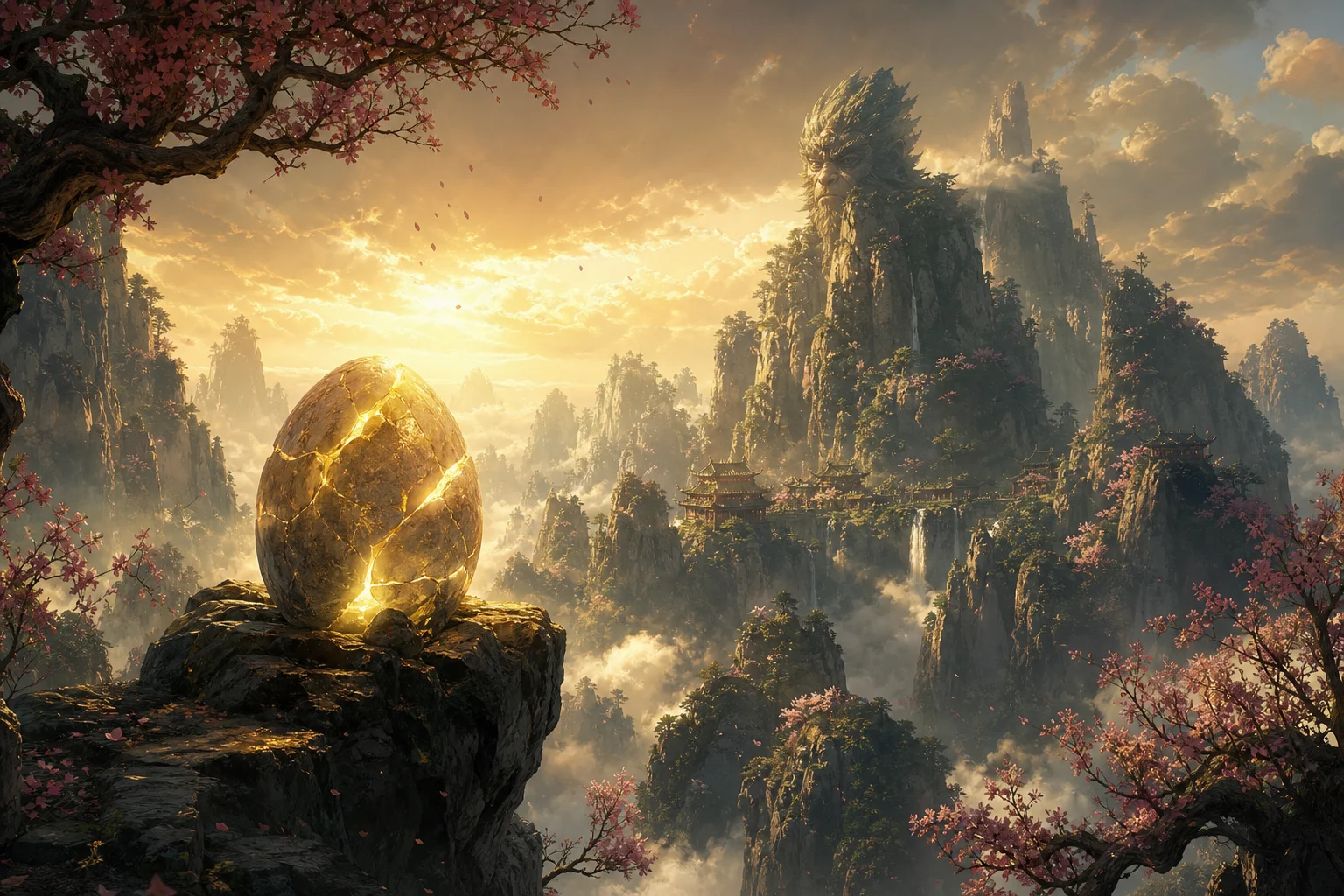
Wukong does not have parents in the human sense. On Flower-Fruit Mountain (花果山) in the Eastern Sea, a magical stone has absorbed heaven and earth for ages. It cracks open and releases a stone monkey — already able to walk, leap, and bow to the four directions.
He joins a troop of monkeys, discovers the Water-Curtain Cave (水帘洞) behind a waterfall, and leads them inside. The group crowns him Handsome Monkey King (美猴王) — not vanity, but a formal title meaning their champion and ruler. For a while, life is paradise: fruit, wine, and no one telling him what he cannot do.
Birthplace
Flower-Fruit Mountain (花果山) — a mythic peak tied to immortality lore
First title
Handsome Monkey King (美猴王) — leader of the monkey clan, not yet Sun Wukong
Core drive
Fear of death — he leaves home to seek eternal life
Seeking immortality
Paradise ends when the Monkey King hears an old monkey speak of death. Mortality terrifies him. He leaves Flower-Fruit Mountain on a long quest for a master who can teach him to escape the cycle of life and death.
He finds Subhuti (菩提祖师, Pútí Zǔshī) — a sage on Spirit-Turtle Island (灵台方寸山) — who accepts him as a disciple and gives him the surname Sun (孙). The given name Wukong (悟空) means “awakened to emptiness” — a Buddhist-flavored name that foreshadows his long path toward discipline.
What Subhuti teaches him
Body
Seventy-Two Transformations 七十二变
Shape-shifting into animals, objects, and people. Wukong uses this constantly — combat, espionage, comedy, and escape.
Movement
Somersault Cloud 筋斗云
One flip covers 108,000 li — essentially teleport-scale travel. It is how he crosses oceans and reaches heaven in a hurry.
Secret
Immortality arts 长生
Methods to resist aging and death. Wukong later stacks other immortality cheats on top — which becomes part of the problem.
Temperament
Restless brilliance 心性
Subhuti warns that showing off his powers will bring trouble. Wukong listens — briefly — then does the opposite.
Arming the legend
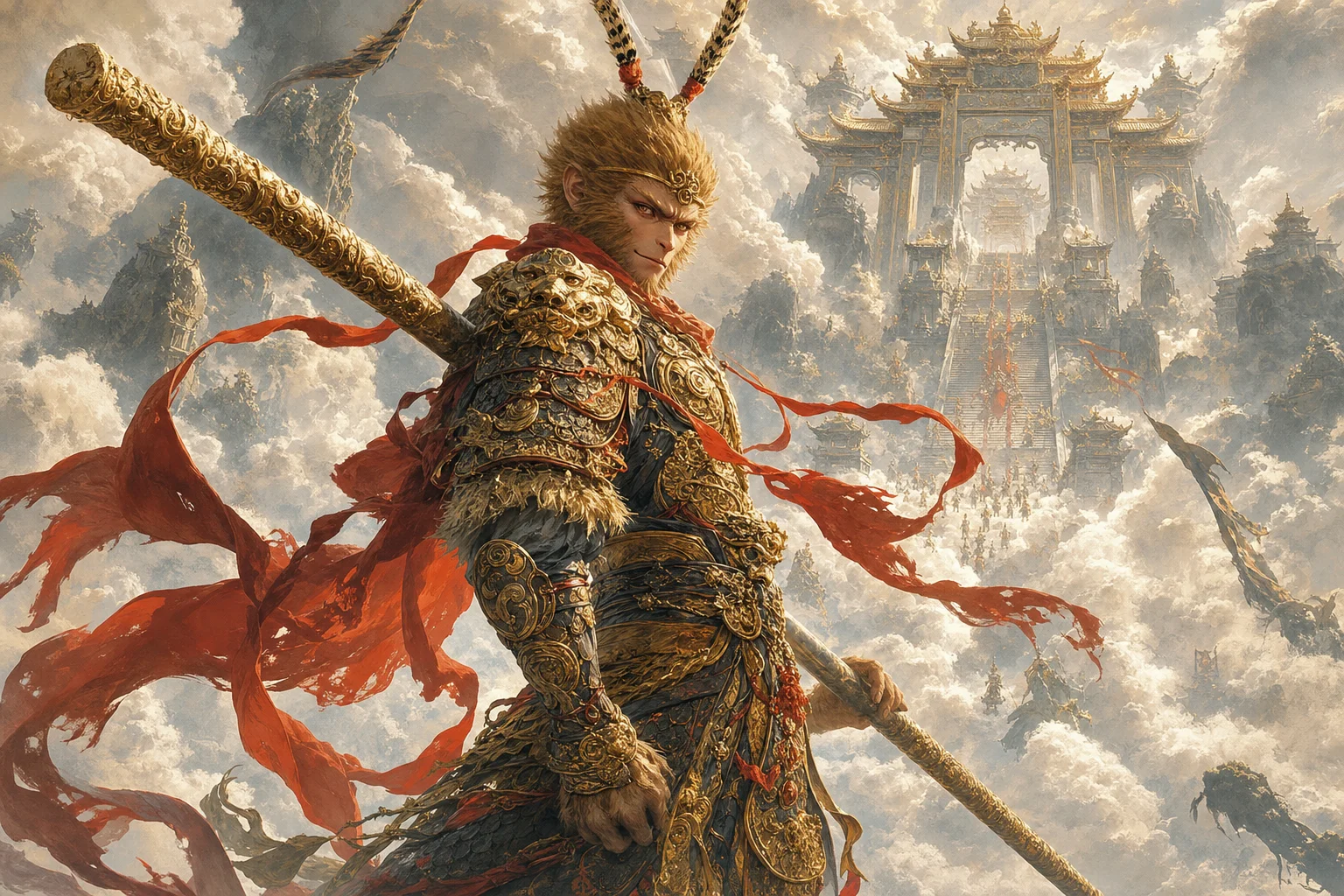
Immortality alone is not enough. Wukong visits the Dragon King of the Eastern Sea (东海龙王) and takes the Ruyi Jingu Bang (如意金箍棒) — a divine iron staff that grows or shrinks at will, originally used to measure the depth of the Milky Way. It becomes his signature weapon in every adaptation, Black Myth included.
He also acquires a golden chain-mail shirt, phoenix-wing cap, and cloud-walking boots — a full set of stolen divine gear. The novel treats this as both triumph and foreshadowing: every treasure he grabs adds another creditor in heaven.
Cheating death — twice
Wukong's audacity escalates. He falls asleep in the underworld and wakes up just long enough to cross out his name and every monkey's name from the Book of Life and Death (生死簿). The Kings of Hell complain to the Jade Emperor.
Later he is invited to heaven — not as an honored guest, but as a low-ranking stable keeper (Bimawen, 弼马温). He realizes the title is a insult, returns to his mountain, and declares himself Great Sage Equal to Heaven (齐天大圣, Qítiān Dàshèng).
Names worth knowing
- → Handsome Monkey King (美猴王) — early tribal title on Flower-Fruit Mountain.
- → Sun Wukong (孙悟空) — formal name from Subhuti; what most translations use.
- → Great Sage Equal to Heaven (齐天大圣) — self-declared rank after the Bimawen insult.
- → Bimawen (弼马温) — heaven's failed attempt to manage him; still a meme in Chinese fandom.
Havoc in Heaven
Heaven sends armies. Wukong defeats them. He crashes the Peach Banquet (蟠桃会), eats immortal peaches, drinks elixir, and steals Lord Lao's pills — stacking immortality on immortality. This arc — Havoc in Heaven (大闹天宫) — is the novel's most famous set piece before the pilgrimage even starts.
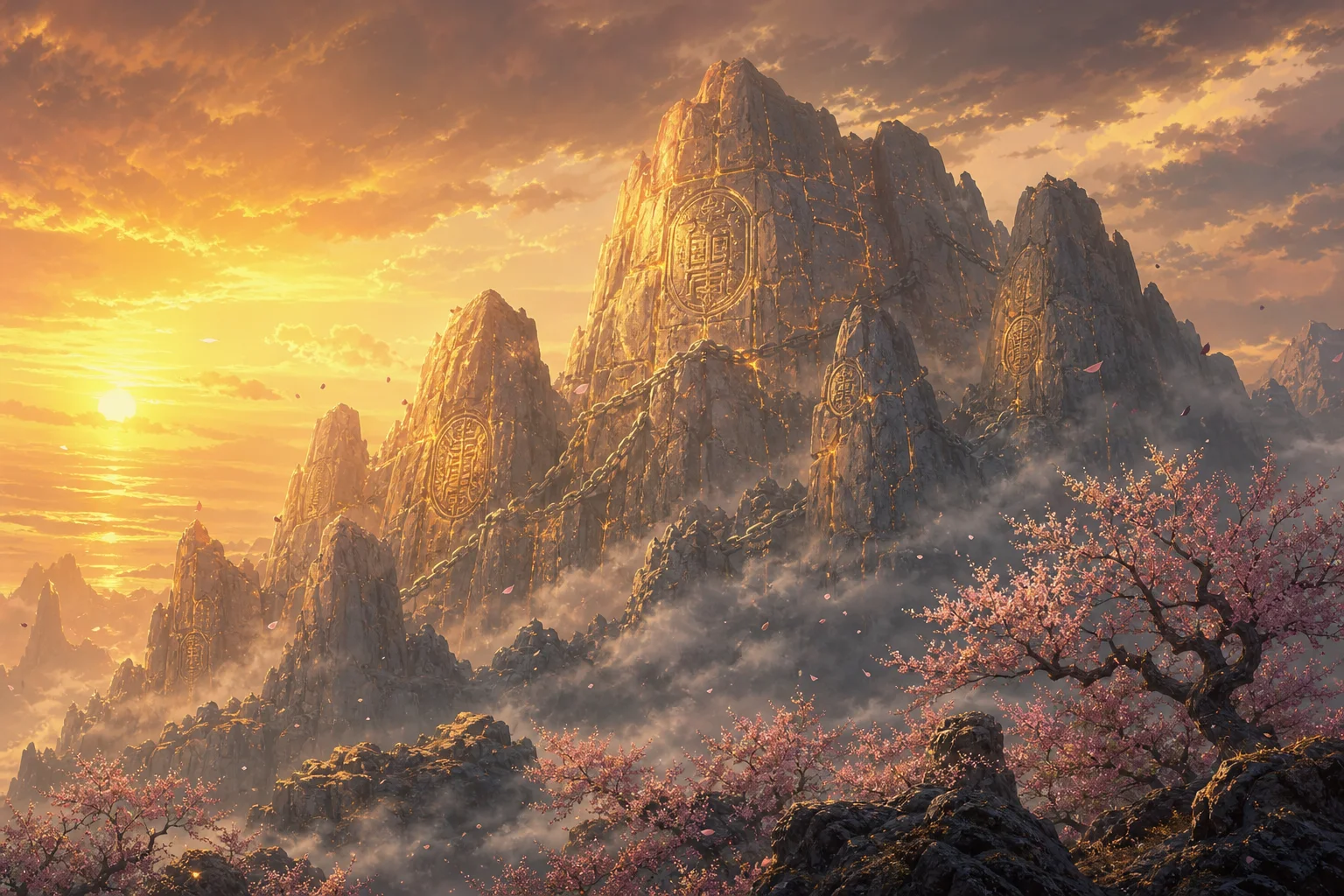
Only the Buddha (如来, Rúlái) can stop him. They wager on whether Wukong can leap out of the Buddha's palm. He cannot. The Buddha traps him under Five Elements Mountain (五行山) — often called Five Finger Mountain in English — for five centuries.
For a deeper look at the heavenly bureaucracy he fought, see Heaven, Hell, and the Buddhist Cosmos.
From prisoner to pilgrim
Guanyin (观音) offers Wukong a path out: protect the monk Tang Sanzang (唐三藏) on the scripture quest, and earn redemption. A golden headband (紧箍) ensures he cannot simply abandon the job — when the monk recites the Tightening Spell, Wukong's skull compresses until he submits.
This is where the long road west begins. The rebellious king becomes a disciple — still brilliant, still violent when provoked, but finally working inside a Buddhist frame. His past does not vanish; it becomes the reason every demon recognizes him on sight.
| Phase | Chinese | What it means for his character |
|---|---|---|
| Stone birth | 仙石 | Cosmic origin — he is never quite a normal creature |
| Monkey King | 美猴王 | Self-made leader; freedom without responsibility |
| Student of Subhuti | 菩提弟子 | Power without wisdom — talent that outruns restraint |
| Great Sage Equal to Heaven | 齐天大圣 | Peak arrogance; defiance as identity |
| Trapped under the mountain | 压五行山 | Cosmic consequence; humility forced by defeat |
| Disciple on the pilgrimage | 取经 | Redemption through service — the arc the novel spends 100 chapters exploring |
Why Black Myth centers this story
Game Science did not pick a random myth. Wukong's pre-pilgrimage legend — stone birth, stolen immortality, heavenly war, Buddha's palm — is already a complete hero epic. Black Myth appears to draw heavily from this phase: the staff, the defiance, the cosmic scale, and the sense that Wukong's fate is still being argued over by gods and buddhas.
The game is not a faithful retelling of every chapter. Treat parallels as echoes of the legend, not a checklist. When a boss title sounds like a celestial rank, or a region feels like Flower-Fruit Mountain or the heavenly court, you are usually seeing the myth pool refracted through a darker lens — as discussed in How Black Myth Reimagines the Novel.
While you play
- → Search unfamiliar names in our glossary.
- → “Great Sage Equal to Heaven” and “Havoc in Heaven” almost always point to pre-pilgrimage Wukong.
- → The headband and Tang Sanzang mark the later, redeemed Wukong — a different storytelling mode.
Further reading
These sources are widely used by English readers exploring the Monkey King beyond the game:
- Arthur Waley, Monkey — abridged but readable; covers the origin and Havoc in Heaven early.
- Anthony C. Yu, complete translation of Journey to the West — chapters 1–7 for the full origin arc.
- 1986 CCTV Journey to the West TV series — the performance many Chinese audiences picture when they hear “Sun Wukong.”