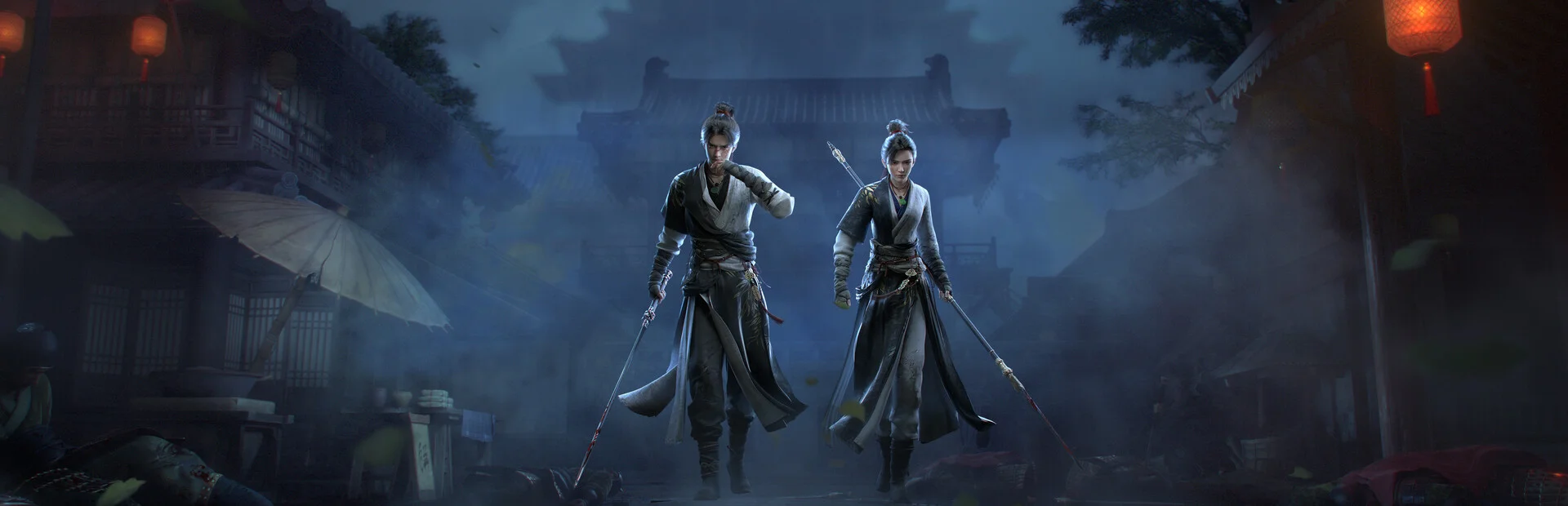
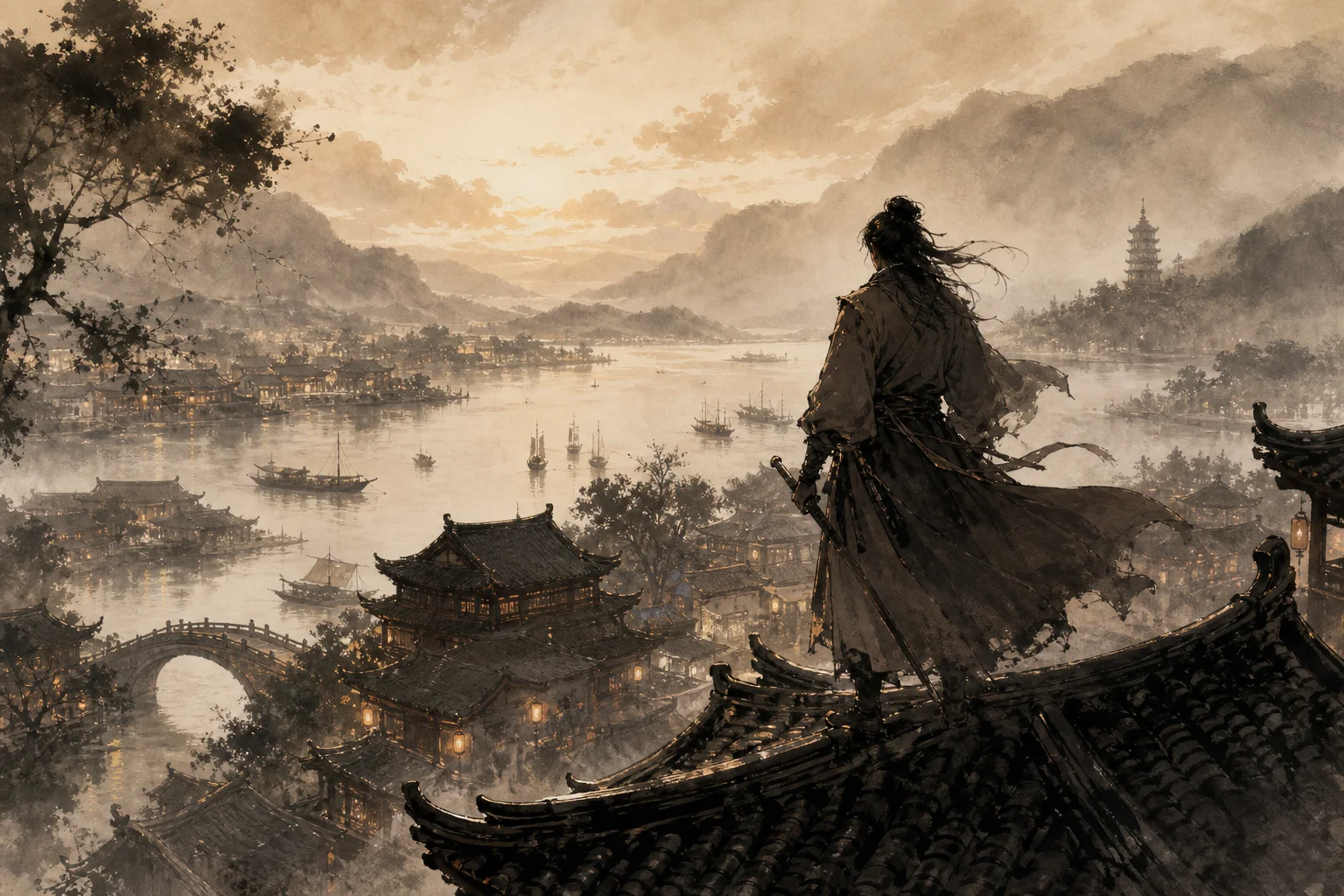
History tells you why tenth-century China is fractured. Wuxia (武侠) tells you how people live when magistrates are distant and swords answer grudges faster than courts do. Where Winds Meet is marketed as an open-world wuxia action RPG: you are a youxia (游侠, wandering adventurer), you join sects, you pick professions, and you solve problems with martial arts, mystic skills, and social choices. This primer covers the genre grammar behind that fantasy — and how it differs from Western open-world templates.
Four words you will keep seeing
武侠 · Wuxia
A genre — fiction about martial heroes (wu, 武) and chivalric action (xia, 侠)
江湖 · Jianghu
A social world — rivers-and-lakes shorthand for life outside direct state control: sects, outlaws, merchants, wanderers
武林 · Wulin
The martial community inside jianghu — who ranks whom, which manuals matter, which grudges are public knowledge
游侠 · Youxia
A wandering adventurer — the role Everstone assigns the player; not a court official, not a fixed historical figure
Think of jianghu as the stage and wulin as the fight club with etiquette. Youxia is your costume on that stage: free to roam, expected to have opinions about honor.
What wuxia is (and is not)
Wuxia is not “Chinese fantasy with swords.” It is a literary and cinematic tradition about people whose trained bodies and personal codes solve problems the bureaucracy cannot — or will not — touch. Modern readers know it through Jin Yong (金庸) and Gu Long (古龙), but the furniture is older: sect manuals, sworn brotherhoods, revenge cycles, tavern gossip that moves faster than imperial edicts.
- Honor codes — debt, face, loyalty, and when violence is regrettable but necessary
- Sect politics — orthodox vs unorthodox paths; public reputation as a resource
- Technique as poetry — skill names that sound like landscape painting turned lethal
- History as backdrop — real dynasties wobble; heroes are rarely emperors
Not Skyrim with hanfu: There is no default elf/dwarf taxonomy. Power is social and bodily before it is magical — though mystic arts exist as a layer on top.
Youxia: your character type
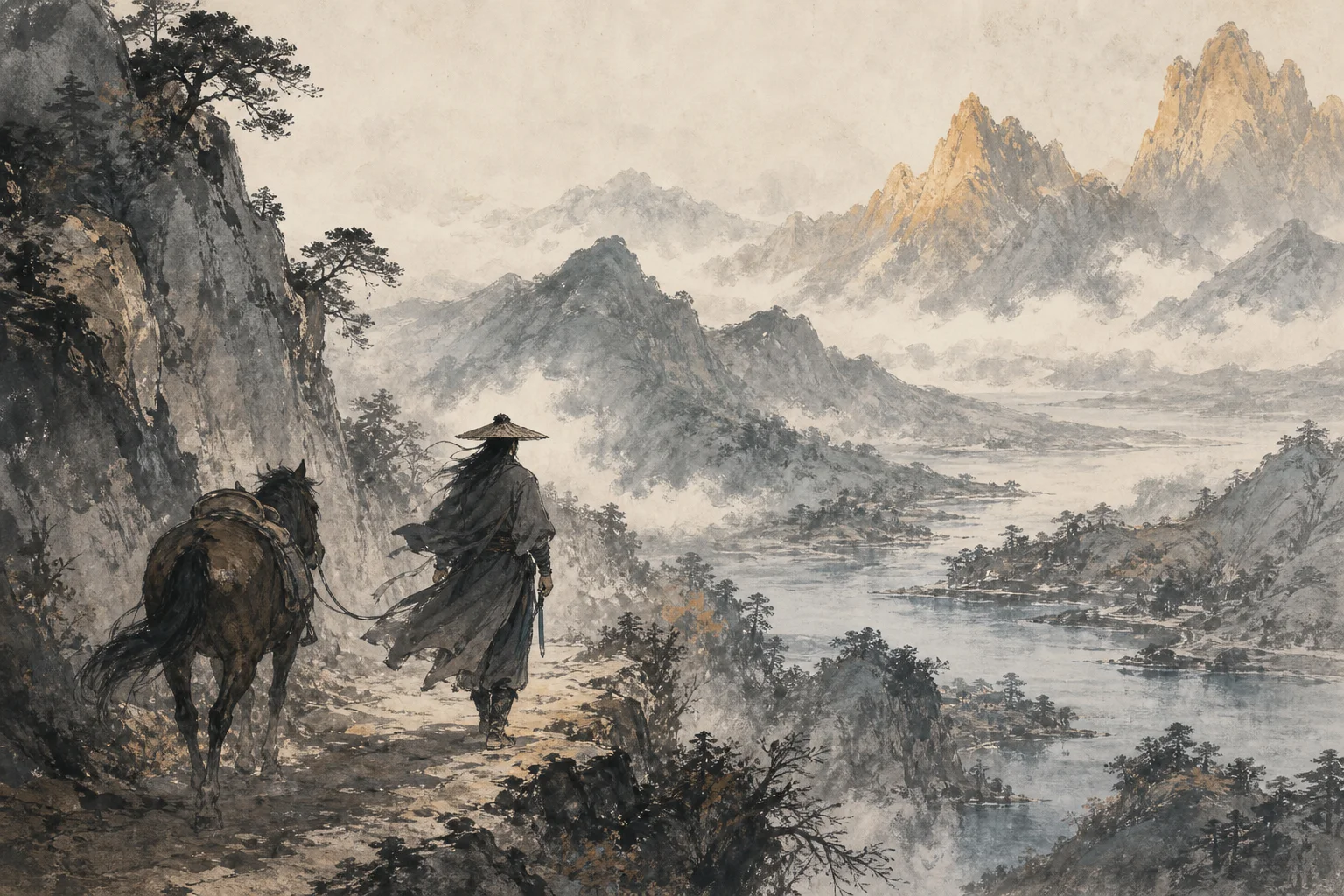
Everstone describes the player as a youxia — a wandering adventurer in the wuxia tradition. That word carries romance: freedom, skill, moral agency without a salary from the state. In-game you can lean hero, assassin, scholar, or healer; the label stays loose enough to fit an open-world RPG.
Producer commentary has linked PvP to “blood and rain” — the jianghu storm of 腥风血雨 (xīngfēng xuèyǔ, foul wind and bloody rain) — the danger the rivers-and-lakes world promises when reputations collide. Multiplayer is not just co-op mechanics; it is genre flavor: other wanderers are part of the ecosystem. Deep dive: Co-op, PvP & “Blood and Rain”.
Sects, professions, and social play
Sects (门派) in wuxia are schools of martial arts with rules, styles, and enemies. Where Winds Meet lets you join in-world sects with distinct codes — from righteous orders to trickster paths — unlocking cosmetics, titles, and martial identity. That mirrors fiction where your uniform tells everyone whom you might owe or attack.
Professions (医者 healer, 学者 scholar, and others) stretch the youxia label: jianghu is not only duelists. Merchants, doctors, and artists also travel the rivers — especially in a game pitching 150+ hours of solo story plus living multiplayer.
How this differs from Western open worlds
| Western fantasy habit | Wuxia / jianghu habit |
|---|---|
| Chosen one prophecy | Personal vendetta or local injustice; history moves whether you do or not |
| Guild quest board as neutral mechanic | Sect membership as social identity with rivals |
| Skill trees as abstract numbers | Named martial arts tied to weapon culture (fan, umbrella, mo blade) |
| Good vs evil faction paint | Face, debt, and shifting alliances — “righteous” can still be cruel |
Weak links to other Dragon Forge hubs
- The Scroll of Taiwu — Wuxia & Jianghu primer — deeper genre intro (sandbox focus, not Five Dynasties history)
- The Bustling World — Beacon Fire & Cooking Smoke — civilian vs martial life paths in another open sandbox
Those games share vocabulary; they do not share canon. Use them when you want extra genre context, not when you need Where Winds Meet plot answers.
Next steps
- Five Dynasties primer — historical frame for the map
- History vs fiction living doc — boundaries and spoilers policy
- Glossary — searchable terms
Dragon Forge Culture is editorial — not affiliated with NetEase or Everstone Studio.