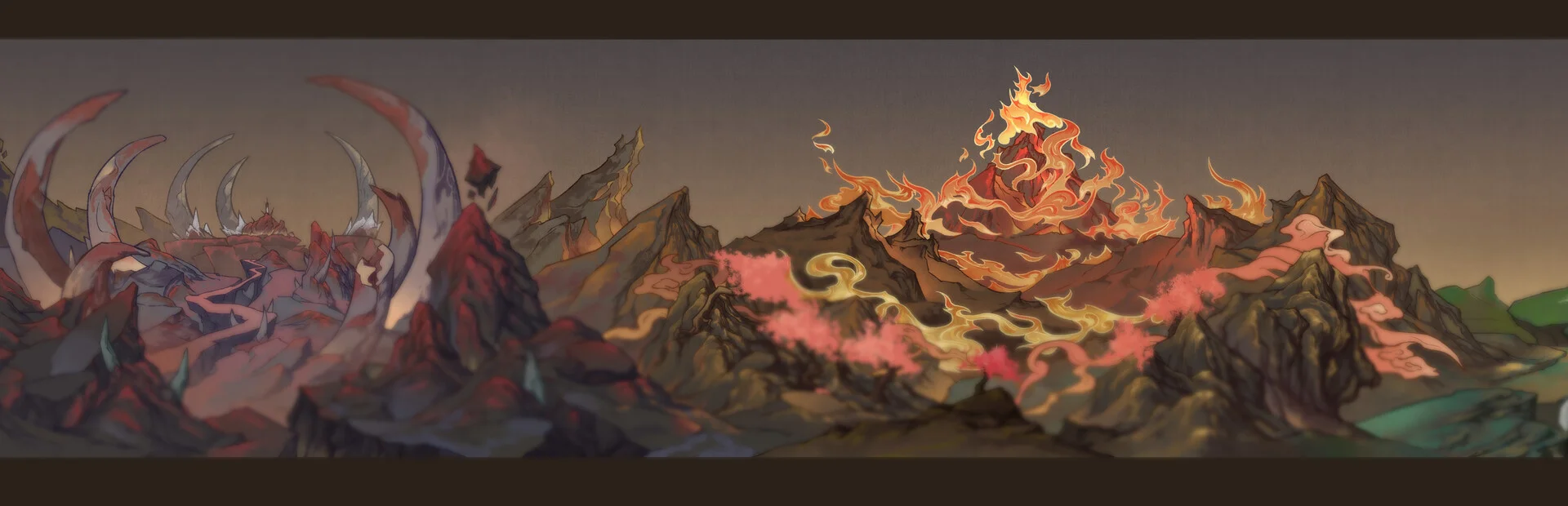
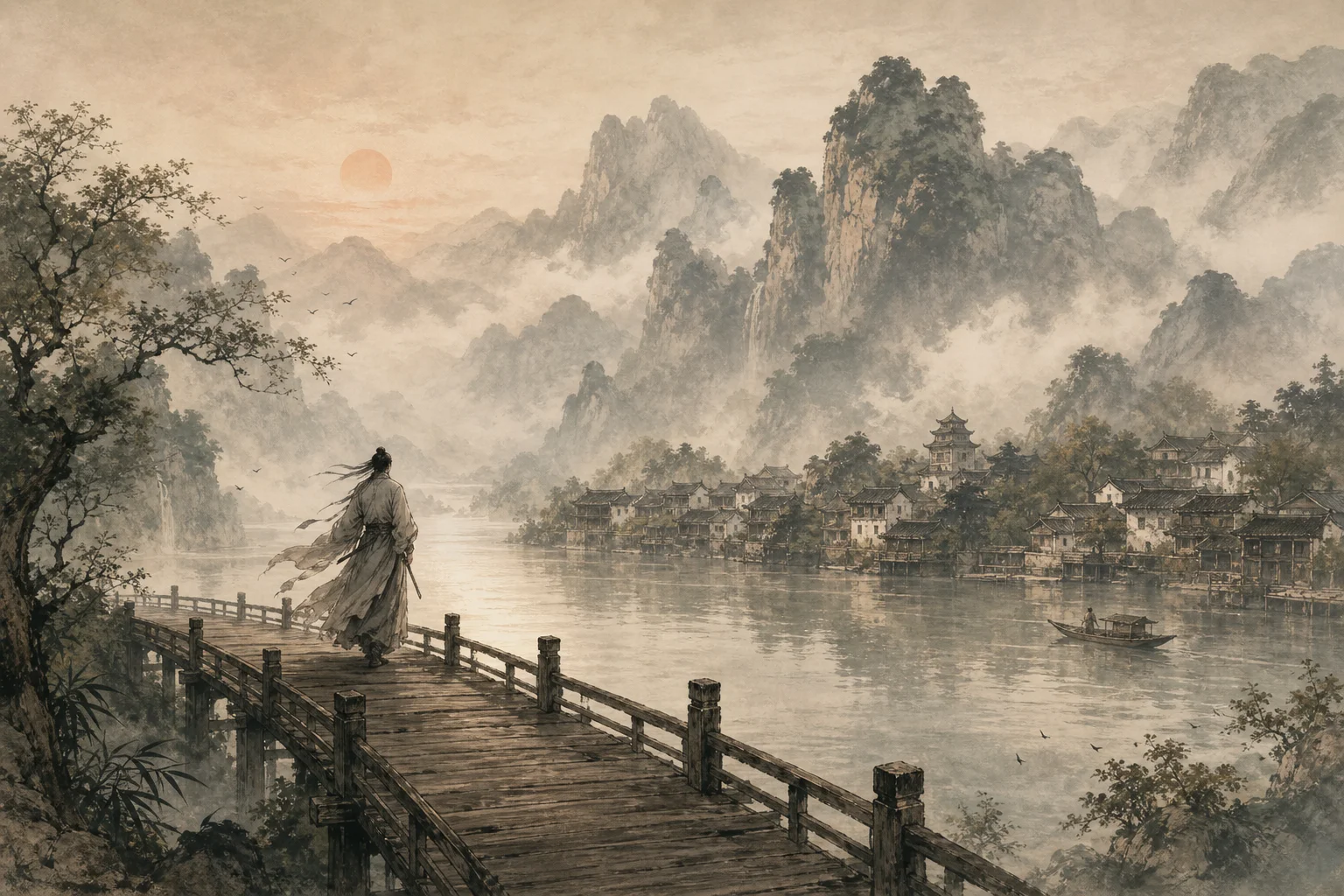
The Scroll of Taiwu (太吾绘卷, Tàiwú Huìjuàn) drops you into a living jianghu — the "rivers and lakes" world of Chinese martial-arts fiction — where sects feud, villages grow, grudges pass between generations, and a single strike can land on a specific body part. If you grew up on Western fantasy, the game can feel familiar (swords, monsters, open maps) and alien at once (no elves-and-dwarves template, no single chosen-one prophecy manual). This ten-minute primer gives you the genre grammar behind the scenery: what wuxia (武侠) actually is, what jianghu (江湖) actually means, and why ConchShip built an entire sandbox around both.
Two words, one world
Chinese players usually treat these as a pair, but they are not synonyms:
武侠 · Wuxia
A genre — stories about martial heroes (wu, 武) and chivalric action (xia, 侠)
江湖 · Jianghu
A social world — the wandering frontier of outlaws, sects, merchants, and knights-errant outside official court life
In practice
Most wuxia stories are set in the jianghu; the jianghu is bigger than any one novel
Think of wuxia as the literary tradition — like saying "Western" or "noir." Think of jianghu as the stage — like saying "the frontier" or "the underworld," except the image is mist over rivers, inns on trade roads, and swordsmen who answer to reputation rather than magistrates. The Scroll of Taiwu is advertised as rooted in Chinese mythology and wuxia; in practice that means you are playing inside a jianghu sandbox with mythic layers on top.
What is wuxia?
Wuxia (武侠) combines 武 (wǔ, martial/military) and 侠 (xiá, chivalry or knight-errantry). At its core, wuxia is fiction about people who solve problems with trained bodies, personal honor codes, and social bonds that the state cannot easily control.
The modern form most readers know comes from 20th-century novelists — especially Jin Yong (金庸) and Gu Long (古龙) — but the roots run much deeper: Ming-Qing adventure novels, storytellers' scripts, opera plots, and folk tales about wandering swordsmen and outlaw justice. You do not need to read any of them to play Taiwu, but you will recognize the furniture immediately:
- Martial sects (门派) with their own manuals, taboos, and internal politics
- Technique names that sound like poetry turned into violence
- Personal grudges that outlive a single lifetime — exactly why Taiwu's generational design matters
- Codes of face, debt, and revenge that make NPC relationships feel less like quest markers and more like social traps
Not a mechanics guide: This series explains cultural context. We are not here to rank builds or map optimal sect routes.
What is jianghu?
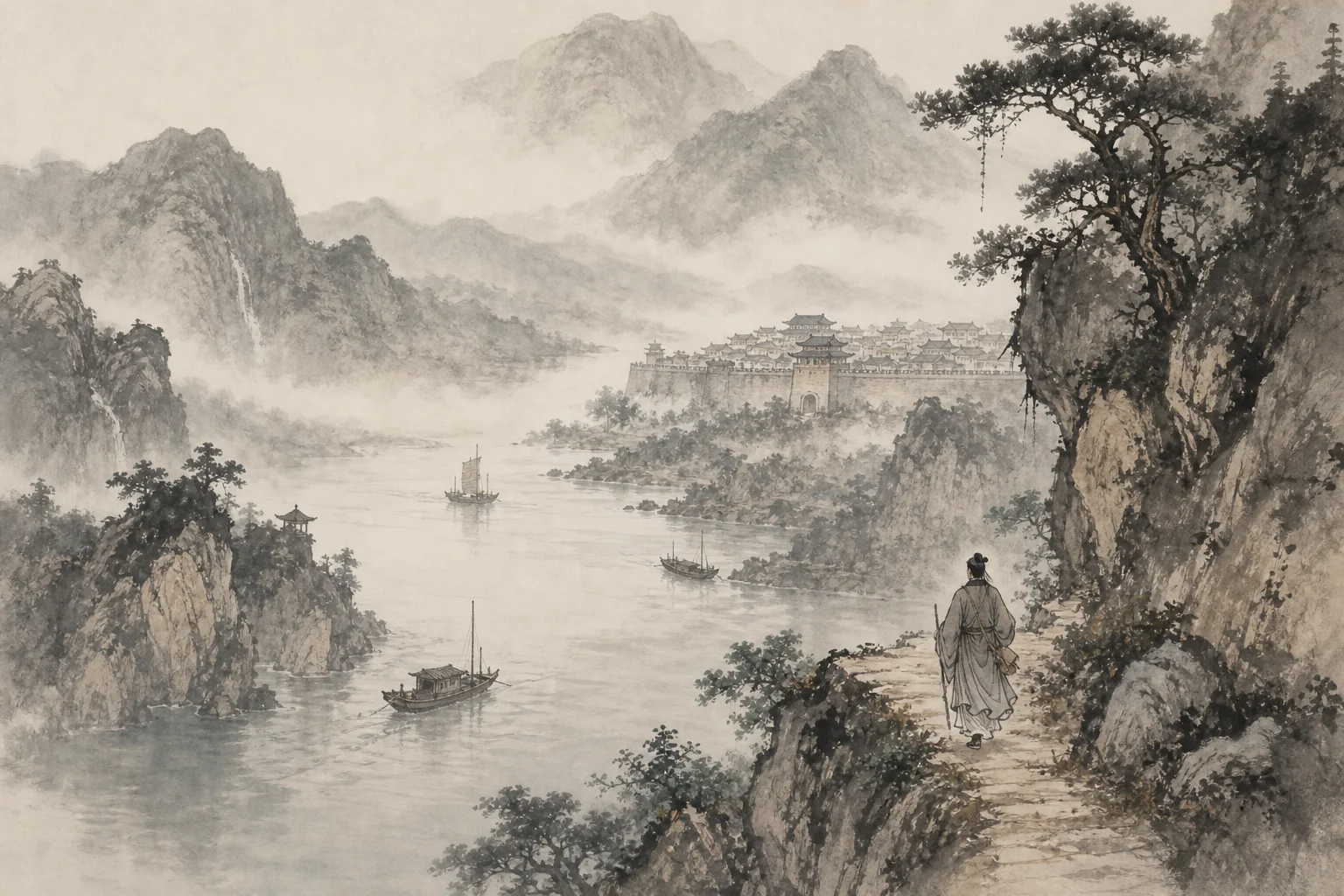
Literally, jianghu (江湖) means "rivers and lakes." Poets used it for the wide world beyond the capital. By the late imperial period, fiction writers reused it as shorthand for everyone who lived between villages and thrones: bandits, monks with secrets, doctors who also poison, escort guards, ruined nobles, sect disciples, and merchants who know which sheriff can be bought.
Official China in these stories still exists — emperors, exams, tax collectors — but the jianghu is where protagonists actually breathe. That is why Steam copy for Taiwu can promise fifteen martial sects, village building, alliances or blood feuds, and thousands of techniques in one sentence: those are all jianghu activities, not court careers.
Who lives in the jianghu?
Sect life
Disciples & masters 师徒
Schools pass down manuals, punish betrayal, and compete for prestige. Taiwu's sect visits are the game's most visible wuxia inheritance.
Wandering
Knights-errant 侠客
Freelance fighters who intervene when law fails — sometimes heroic, sometimes self-serving. Reputation is currency.
Civilian edge
Villages & workshops 村落
Farmers, smiths, and shopkeepers are not "side content." In Taiwu they anchor the sandbox — marriage, craft, and seasonal life still sit inside jianghu geography.
Underworld
Outlaws & vendettas 恩怨
Blood feuds, sworn brotherhoods, and debts of gratitude (en, 恩) drive plots more often than abstract evil empires.
Wuxia is not Western fantasy with hanfu
Western fantasy often builds from medieval Europe plus Tolkien's races and a clear epic quest. Wuxia builds from a different toolkit:
| Western fantasy habit | Wuxia / jianghu habit |
|---|---|
| Chosen one saves the world | Personal honor, family debt, or sect survival may matter more than "dark lord" scale |
| Races and species define culture | Occupation, sect, region, and reputation define culture |
| Magic system with mana bars | Neigong (内功), meridians, manuals, poisons, talismans — often framed as training or esoteric art |
| Tavern quest hub | Inn, teahouse, escort agency, or mountain gate — social nodes with their own rules |
| Good kingdom vs evil empire | Overlapping loyalties; today's ally may be tomorrow's murder suspect |
| Single hero's journey | Generational sagas, sworn siblings, and clans that remember slights — Taiwu leans hard here |
None of this means Taiwu avoids epic stakes — official materials mention a hereditary enemy and world-shaping conflict. It means the emotional logic is often social first: who taught you, who you owe, who you humiliated, which village you built, which sect manual you stole.
The genre grammar Taiwu keeps reusing
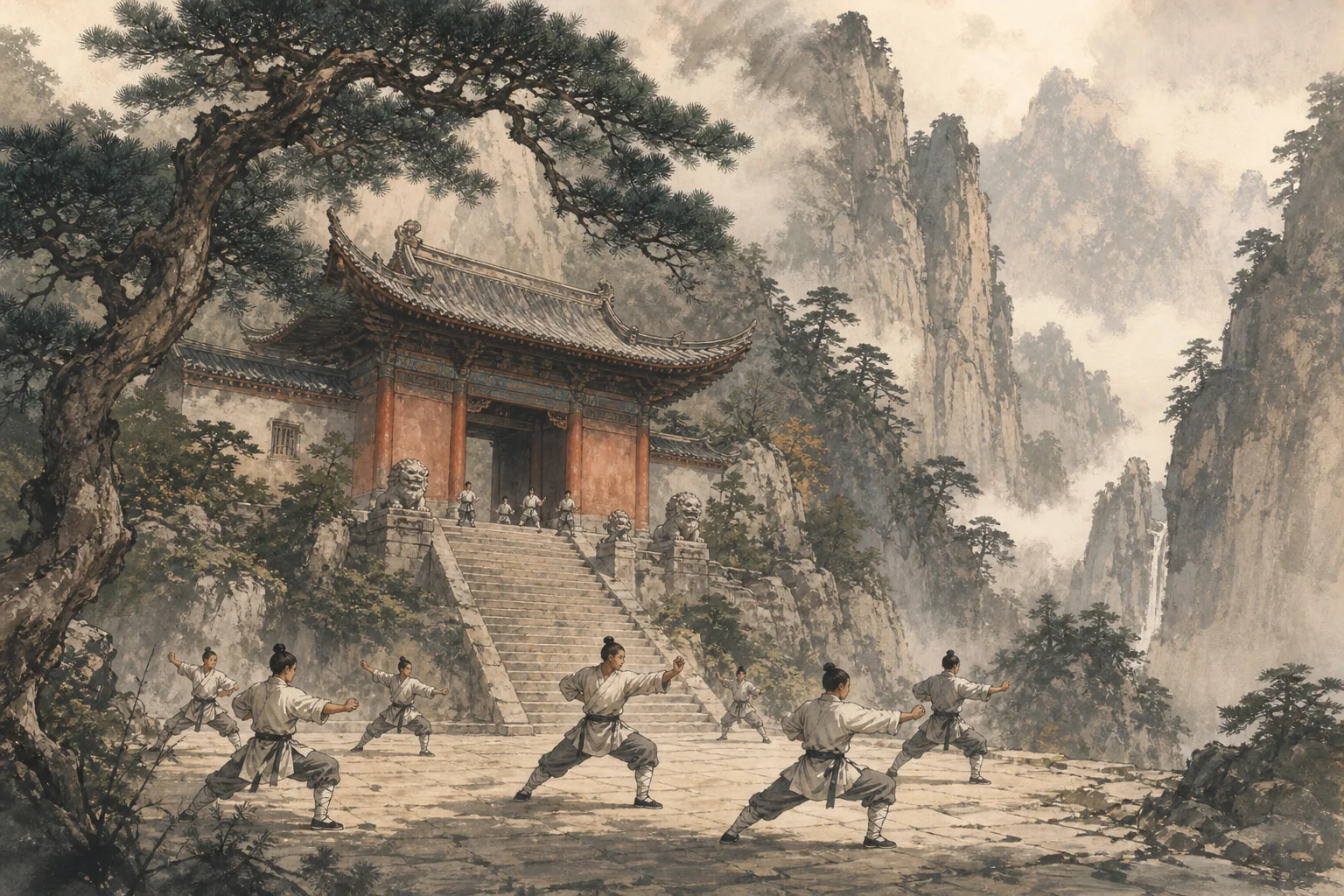
Martial sects (门派)
A sect is more than a skill tree. It is a household with history: founders, forbidden styles, rival schools, and disciples who bring shame or glory. Taiwu's fifteen sects are game-original, but they speak the same language as Shaolin- or Wudang-style fiction — orthodox public face, secret manuals, internal feuds. Our later article Fifteen Sects & the Martial-Arts School Tradition will unpack that institution; for now, read every sect as a small society, not a class picker.
Techniques & manuals (武功 · 秘籍)
Wuxia loves named moves — often four-character phrases that sound like landscape poetry. Collecting, trading, and stealing manuals is a plot engine older than video games. Taiwu advertises thousands of techniques; culturally, that promise signals depth of jianghu life, not just bigger damage numbers.
Grudges, debts, and face (恩怨 · 面子)
En (恩) is a debt of kindness; yuan (怨) is a grievance. Mianzi (面子), "face," is public dignity — losing it can demand a duel even when money would be cheaper. When Taiwu lets you forge alliances or blood feuds, it is simulating this gossip-and-revenge economy. NPCs who remember slights are not a gimmick; they are genre realism.
Body-aware combat
Turn-based strikes to specific body parts echo a long wuxia obsession with meridians, crippling blows, and pressure points — the idea that a trained body is a map you can read or ruin. Taiwu makes that literal in combat design. Our series Craft, Village Life & Martial Culture will go deeper on the body culture; here, notice that it is wuxia logic, not Soulslike randomness.
Where mythology fits — briefly
Taiwu is not only wuxia. Official description also cites Chinese mythology — strange creatures, esoteric cultivation, and v1.0's darker paths such as demonic cultivation (邪道) that turns enemy essence into forbidden techniques. In Chinese storytelling, the jianghu often borders myth: fox spirits in inns, drowned dragons in rivers, monks who are not quite human. Think of wuxia as the social layer and myth as the weather system that sometimes breaks the rules. The next primer in this series covers that layer directly.
Why this matters for The Scroll of Taiwu specifically
ConchShip's pitch is unusual even inside China: a sandbox RPG with Roguelike generational conflict, not a linear Jin Yong adaptation. You are not playing as a named hero from a famous novel. You are inheriting the Taiwu bloodline, raising families, visiting sects, building villages, and carrying consequences into the next generation while a clan-level vendetta waits at the horizon.
That design only clicks if you accept jianghu rules:
- Your story can be small (craft, marriage, cricket fights) and still be "main content."
- Your story can explode into sect politics without a quest giver with a golden marker.
- Failure is not always the end — generational play is a wuxia trope turned into system design.
- v1.0 Beyond the Dome (天幕心帷) adds official English and a rebuilt narrative layer, but the cultural frame remains the same jianghu sandbox.
How to read along as you play
- → When a sect acts petty or glorious, ask what reputation it is protecting — not just what loot it guards.
- → When NPCs demand repayment, treat it as en / yuan logic, not random attitude.
- → Bookmark our upcoming glossary for names and translations.
- → Continue with the next primer on the Taiwu bloodline and why generations are a cultural feature, not just a Roguelike gimmick.
Key terms to remember
Six words will cover most early confusion. Pin this table before your first sect visit.
| English | Chinese | Quick meaning |
|---|---|---|
| Wuxia | 武侠 | Martial chivalry fiction — the genre tradition |
| Jianghu | 江湖 | The wandering martial world outside court bureaucracy |
| Martial sect | 门派 | A school with manuals, hierarchy, and public reputation |
| Knight-errant | 侠客 | A freelance fighter living by personal honor codes |
| Grudge / debt | 恩怨 | The paired logic of grievance and owed kindness |
| Internal skill | 内功 | Breath-and-meridian training beneath visible techniques |
What Western players often misunderstand
- "Wuxia = kung fu skin on fantasy RPG." The social rules — face, debt, sect politics — are as important as the kicks.
- "I must pick the righteous sect." Genre fiction loves morally gray schools; v1.0 even spotlights demonic cultivation as a path.
- "Sandbox means no story." Taiwu has a hereditary enemy arc; jianghu sandboxes often still carry clan-scale vendettas.
- "Every Chinese game is Journey to the West." Taiwu draws on wuxia and myth broadly — not a single novel checklist.
- "Village sim is filler." Marriage, craft, and seasons are how most people actually live inside jianghu geography.
Where to go next
You now have the vocabulary for rivers-and-lakes society and martial chivalry fiction. The next article in this series explains why the game is called a scroll, who the Taiwu clan is, and why playing multiple generations is not just Roguelike difficulty — it is a storytelling tradition wearing system design clothes.