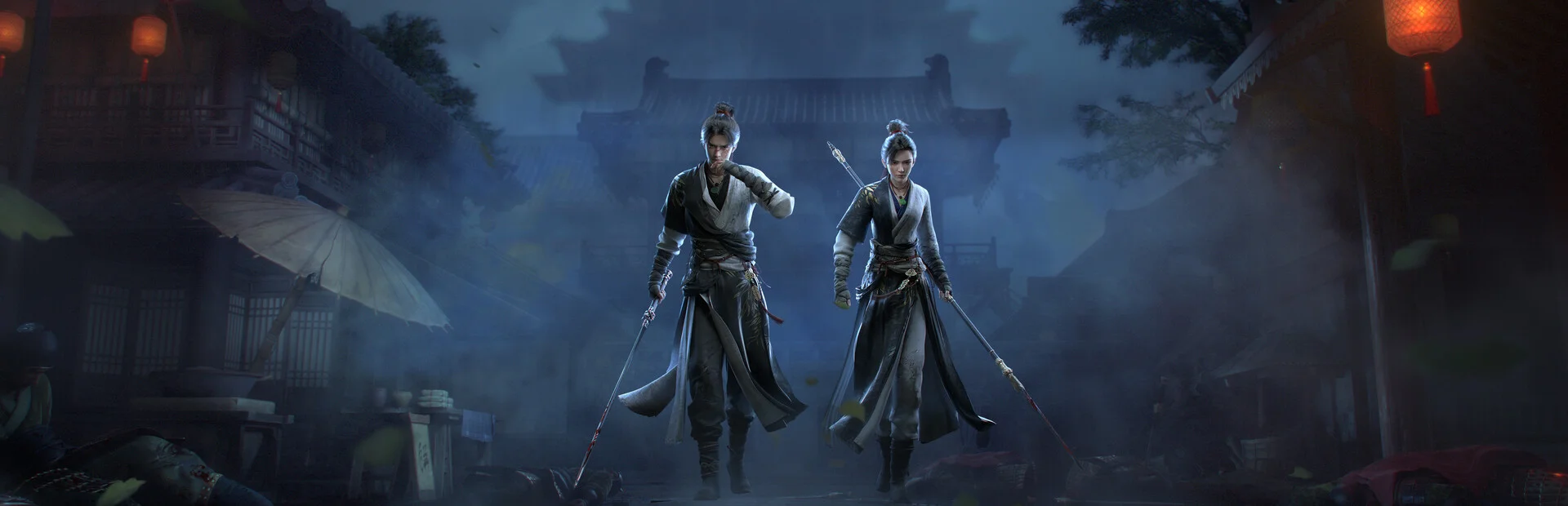
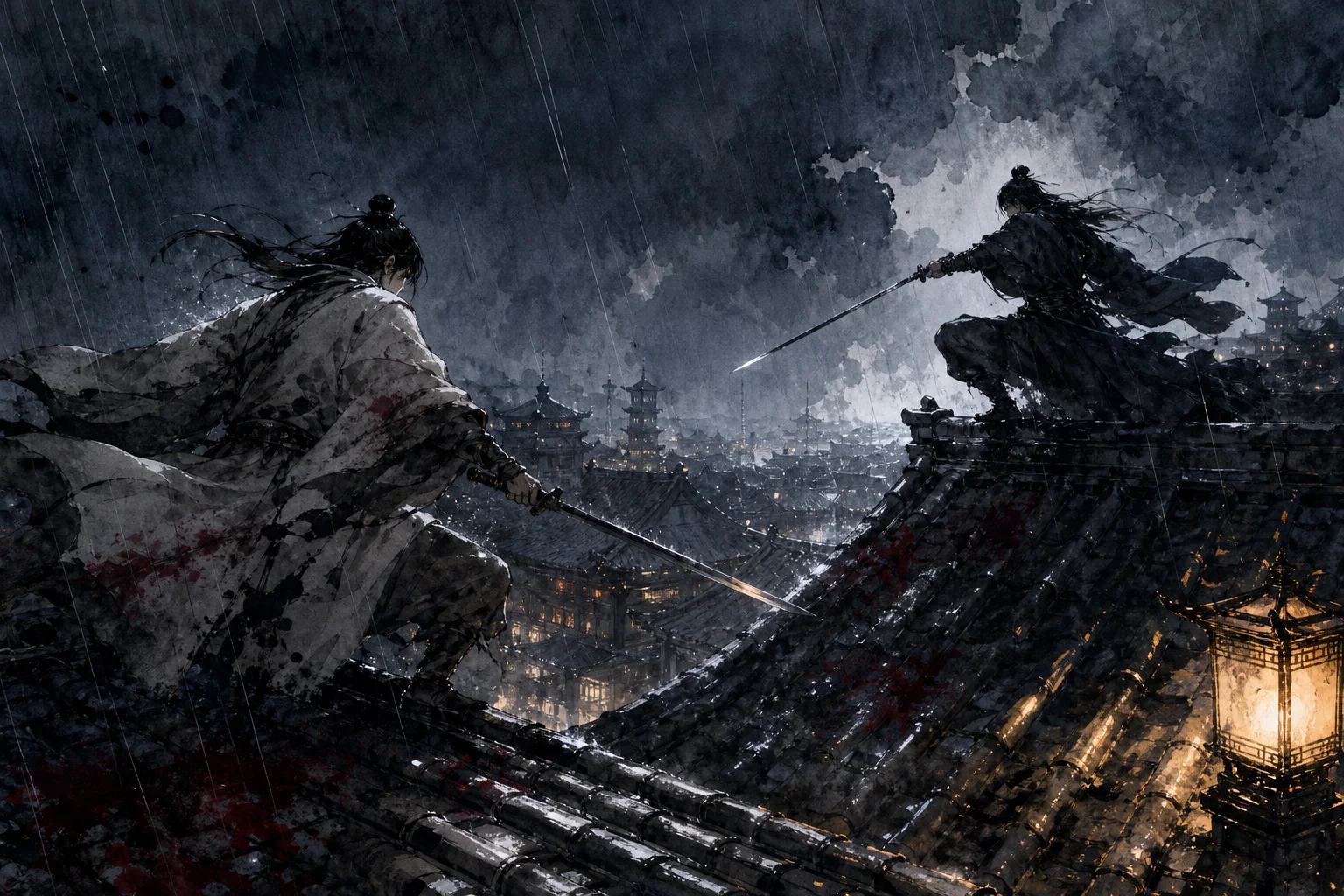
Where Winds Meet can be a long solo story — and it can also fill the map with other wanderers. That dual identity is not a marketing afterthought. In wuxia culture, the jianghu (江湖) is already a social weather system: allies swear brotherhood, rivals settle grudges, taverns gossip, and reputation travels faster than horses. Lead producer Beralt Lyu has said player-versus-player play recreates the jianghu experience of “blood and rain” — shorthand for the fierce idiom 腥风血雨 (“foul wind and bloody rain”), used for violent, chaotic times. This article reads multiplayer as genre weather, not as a mode checklist.
Light spoilers / social systems: We name publicly known multiplayer shapes (co-op, arena, battle-royale style zones, guilds, bonds). No campaign plot beats.
Why “jianghu” was always multiplayer
Classical jianghu stories rarely isolate one hero forever. Even loners define themselves against other named martial artists: masters, juniors, guests, enemies. The proverb 有人的地方就有江湖 — “wherever there are people, there is the jianghu” — is popular enough that marketers (and launch streams) keep recycling it. Everstone's design simply takes the proverb literally: other players are part of the rivers-and-lakes cast.
Solo story
Your personal youxia arc — pacing, exploration, narrative peaks without crowd noise
Shared jianghu
Co-op clears, world events, social bonds, markets of help between healers and scholars
Blood and rain
PvP as contested reputation — not grief for its own sake, but the genre's promised danger
Need the vocabulary refresher? See our jianghu & youxia primer.
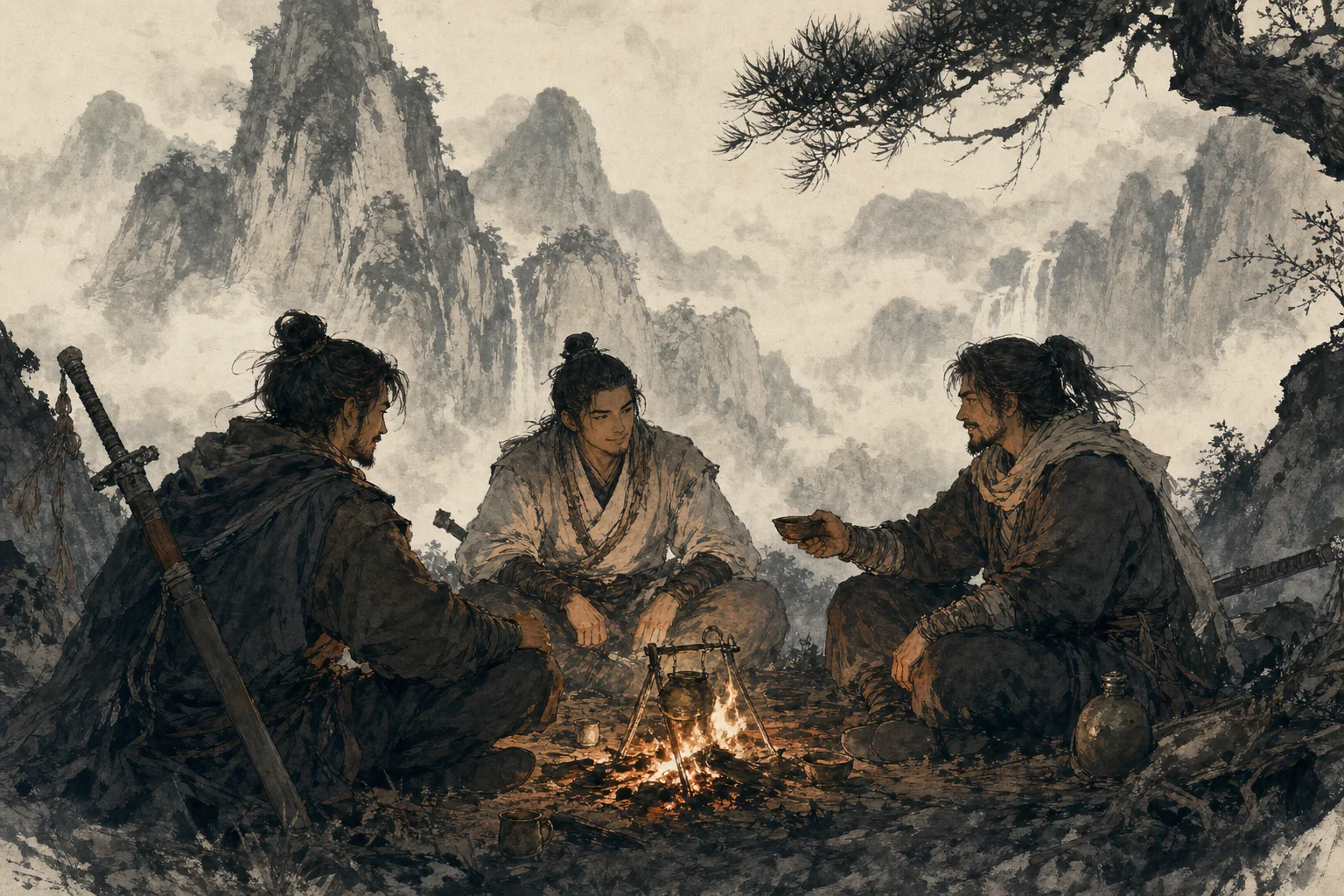
腥风血雨 — the idiom behind “blood and rain”
English materials often quote Lyu's phrase as blood and rain, pointing to the fuller image foul wind and blood rain. In Chinese, that cluster of meaning lives in 腥风血雨: iron-smelling wind, rain like blood — figurative speech for an age of slaughter and terror. Jianghu fiction loves that weather: streets wet with feud, inns suddenly emptying when a famous rival walks in.
Mapping that onto PvP is a cultural claim, not a tutorial tip: when you duel in arenas, hunt karma for Midnight Blades, or enter open-combat style zones, you are supposed to feel the instability novels advertise, not only a ranked ladder.
Midnight Blades callback: Our sects primer notes their Asura Path and PvP-facing karma. Sect code + systemic PvP = intentional genre packaging.
Two poles of social play
| Pole | Wuxia echo | In-game shapes (public) |
|---|---|---|
| Fellowship | 结义 brotherhood; aiding juniors; shared campaigns | Co-op story/challenge help, outposts, bosses, guilds / fellowships |
| Contest | Duel culture; grudges; battlefields of fame | Arenas, PvP zones / battle-royale style modes, bounty-flavoured hunting |
| Soft bonds | Discipleship, sworn pairs, friendship etiquette | Hero Bond, discipleship, friendship, sworn modes in social menus |
| Service economy | Doctors and advocates for hire | Healer / Scholar bounties between players — see professions |
Early 2026 telemetry cited in public write-ups claimed majority of active players touched multiplayer regularly, with a sizable minority deep in PvP — evidence that the audience, not just the slogan, treats the game as a social jianghu.
Solo mode and online mode — one world, two weathers
Many players meet the game first as a story-led experience, then switch into denser multiplayer spaces where other names crowd the map. Culturally, that split is gentle: novels also give you quiet chapters of travel and then sudden banquet massacres. Use Solo when you want narrative authorship; step into shared modes when you want the proverb — people make the jianghu real.
Cross-play across platforms extends the same idea globally: winds meeting across regions, not only dynasty borders.
Guilds, sects, and face
Keep the distinction from our sects article:
- Sect — martial school and moral brand inside fiction systems
- Guild / fellowship — player society for organisation, wars, and logistics
In novels, gangs and escort firms already blur that line. Online, your guild tag is your travelling name: it earns face or loses it in wars and raids. That is why “blood and rain” is not only 1v1 drama — collective honour fights are also jianghu weather.
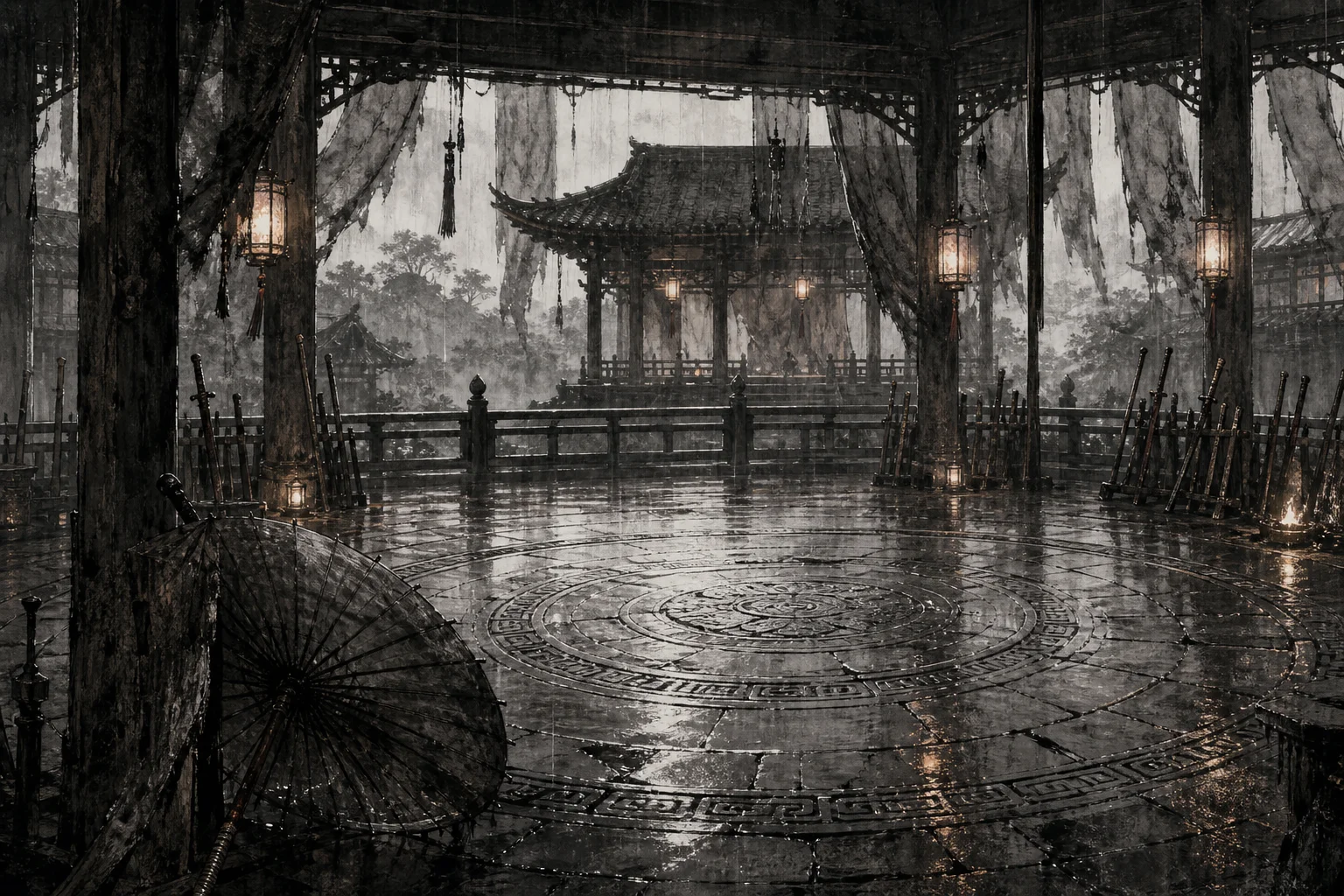
Etiquette for a living jianghu
Culture can suggest norms without writing TOS lectures:
- Read the mode. Co-op help and Asura-path hunting are different social contracts
- Reputation is diegetic. Healing bounties and Scholar defenses rebuild face after blood
- Conflict is genre, grief is not. The idiom celebrates fierce contest, not empty sabotage of someone's story night
- Sworn language matters. Bonds and discipleship systems echo 师徒 / 结拜 — treat names with the seriousness fiction gives them
History, genre, game fiction — quick filter
| Layer | What belongs |
|---|---|
| Documented history | Factional violence after Tang; mercenaries and shifting loyalties — not ranked arenas |
| Wuxia genre | 腥风血雨 imagery; duels, gang wars, sworn brotherhood, inn ambushes |
| Game fiction | Mode switches, matchmaking, fellowship tokens, season schedules, sect PvP rules |
Read next
- Yuen Woo-ping, Stephen Tung & Wuxia on Screen — how fight language earns its cinema feel
- Martial Sects — moral brands that encode PvP or aid
- Living doc — keep mode fiction separate from history claims
Dragon Forge Culture is editorial — not affiliated with NetEase or Everstone Studio. Producer phrasing summarized from widely cited interviews / encyclopedia syntheses of Lyu's remarks on PvP and jianghu atmosphere.