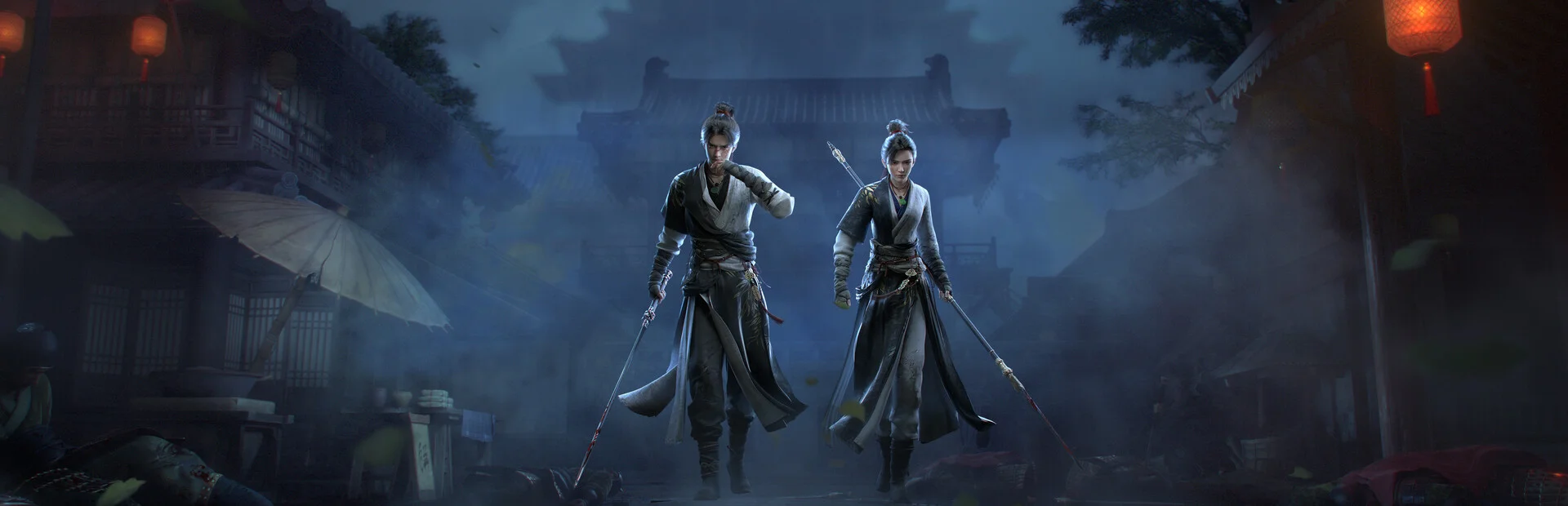
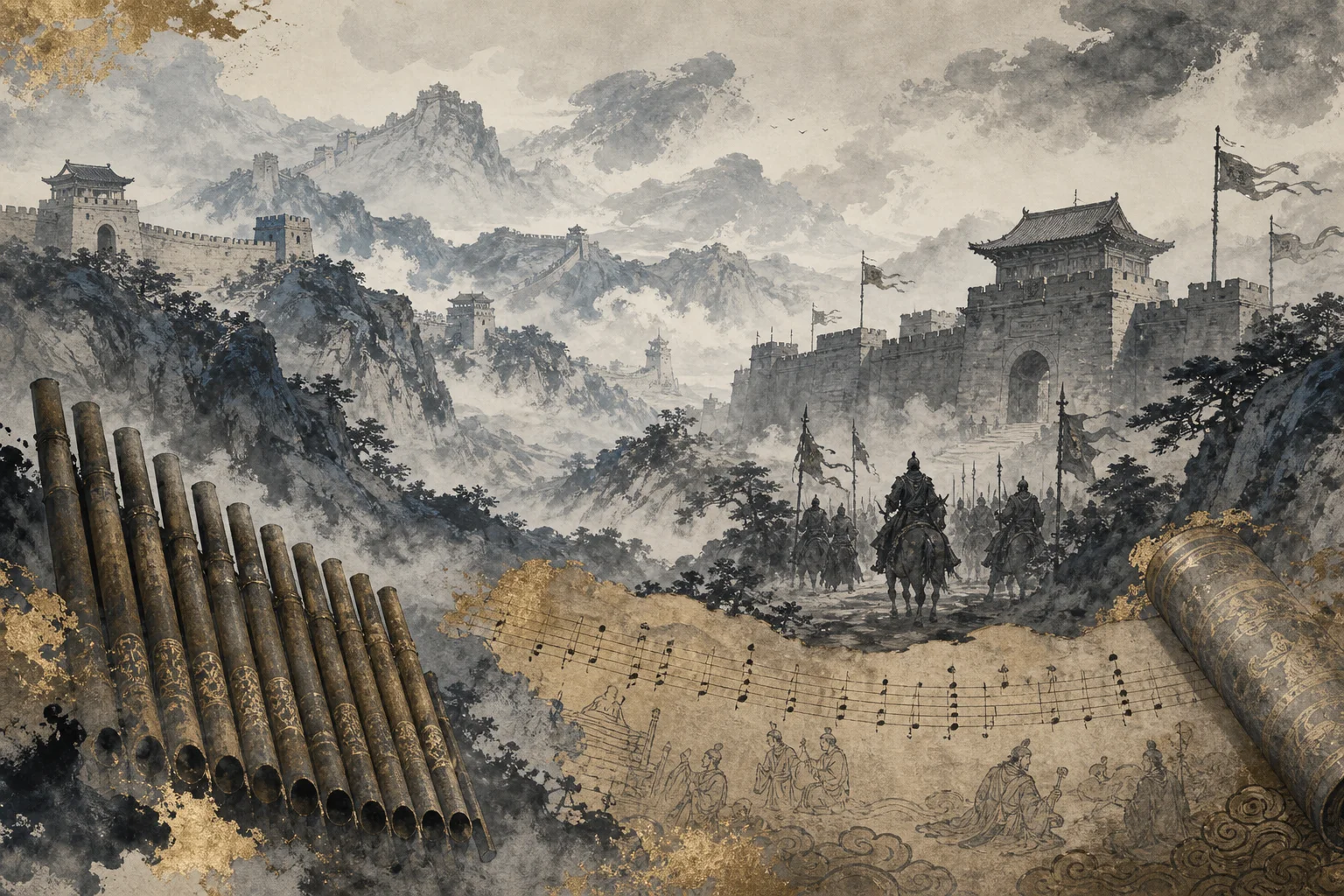
Western players see Where Winds Meet on Steam. Chinese players see 燕云十六声 (Yànyún Shíliù Shēng) — literally “Sixteen Sounds of Yanyun.” Neither name is random wallpaper. The Chinese title compresses two loaded ideas: the Yan Yun Sixteen Prefectures (燕云十六州), a northern borderland ceded to the Liao empire, and the sixteen sounds (十六声) of court-and-folk musical theory recorded in the Later Zhou minister Wang Pu's treatise Lüzhun (律准). The English title, meanwhile, asks you to imagine winds converging — factions, philosophies, and wanderers meeting before Song reunification. This article unpacks all three layers.
Layer 1: Yan Yun and the Sixteen Prefectures
Yan Yun (燕云, Yānyún) names a strategic northern region — often called the Sixteen Prefectures (十六州, Shíliù Zhōu) — around modern Beijing and the mountain passes guarding north China. Whoever holds those passes holds the doorway into the Central Plains.
936 AD
Shi Jingtang (石敬瑭), founder of Later Jin, cedes the Sixteen Prefectures to the Liao (Khitan) empire in exchange for military backing — one of the period's most infamous border deals
Aftermath
The early Song reunifies much of China but does not recover Yan Yun from Liao control — a long geopolitical wound in Chinese memory
In fiction
Lost borderlands become symbols of national trauma — useful dramatic soil for wuxia and historical drama alike
Everstone has stated that Yanyun in the title refers to this historical region lost during the Five Dynasties period. You do not need to fight a history quiz in-game, but when NPCs speak of northern threats or broken frontiers, this cession is part of the real echo underneath.
Layer 2: Sixteen sounds — court music meets folk tones
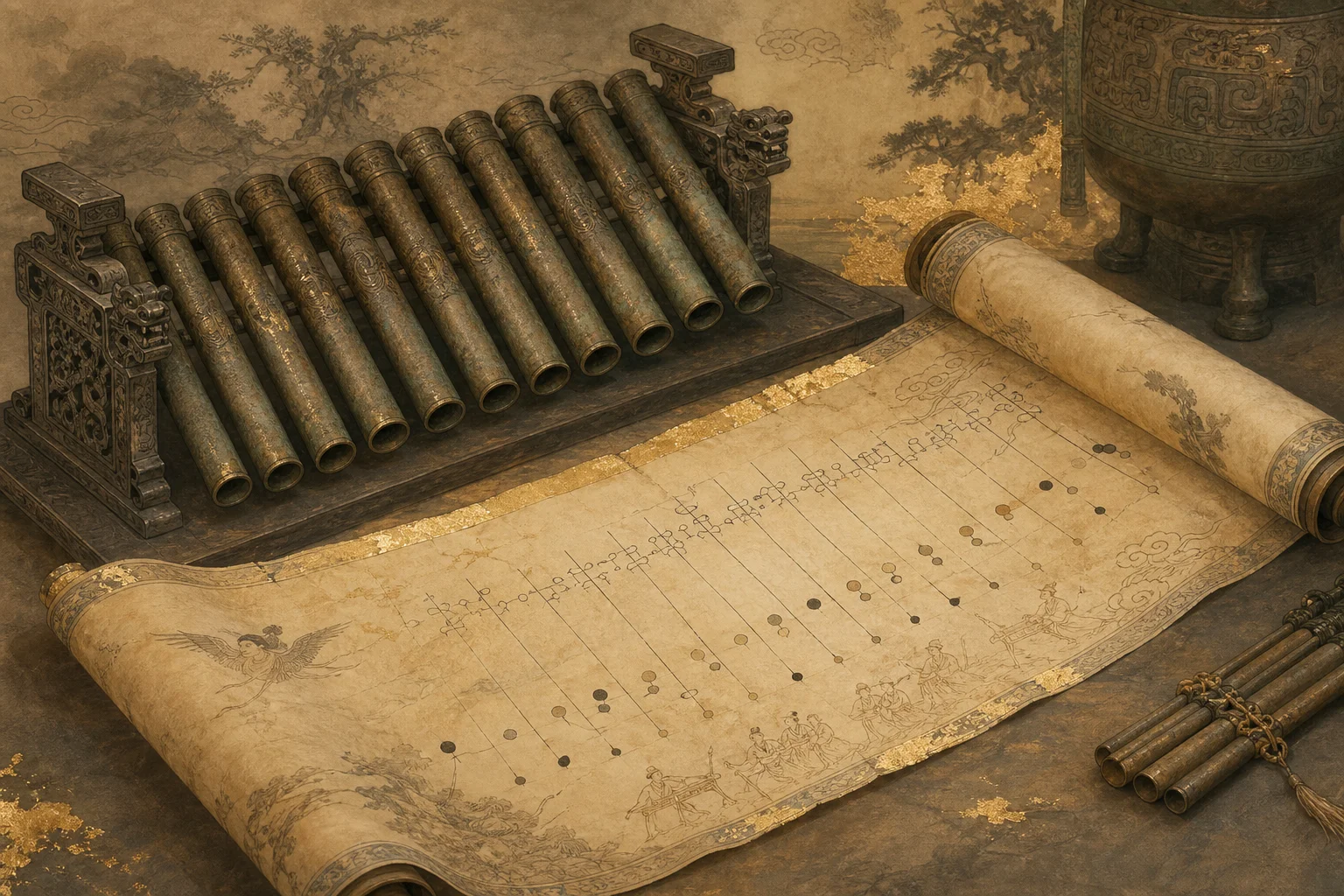
The second half of the title — 十六声 (shíliù shēng, sixteen sounds/tones) — points to music theory, not battlefield headcount. In the mid-tenth century, minister Wang Pu was commissioned to systematize pitch standards in the treatise Lüzhun (律准). The framework blends:
- Twelve formal tones (十二正声) — the classical pitch set associated with court ritual music
- Four “clear” folk tones (四清声) — additional pitches drawn from popular practice
Developers have described the sixteen sounds as a metaphor for Chinese culture itself: high tradition and everyday folk life interwoven — not pure court elegance, not pure grassroots noise, but both in one system. That matches the game's pitch: historical weight carried by ordinary people living through chaos.
Sound in-game: Everstone's audio direction also leans on folk song, theater, and poetry-as-lyrics — less “museum reenactment,” more emotional weather. The title's musicology is a lens, not a soundtrack trivia test.
Layer 3: Where Winds Meet — winds that converge
The international title swaps geography for weather. Official commentary frames wind as freedom and possibility; winds (plural) as forces that collide — individuals, factions, philosophies, wanderers on incompatible paths — before many streams merge into the Song unification.
Read beside the Chinese name, the English title is not a replacement but a parallel metaphor:
| Title | Image | Historical echo |
|---|---|---|
| 燕云十六声 | Lost north + blended tones | Border trauma + cultural synthesis in Later Zhou |
| Where Winds Meet | Many winds in one sky | Fragmented powers converging toward Song |
How the layers show up while playing
- Region design — Kaifeng's wealth beside decay; northern frontier tension; Hexi's poetic dreamscape — each theme reads differently once you know the era is between dynasties
- Faction diversity — sects and guilds embody competing codes; the English title's “winds” are a fair shorthand
- Player freedom — youxia paths (hero, healer, scholar, assassin) mirror the sixteen-sounds idea: many voices, one world
None of this requires you to read Wang Pu before your first sword swing. It does explain why Chinese players treat the name as serious cultural packaging — not generic “mystical China subtitle #47.”
Related on this hub
- Five Dynasties & Ten Kingdoms in 10 Minutes — the timeline behind Yan Yun
- Glossary — quick entries for Yanyun, Lüzhun, Later Zhou
- How the game uses history — what is documented vs dramatized
Title etymology summarized from official PlayStation Blog posts, Steam store text, and widely cited developer interviews through global launch (2025). Dragon Forge is editorial — not affiliated with NetEase or Everstone Studio.