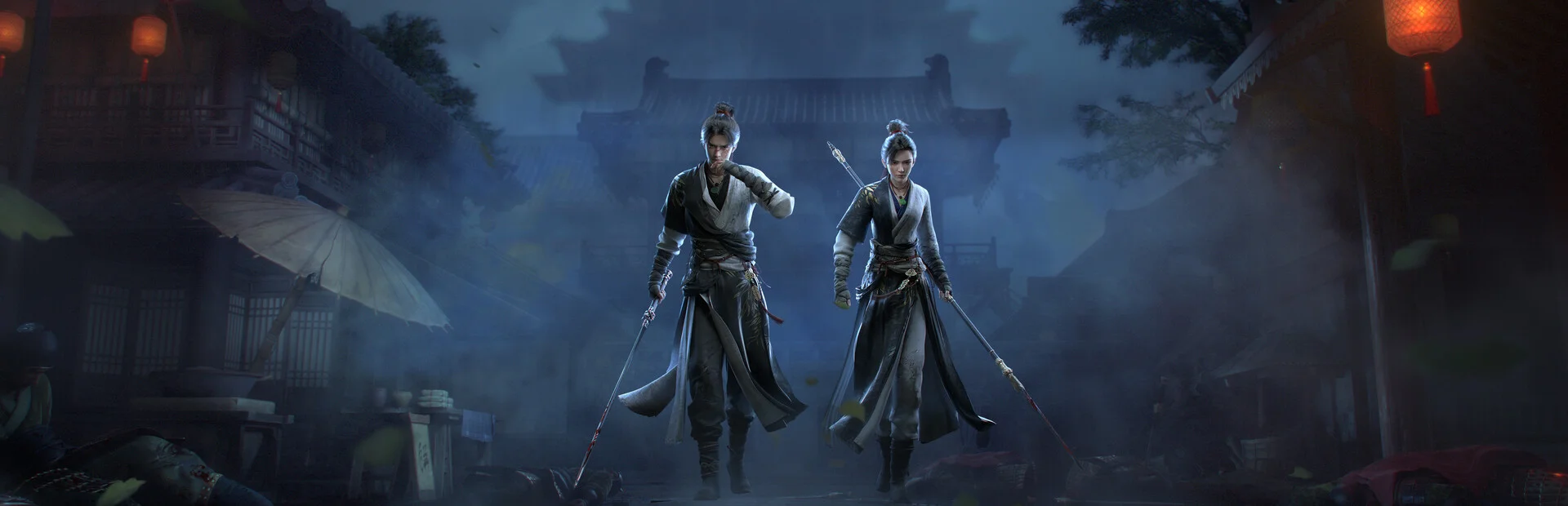
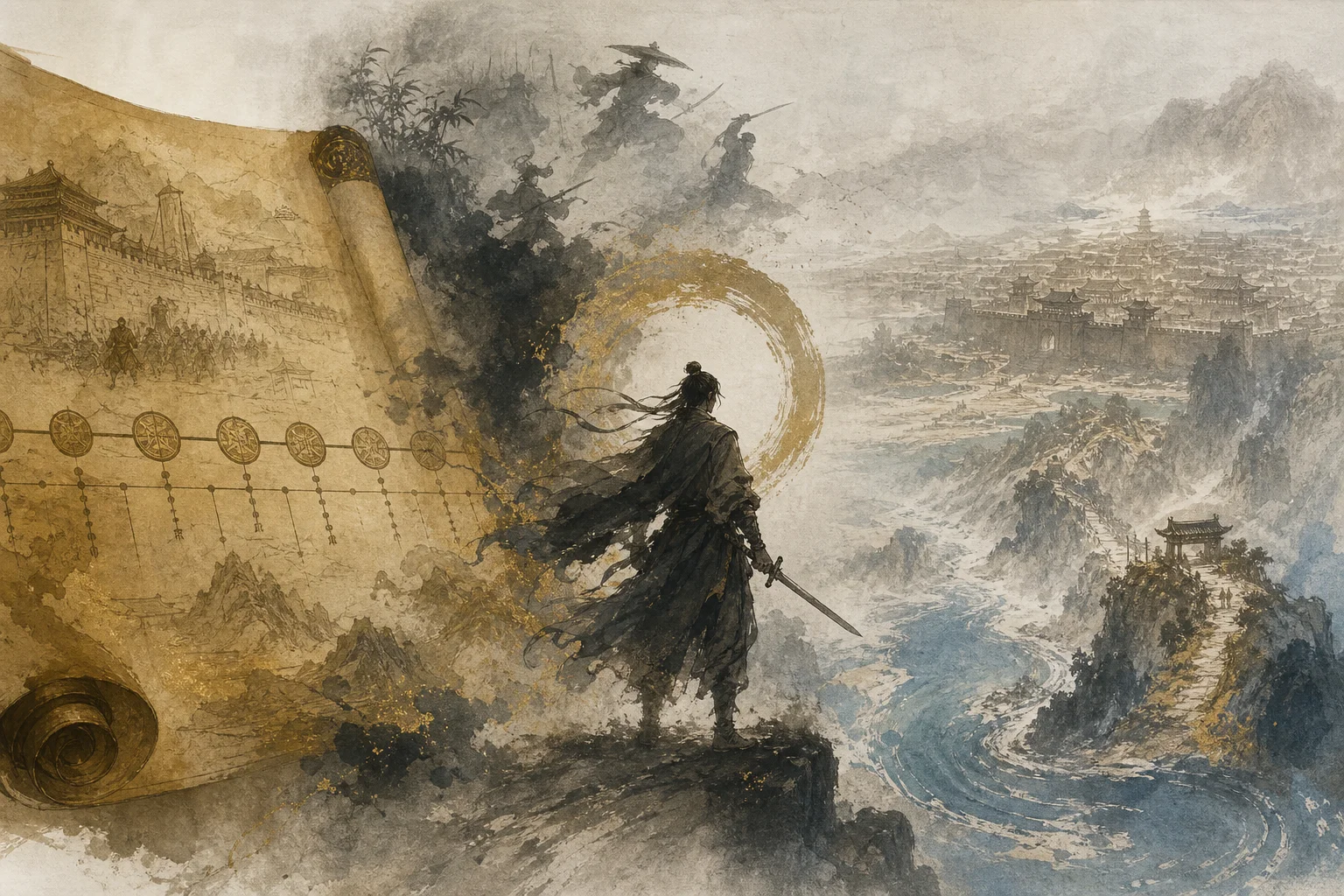
Living document. Where Winds Meet is not a documentary and not a Jin Yong adaptation. Everstone Studio set the game in the Five Dynasties and Ten Kingdoms period, cited real paintings and texts, hired legendary martial-arts choreographers — and still built an open-world RPG with original sects, mystic arts, and a player-defined youxia. This page separates what comes from documented history, wuxia genre convention, and game fiction. Last scoped: global PC/PS5 launch materials, Steam store text, PlayStation Blog, and post-launch interviews through early 2026. Dragon Forge is editorial — not affiliated with NetEase or Everstone Studio.
Status at a glance
Developer / publisher
Everstone Studio · NetEase Games · Hangzhou-based team
Setting
Five Dynasties and Ten Kingdoms China (~907–960) with regions including Qinghe, Kaifeng, Hexi
Release
Global PC & PS5: 2025-11-14 · Mobile: 2025-12-12 · F2P, cosmetic monetization
| Item | Confirmed? | Notes |
|---|---|---|
| Historical period anchor | Yes | Five Dynasties and Ten Kingdoms; title references Yan Yun and Later Zhou music theory |
| Real-place research | Yes | Kaifeng studies; paintings like Qingming scroll and Han Xizai night revels; text A Dream of Sorghum |
| Player is a historical figure | No | You are an original youxia wanderer |
| Linear retelling of one dynasty | No | Open world with main story, side quests, co-op, PvP, guild systems |
| Wuxia martial choreography | Yes | Stephen Tung, Yuen Woo-ping involved in action direction / mocap — see cinema article |
| Mystic arts (e.g. Tai Chi throws) | Yes (gameplay) | Genre-flavored abilities — not documentary martial history |
| CN vs global version parity | Partial | Separate schedules; some content gaps during rollout — check patch notes for your client |
Three layers (not one “retelling”)
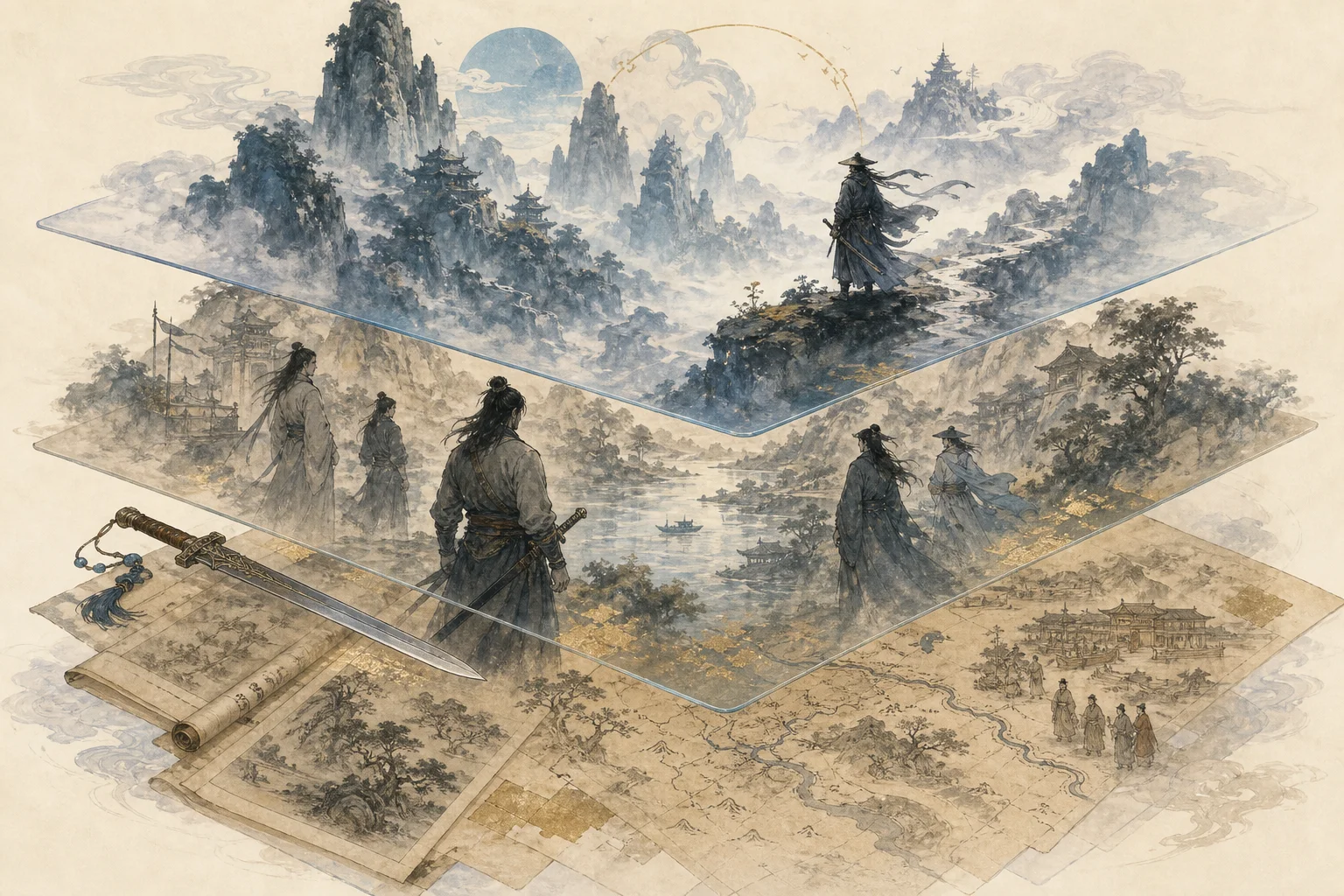
1. Documented history
- Timeline: Tang collapse → northern Five Dynasties rotation → Ten Kingdoms in the south → Song founding (960)
- Geopolitics: Yan Yun Sixteen Prefectures ceded to Liao (936); Song reunification incomplete at first
- Urban history: Kaifeng as recurring capital; material culture bridging Tang splendor and Song commerce
Use this layer when NPCs mention border loss, dynastic change, or city prosperity beside suffering.
2. Wuxia genre convention
- Jianghu social world outside official law
- Sects, manuals, grudges, youxia freedom
- Weapon taxonomy (fan, umbrella, mo blade) as cultural theater
- Mystic arts as acceptable exaggeration — Tai Chi that moves objects is genre license, not physics class
3. Game fiction
- Original main story and lost-chapter quests (e.g. Kaifeng golden-leaf mysteries in marketing)
- Named in-game sects (Heaven's Well, Silver Needle, Midnight Blades, Nine Mortal Ways, etc.)
- Region themes: Qinghe's vanished xiake legends; Hexi as poetic dreamscape beyond strict calendar
- Multiplayer guild wars, raids, and co-op as living jianghu — not historical events
Hexi exception: Developers describe Hexi as a dreamscape that can evoke late Tang romanticism (poets like Wang Han) even while the broader setting stays Five Dynasties. That is intentional artistic time-slippage — not a continuity error to “fix.”
Regional themes vs textbook dates
| In-game region | Official theme (paraphrased) | History / art echo |
|---|---|---|
| Qinghe (清河) | Vanished xiake legends | Jianghu myth-making — heroes who may never have existed |
| Kaifeng (开封) | Flourishing age beside decay | Real capital; Qingming-style urban life research |
| Hexi (河西) | Poetic dreamscape | Frontier poetry, Dunhuang dance mocap; late-Tang emotional palette |
| Hidden Mountain | Wisdom, wind, stone | Game-original spiritual geography; vertical exploration focus |
What we will (and won't) spoil here
Culture Hub Phase 1 articles stay at spoiler level: none. Future articles on sect storylines or main-quest beats will be labeled light or major as they ship. For searchable element-by-element mappings, use the companion Quick Reference: Game ↔ History & Tradition (living doc v0.1).
When fans disagree with us
Chinese players often debate whether a costume or building is “Song too early” or “Tang too late.” Open-world wuxia routinely compresses centuries of visual culture for readability — same reason many films dress every dynasty in idealized hanfu. We document stated developer intent and closest historical neighbors; we do not issue canon certificates.
Continue reading
- Quick Reference — game element ↔ history / genre / fiction
- Five Dynasties primer
- Title etymology
- Glossary
- Further reading list
Corrections welcome via community feedback — this page will be revised as expansions ship.