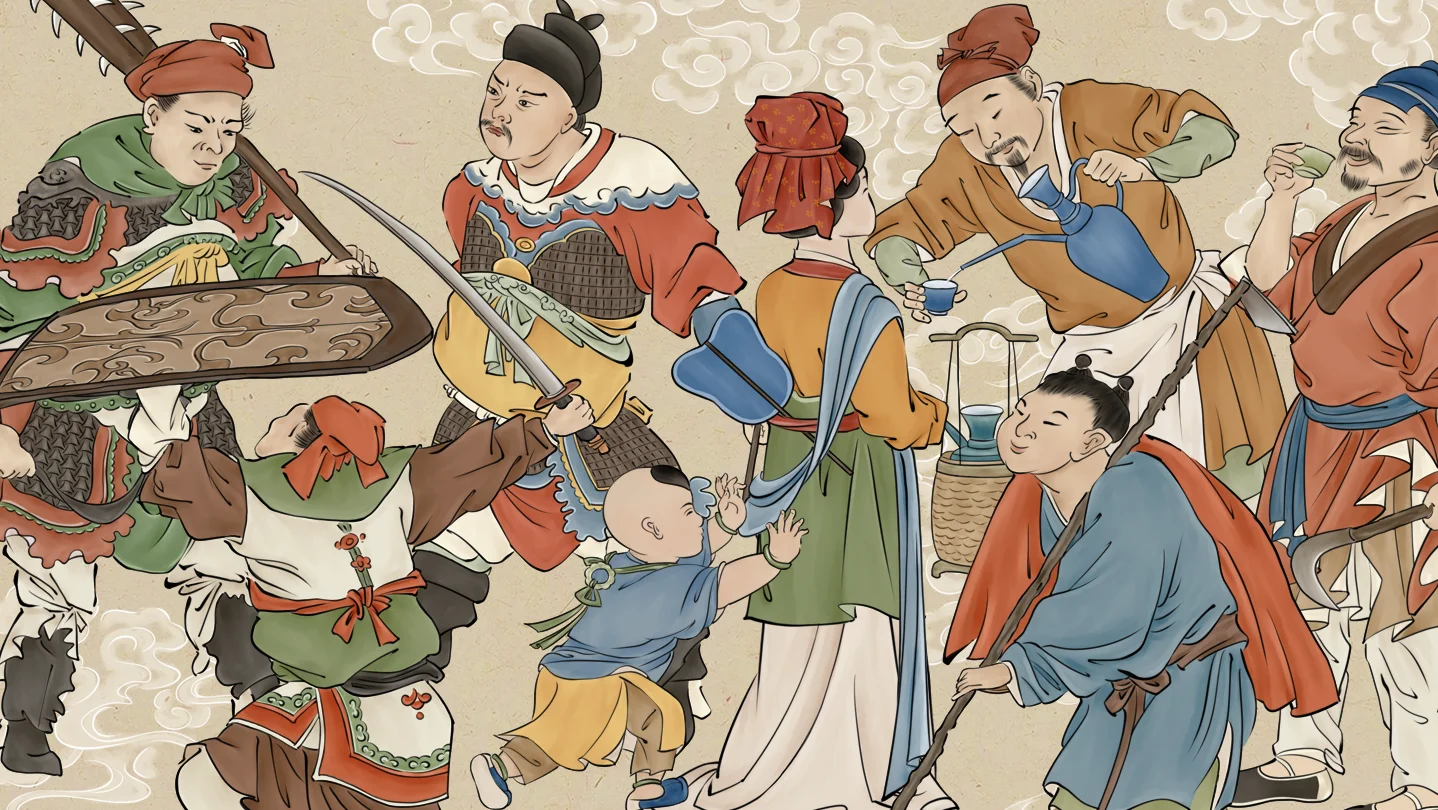
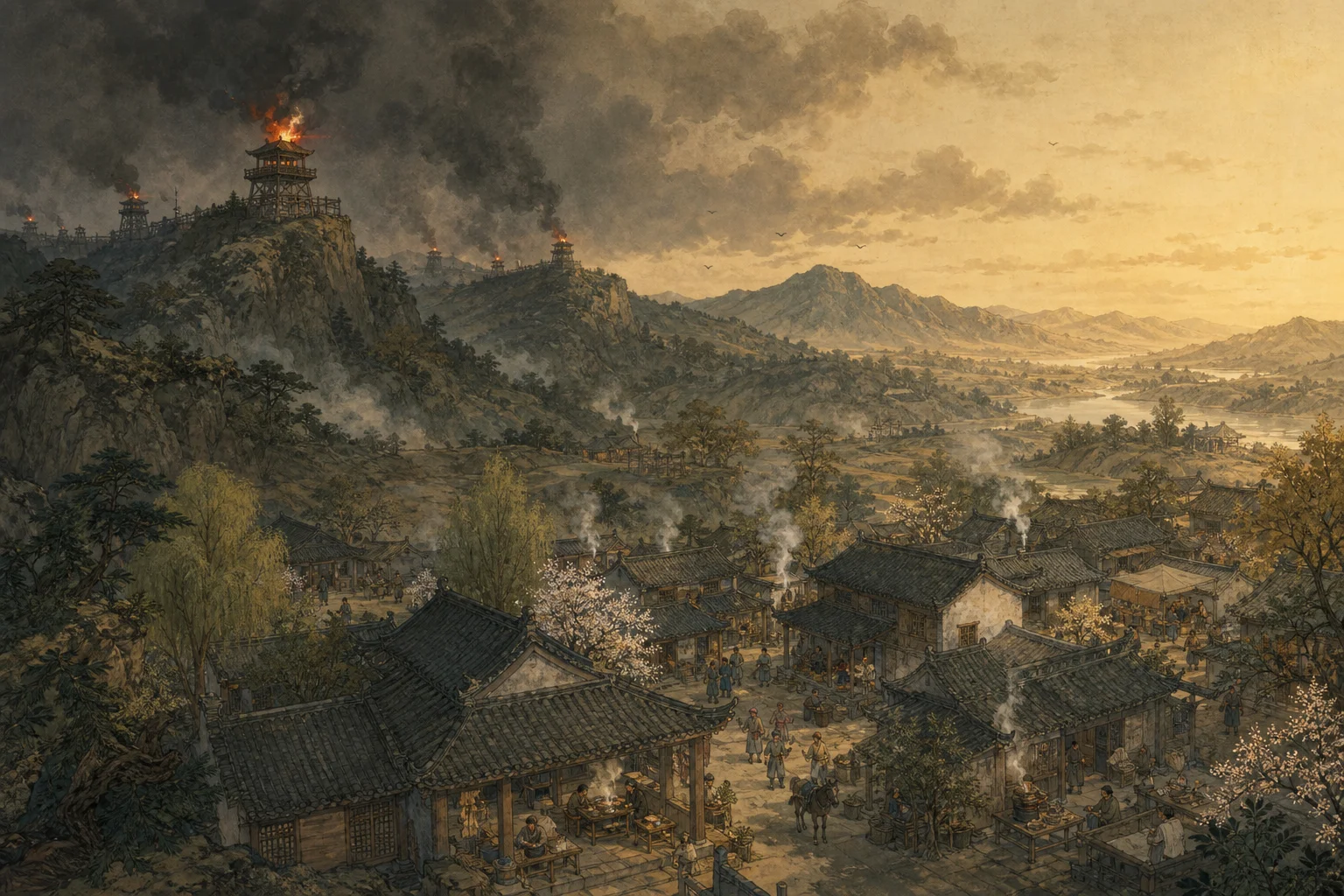
Every Chinese player hears the title and gets it immediately: 烽火 (fēnghuǒ, beacon fire) means trouble on the border; 炊烟 (chuīyān, cooking smoke) means someone is home making dinner. The Bustling World (English title: The Bustling World) is built around that tension — not as a moral lecture, but as a design promise: you can live the quiet life of fields and shops, or chase the loud life of blades, armies, and thrones. FireWo Games says there is no forced main quest pushing you down one rail. This eight-minute primer translates the title for players who did not grow up with those two images — and shows how they map to what the trailers actually show.
The title in one paragraph
In classical usage, beacon fires (烽火) lit along frontier walls to warn that enemies were coming — the signal that ordinary life was about to break. Cooking smoke (炊烟) rising from a chimney or kitchen stove meant the opposite: someone was grinding grain, boiling rice, feeding animals, continuing the day. Poets and historians used both images for centuries to contrast war and peace, public catastrophe and private survival. The game takes that pair and turns it into gameplay: two families of choices in one open map — civilian livelihood versus martial and political ambition — without telling you which is the "real" ending.
烽火 · Beacon fire
Jianghu adventure, bounty hunting, mercenary armies, diplomacy, city-building, warfare
炊烟 · Cooking smoke
Farming, livestock, crafting, wage work, shopkeeping, marriage, settling down
Design rule
No mandatory main storyline; paths can mix; the world reacts either way
What beacon fire means in the game
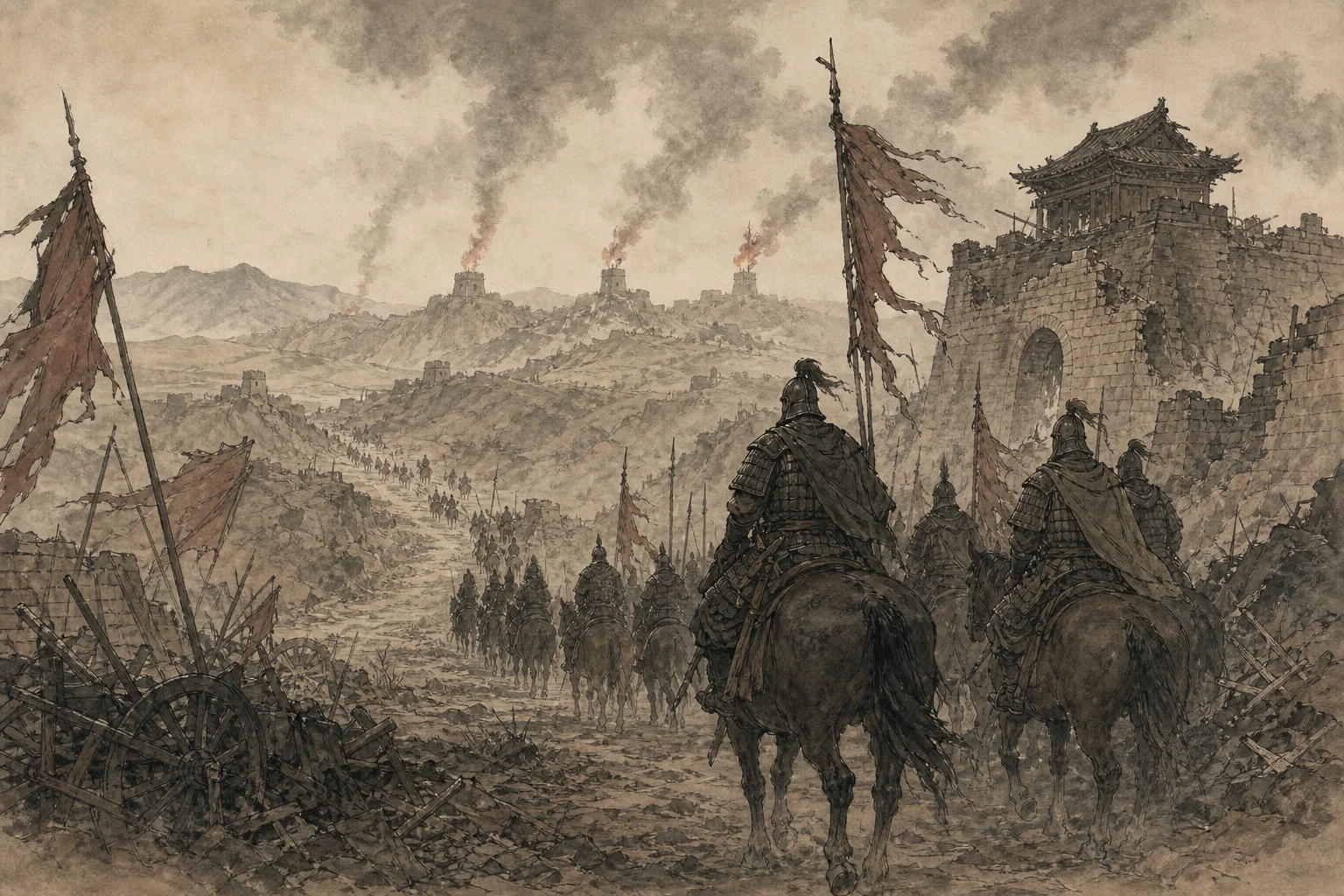
Official materials describe the beacon fire path as the life of action and power. Concretely, that includes:
- Jianghu (江湖) — wandering outside official society; joining factions; bounty work; being hunted when you cross the wrong patron
- Exploration and combat — ruins, traps, treasure, martial manuals; ranged attacks, mounted charges, stealth, hook-lock traversal between rooftops
- Raising force — recruiting heroes and soldiers, defending territory, attacking rivals
- Governance at scale — planning cities, issuing policy cards, managing diplomacy, expanding or holding borders
This is the side of the game Western trailers often lead with — armor, cavalry, siege mood — because it reads instantly as "epic." Culturally, it connects to centuries of stories about knights-errant (youxia, 游侠), outlaw bands, and warlords who appear when the center weakens. The fictional realm's background war (atmosphere similar to dynastic collapse, though not pinned to one date) exists so this path has stakes, not so you must finish a campaign map.
Not a genre lock: Choosing violence does not cancel economy or building systems. A warlord still needs grain, workshops, and loyal towns. The title names a tone, not a class selection screen.
What cooking smoke means in the game
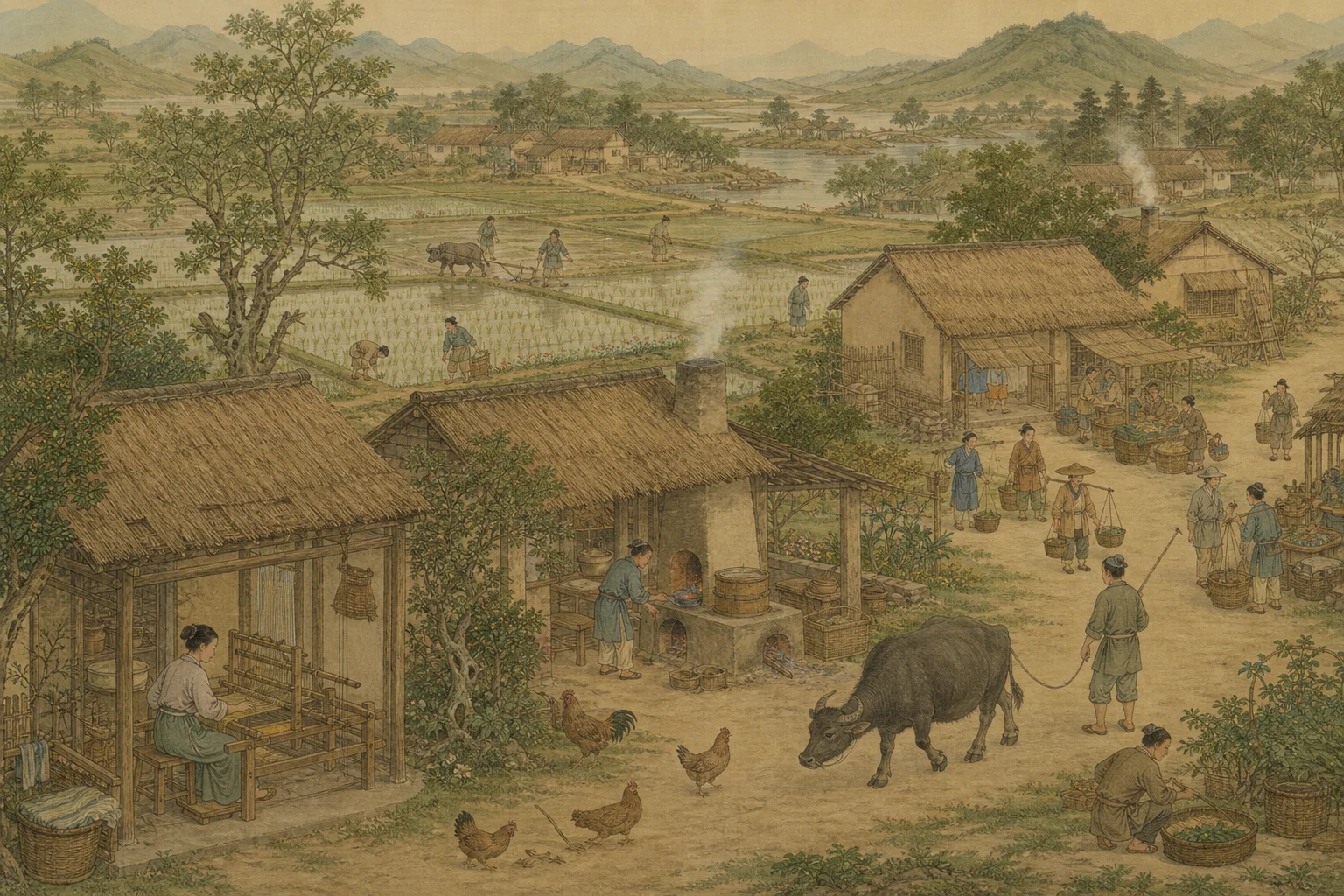
The cooking smoke path is civilian life — what Chinese players sometimes compare to a "SimLife in ancient dress." FireWo Games lists it explicitly as working, trading, marrying, and building a home. In trailer terms, that means:
- Agriculture and animal husbandry — 60+ period plants with growth requirements; 30+ livestock species for food, labor, or combat support
- Craft and construction — gathering, processing, furnishing homes with historically referenced objects
- Wage labor and business — taking jobs, opening teahouses or pawnshops, hiring staff, competing with rival shops — fairly or dirty
- Social life — relationships that affect reputation; moving to another city for opportunity; settling in a district and raising a household
In literary tradition, cooking smoke is the image of 治平 (zhìpíng) — orderly, governable peace — even when the empire above is messy. The game lets you inhabit that layer directly: NPCs also go home, cook, gossip, and relocate for money, so your quiet run still sits inside a living society.
Two paths, one map — and no required ending
The important design point — repeated in interviews and Steam copy — is freedom:
- You are not locked into a righteous hero arc or a pacifist purity run.
- You can start as a farmer, go into debt, join a gang, become a magistrate's problem, then raise a private army.
- NPCs follow similar logic: grudges, migration, revenge, and career changes happen whether you pursue war or hearth.
That is why the title uses 与 (yǔ, "and") rather than "or." The world contains both images at once — smoke from kitchens below, warning fires on hills beyond the wall — and the sandbox asks which you engage with today.
| Image | Classical connotation | Gameplay family (confirmed) |
|---|---|---|
| 烽火 · Beacon fire | Border alarm, war, public crisis | Jianghu, combat, mercenaries, policy, diplomacy, war |
| 炊烟 · Cooking smoke | Hearth, household, daily peace | Farm, craft, jobs, shops, family, construction |
| 与 · And | Both exist in the same landscape | Single persistent world; mixed playstyles encouraged |
How this connects to "scholar, farmer, artisan, merchant"
Chinese players often shorthand civilian life as 士农工商 (shì nóng gōng shāng) — the "four occupations" of scholar-official, farmer, artisan, and merchant. Most cooking smoke activities map there: till soil, forge tools, keep accounts, sit exams if the game allows office work. Most beacon fire activities map outside or above that grid — outlaws, mercenaries, warlords, hidden sects. Our later series Life Paths & Social Order will unpack that social ladder; for now, read the title as a shortcut: inside the economy versus outside the law, with plenty of overlap.
What Western players often misunderstand
- "I must pick a faction at start." Materials emphasize open choice over time, not a permanent class at character creation.
- "Cooking smoke = boring DLC." It is half the brand — the meticulous market simulation is what impressed domestic audiences in the first reveal.
- "Beacon fire = the real game." Trailers emphasize combat for spectacle; producers also describe the project as a love letter to traditional daily culture.
- "It's only war because China equals wuxia." Wuxia is one thread; state-building and survival sim threads are equally advertised.
Reading the next trailer
When a new video drops, ask which image it foregrounds:
- Market noise, farm tools, shop ledgers → cooking smoke
- Armored columns, wanted posters, policy screens → beacon fire
- Both in one shot — smoke rising while riders pass the gate → that is the title working as intended
If you have not read it yet, start with our previous primer on the fictional Song–Tang material world — the buildings and props both paths share. Next we turn to how that world looks: gongbi painting, hand-painted 3D, and the scroll-painting spirit behind the streets.
Next in this series: Gongbi art, hand-painted 3D, and why the game chases the feel of a living scroll painting — not generic "oriental" fantasy.