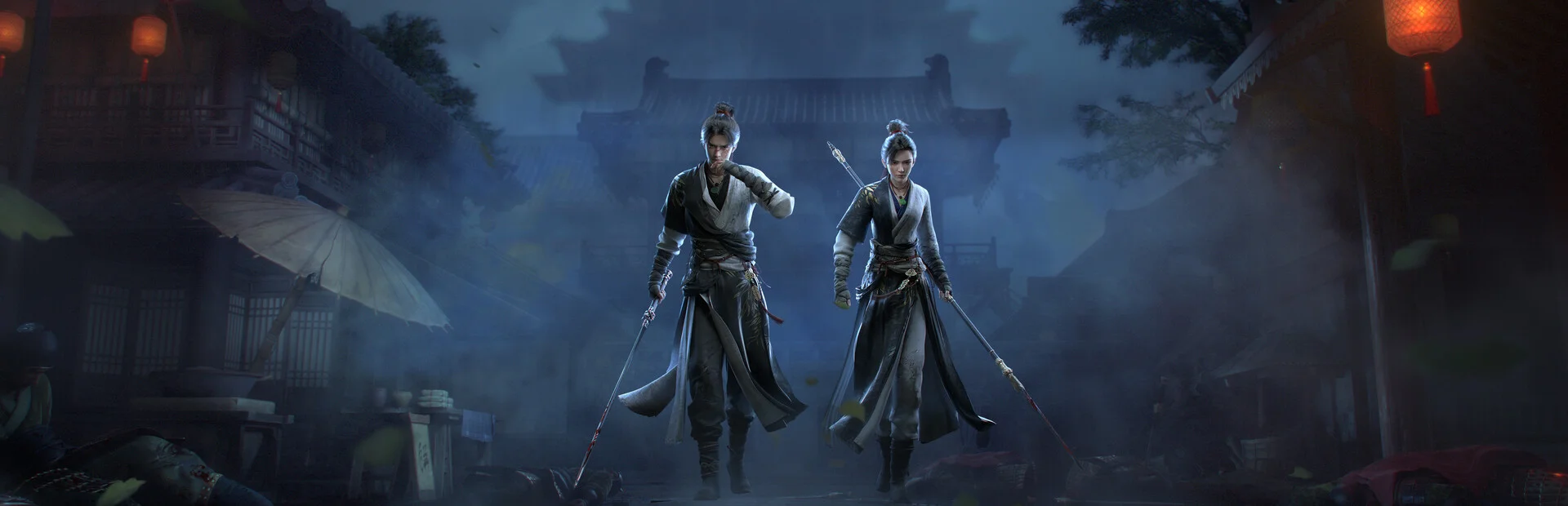
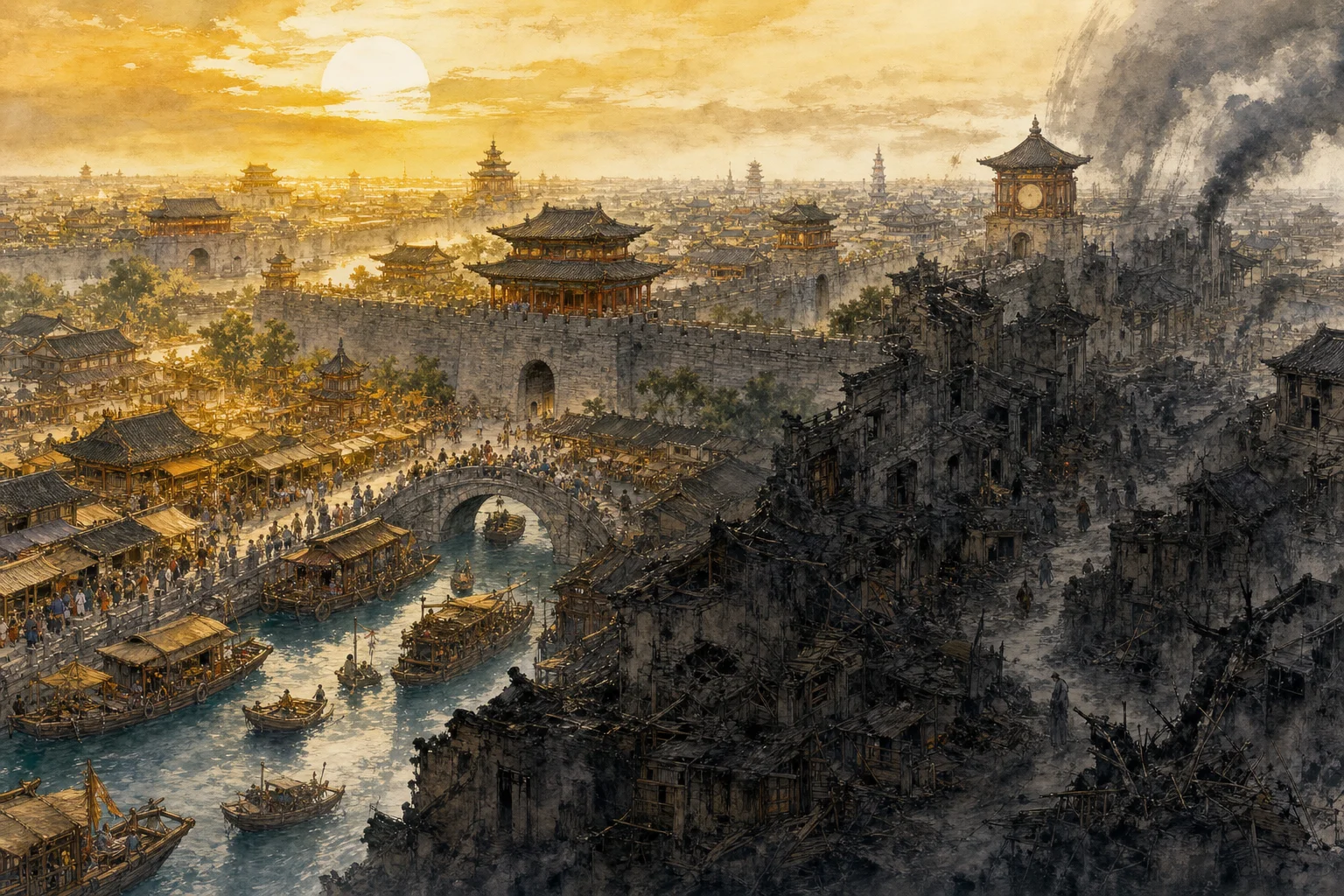
Where Winds Meet sends you to Kaifeng (开封, Kāifēng) — one of the game's major regions and a name that appears on almost every Five Dynasties timeline. In history, Kaifeng was not a fantasy capital. It was the recurring seat of northern power between Tang's fall and Song's rise: markets, canals, palaces, and refugees stacked on top of each other every time a general seized the throne. Everstone's designers describe the in-game region as a study in prosperity beside turmoil — glittering streets above suffering you can still glimpse in the alleys. This article explains the real city behind that design choice, what paintings the team cited, and where history ends and your wanderer's story begins.
Spoiler note: We reference publicly marketed quest themes (e.g. golden-leaf mysteries) but do not walk through main-story beats.
Kaifeng on the Five Dynasties map
After 907, northern China rotated through five short-lived regimes — and Kaifeng kept coming back as the administrative heart. The city sat on the eastern edge of the North China Plain, tied to the Grand Canal (大运河) network that moved grain and tax revenue northward. Control Kaifeng and you control logistics, not just walls.
Later Liang (907–923)
First of the Five Dynasties; moved power toward Kaifeng from the old Tang western capital tradition
Later Jin · Han · Zhou
Successive northern courts (936–960) — Kaifeng remains the power center through the era Where Winds Meet evokes
After 960
The Song (宋) makes Kaifeng (Bianjing 汴京) its capital — the famous Northern Song metropolis still being built when the game's century ends
Need the broader timeline? Start with our Five Dynasties primer. Need the northern shield Kaifeng lost? Read Yan Yun & the Sixteen Prefectures.
Why Kaifeng feels “Song-ish” in a Five Dynasties game
Players sometimes ask: if the game is set around 907–960, why do the streets resemble the bustling Song capital of later paintings? The honest answer is compressed visual history — a common choice in open-world wuxia. Everstone cited artworks and texts associated with the broader late Tang → Five Dynasties → early Song transition, not a single freeze-frame year.
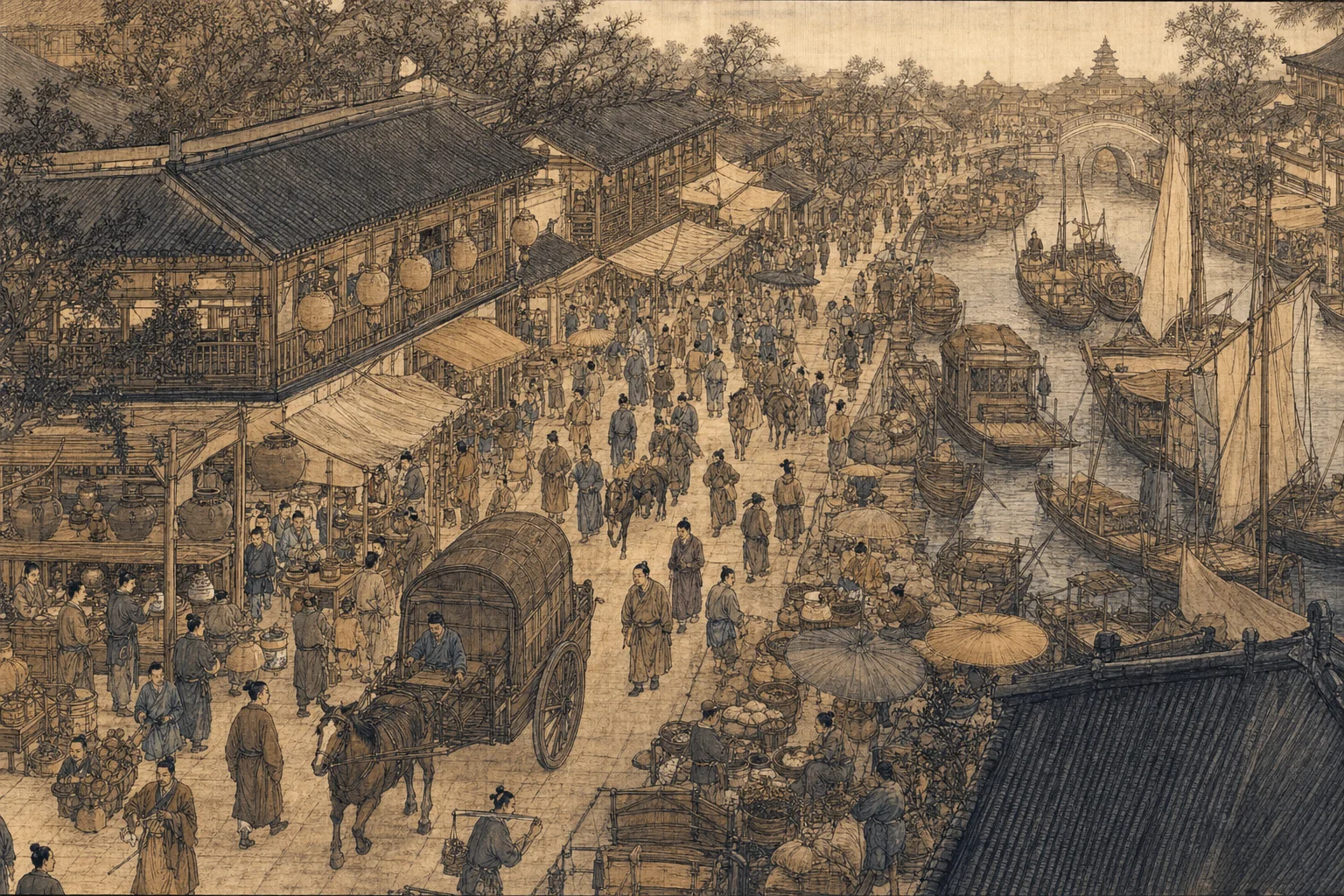
Key visual sources named in development materials include:
- Along the River During the Qingming Festival (清明上河图) — bridges, wine shops, cargo boats, crowds; the ur-text of “busy Chinese city painting”
- The Night Revels of Han Xizai (韩熙载夜宴图) — elite interiors, music, costume; useful for reading wealth beside political anxiety
- A Dream of Sorghum (高粱河) — historical text cited alongside paintings in scene research
- Field study of real Kaifeng — modern city layers sitting atop Song-era foundations
None of these are in-game screenshots. They are reference grammar — how roofs curve, how a canal market sounds, how opulence and unease share one frame. Our living doc tracks that boundary.
Prosperity and decay — the official regional theme
Everstone's regional design notes describe Kaifeng as focused on the prosperity of a flourishing age and the decay amid echoes of turmoil. In plain language: the city is supposed to feel rich and cracked at the same time.
| Layer you see | Historical echo | In-game expression (marketing / early access) |
|---|---|---|
| Markets & canals | Grand Canal economy; tax grain; merchant culture | Dense urban hubs, trading life, crowded waterfronts |
| Palaces & elites | Short-lived courts spending fast before the next coup | Opulent districts beside political rot |
| Poor districts | Refugees from wars up north after Yan Yun's loss | Juxtaposition of wealth and suffering in street-level quests |
| Street mysteries | Urban folklore; jianghu hiding inside city walls | Lost-chapter threads like golden-leaf rumors among residents (light spoiler) |
Marketing has highlighted a lost-chapter quest, “One Leaf, One Life,” weaving together Kaifeng residents and a mystery about golden leaves — a good example of how the city region uses small folk stories to carry the prosperity/decay theme without lecturing you on dynasty names. We are not summarizing the plot here; treat it as proof that Kaifeng is built for urban jianghu, not only palace history.
What Kaifeng is in the game (vs on a map)
Real history
Five Dynasties capital
Documented hub for northern regimes; canal logistics; precursor to Song Bianjing.
Art & archaeology
Look & texture
Qingming-style bustle, Han Xizai interiors, modern Kaifeng field research — blended into one readable cityscape.
Game fiction
Your Kaifeng
Original NPCs, sect hooks, co-op spaces, and mysteries — an open-world region, not a museum diorama of 947 AD.
You are a youxia (游侠), not a court historian. Kaifeng gives you crowds to read, debts to settle, and roofs to cross — the wuxia city fantasy anchored on a real place name Chinese players already feel in their bones.
Walking the real city today
Modern Kaifeng in Henan province still carries Song-era memory in archaeology and tourism — iron pagodas, buried capital layers, museum reconstructions. If you visit digitally, search for:
- Iron Pagoda (铁塔) — Song-period landmark on the edge of the old city imagination
- Song Dynasty themed park & museum displays — tourist-facing reconstructions; useful mood references, not primary sources
- Palace Museum digital scroll viewers for Qingming — zoom until the wine shops feel three-dimensional
Comparing game streets to these references is half the fun — and a gentle way to notice where Everstone exaggerated for gameplay clarity.
Read next in this series
- Qinghe, Hexi & the Poetry of Regional Design — how other regions contrast Kaifeng's urban mood
- From Five Dynasties Chaos to Song Reunification — where Kaifeng's story goes after 960
- Jianghu & youxia primer — why cities are jianghu stages, not just quest hubs
Dragon Forge Culture is editorial — not affiliated with NetEase or Everstone Studio. Quest details paraphrase public marketing only.