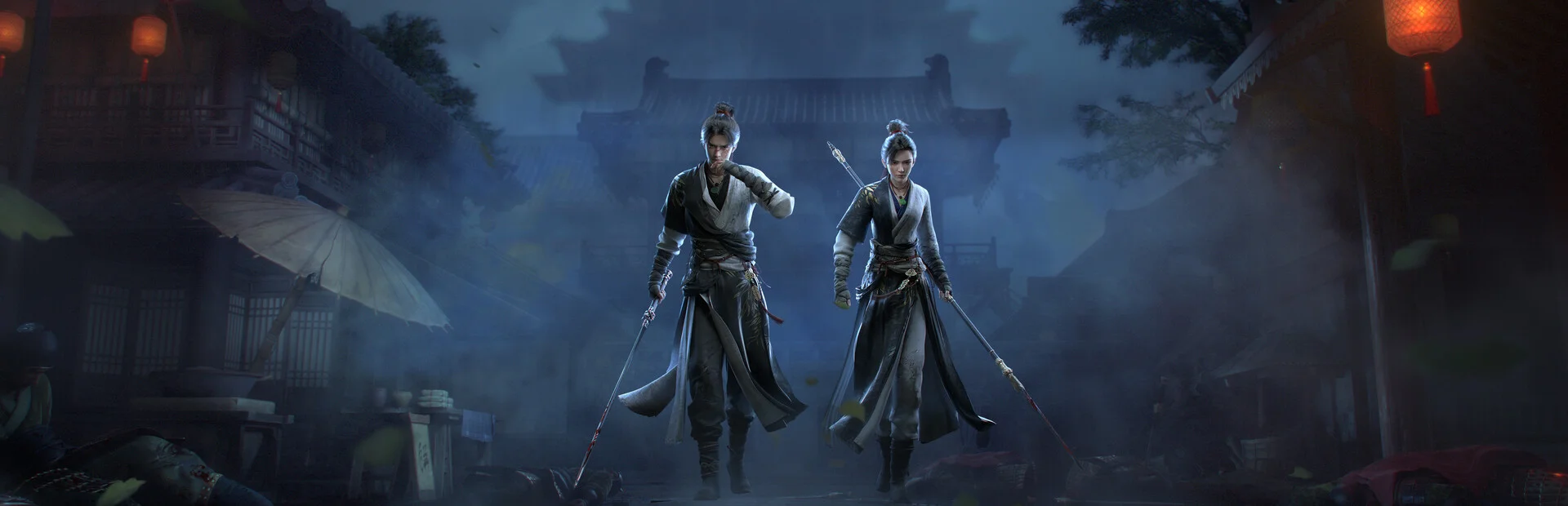
If you read our title primer, you already know the Chinese name 燕云十六声 half-opens with Yan Yun (燕云, Yānyún) — the Sixteen Prefectures (燕云十六州, Yànyún Shíliù Zhōu) lost to the Liao empire in 936. This article goes deeper: where Yan Yun sat on the map, why emperors treated it as life-or-death territory, and how that loss still echoes in history books, patriotic rhetoric, and the mood of Where Winds Meet's northern frontier. No quest spoilers — only geography, politics, and memory.
Where is Yan Yun?
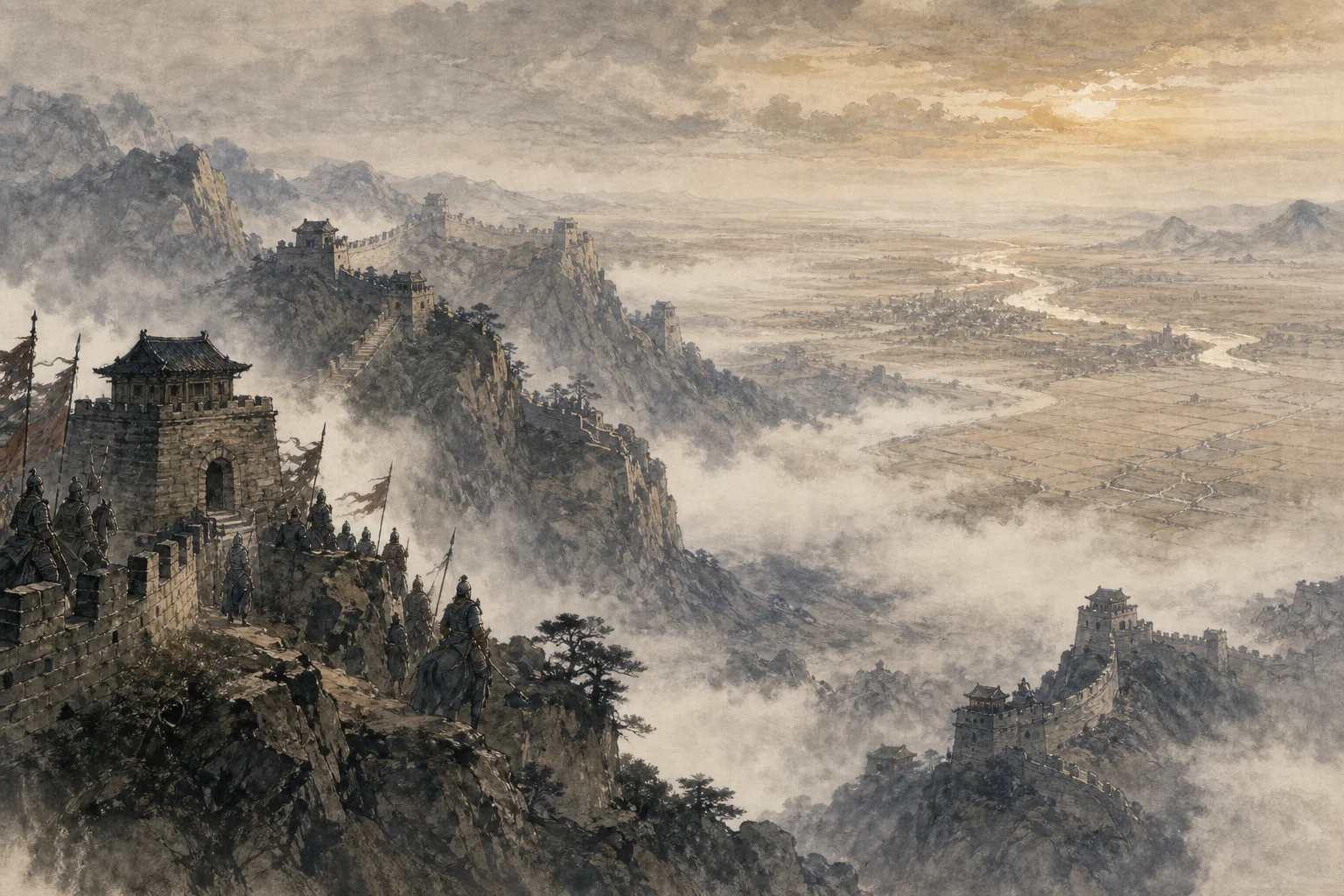
Yan Yun is not a single walled city. It is a historical label for a strategic northern belt combining the old Yan (燕) and Yun (云) regions — roughly the area around modern Beijing, Tianjin, and the mountain passes that separate the North China Plain from the steppe. Think of it as the roof and front door of the Central Plains (中原, Zhōngyuán): flat farmland and dense cities to the south; cavalry country to the north.
Terrain
Yan Mountains (燕山) and passes like Juyong (居庸关) — natural choke points for armies and trade caravans
Modern anchor
Beijing sits inside what was once Yan territory — which is why capital cities keep returning to this latitude
Game echo
Northern threats, broken frontiers, and border anxiety in Where Winds Meet read differently once you know this map
The Sixteen Prefectures — what the number means
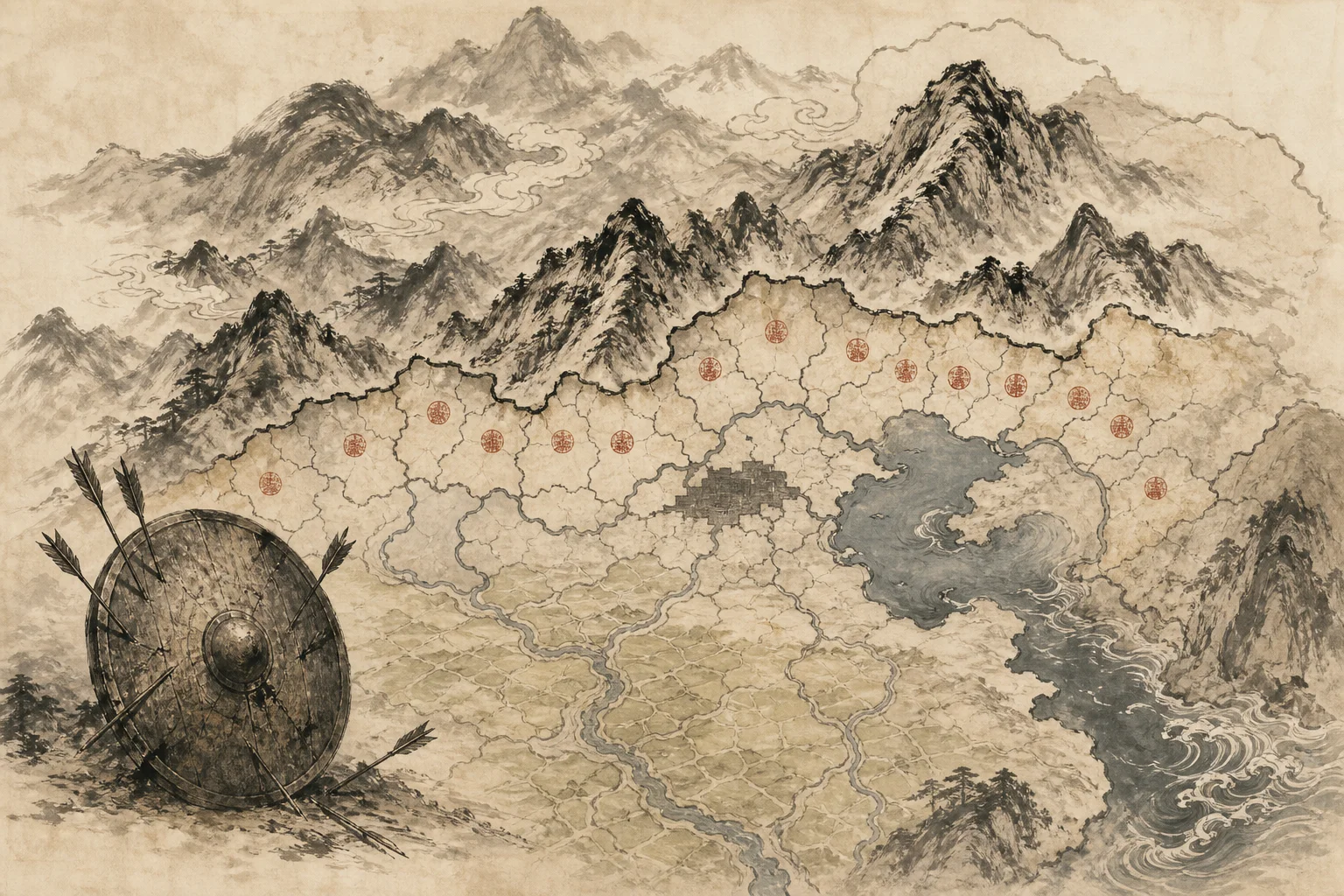
Sixteen Prefectures (十六州) refers to a group of administrative units ceded in 936 — not sixteen random towns, but a contiguous northern frontier zone. Different sources list the names slightly differently, but the usual roll call includes prefectures such as:
- Youzhou (幽州) — anchor of the region; later imperial Beijing grows from this root
- Jizhou (蓟州), Guozhou (涿州), Tanzhou (檀州) — nodes along the Yan mountain line
- Yunzhou (云州) and northwestern units like Shuozhou (朔州), Daizhou (代州) — the “Yun” half of the name, closer to the steppe frontier
- And others in the set historians bundle as the Yan Yun sixteen
You do not need to memorize the list to play Where Winds Meet. The takeaway is structural: this was a single strategic package — passes, garrisons, and agricultural hinterland sold together.
Quick lookup: See our Glossary for Yanyun, Sixteen Prefectures, and Liao.
936: the cession that scarred the century
In 936 AD, Shi Jingtang (石敬瑭) — founder of the Later Jin (后晋) regime — was fighting for survival against rivals in the fractured north. He struck a bargain with the rising Liao (辽) empire of the Khitan people: military support in exchange for territory. The price was Yan Yun.
| Actor | Role in 936 | Why it matters later |
|---|---|---|
| Shi Jingtang (石敬瑭) | Later Jin founder who ceded the Sixteen Prefectures | Poster child for “selling the frontier” — condemned in later moral history |
| Liao / Khitan (辽) | Nomadic empire north of China; received Yan Yun | Controlled the passes for decades; Song could not easily dislodge them |
| Later Jin court | Short-lived northern dynasty (936–947) | One more rotation in the Five Dynasties sequence — see our timeline primer |
| Song founders (960+) | Reunified much of China | Still faced a Liao-held north — Yan Yun remained lost |
Chinese historiography has long treated this cession as a national humiliation — a ruler trading long-term defense for short-term throne security. Whether every detail matches modern geopolitical analysis, the memory is what matters for culture: Yan Yun became shorthand for a wound that would not close.
Why emperors obsessed over these passes
Lose Yan Yun and an outside power can:
- Descend quickly onto the North China Plain — cavalry and supply lines through the passes
- Threaten Kaifeng and Luoyang — the recurring capitals of the Five Dynasties era
- Force expensive frontier armies — draining treasuries already cracked by constant regime change
- Psychological leverage — subjects know the “natural border” is gone
The early Song (宋) reunified most of China after 960 but spent generations unable to recover Yan Yun from Liao control. Later dynasties — Yuan, Ming, Qing — would place their northern capitals in this same latitude precisely because whoever holds Beijing holds the passes. The game's tenth-century setting sits in the moment before that long Song struggle fully plays out — when the loss is fresh.
From history book to game atmosphere
Everstone has stated that Yanyun in the title refers to this lost region during the Five Dynasties period. Where Winds Meet is not a reenactment of Shi Jingtang's treaty, but the emotional vocabulary is borrowed:
Documented history
936 cession · Liao frontier
Real geopolitics — border deals, northern empires, capitals under pressure. Use this lens when NPCs discuss lost territory or foreign riders.
Cultural memory
Trauma & patriotism
Later poets, novelists, and school textbooks treat Yan Yun as a moral lesson — fertile soil for wuxia themes of revenge and restoration.
Game fiction
Your youxia story
Original quests and regions (Qinghe, Kaifeng, Hexi) remix the mood — not a documentary map of 936. See our living doc.
When Chinese players see 燕云 in the title, many hear not only geography but duty left unfinished — winds still blowing from the north. That is one reason the English title Where Winds Meet works as a parallel metaphor: converging forces before reunification.
Yan Yun vs the “sixteen sounds”
Do not confuse the two “sixteens” in 燕云十六声:
- 燕云十六州 — sixteen prefectures (administrative territory)
- 十六声 — sixteen musical tones in Wang Pu's Lüzhun (律准) — court plus folk pitch theory
They rhyme in number but not in meaning. Our title article explains the musical layer; this article owns the geographic and political layer. Together they show how Everstone packed territory and culture into one name.
What to read next
- Kaifeng: Prosperity, Decay & a Real Ancient Capital — the capital Yan Yun once shielded
- From Five Dynasties Chaos to Song Reunification — what happens after the fracture
- Five Dynasties in 10 Minutes — timeline refresher
Further reading (English)
- Britannica entries on the Five Dynasties, Liao dynasty, and Song dynasty
- The Cambridge History of China, Vol. 5 — scholarly treatment of the 936 transfer and Song–Liao relations
- Maps of the Yan Mountains and Juyong Pass — useful for visualizing why passes mattered
Dragon Forge Culture is editorial — not affiliated with NetEase or Everstone Studio. Prefecture lists vary by source; we follow commonly cited Song-period historiography.