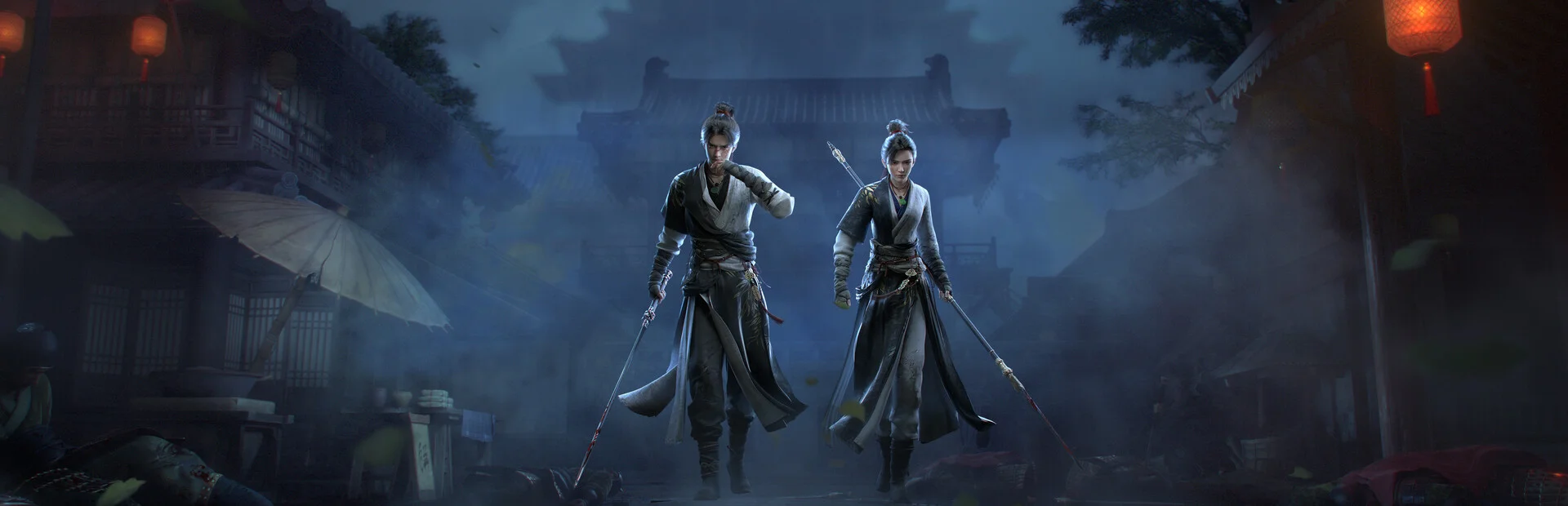
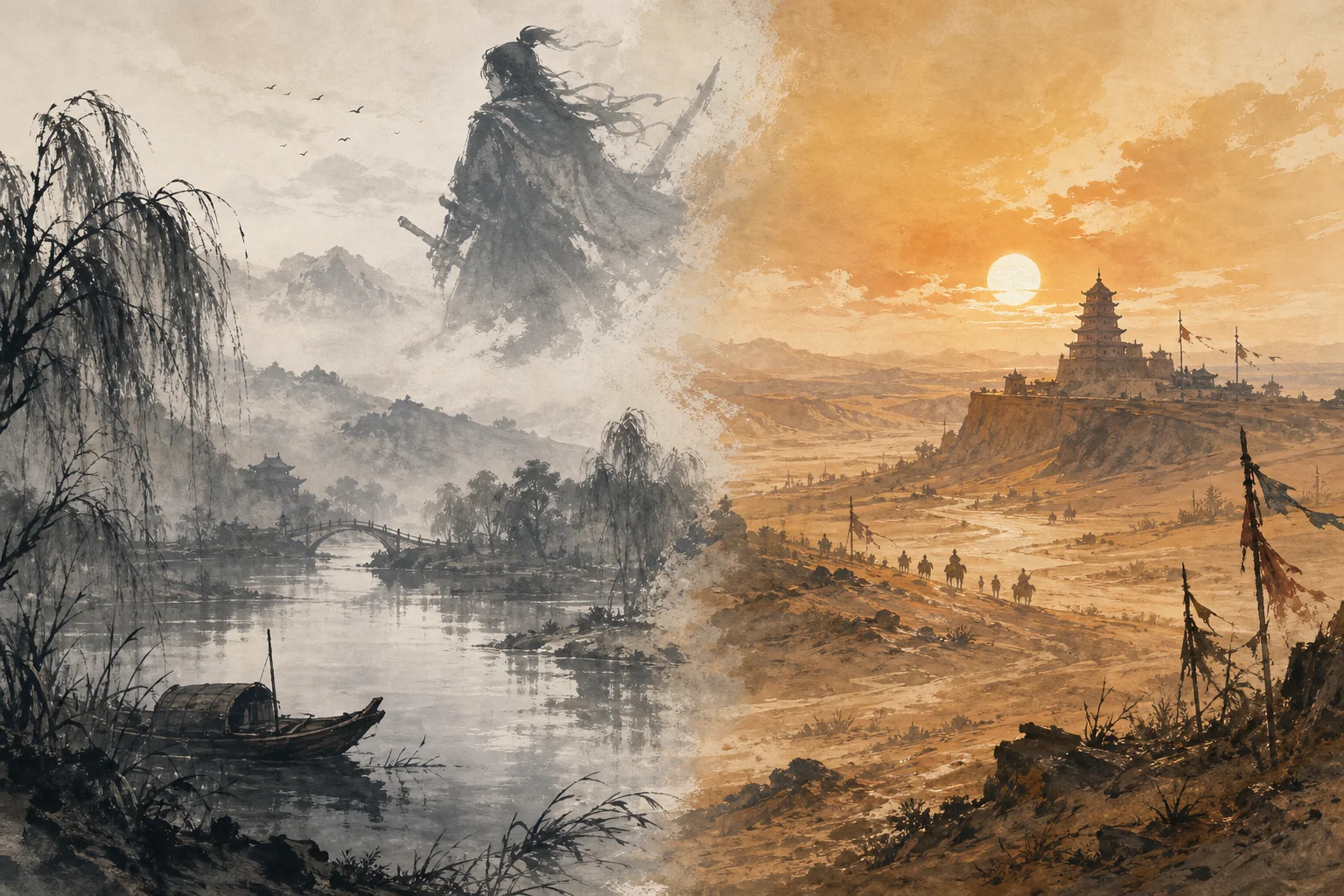
If Kaifeng is the game's crowded heart, Qinghe (清河, Qīnghé) and Hexi (河西, Héxī) are its lungs and its dream. Everstone built each major region around a core emotional theme — not a textbook province boundary — then filled the map with wuxia fiction on top. Qinghe asks: what happens when heroes disappear and only stories remain? Hexi asks: what if the frontier feels like a poem that slipped out of time? This article unpacks those design intentions, the history and art they echo, and why Hexi in particular bends the calendar.
Spoiler note: Regional themes and publicly shown expansion content only — no main-quest walkthrough.
Three regions, three questions
| Region | Official theme (paraphrased) | Cultural mood |
|---|---|---|
| Kaifeng (开封) | Prosperity beside decay | Urban jianghu — wealth, crowds, rot under gilt |
| Qinghe (清河) | Vanished xiake legends | Rural rivers — myth, absence, swords that outlive their owners |
| Hexi (河西) | Poetic dreamscape | Western frontier — wine, exile, Dunhuang light, late-Tang romance |
The game's calendar broadly sits in the Five Dynasties and Ten Kingdoms (~907–960). Regions do not all obey that date with equal strictness — Hexi is the famous exception. Think of the map as emotional geography first, atlas second.
Qinghe: the clear river and the missing hero
Qinghe literally means “clear river” — a common place name in Chinese geography, evoking clean water, fishing villages, and the quiet countryside beyond city walls. Everstone's Qinghe is not primarily a documentary county. It is a jianghu memory palace.
Design focus
The disappearance and re-emergence of xiake (侠客) — knights-errant who exist as legend as much as person
Wuxia echo
Heroes who rode out and never returned; villages that tell conflicting stories; swords buried under willows
Contrast with Kaifeng
Less canal tax-grain politics, more myth recovery — who gets to remember the jianghu?
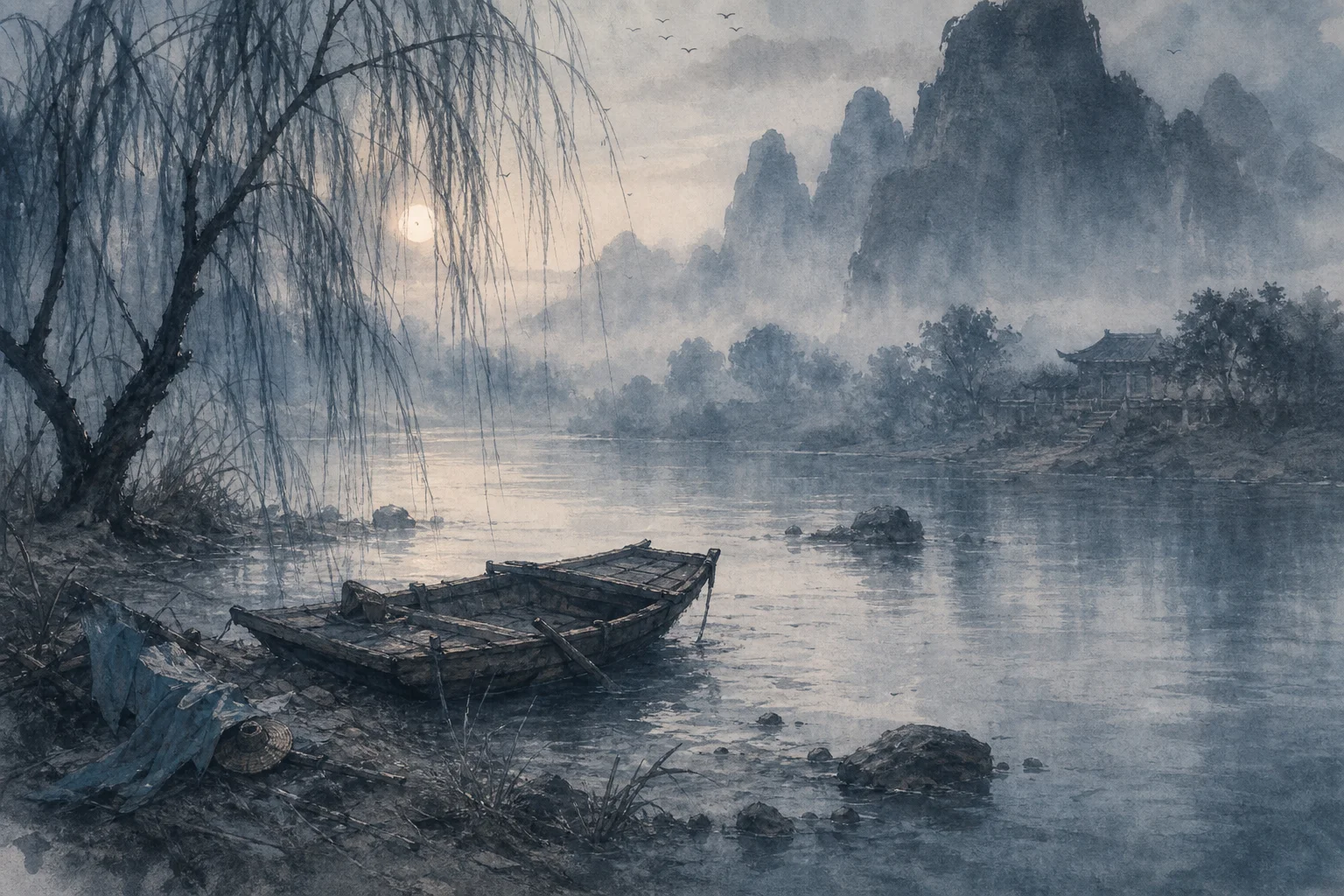
In wuxia fiction, rural rivers are where official law thins and storytellers thicken reality. A magistrate might dismiss a bandit; a Qinghe elder might swear the same figure was a savior. That ambiguity is genre-native — and it fits a century when records themselves are shredded by constant regime change.
Gameplay in Qinghe (per official region framing) leans toward exploration and legend-hunting rather than palace intrigue. You are still a youxia — see our jianghu primer — but the region asks you to feel like a detective of myths.
Hexi: west of the river, east of the calendar
Hexi means “west of the [Yellow] River” — historically the corridor toward the Silk Road, Gansu, and the Buddhist art center of Dunhuang (敦煌). Real Hexi is arid, wind-scoured, and lyrically overloaded in Tang poetry: exile posts, frontier garrisons, wine cups glowing in moonlight.
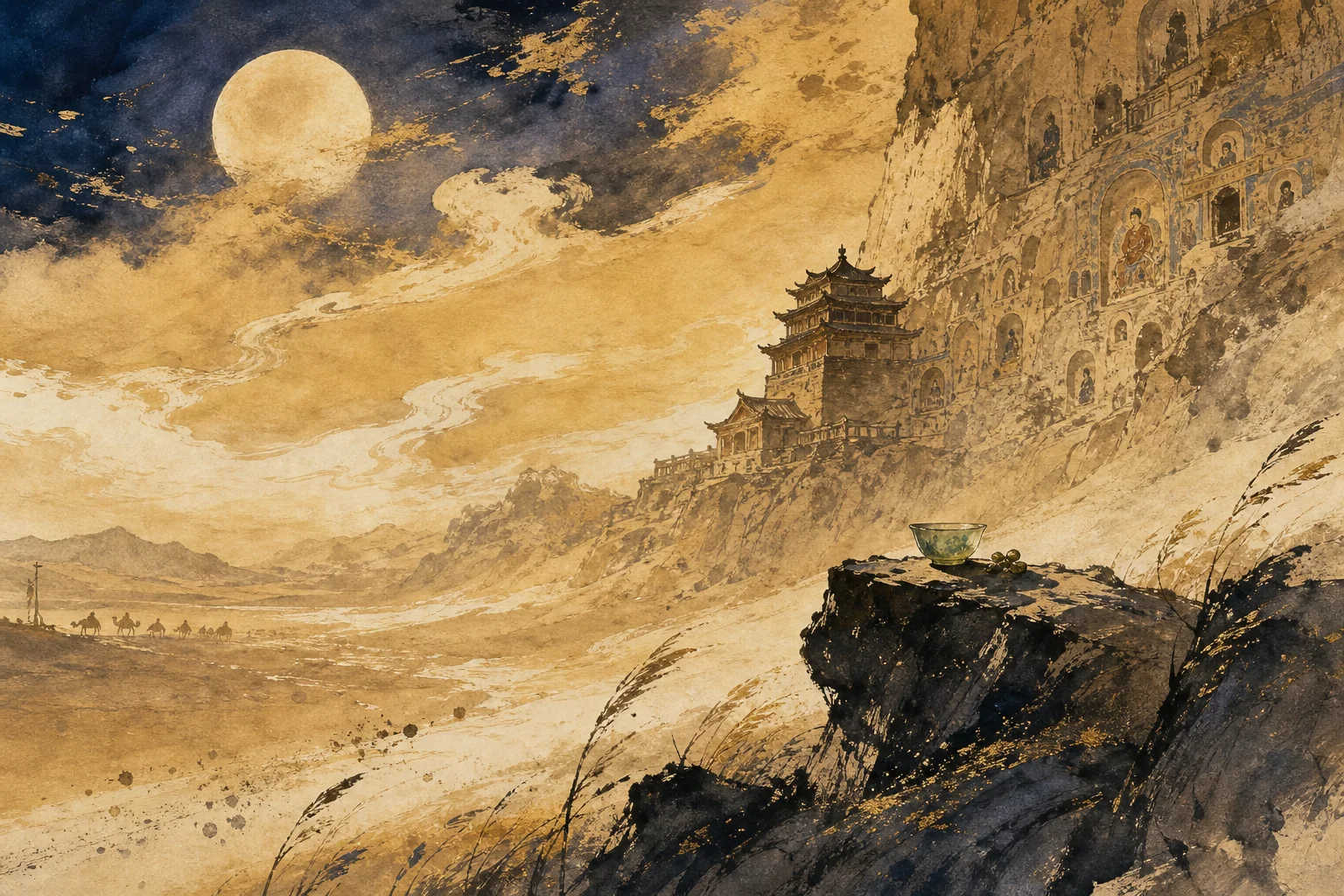
Everstone describes Hexi as a dreamscape that can step outside strict Five Dynasties dating. Developers have cited:
- Tang frontier poetry — especially moods like Wang Han's (王翰) Liangzhou lyrics (葡萄美酒夜光杯 — jade cups, grape wine, battlefield tomorrow)
- Xieyi (写意) expressive brush logic — suggestion over literal detail; feelings painted loose
- Dunhuang flying-deity dance — motion capture from Beijing Dance Academy choreography for celestial movement
Intentional time-slippage: Hexi may feel late-Tang while Kaifeng feels early-Song-ish. That is a design choice — romantic west vs bureaucratic east — not a continuity mistake. See our living doc.
Where Qinghe is about who is forgotten, Hexi is about what cannot be pinned down — sand, music, mirage, memory of a dynasty that already ended but still sings in exile poetry. Expansion materials have framed Hexi content as a more poetic, romantic contrast to the Central Plains grind.
Poetry as regional design language
Chinese players often experience Hexi as “the region that quotes poems at you.” That is closer to classical culture than to modern open-world convention:
- Frontier songs (bian sai shi 边塞诗) — beauty beside death; mandatory nostalgia
- Wine, moon, and jade cups — shorthand for carpe diem on the wall
- Camel bells and pagodas — Silk Road visual grammar without needing a trade-sim mechanic
Audio direction in the broader game also weaves folk theater and poetry-as-lyrics — Hexi is where that approach is allowed to be most nakedly lyrical.
Qinghe vs Hexi — how to read the contrast
Qinghe
Legend archaeology
Water villages, willows, empty docks — jianghu as local oral history. Who was the hero? Did they leave?
Hexi
Poem geography
Desert wind, grottoes, dance in moonlight — emotion as terrain. Time bends toward Tang romance.
Both
Not Kaifeng
Escape from canal capitalism and court rot — different exits, same fractured age.
Brief note: Hidden Mountain
A fourth major region, Hidden Mountain, themes wind, light, and stone — wisdom-seeking and vertical exploration (cliffs, forests, ancient paths). It is less tied to a single historical poem-tradition than Qinghe or Hexi, and deserves its own future deep dive if the game expands further. For now, treat it as the map's meditation layer — altitude instead of river or desert.
History, genre, and game fiction — quick filter
| Element | Layer |
|---|---|
| Hexi corridor & Dunhuang art history | Documented culture |
| Vanished xiake, conflicting village tales | Wuxia genre |
| Named NPCs, sect hooks, region quests | Game fiction |
| Late-Tang mood inside Five Dynasties calendar | Artistic compression (especially Hexi) |
Read next
- From Five Dynasties Chaos to Song Reunification — where the map trends after 960
- Yan Yun & the Sixteen Prefectures — northern pressure behind all three regions
- Glossary — Qinghe, Hexi, Dunhuang, Xieyi
Further reading (English)
- Tang frontier poetry anthologies — look for Liangzhou-themed lyrics and bian sai poems
- Dunhuang Mogao Caves digital tours — flying apsaras murals for Hexi visual context
- Jin Yong / wuxia films set in rural rivers — mood references for Qinghe's legend-hunt feeling
Dragon Forge Culture is editorial — not affiliated with NetEase or Everstone Studio. Regional themes paraphrase official development interviews and PlayStation Blog materials.