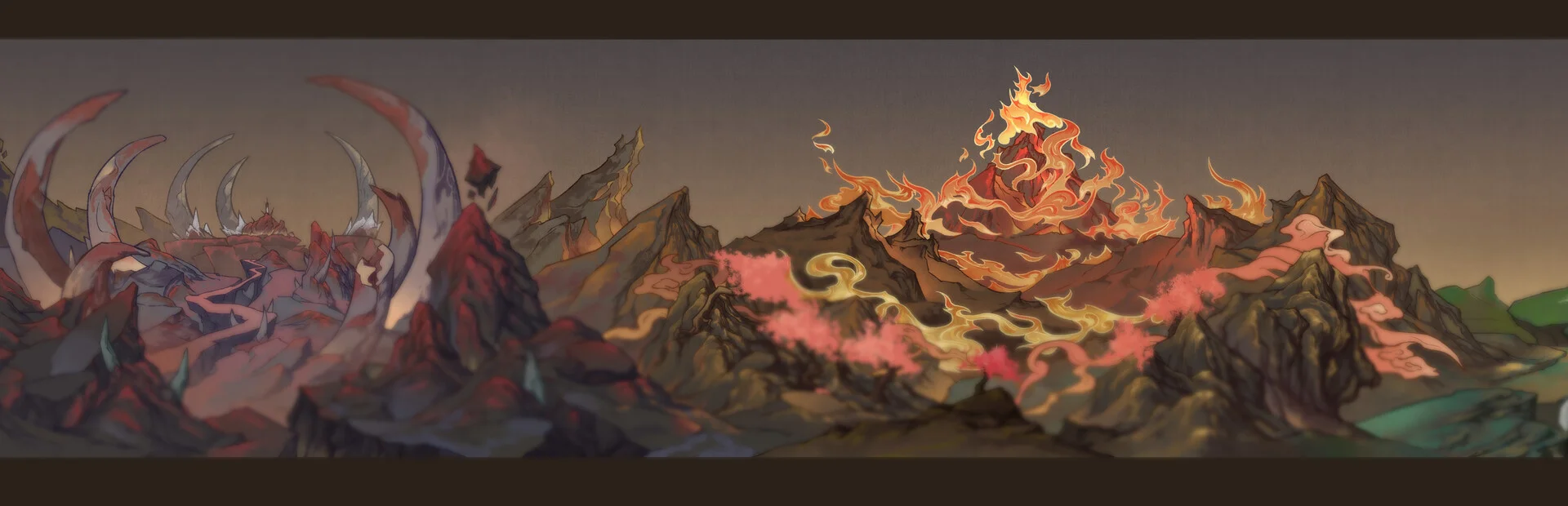
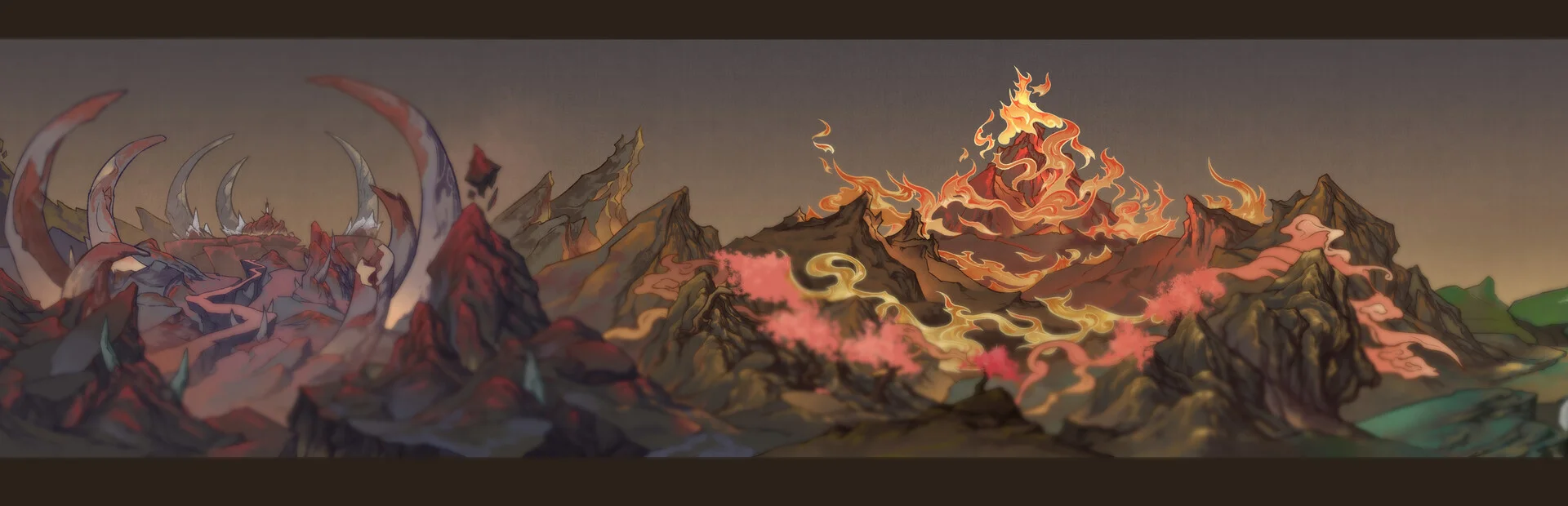
Review info: v1.0 Beyond the Dome (2026-06-17) · PC (Steam) · ~50 hours played · Light spoilers for main-quest framing only
Read this first: New to jianghu? Start with our Wuxia & Jianghu in 10 Minutes. Already bought and stuck? See player guides for v1.0 mechanics.
After seven years in Steam Early Access, ConchShip Games has shipped v1.0 — Beyond the Dome (太吾绘卷:天幕心帷), and for Western players this is the first time the game arrives with a full English localization, difficulty tiers, and a coherent onboarding path. That matters, because The Scroll of Taiwu was never trying to be Black Myth: Wukong or Phantom Blade Zero. It is closer to a martial-arts Kenshi: a procedural jianghu where you inherit a bloodline across generations, befriend sects, learn thousands of techniques, and slowly unravel a hereditary vendetta — all in turn-based combat where every strike targets a specific body part. The question after v1.0 is not whether Taiwu is ambitious. It obviously is. The question is whether you are the kind of player who will love wrestling with its rules.
From Early Access to Beyond the Dome
ConchShip launched Taiwu on Steam in September 2018. What shipped on June 17, 2026 is not a victory lap patch — it is a ground-up reboot. Movement, combat distance, inner-energy systems, sect progression, and the endgame layer were rebuilt for v1.0. Old saves do not carry over. Steam keeps an EA Classic branch for veterans who want the pre-v1.0 experience, plus a character-transfer tool for partial migration. If you left during Early Access because the game felt unfinished or opaque, that frustration was fair — and you should treat v1.0 as a new product, not a continuation.
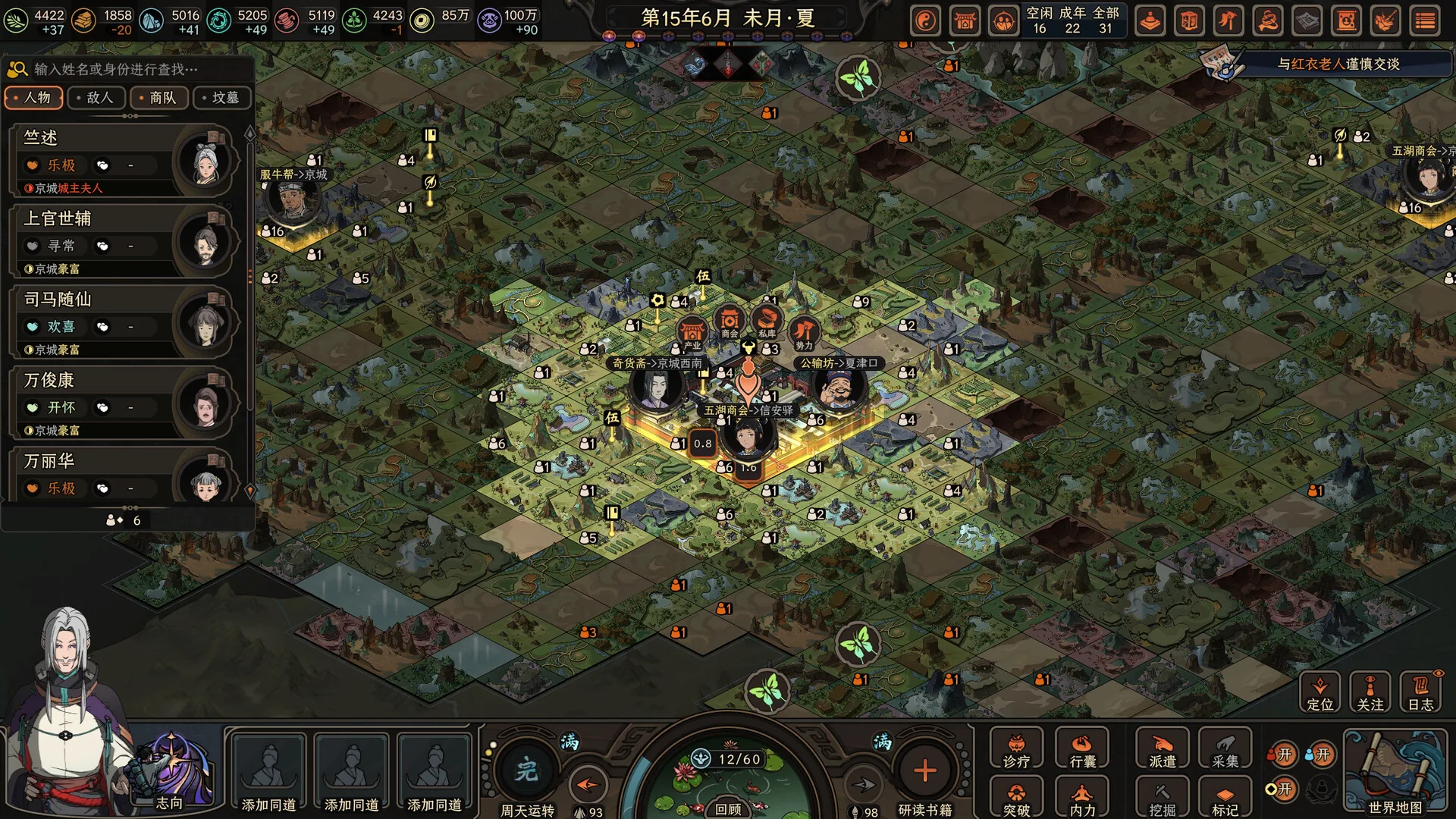
ConchShip is a Hangzhou indie studio (螺舟工作室). Taiwu remains PC-only on Steam (app 838350), premium-priced with no subscription or battle pass. For players comparing it to recent Chinese action hits, reset expectations now: Taiwu is slow, text-heavy, and proud of it.
The generational jianghu loop
Taiwu's daily rhythm is deceptively simple once you survive the opening: befriend → learn → strengthen → push Sword Tombs → repeat across heirs. You play the heir of the mysterious Taiwu clan, building favor with NPCs, stealing reading time for manuals, upgrading your village, and clearing tomb gates when you are ready — not when a quest arrow insists.
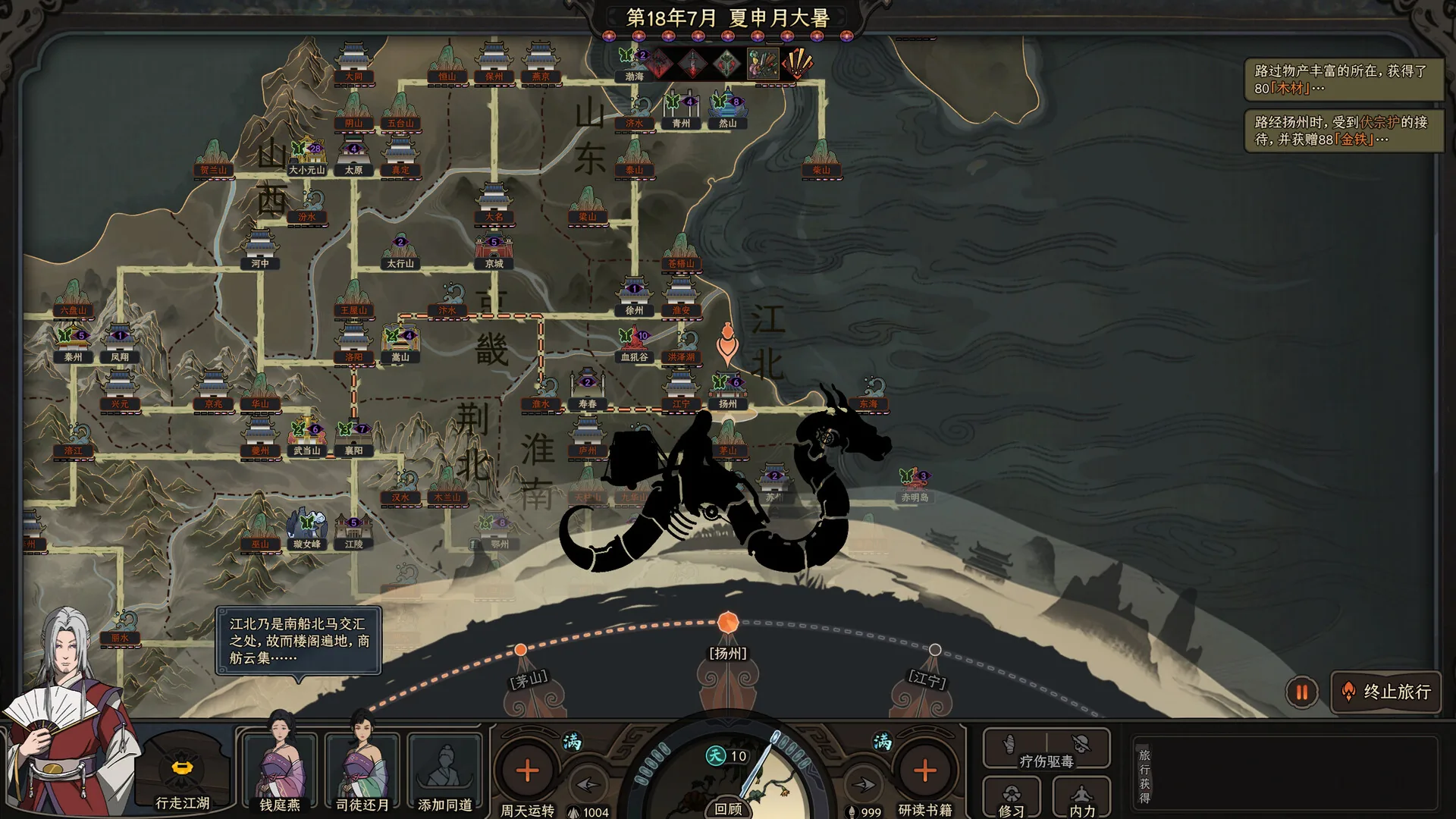
What makes the loop special is generational play. Failure is rarely a hard game over. When an heir falls short, you pass the scroll forward — carrying grudges, alliances, and unfinished business into the next life. That design pairs beautifully with the hereditary-enemy mainline: your clan's vendetta spans bloodlines, so a single bad month can sting for generations. For context on why generations matter in Chinese fiction, see our Taiwu bloodline primer — this review focuses on whether it plays well, not what it symbolizes.
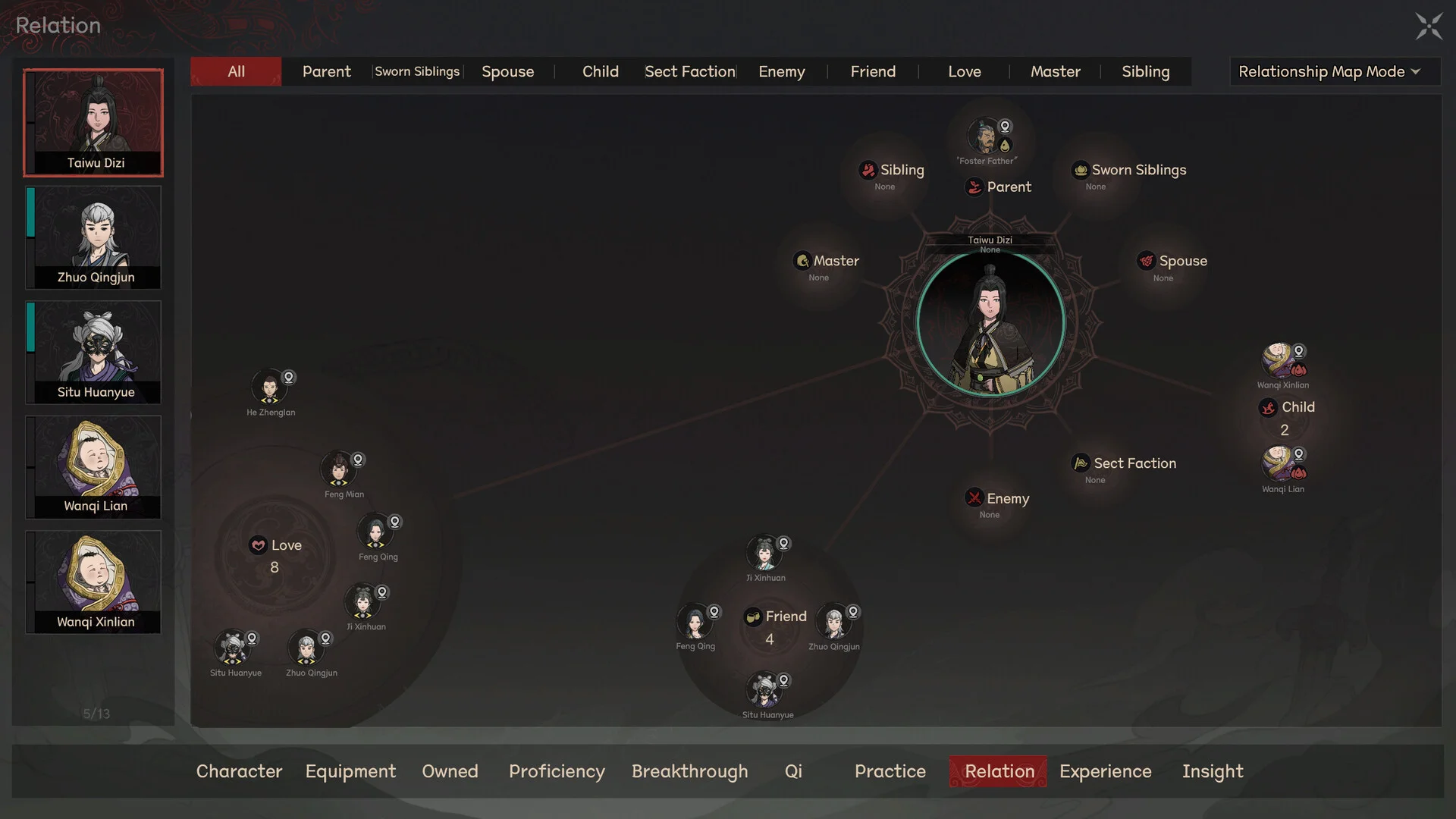
Fifteen martial sects and thousands of techniques sound like marketing copy until you are three hours into comparing movement manuals and inner-art compatibility. The breadth is real. The depth is real. So is the UI friction. NPCs are procedurally generated within sensible bounds, which produces emergent stories — a rival who keeps showing up, a sect elder who becomes a surrogate mentor — but also moments where nobody feels as memorable as a hand-written RPG cast. v1.0's demonic cultivation path adds build variety for players willing to walk a darker route; we will not unpack its cultural roots here (Culture already did).
Turn-based body-part warfare
Combat is turn-based, distance-aware, and anatomical. You are not timing parries in real time — you are managing spacing, reading stances, and deciding whether to cripple a leg or shatter an guard. It feels tactical and deliberately slow compared to action wuxia. If you bought Taiwu expecting Phantom Blade pacing, you will bounce off the first Sword Tomb.
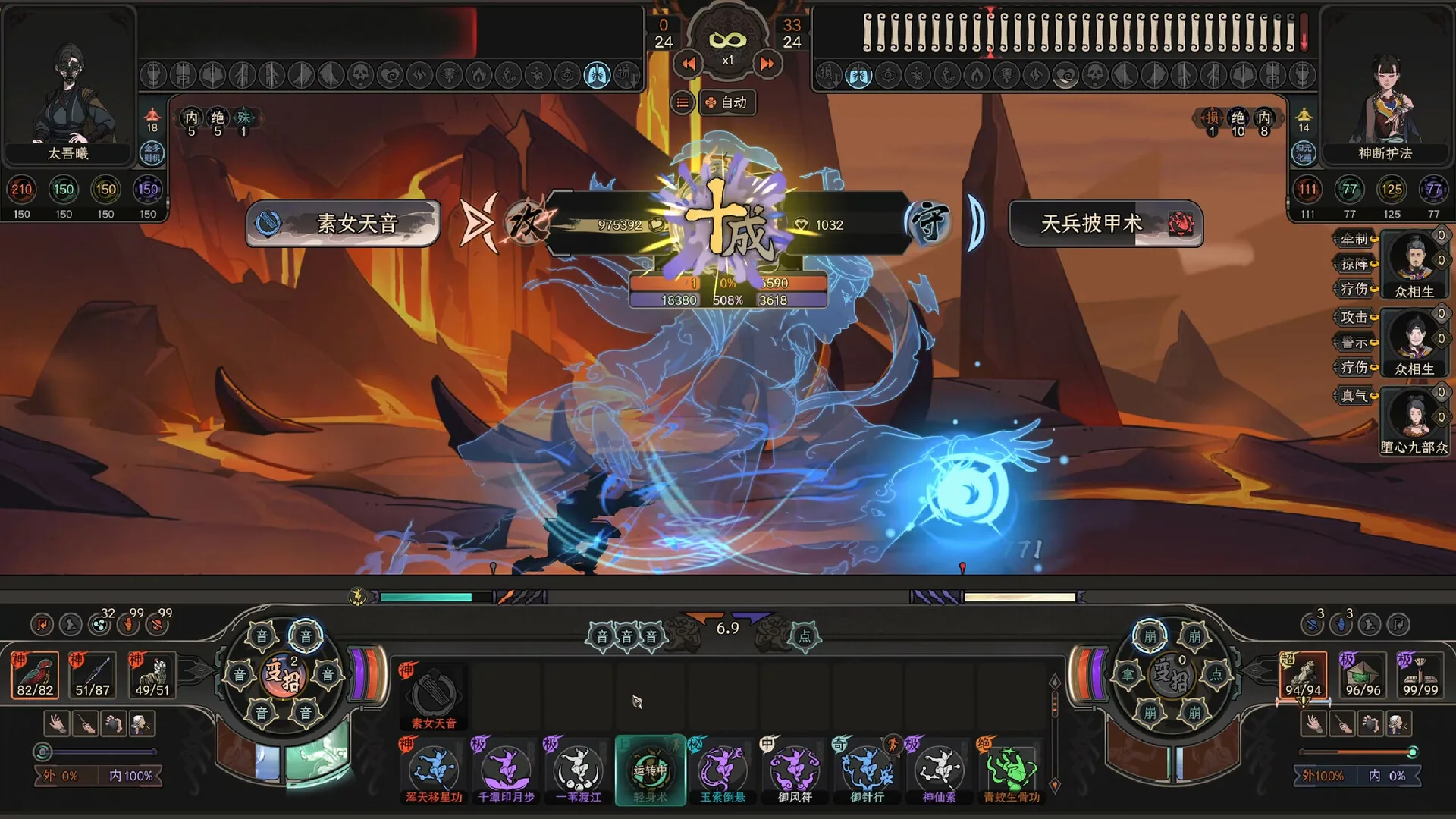
v1.0's Movement Speed 2.0 overhaul makes spacing readable for veterans but still demands study. Inner-power counters, weapon categories, and manual synergies interlock like a spreadsheet wearing a wuxia coat. We are not publishing counter tables here — player guides cover Sword Tomb matchups — but the high-level verdict is: rewarding if you enjoy systems puzzles, grindy if you want fights to stay intuitive. Sword Tombs act as difficulty gates. Clearing one feels like a graduation. Stalling on one feels like the game is asking you to live in a wiki until the numbers align.
Life beyond combat
Taiwu's village layer is not padding. Building out your home valley, managing seasons, forging gear, and tending crops gives the jianghu breathing room between tomb pushes. It also feeds the economy that funds travel and manual acquisition — ignore your village and the wider map squeezes back.
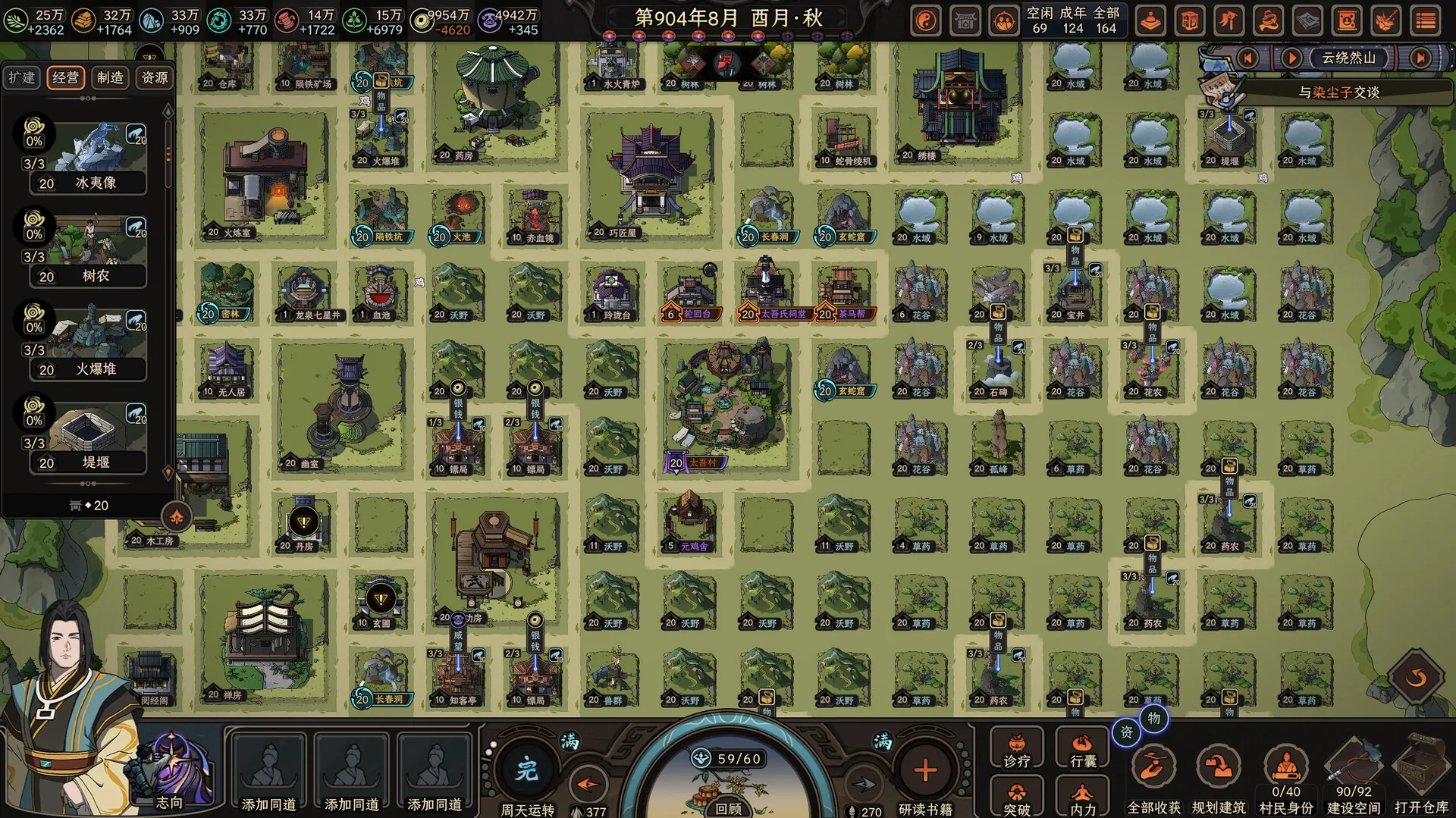
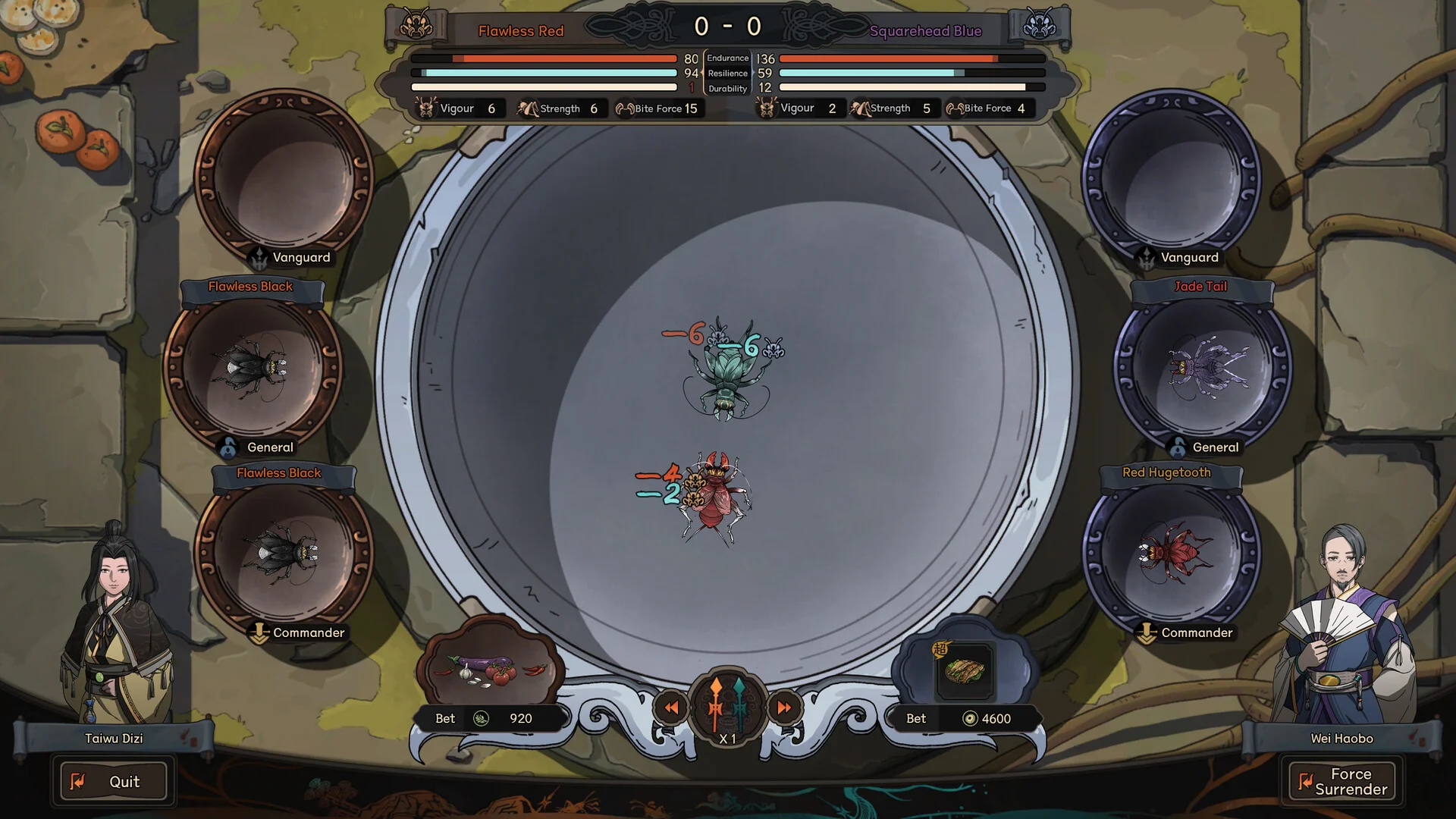
Then there is cricket fighting, calligraphy minigames, and the thousand small trades that make Taiwu feel like a world rather than a combat arena. Not every pastime will hook every player — I treated some as charming flavor, others as mandatory detours — but together they sell the fantasy that jianghu life is more than duel spam. Full-map seasons and day-night weather in v1.0 add immersion without rewriting the core loop.
Story, lore, and the Baixiao Manual
Taiwu's mainline revolves around a hereditary enemy tied to the Taiwu clan — a vendetta that outlives any single heir. We will not spoil the v1.0 endgame myth layer here; suffice to say Beyond the Dome adds a genuine late-game challenge stack beyond clearing tombs for sport. Players who want endgame lore details should read our Culture article on the Tianmu Host and Santu demons — it is marked major spoilers.
Inside the game, the Baixiao Compendium (百晓册) stores 300,000+ Chinese characters of in-world reference text. For lore hounds, it is a gift: a built-in archive instead of a fragmented wiki. For story-first RPG fans, the procedural cast means emotional peaks come from systems-driven drama rather than scripted set pieces — brilliant when it fires, flat when it does not. Our Baixiao culture piece explains how the manual relates to real encyclopedic traditions.
Presentation, audio, and English localization
Taiwu's 2D ink-wash presentation is instantly recognizable. It will not compete with 3A lighting demos, but it ages gracefully and keeps UI readable. v1.0's dynamic CG moments punch above the budget whenever the story calls for scale.
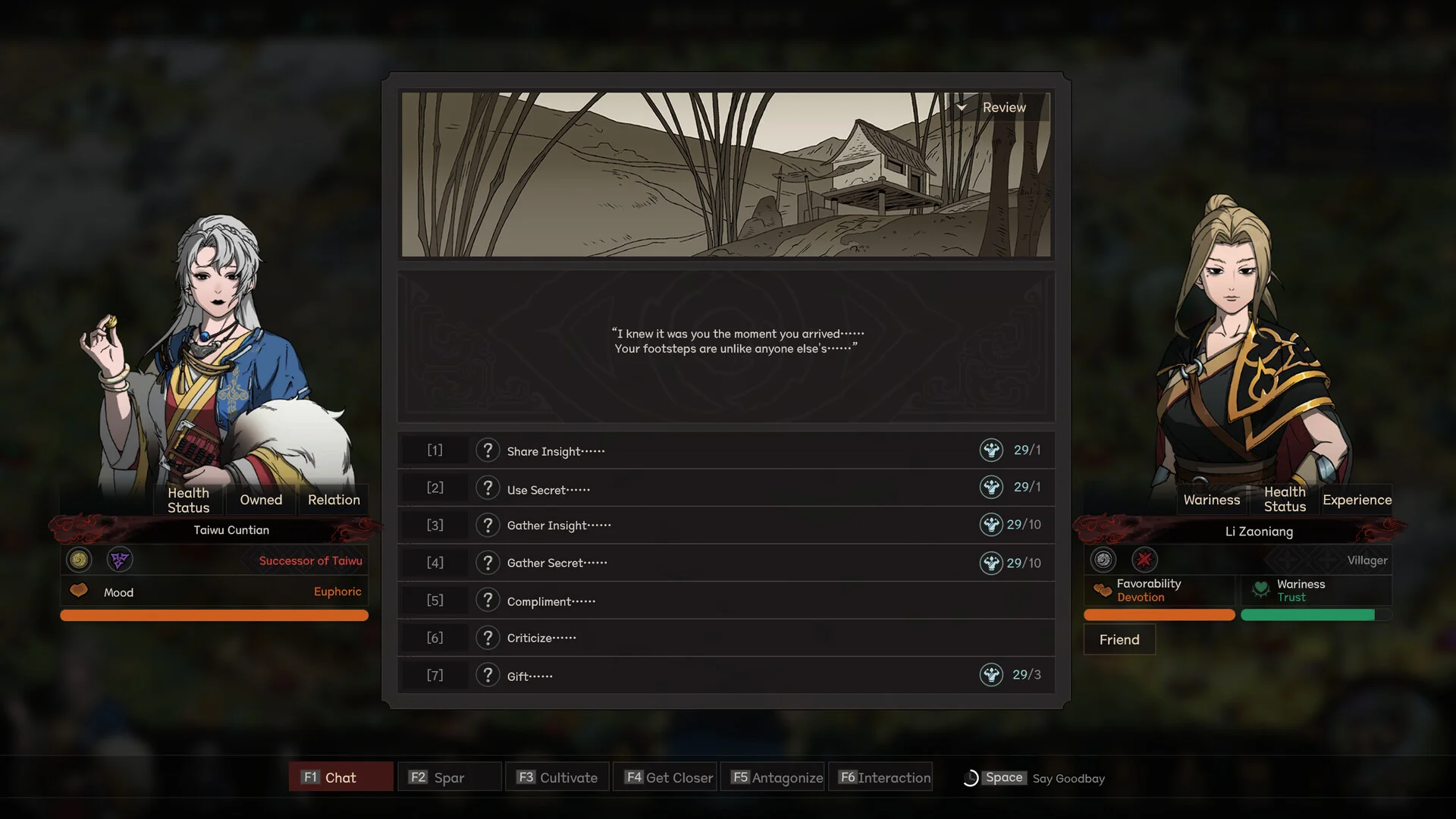
The Western launch story lives or dies on localization. ConchShip claims four million translated characters for v1.0, and in practice the English UI is finally playable without constant tab-switching to fan wikis. Terminology stays consistent enough that sect names, inner-energy types, and tutorial prompts land for newcomers — though dense menus still assume you will reread tooltips. Audio is solid wuxia atmosphere: strings, percussion, and environmental cues that sell travel without overpowering the text. Do not expect full English voice acting; this is a reading game.
Performance, saves, and quality of life
On a mid-range PC (Ryzen 5 / RTX 3060 class), v1.0 ran smoothly at 1080p with occasional stutter in crowded towns — acceptable for a 2D sandbox, not flawless. Your mileage will vary at launch as hotfixes land; treat performance as a live-service variable for the first month.
The bigger QoL debate is saves. Taiwu auto-saves only at month rollover. Quit mid-month and you reload the month start. That design reinforces long-term planning, but it clashes with modern expectations and makes experimentation expensive. Combined with EA save incompatibility, returning players face both a learning curve and a trust curve. v1.0 difficulty tiers and guided early hours help — they do not remove the need for patience.
Value and verdict
At premium pricing, Taiwu offers enormous systemic depth and multi-generational replayability. You are not buying a 40-hour cinematic; you are buying a hobby that can swallow seasons if the loop hooks you.
Who should buy: Sandbox diehards, wuxia genre fans, players who enjoyed Kenshi-like emergent stories, and anyone who wants a unique PC RPG that could not exist outside Chinese game design.
Who should wait: Action-combat seekers, narrative-only RPG fans, and players unwilling to pair the in-game manual with community guides.
Who should use EA Classic: Early Access veterans who prefer the old ruleset and accept staying on a legacy branch.
The Scroll of Taiwu v1.0 justifies the long wait for the patient audience it always chased. It is a deep, one-of-a-kind jianghu simulator — not a pick-up-and-play RPG for everyone. If you are ready to commit, start at the Game Hub for store links, then dive into our Culture primer series once the tutorials stop making sense.