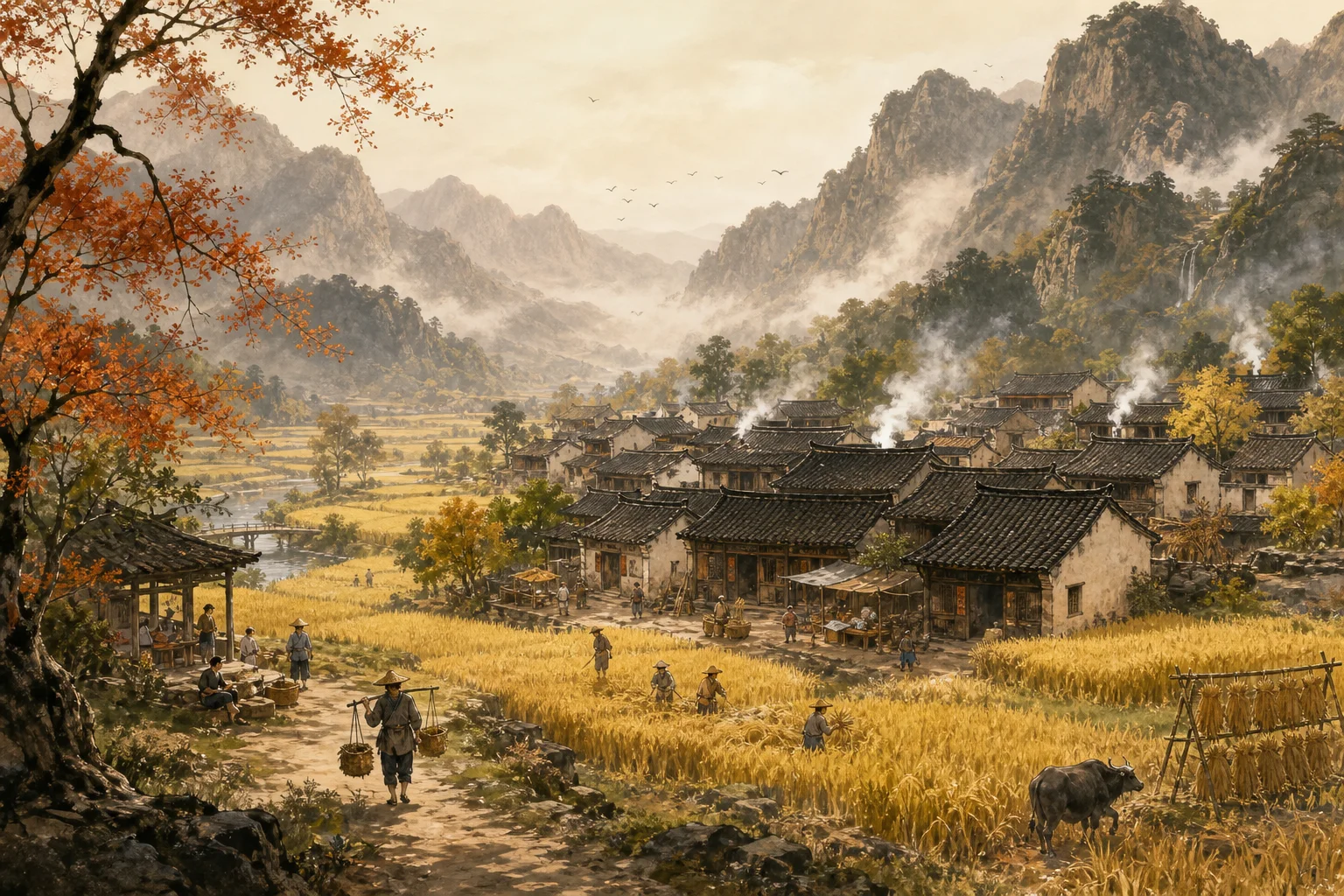
Wuxia marketing often foregrounds swords and sect gates. The Scroll of Taiwu also promises village building, crafting, marriage, and seasons across the map — the life you live between vendettas. If you played our jianghu primer, you know the martial world has a social layer. This article explains the rural layer: why settling down is culturally legible in Chinese fiction, what 安身立命 (establishing yourself) means, and how v1.0's day-night weather and seasonal cycles echo pre-modern village rhythm — without turning culture into a farming tutorial.
Village life is not side content
In many Western RPGs, farming is a minigame bolted onto an adventure. In Taiwu's pitch — and in much Chinese sandbox imagination — village life is parallel main content:
安身立命
Establish a secure livelihood and moral place in the world
烟火气
Literally “smoke and fire” — the texture of everyday domestic life
In Taiwu
Build, plant, marry, inherit — then pass the village to the next heir
A knight-errant who never eats, never ages, and never owns a roof is a video-game convenience. A wuxia heir who can farm, open a workshop, and raise children feels like a person inside jianghu geography — the same map where sects feud and enemies wait.
Not a mechanics guide: We are not listing crop yields, build order, or optimal village layouts. This is why rural play means something culturally.
What “building a village” signals
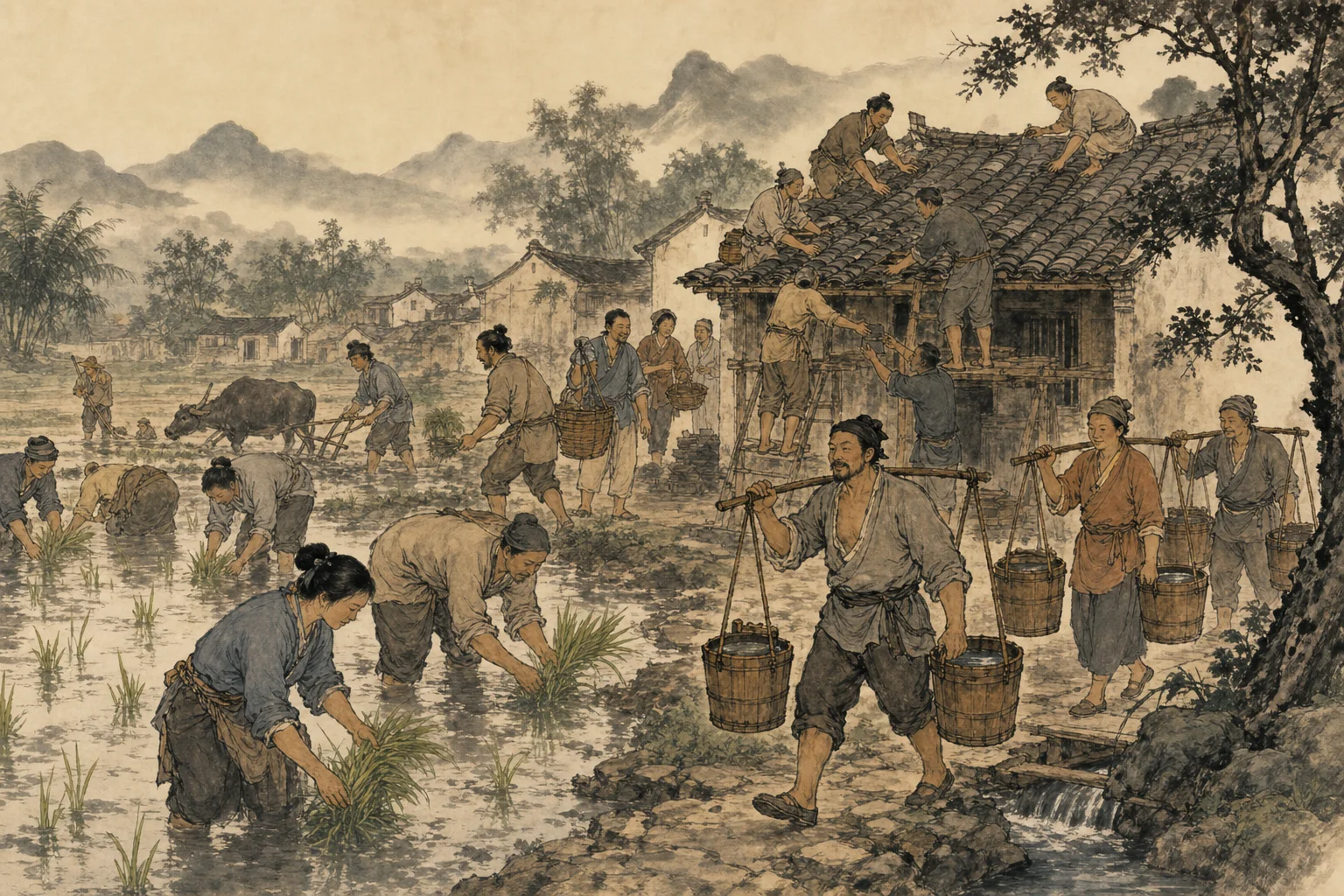
When Taiwu lets you build villages, it is simulating more than placement grids:
- Rooting — land you improve becomes argument against wandering forever
- Household — marriage and children link to our generational play frame
- Reputation — a prosperous village raises the Taiwu name; a raided one becomes vendetta fuel
- Economy — grain and goods feed martial ambition without magic merchants everywhere
In fiction, heroes retreat to villages to recover, hide, or mourn. Taiwu inverts the pause: the village can be the story for an entire heir while the hereditary enemy waits.
Seasons, day and night, weather (v1.0)
v1.0 Beyond the Dome advertises seasonal and day-night weather across the world map. Culturally, that matters because pre-modern Chinese life was calendar-driven:
| Rhythm | Traditional life | Why games echo it |
|---|---|---|
| Spring plant / autumn harvest | Survival and tax cycles | Deadlines that collide with martial travel |
| Winter storage | Idle months, festivals, repairs | Slower heir — until bandits smell weakness |
| Dawn / dusk labor | Field work at cool hours | Day-night split between craft and risk |
| Rain and drought | Local disaster, migration | Sandbox pressure without a quest arrow |
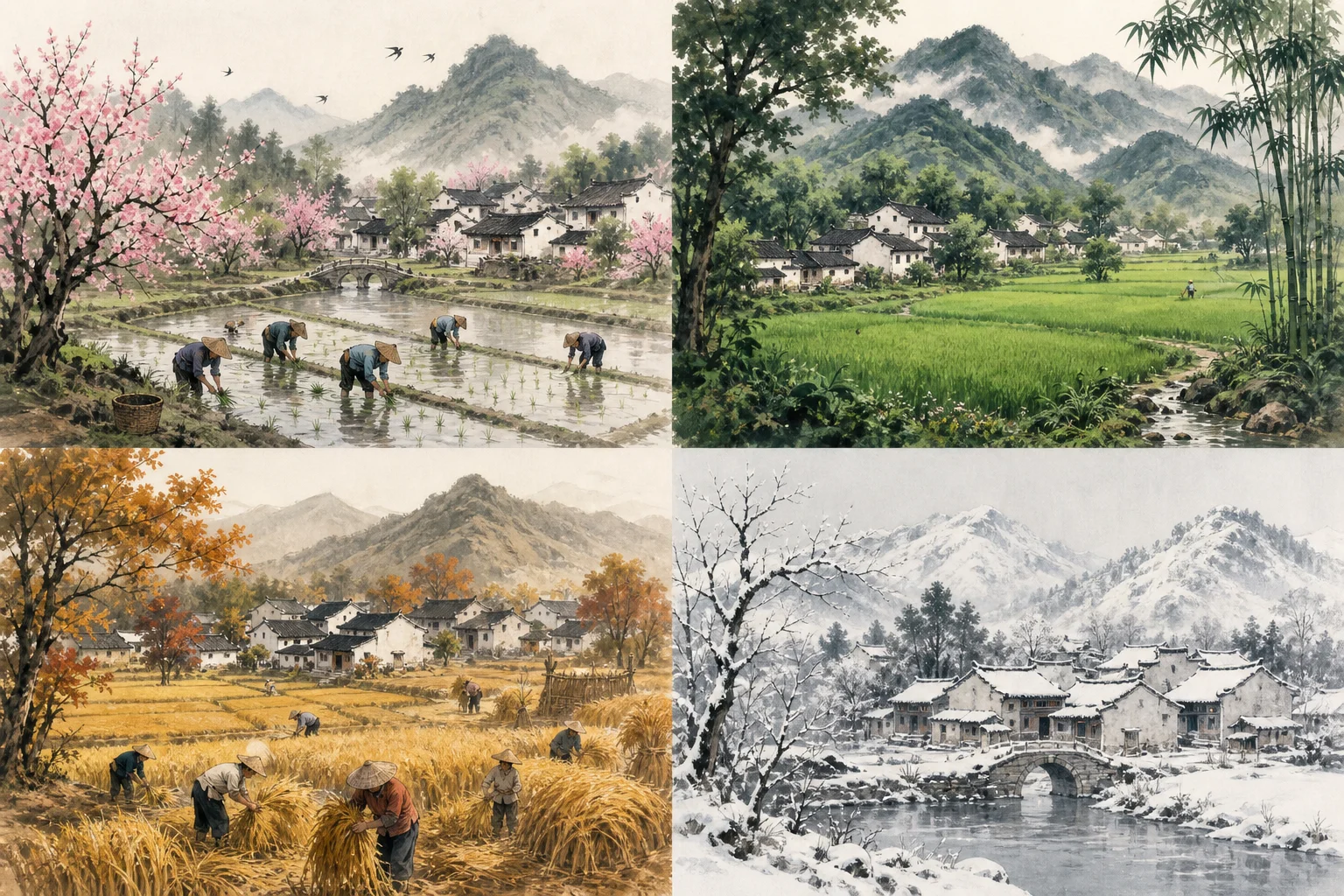
The classical 24 solar terms (二十四节气) divided the year into micro-seasons for planting, rituals, and clothing. Taiwu does not require you to memorize them — but when snow delays travel or harvest pulls you home, you are touching the same emotional logic as Song–Tang village paintings: life obeys sky and soil.
Jianghu vs hearth — both on one map
Chinese players sometimes describe sandbox wuxia as 江湖上的家 — a home on the jianghu, not safe from it. Your village can be:
- A refuge after sect expulsion
- A bargaining chip in alliances
- A target when the hereditary enemy's allies raid stores
- A legacy asset the next heir inherits — or must rebuild
That is why rural play pairs with blood feuds rather than replacing them. Burning a farm is an insult with face consequences, not only a resource loss.
Weak historical comparison (not a dynasty sim)
Taiwu does not simulate a specific historical tax code or corvée roster. Useful weak parallels for mood:
Economy
Self-sufficient hamlet
Grain, tools, and kinship before distant markets — survival first.
Politics
Local elders
Not always officials — respected households mediate disputes.
Risk
Bandits & war
Jianghu and frontier violence reach farms before cities notice.
Fiction
Hidden hero
The retired master posing as a farmer — trope because villages hide stories.
Questions for each heir who settles
- Are you building for this life only, or for the child who inherits the deed?
- Does prosperity attract sect attention — friendly or hostile?
- When the season turns, what do you sacrifice — travel, training, or the harvest?
- If this village burned, would the scroll still be worth continuing?
Next in this series: crafting and forging — the hundred livelihoods that turn a settlement into a living economy.