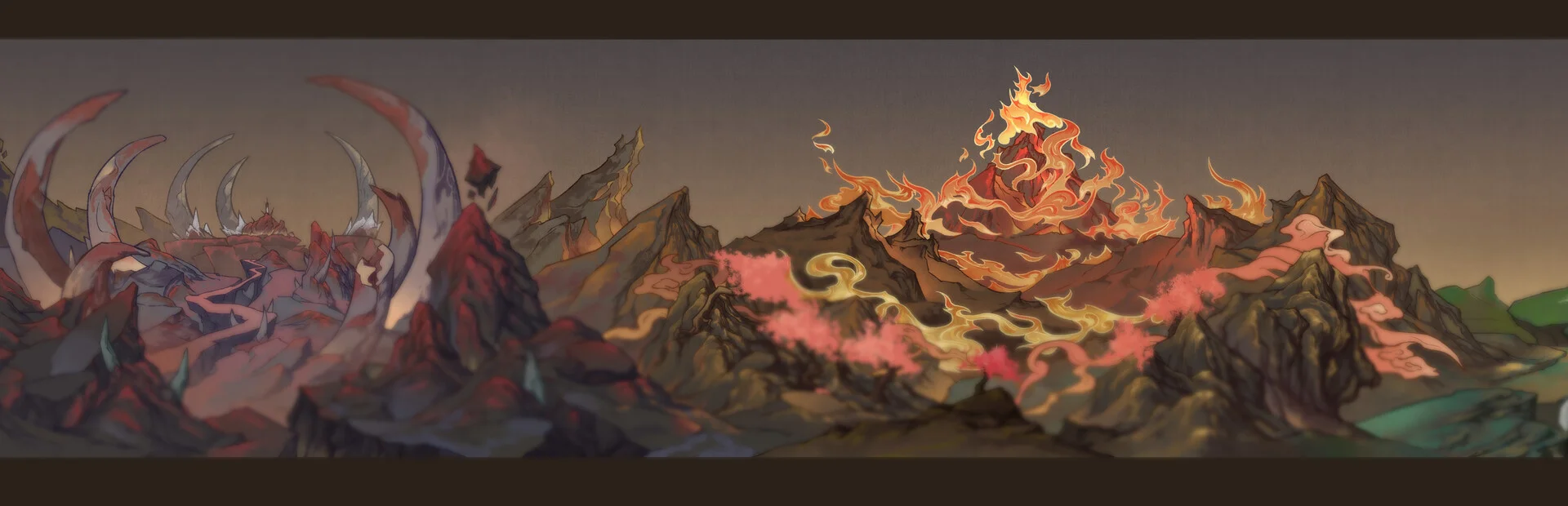
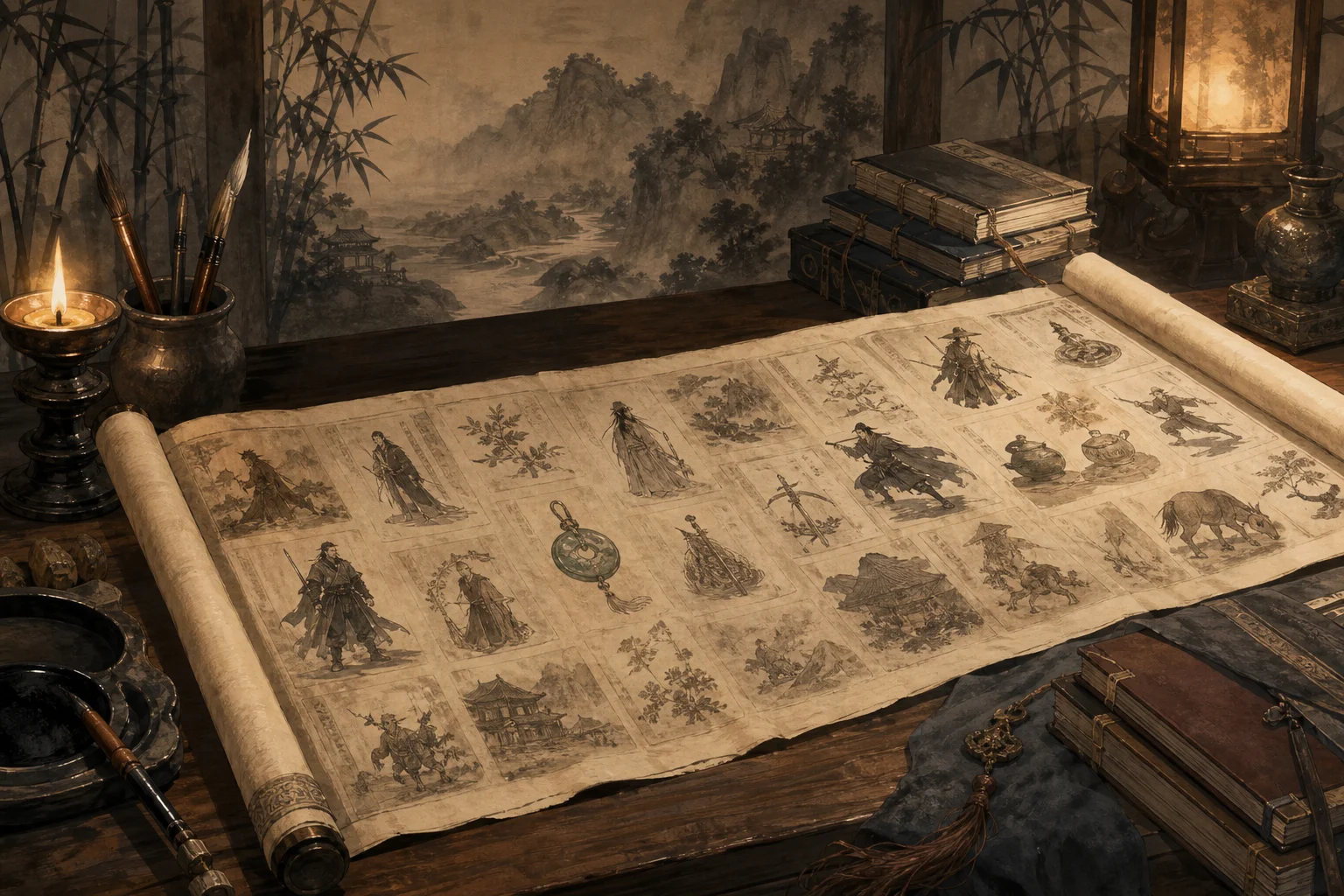
v1.0 Beyond the Dome ships with a Baixiao Manual (百晓册, Bǎixiǎo Cè) — an in-game encyclopedia ConchShip describes as 300,000+ Chinese characters of lore, now paired with official English localization. Overseas players often ask whether Dragon Forge Culture replaces it. It does not. This article closes our Craft, Village Life & Martial Culture series by explaining the split: the Baixiao Manual holds Taiwu canon; Culture holds genre and tradition — the frame that makes canon legible.
What “Baixiao” signals
The name is a wink at old-world know-it-alls:
百
Hundred — breadth, not a literal count
晓
To know / dawn — clarity, being well-informed
册
Booklet / register — reference you browse, not a novel you finish
In fiction, a baixiao type is the pedant, storyteller, or street sage who “knows everything” about local gossip and ancient names. Taiwu turns that archetype into UI: when a sect, technique, or creature confuses you, the manual is the first authority — the same role our glossary plays at a much smaller scale off-site.
What the manual is for
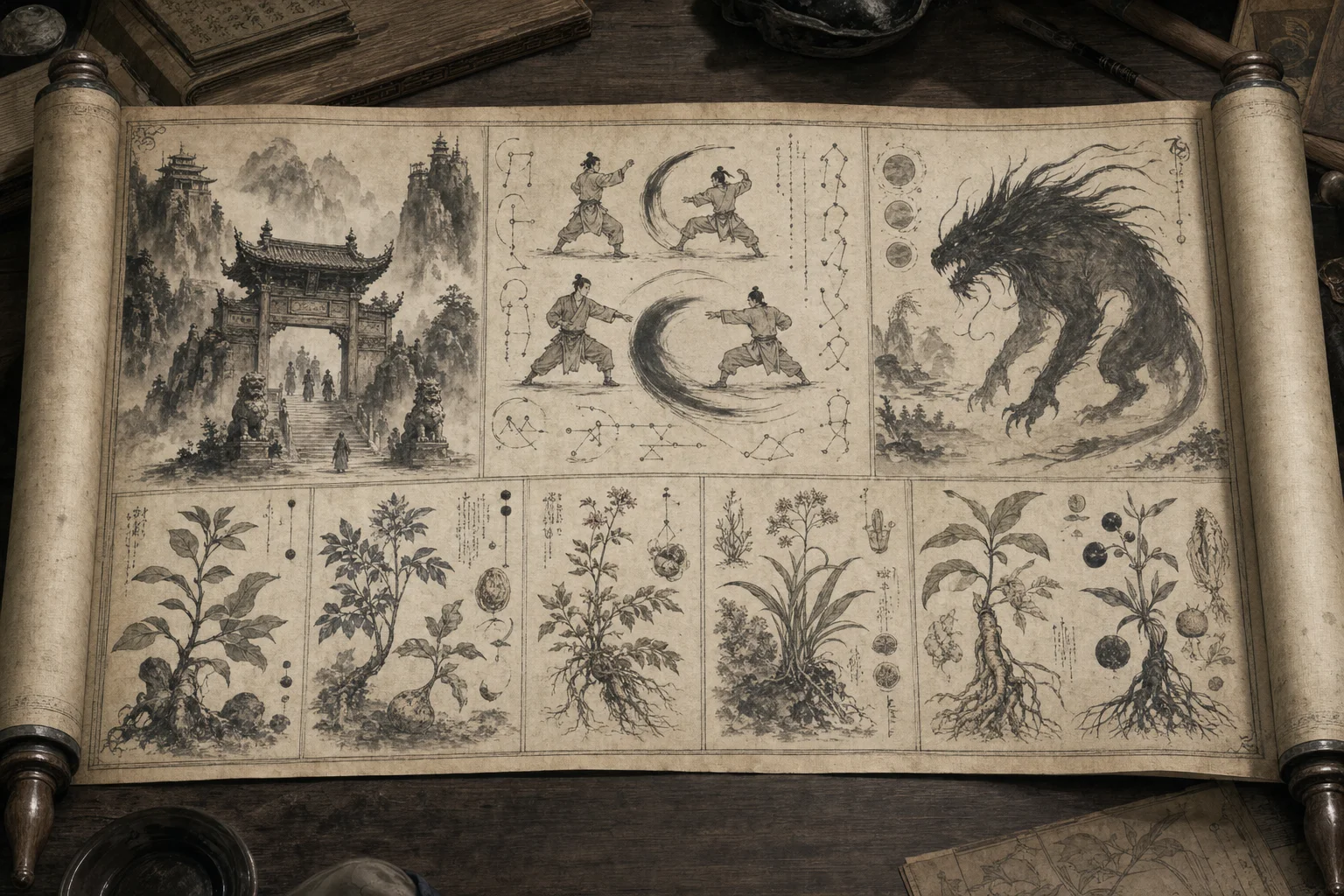
Expect Baixiao entries to answer in-world questions:
- What is this sect and what does it forbid?
- Where does this technique come from in Taiwu fiction?
- What creature, item, or region name did you just meet?
- How did v1.0 rewrite a school such as Emei or Jieqing (界青)?
It is deliberately dense — closer to a CRPG codex than a tutorial tooltip. That density is why ConchShip could iterate for years: the scroll is the archive of their sandbox, not a marketing FAQ.
Canon rule: When a Culture article and the Baixiao Manual disagree on spelling or detail, trust the in-game encyclopedia for Taiwu facts. Trust Dragon Forge for why the tradition behind the fact exists.
Culture vs Baixiao — division of labor
| Question | Baixiao Manual | Dragon Forge Culture |
|---|---|---|
| Who is Taiwu sect X? | Game entry — manuals, leaders, history | What sects mean in wuxia |
| What is this meridian term? | In-universe explanation | Martial body culture |
| Why cricket fighting? | Item / activity lore | Folk pastime history |
| Is this from Shan Hai Jing? | Taiwu's version of the name | Myth vs game fiction |
| v1.0 vs EA changes? | Updated entries in-game | Living doc A4 |
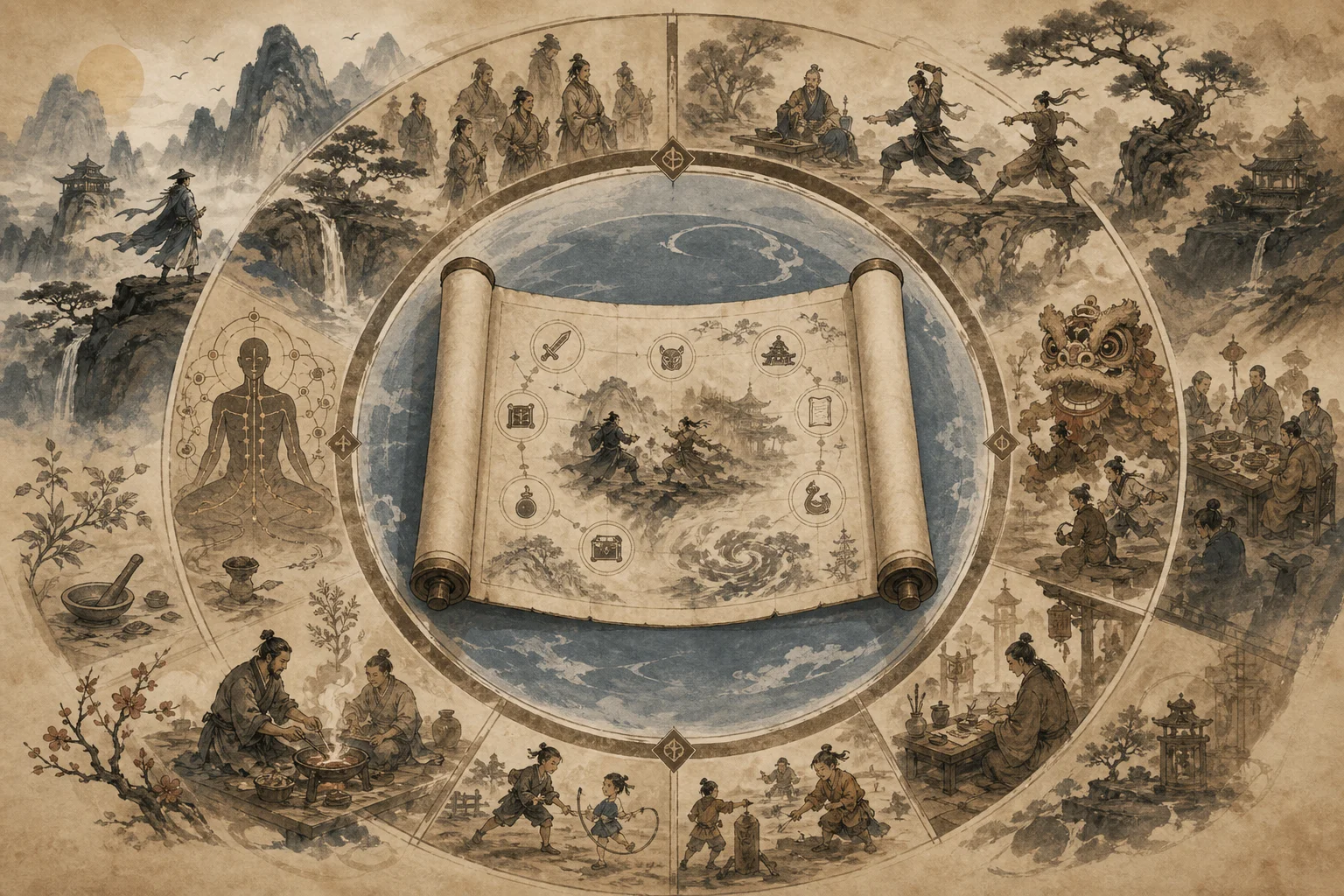
Short version from our reading order article: play, browse Baixiao when names bite, return to Culture when you ask why this genre works this way.
Why both exist in v1.0
Official English localization (millions of characters across the game) lowers the language wall — but it does not teach wuxia type grammar to someone raised on Tolkien and D&D. Baixiao answers “what is Jieqing?” Culture answers “why do Chinese martial games keep inventing mountain schools?”
In-game
Immersion
Lore stays diegetic — you discover through play, not homework tabs.
Off-site
Onboarding
Primers before or between sessions — no spoilers required.
Glossary
Quick pin
One-screen terms; links out to longer series.
Future
Quick Reference
Living doc mapping game elements ↔ tradition (module D).
What we deliberately do not duplicate
Culture articles avoid:
- Pasting Baixiao text or paraphrasing every sect entry
- Mechanics wikis — crop math, forge tables, optimal builds
- Claiming non-official canon when the manual is silent
We do point you back to Baixiao whenever a proper noun is the point — see mentions across sects, craft, and myth articles.
Practical workflow for players
- Skim Culture series A (world primer) — ~35 minutes, no spoilers
- Play v1.0; open Baixiao when a name blocks enjoyment
- Return to Culture B / C when social or craft systems feel opaque
- Use Glossary for one-line reminders; Baixiao for depth on that noun
- Watch A4 and upcoming Quick Reference for version drift after patches
End of module C — where next
This series moved from village rhythm through craft, martial body culture, and folk pastimes — the material life that makes Taiwu's jianghu believable. The Baixiao Manual is the in-game mirror of that density: thousands of small truths that add up to a world.
Dragon Forge will keep Culture updated as ConchShip ships patches — especially the living Game ↔ Tradition Quick Reference in module D. For everything inside the dome, let the scroll know first.