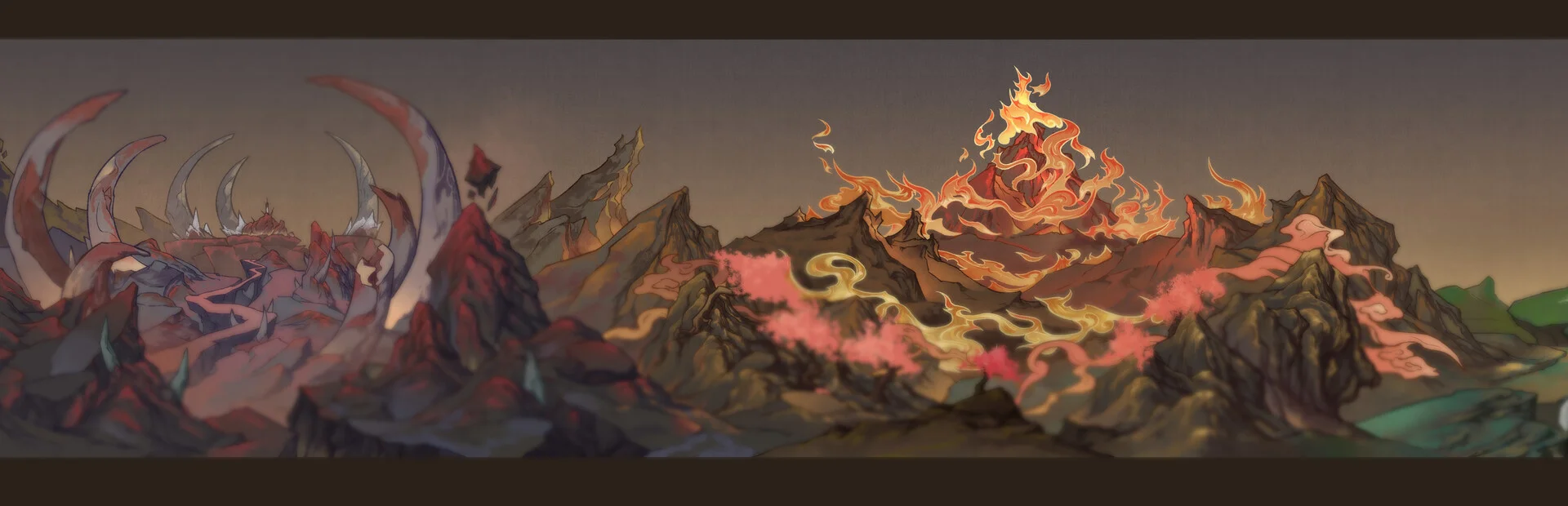
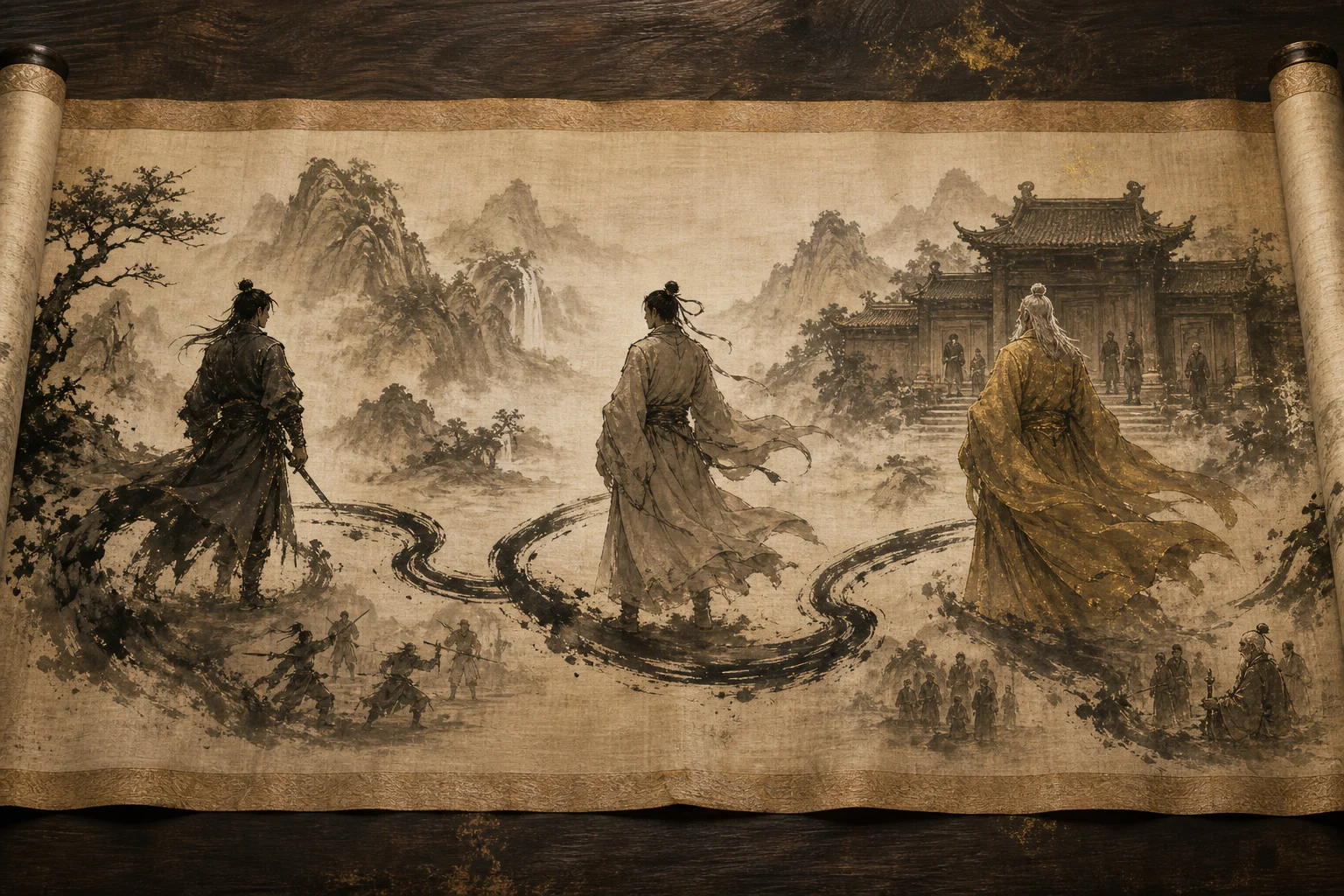
If you read our jianghu primer, you already know the social world: sects, grudges, manuals, and reputation. The next question every new Taiwu player asks is structural: why am I not just one hero with one life? Official materials cast you as the heir of the mysterious Taiwu clan (太吾氏), carrying a hereditary enemy across generations in a procedurally generated jianghu. This nine-minute article explains the title, the bloodline, and why generational play is not a random Roguelike twist — it is one of the oldest emotional engines in Chinese family and martial-fiction storytelling.
Decode the title: Taiwu + scroll
The Chinese title 太吾绘卷 (Tàiwú Huìjuàn) packs two promises into four characters.
太吾 · Taiwu
A clan name — you are its heir, not a blank adventurer who wandered in from the tutorial void
绘卷 · Painted scroll
A visual chronicle that unfolds — history recorded as image and episode, not a single closed book
English title
The Scroll of Taiwu — the saga of a family line written across time
Huìjuàn (绘卷) literally means painted scroll or illustrated handscroll. In Chinese art history, handscrolls are read section by section — you unroll a little, live inside a scene, roll forward. That format maps cleanly onto a game that asks you to live one heir's life, then unroll the next chapter with another body in the same world. You are not reading a scroll; you are writing one through play.
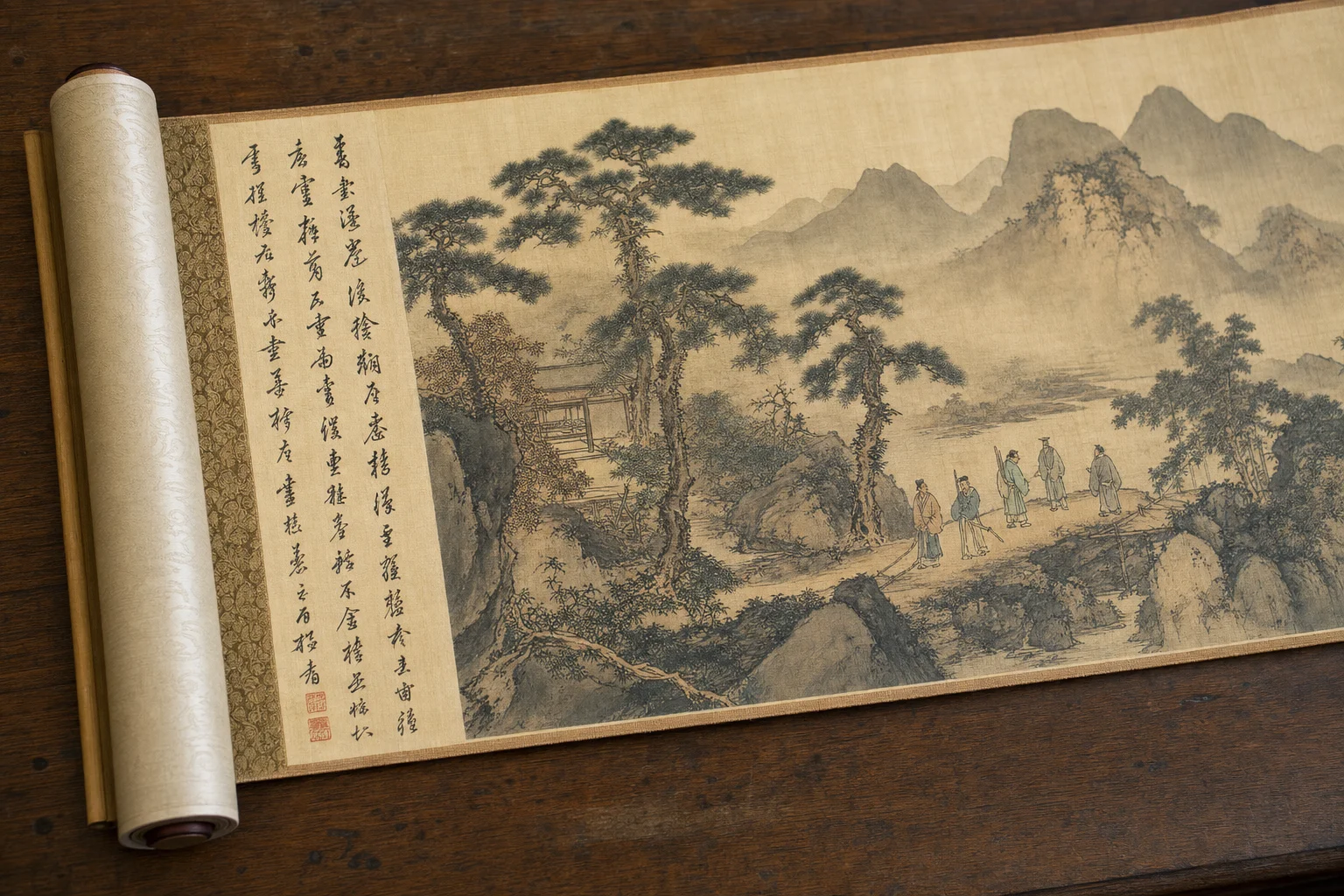
Taiwu (太吾) functions first as a patronymic clan marker — like saying House Stark or Clan Shimada in Western fantasy, except Chinese wuxia clans are often defined by a manual, a grudge, or a secret rather than a castle on a map. Steam copy describes you as the mysterious heir of this line, tasked with visiting sects, building a life in the world, and eventually confronting the clan's hereditary foe. The mystery is part of the brand: Taiwu is a name players argue about in forums precisely because it feels ancient without being a Wikipedia entry.
Who is the Taiwu heir?
At the most basic level, you are playing a succession of heirs, not a single immortal protagonist. Each heir can marry, learn techniques, make enemies, build villages, and die — leaving the world altered for whoever comes next. ConchShip advertises:
- Generational inheritance — skills, relationships, property, and grudges can persist or mutate
- Procedurally generated maps and NPCs — every run's geography and cast differ, but the clan-level conflict remains
- Open-world sandbox — no single railroaded hero path; your scroll records what you chose to emphasize
- A hereditary enemy — a vendetta larger than one lifetime (more on the cultural logic below; we avoid plot spoilers here)
v1.0 Beyond the Dome (天幕心帷) adds custom character creation with inheritable traits, deepening the idea that heirs are biologically and socially linked, not cosmetic reskins. If you played the Early Access years, note that v1.0 rebuilt core systems — our later living-doc article will map what changed. For culture-reading purposes, the generational frame survived the overhaul: you are still writing a clan chronicle.
Not a mechanics guide: We are not documenting save formats, transfer tools, or optimal succession routes. This article is about why the design means something in wuxia tradition.
Why generations matter in Chinese storytelling
Western RPGs often treat death as reload. Roguelikes treat death as run reset. Chinese martial fiction has a third habit: the story outlives the body.
Clan before individual
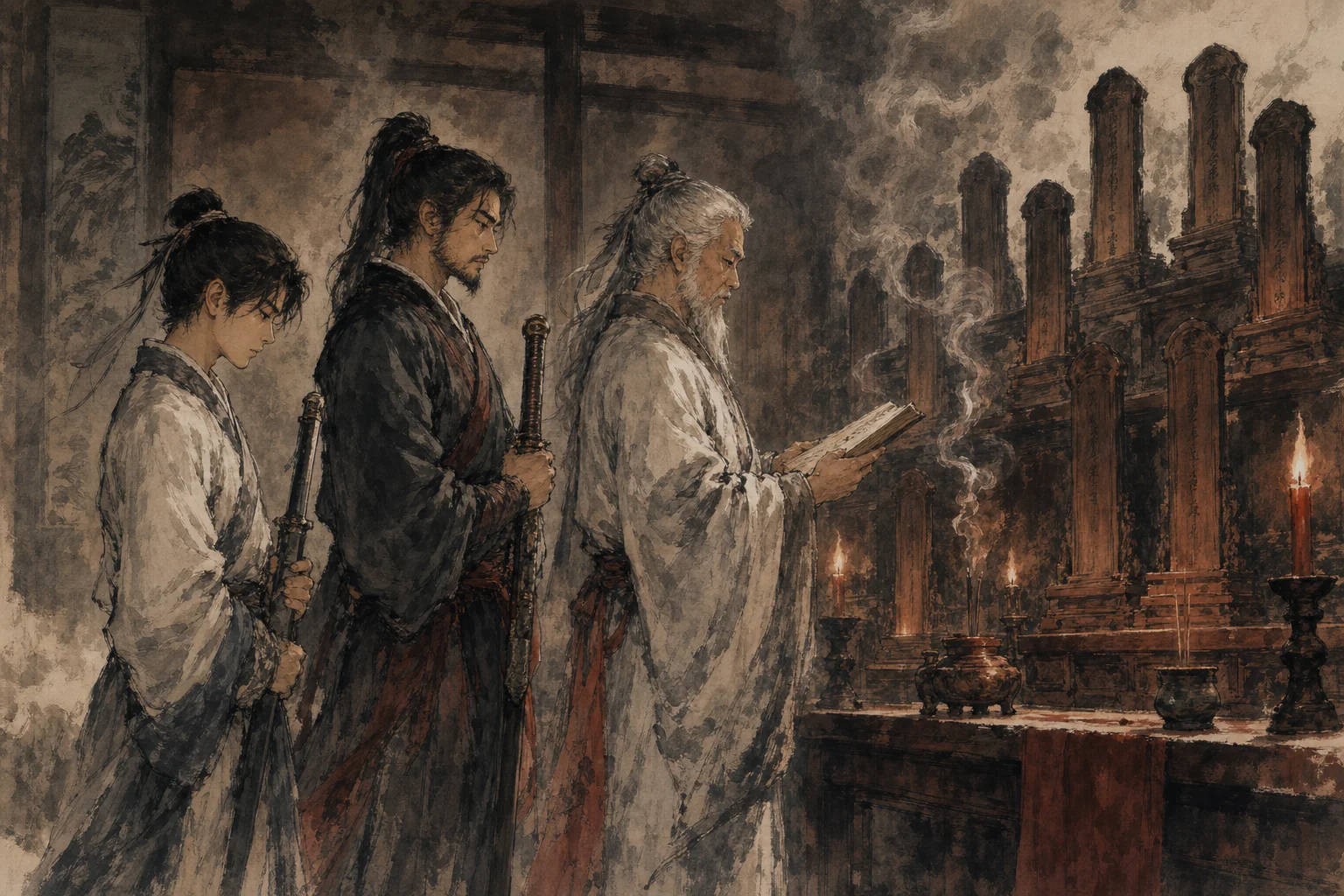
Confucian-influenced family ethics — even in pulp wuxia — assume that a person is a node in a lineage (宗族, zōngzú). Ancestors watch from tablets and stories; descendants inherit debts, land, manuals, and shame. A hero who dies without an heir is a tragedy; a villain who escapes punishment until the grandson arrives is a classic setup. Taiwu turns that into system design: when one heir falls, the scroll does not close — the clan still owes the world an answer.
Blood feuds across time (世仇)
Shìchóu (世仇) means a feud that passes between generations — not a bar fight you forget next week. In fiction, these vendettas justify decades of plot: your grandfather humiliated their patriarch; their disciple killed your cousin; now you must decide whether to escalate or break the cycle. Taiwu's hereditary enemy hook sits squarely in this tradition. It gives sandbox chaos a long shadow: you might spend one heir farming and the next heir drowning in consequences someone else started.
Failure as chapter, not ending
Roguelike language ("permadeath," "run-based") sounds modern, but the feeling is old: the knight-errant dies; the younger brother takes the sword; the manual is half-learned; the village remembers. Generational play reframes failure as narrative continuation rather than player embarrassment. Your worst heir might become the ancestor everyone curses — which is still story.
How this differs from Western "chosen one" fantasy
| Common Western habit | Taiwu / generational wuxia habit |
|---|---|
| One prophesied hero saves everything | One clan may save or ruin everything — across several lives |
| Reload erases consequences | Consequences can become family property |
| Identity = class + race selection | Identity = surname, teacher, spouse, reputation, inherited traits |
| Epic ends when credits roll | Epic may pause when an heir dies — the scroll keeps unrolling |
| Sandbox = no stakes | Sandbox + hereditary vendetta = personal choices inside clan-scale stakes |
None of this forbids personal glory. A single heir can still become a legend. The frame simply says: you are never the only chapter. That is why marriage, children, and village building are not "side sim" fluff in Taiwu's pitch — they are how the scroll gets a next page.
What carries forward between heirs?
Exact inheritance rules are game systems; culturally, players expect certain categories to echo between generations:
- Martial knowledge — manuals, sect relationships, half-finished training
- Social debt — who owes you, who wants you dead, which elder you insulted at a banquet
- Material life — villages, workshops, stored goods, family wealth or poverty
- Reputation — the Taiwu name itself as blessing or curse
- The hereditary conflict — the enemy line does not reset because your character screen did
Procedural generation means the map and cast reshuffle between broader runs, but the fantasy is consistent: each heir enters a jianghu already textured by predecessors. Think of it as a family saga novel where every chapter might be written by a different genre writer — one heir is a farmer romance, the next is a revenge tragedy — but the surname stays in the margin.
Reading your playthrough as a scroll
When Chinese players call the game a 绘卷, they often mean the emergent chronicle: the time your second heir married into a sect you had raided; the winter your village starved because your grandfather stole the wrong manual; the cricket champion who never learned a single sword form. The official Baixiao Manual (百晓册) — v1.0's in-game encyclopedia — catalogs world lore; your save writes the family lore.
Questions to ask each generation
- → What did the last heir owe the world — and who still remembers?
- → Am I repeating a vendetta or finally ending it?
- → What kind of ancestor will this heir become for the next run?
- → If this were a painted scroll, what scene would the artist highlight?
Key terms to remember
| English | Chinese | Quick meaning |
|---|---|---|
| Taiwu clan | 太吾氏 | The bloodline you inherit as playable heirs |
| Painted scroll | 绘卷 | Illustrated chronicle — the game's title metaphor |
| Hereditary enemy | 世仇 / 宿敌 | A foe tied to the clan across generations |
| Lineage / clan | 宗族 | Extended family as a social and moral unit |
| Heir / successor | 传人 | One who receives techniques, duties, and debts |
| Beyond the Dome | 天幕心帷 | v1.0 subtitle — rebuilt complete edition (2026) |
What Western players often misunderstand
- "Generations = Roguelike only." The Roguelike layer is real, but the emotional frame is family saga — closer to generational wuxia than to Hades loop dialogue.
- "I failed, so the story ended." Often the story continues — that is the point of the scroll.
- "The hereditary enemy is just a final boss." Culturally it is a vendetta engine that can color every heir, not only the last hour.
- "My heir is unrelated to the last one." Treat surnames, grudges, and villages as continuity even when faces change.
- "Sandbox means I ignore the main plot." You can delay the vendetta, but the genre expects it to haunt the line.
Where to go next
You now know why the game is a scroll and why Taiwu is a clan, not a nickname. The next primer steps beneath the social layer into myth and strange tales — the demons, esoteric cultivation, and folklore that sit behind the sect gates. Our later series on Lineage, Sects & Jianghu Society will return to the hereditary enemy with more detail once you are ready for light spoilers.