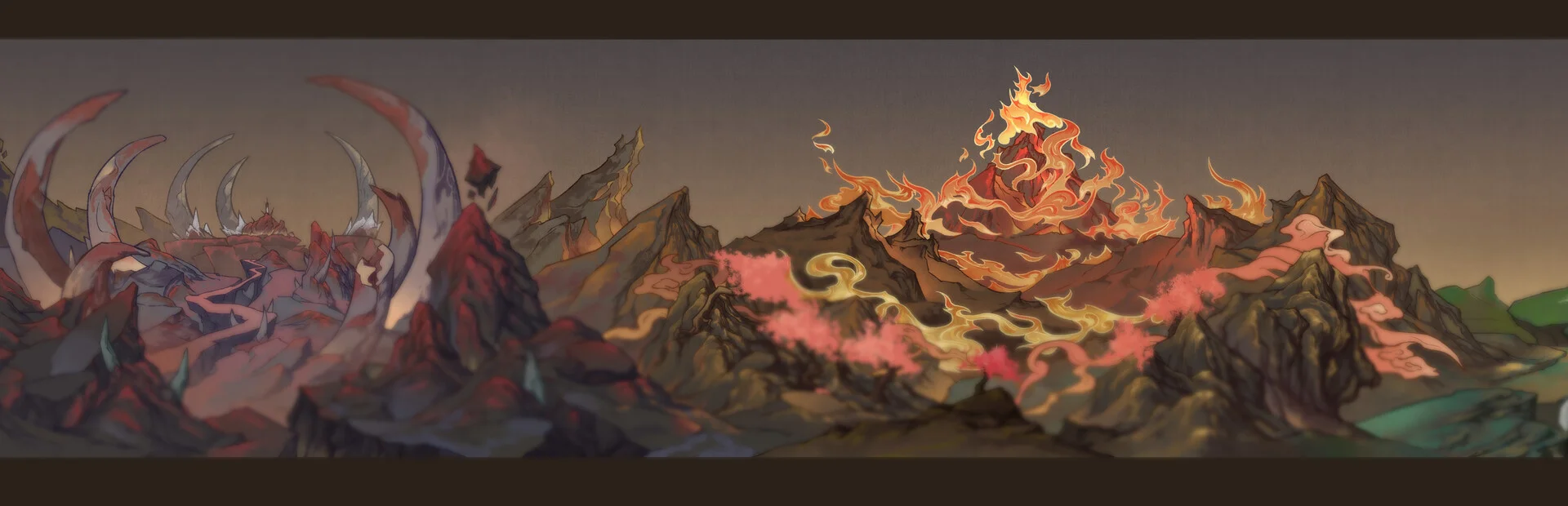
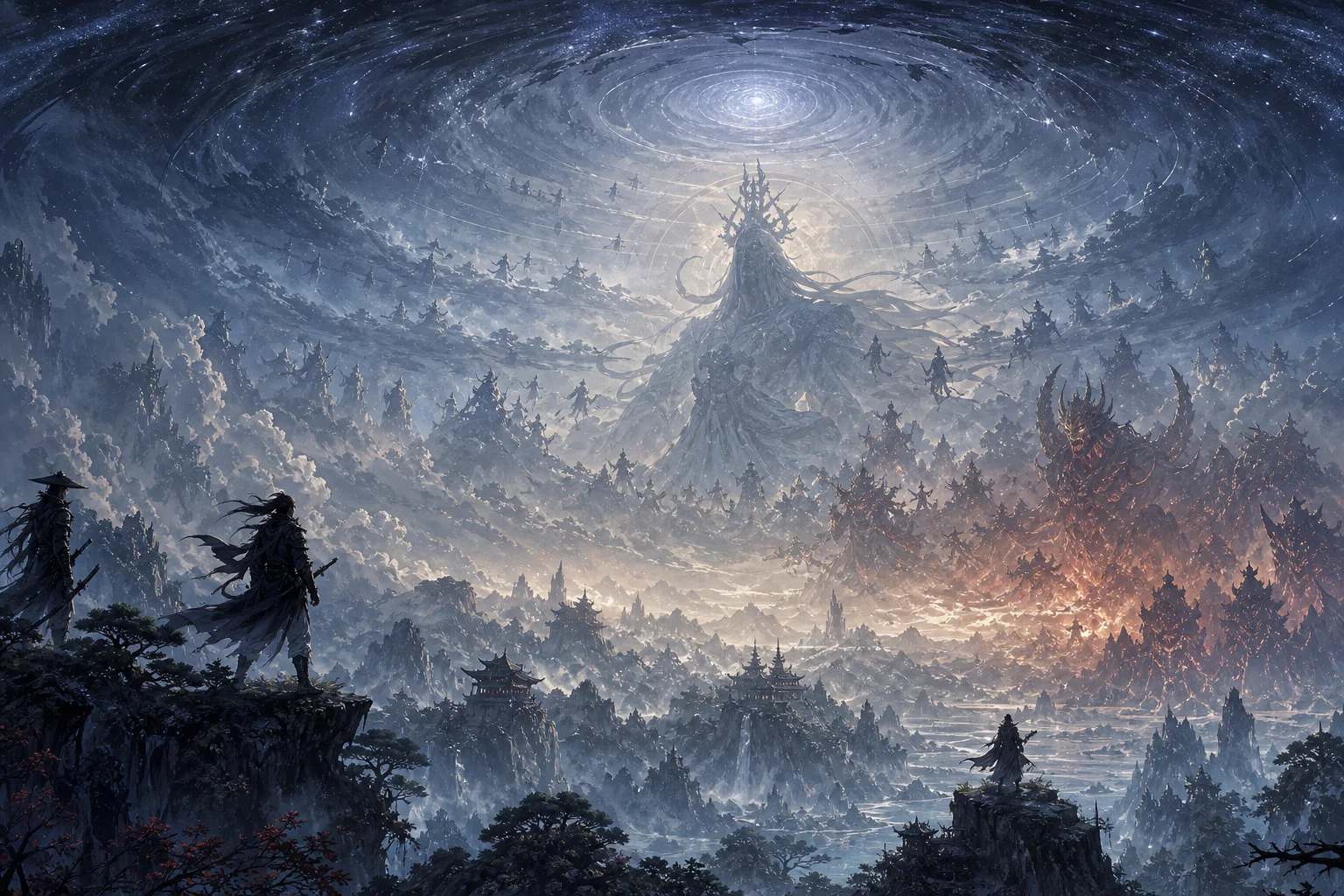
Major spoilers. Stop here if you have not played deep into v1.0 Beyond the Dome (天幕心帷) and still want discoveries unspoiled. This article covers publicly marketed endgame elements: the Tianmu host (天幕宿主), Santu demons (三途妖魔), and expanded elite challenges — plus how they fit Chinese myth and wuxia finale tradition. We summarize framework and cultural logic, not a beat-by-beat walkthrough.
Spoiler level: major. Expect enemy identities, mythic stakes, and late-game vocabulary. No substitute for playing — but enough to read the finale with cultural context.
Why the finale goes cosmic
Wuxia often starts in teahouses and ends touching heaven. A clan vendetta that began over a manual theft can reveal demon seals, ancient hosts, or world-spanning arrays. Taiwu's v1.0 marketing follows that escalation:
Early game
Sect study, village life, personal grudges
Mid game
Clan enemy pressure, regional power webs
Endgame (v1.0)
Tianmu host, Santu demons, twelve new elite foes — myth layer dominant
The subtitle Beyond the Dome (天幕心帷) literally gestures at crossing a canopy of heaven — the story stops pretending the feud is only human.
Tianmu (天幕) — the heavenly canopy
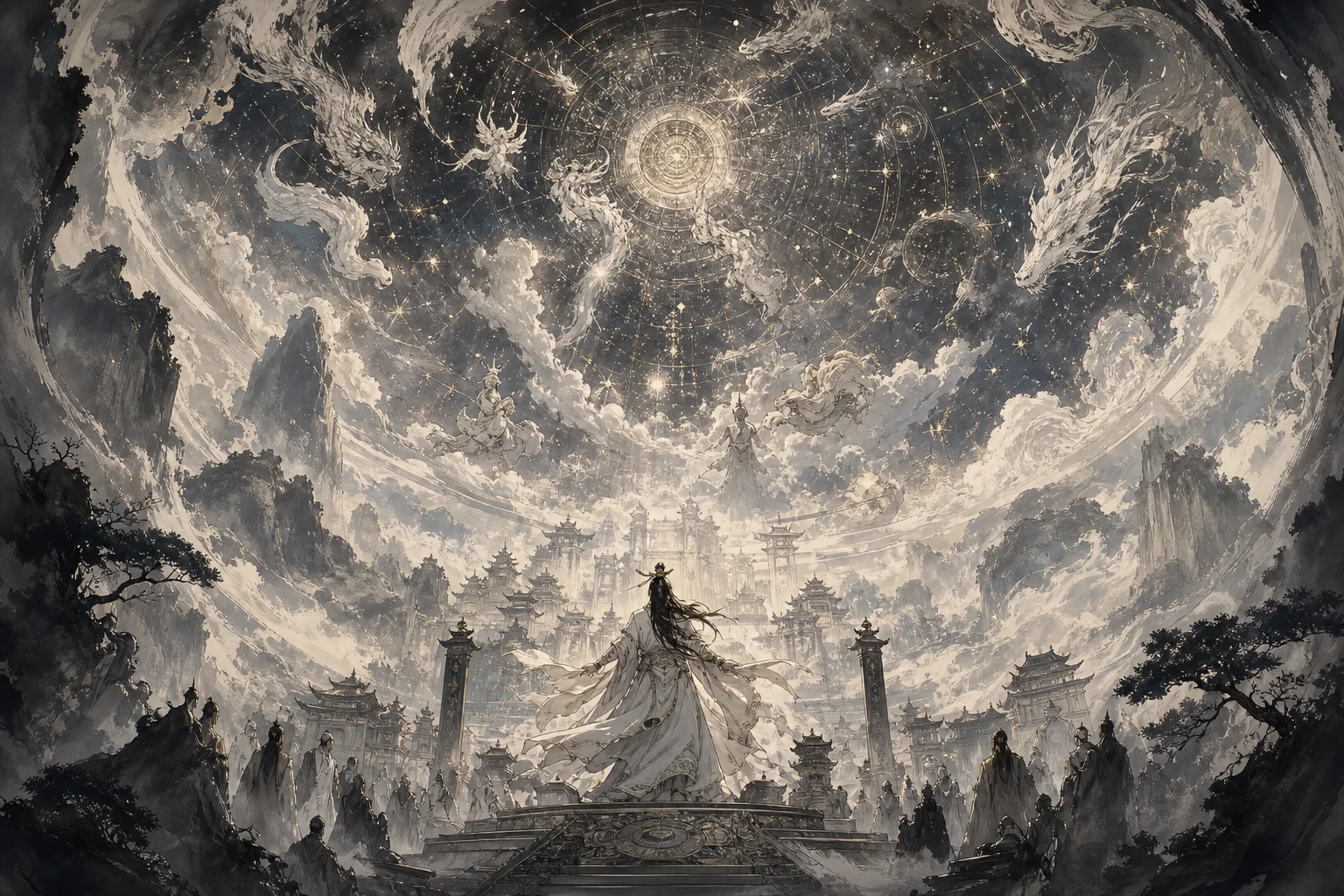
Tianmu (天幕) means “heavenly curtain” or “sky canopy.” In literary Chinese it can describe the visible dome of sky — and, in fantasy, a boundary between mortal jianghu and something older. Official v1.0 materials reference a Tianmu host (天幕宿主) — a being or role tied to that canopy. Culturally, read “host” (宿主) as anchor: someone or something the mythic layer pivots on, not merely a final boss HP bar.
Without copying plot beats here, the host concept belongs to a family of finales where:
- The clan enemy was always a symptom of a sealed catastrophe
- Generations of Taiwu heirs were unwittingly maintaining or breaking a array
- Personal vendetta and world survival merge — classic wuxia escalation
Santu (三途) demons
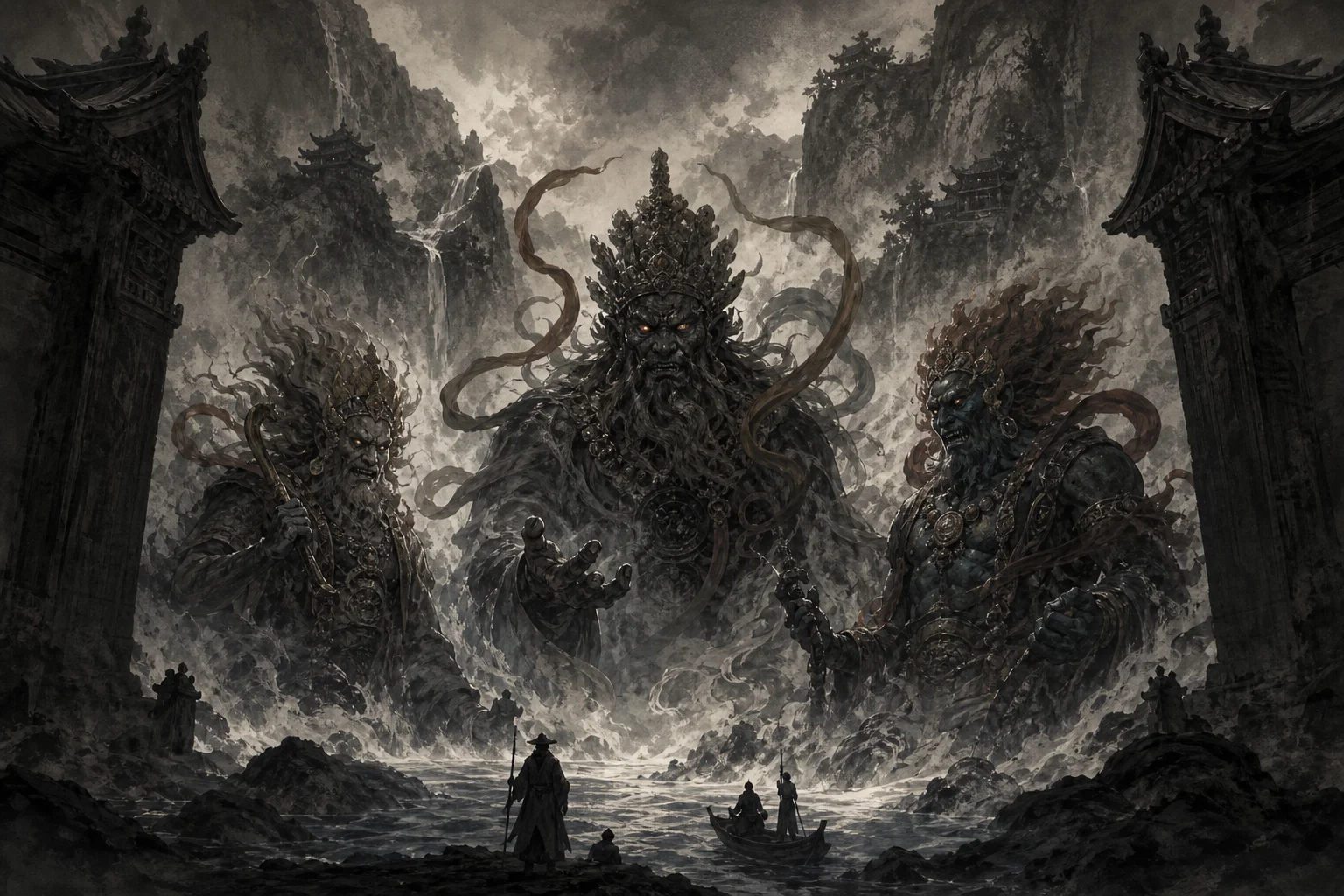
Santu (三途) means “three paths.” In East Asian religious imagination it often connects to afterlife routes — suffering, judgment, crossing. Marketing's Santu demons (三途妖魔) places Taiwu's late enemies in that underworld-border mood: not random monsters, but beings that belong where the canopy frays.
Pair Santu with our earlier ghost cosmology primer only when the dead and hell bureaucracy take center stage — Taiwu uses the imagery without requiring the same plot.
Twelve elite foes & dynamic CG
v1.0 also advertises twelve new elite enemies and dynamic CG for key story beats. Culturally:
- Elite roster expansion — late wuxia piles named champions before the true antagonist; each tests a different moral or martial lesson
- Cinematic beats — the scroll unrolls in illustrated panels; CG moments are the game admitting “this chapter matters to the clan saga”
Treat elites as argument scenes — each asks what kind of Taiwu heir you became before the canopy falls.
How endgame myth rewrites the sandbox
| Layer | Early Taiwu play | Endgame myth (v1.0) |
|---|---|---|
| Enemy scale | Personal, sect, regional | Host-level, world-threatening |
| Technique logic | Manuals and sect styles | Orthodox vs demonic paths matter cosmically |
| Generations | Family chronicle optional | Heirs feel like links in a sealed chain |
| Source authority | Culture primers + play | Baixiao Manual for proper nouns and lore detail |
After the finale — what to read next on Dragon Forge
You have finished Lineage, Sects & Jianghu Society. Continue into Craft, Village Life & Martial Culture when you want the hearth side of Taiwu — villages, craft, body culture, and the Baixiao Manual as living archive.
Continue with village life: Building Villages & the Rhythm of Rural China — coming in our Craft, Village Life & Martial Culture series. Need a term lookup? See the glossary.