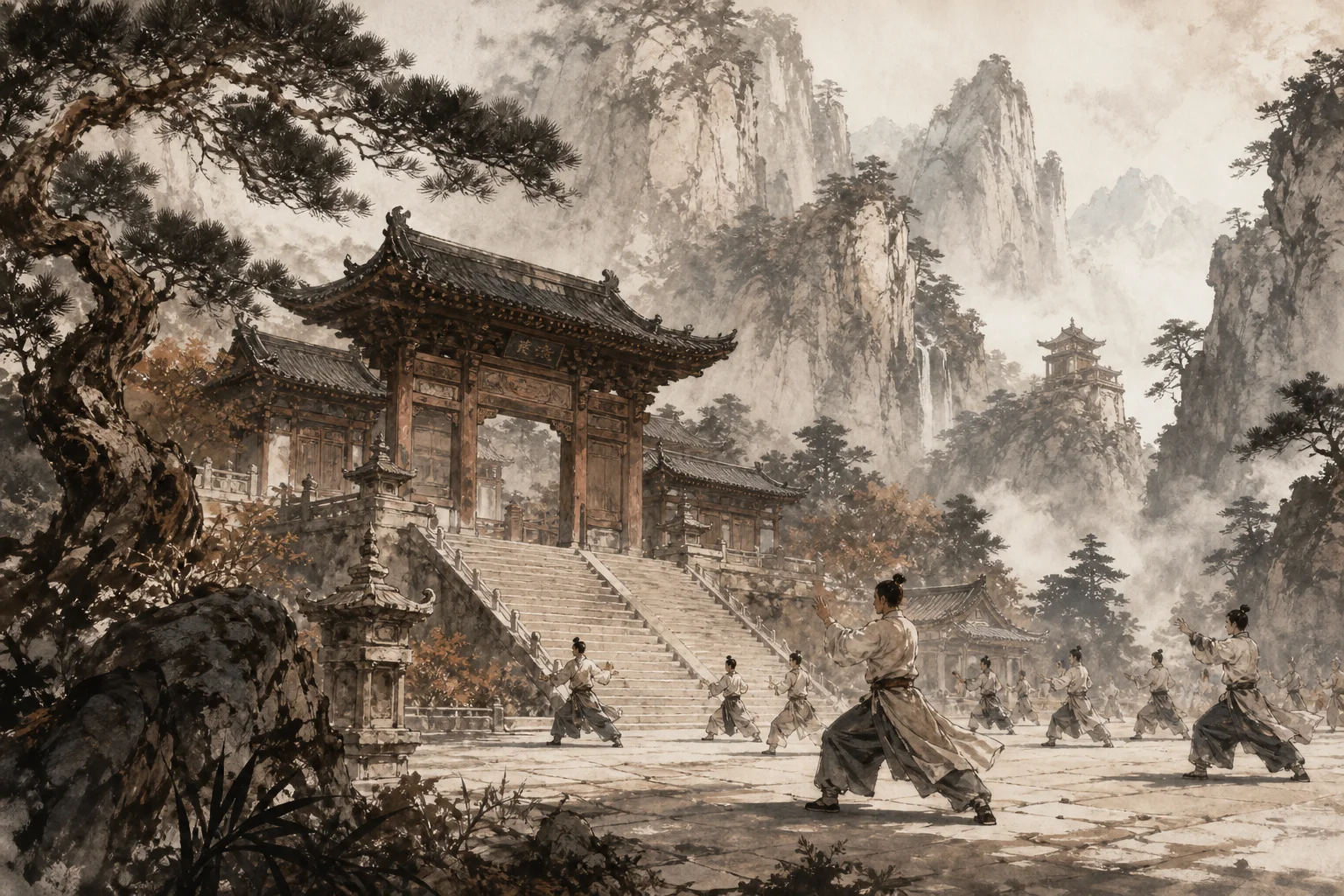
Steam copy promises fifteen martial sects and thousands of techniques. That is not a skill-tree brag — it is a wuxia promise. In Chinese martial fiction, a sect (门派, mén pài) is a small society with its own manuals, hierarchy, scandals, and public reputation. This article explains what sects mean in the genre, how famous real-world names like Shaolin and Emei became templates, and how to read Taiwu's game-original schools without treating them as a faction-picker wiki.
What is a martial sect?
A sect is more than a class selection screen. Culturally it bundles:
Manuals
Secret techniques passed master to disciple — theft is a plot engine
Hierarchy
Headmaster, elders, inner vs outer disciples — face travels upward
Reputation
Orthodox schools claim public virtue; rumors still circulate
Jin Yong turned sect rivalry into national politics; Gu Long turned it into lonely tavern philosophy. Taiwu turns it into sandbox visits: you can learn from a school, insult its elder, marry its accountant, and still need their manual two heirs later.
Not a mechanics guide: We are not ranking optimal sect routes or drop tables. This is cultural context for why sects feel loaded when you arrive.
From Shaolin and Wudang to fifteen Taiwu schools
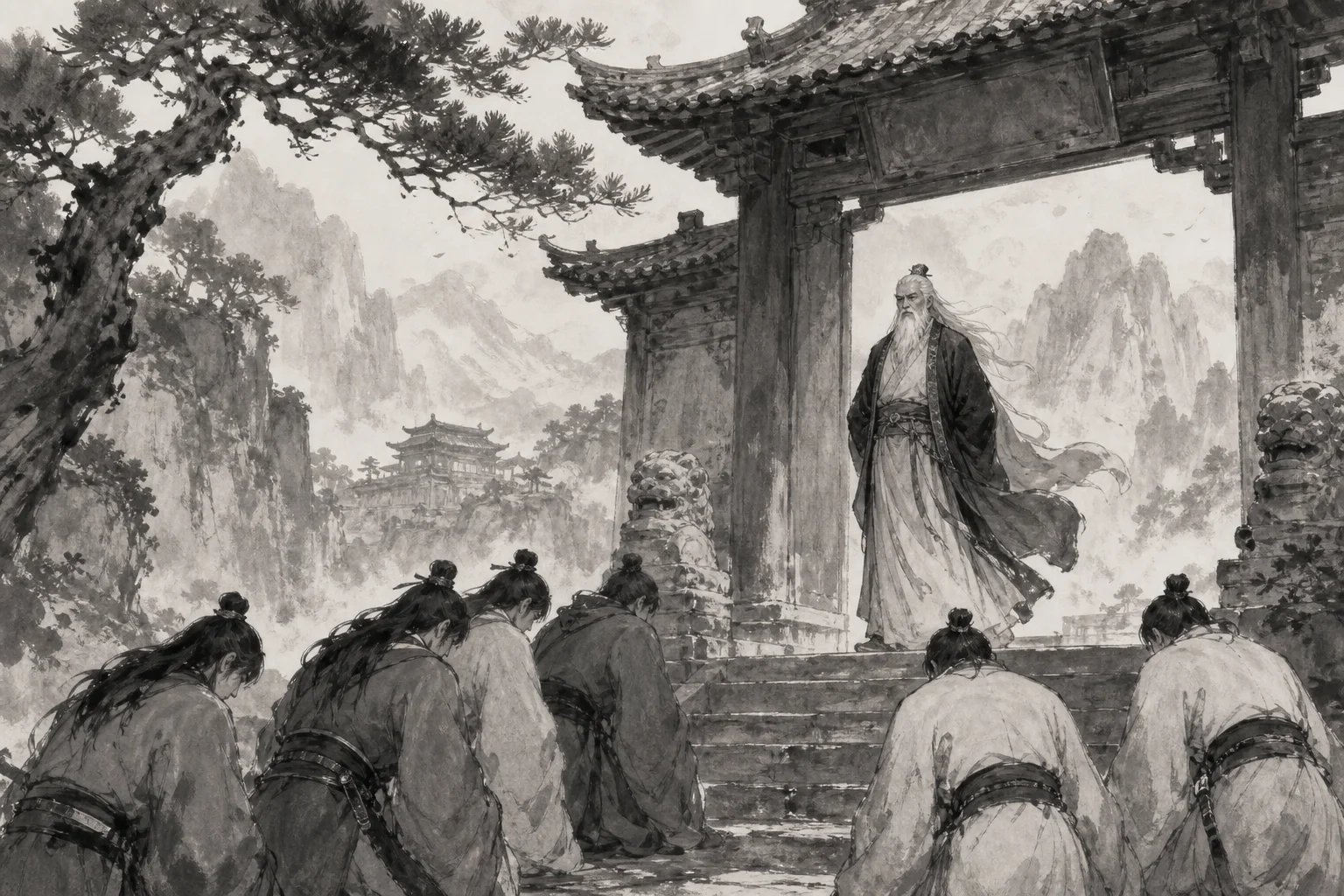
Wuxia borrowed heavily from real religious and martial institutions, then fictionalized them:
- Shaolin (少林) — Buddhist temple fame; external hard styles; righteous public face
- Wudang (武当) — Daoist mountain; soft internal styles; hermit sage mood
- Emei (峨眉) — Female-led or mixed schools in fiction; sword-heavy elegance
- Kunlun, Qingcheng, Huashan — regional names that signal terrain and temperament
Taiwu's fifteen sects are game-original — including highlighted v1.0 rewrites such as Emei and Jieqing (界青) per official copy. When a name sounds familiar, treat it as genre echo, not a guarantee that the school behaves like its novel counterpart. The Baixiao Manual (百晓册) is the authority for what each Taiwu sect actually teaches and forbids.
The social grammar of joining a school
Entry
Bowing in 拜师
Accepting a master creates obligation — you inherit the sect's friends and enemies.
Study
Manuals 秘籍
Techniques are property. Learning without permission is theft; teaching outsiders is betrayal.
Politics
Alliances 结盟
Schools feud over rankings, resources, and slights at tournaments — not only ideology.
Exit
Expulsion 逐出师门
Being cast out stains face; rivals may hunt you to prove the sect was right to fear you.
Taiwu lets you wander between schools across generations. Culturally, that mirrors jianghu freelancers who collect fragments of many styles — admired, feared, and never fully trusted by any one elder.
Inner court vs outer disciples
Fiction loves splitting disciples into ranks:
| Rank (common fiction) | Chinese | What it signals |
|---|---|---|
| Outer disciple | 外门弟子 | Chores, basics, expendable in feuds |
| Inner disciple | 内门弟子 | Core manuals, marriage prospects, succession fights |
| Elder | 长老 | Arbitrates face disputes; guards secrets |
| Head / master | 掌门 | Public symbol of the sect — losing them humiliates everyone |
When an NPC treats you differently after a promotion, that is not arbitrary attitude — it is sect sociology.
Fifteen sects in a procedural world
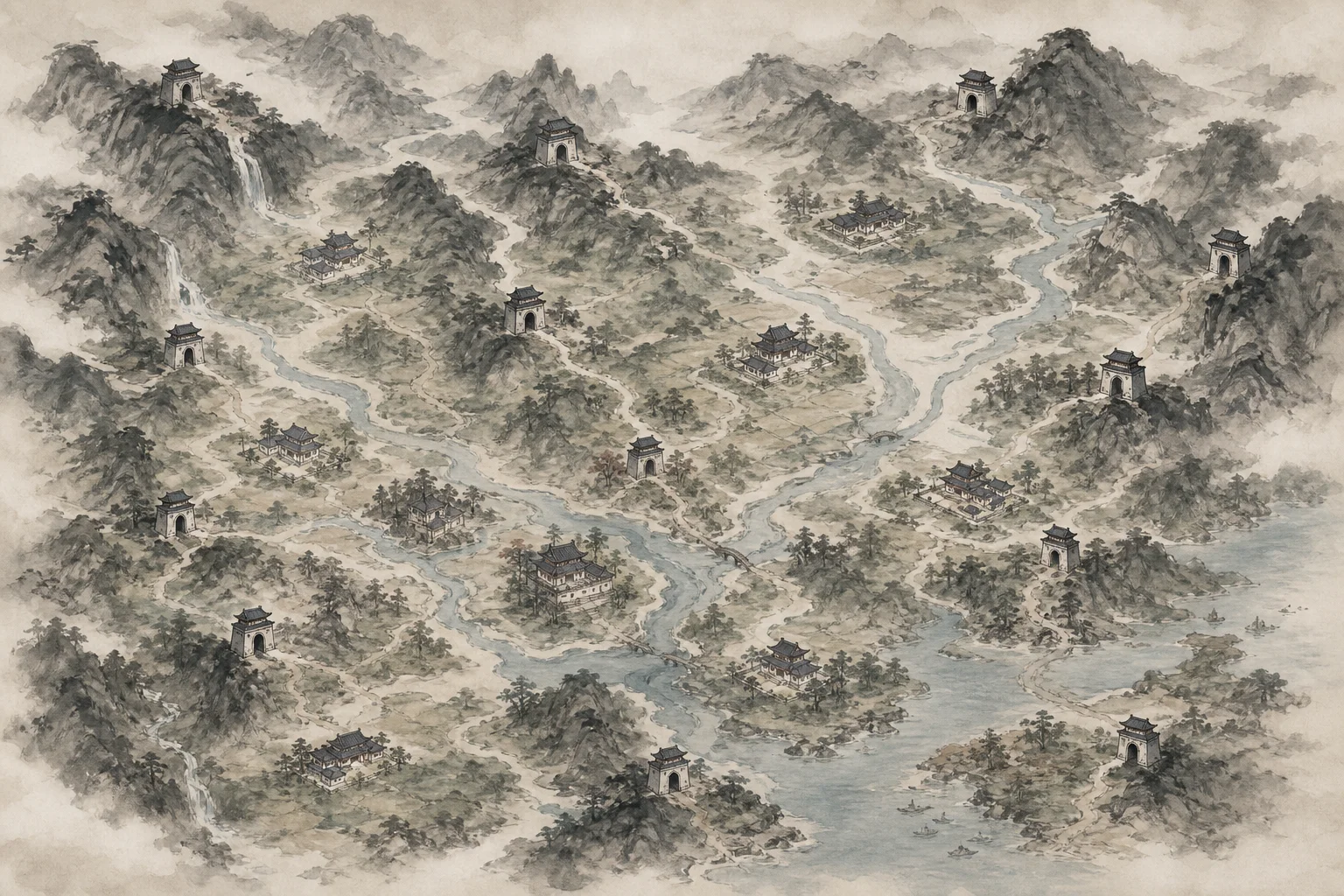
Official materials emphasize visiting fifteen schools to learn thousands of techniques. In sandbox terms, that means:
- Each sect is a bundle of social rules, not only a damage type
- Technique collection mirrors the novel trope of patchwork mastery
- Sect grudges can intersect your Taiwu clan vendetta — two feud engines in one scroll
- v1.0 rewrites some sect storylines — check the living doc on tradition vs fiction
Questions to ask at each gate
- What reputation is this school protecting — orthodox virtue, regional dominance, or survival?
- Which manual is not on the syllabus but everyone whispers about?
- Who did the last headmaster insult — and is that your problem now?
- Would learning here help the next heir, or paint a target on the Taiwu name?
Next in this series: the Taiwu clan itself and the hereditary enemy that turns sect visits into chapters of a longer vendetta.