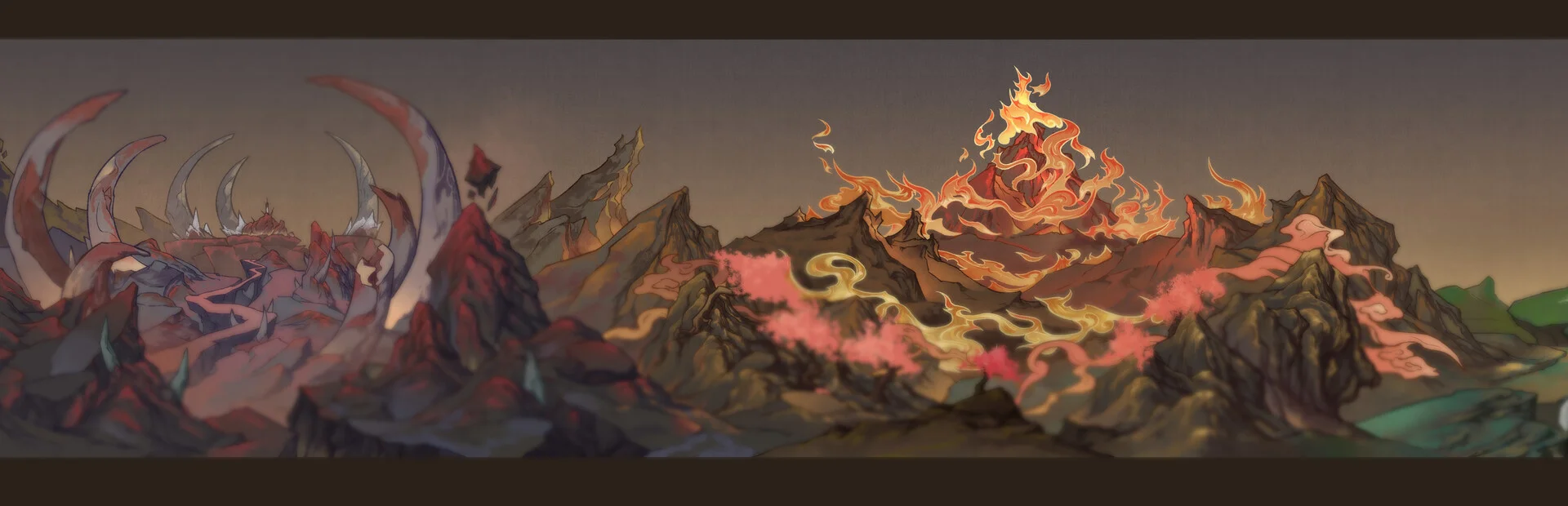
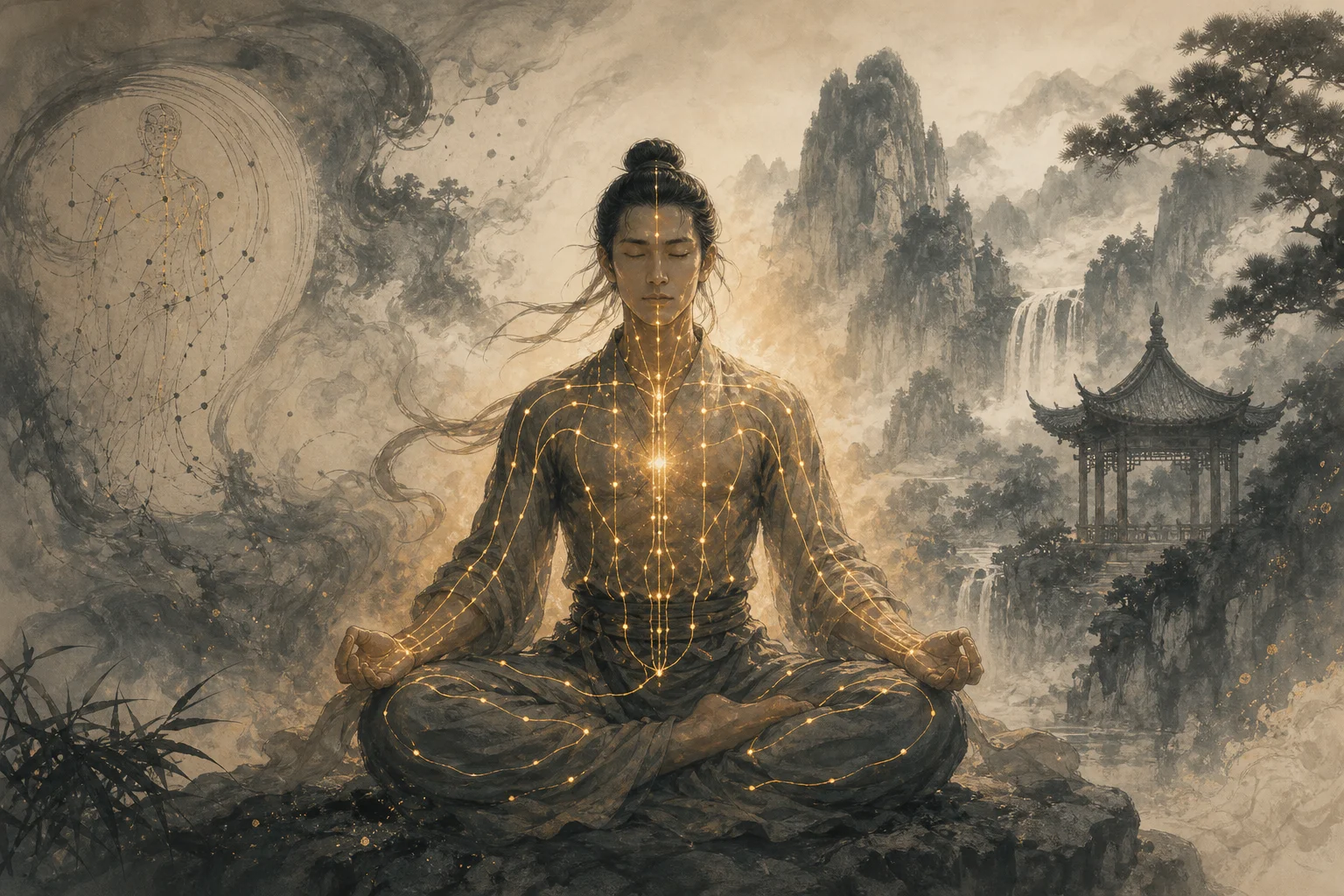
The Scroll of Taiwu advertises turn-based combat where every strike lands on a specific body part. That is not a gimmick borrowed from Western RPG hit-location tables. It belongs to a long wuxia obsession with meridians (经脉), vital points (穴位), and the idea that a master reads an opponent's body the way a physician reads pulse. Our jianghu primer flagged this briefly; after craft and livelihood, we go deeper on the martial body — the cultural logic behind neigong, acupoints, and crippling blows, without combo charts or damage math.
The body as battlefield
Western action RPGs often treat the body as a health bar with animations. Chinese martial fiction treats it as infrastructure:
经脉
Meridians — pathways where inner energy (气) is said to flow
穴位
Vital points — nodes on the map you can seal, open, or break
部位打击
Body-part strikes — targeting limbs and organs, not abstract HP
A duel in Jin Yong might hinge on whose neigong (内功) exhausts first, whose wrist tendon is severed, or whose pressure point was sealed mid-sentence. Taiwu systematizes that grammar: you are not only trying to win — you are trying to disable, cripple, or expose a body trained in a particular school.
Not a mechanics guide: We are not listing optimal strike orders, armor breakpoints, or build guides. This is why body-aware combat feels wuxia.
Meridians — the energy map
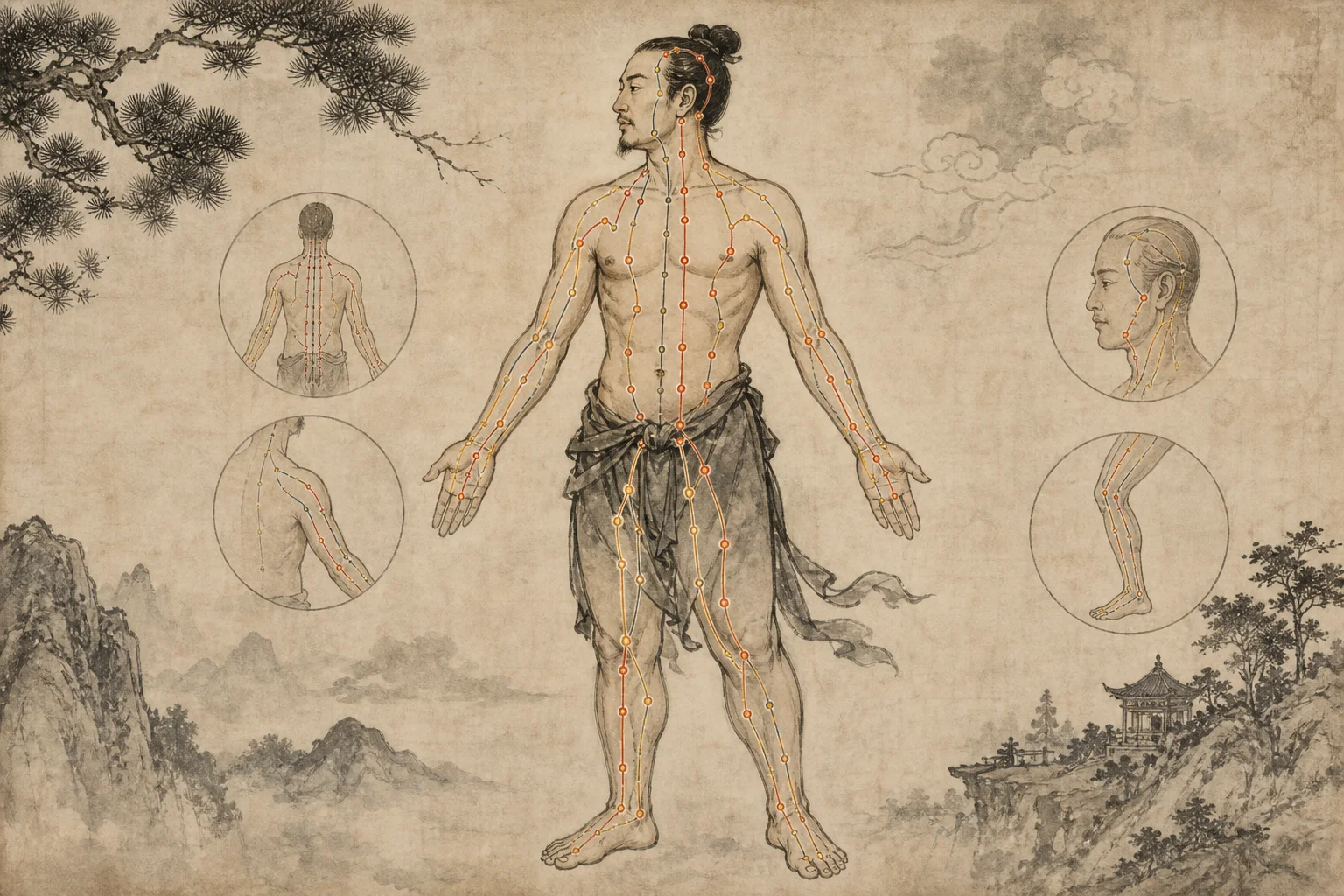
In classical Chinese medicine and martial arts lore, meridians are channels through which qi (气, life force / breath-energy) circulates. Physicians use the map for acupuncture; martial artists use it for striking, healing, and cultivation. Wuxia freely blends both — sometimes responsibly, often fantastically.
Useful distinctions for players (see also our glossary):
- Neigong (内功) — internal training; breath, circulation, stamina beneath visible techniques
- Waigong (外功) — external training; muscles, speed, weapon forms you can see
- True qi vs scattered qi — fiction loves the moment inner energy “breaks” under pressure
- Meridian damage — crippling tropes: “destroyed dantian,” sealed channels, years of recovery
Taiwu's manuals and sect techniques sit in this vocabulary even when the game simplifies the physics. When a style claims to “cut off meridians,” it is speaking genre — the same language as orthodox vs demonic paths.
Vital points — where stories pivot
Acupoints (穴位, xuéwèi) are specific nodes on the meridian map. In fiction they are narrative switches:
| Fictional use | What it does in plot | Taiwu echo |
|---|---|---|
| Seal / strike a point | Paralyze, mute, or stagger an opponent | Turn-based hits that disable limbs or organs |
| Hold a point hostage | Coercion without killing — honor tests | Non-lethal wins that still humiliate |
| Wrong point struck | Accidental death or lifelong injury | Risk/reward of targeting vs swinging wild |
| Heal a point | Physician-saint saves a rival — debt of kindness | Medicine craft tied to relationship webs |
The trope called dim mak in English (点穴, delayed death touch) is often exaggerated in kung-fu films — but the idea that experts touch the body with precision, not brute force, is core wuxia. Taiwu's body-part combat is the game-native version: precision is a cultural flavor, not only a difficulty knob.
Why turn-based fits wuxia pacing
Action combat is not “more realistic” for martial fiction. Novels and films often stage fights as exchanges: feint, counter, reveal hidden technique, moral dialogue mid-strike. Turn-based structure mirrors that rhythm:
- Read the opponent — what style, what injury, what weapon reach
- Choose a target — head, arm, torso — each choice is a statement
- Consequences persist — a ruined leg changes the next heir's world too
- Time for tactics — not twitch skill; preparation and manual knowledge
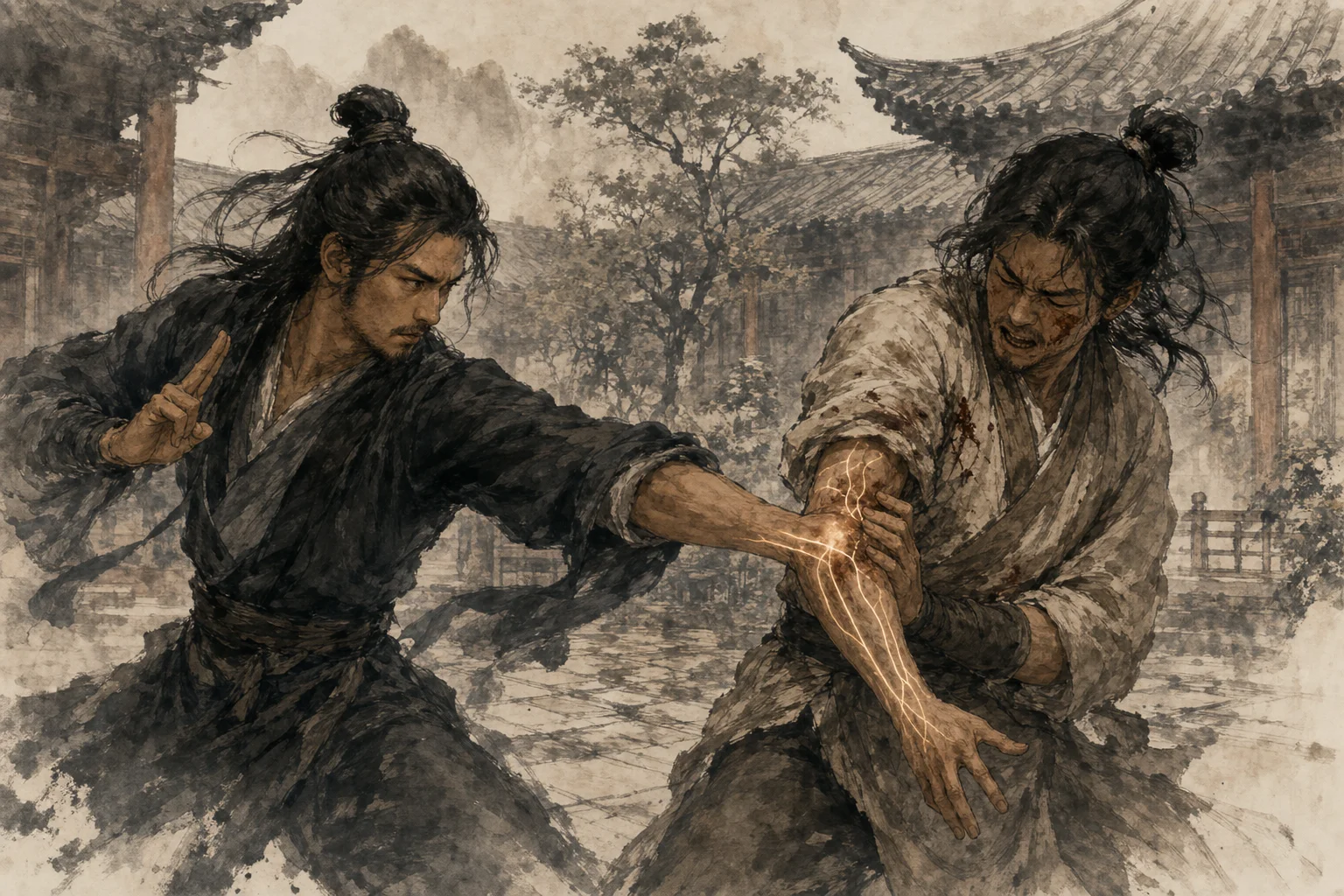
Roguelike generational play amplifies this. An heir who loses function in a limb may pass partial disability to narrative consequence — aligning with fiction where wounds define character arcs more than death screens.
Limbs, organs, and social face
Body-part combat also carries face (面子) logic from jianghu society:
Arms & hands
Weapon identity
Break the sword hand — you break the sect signature.
Legs & footwork
Escape & pride
Cripple movement — capture without kill; humiliation duel.
Torso & breath
Neigong core
Inner injury tropes — cough blood, shortened lifespan, hidden weakness.
Head & senses
Mind games
Blindness, deafness, madness — classic price of forbidden manuals.
When Taiwu lets you target regions, you are participating in a genre where how you win matters as much as whether you win. A sect elder defeated cleanly earns respect; the same elder maimed without cause creates grudges that outlive the duel.
Medicine, poison, and the same map
The martial body map is shared with physicians and poisoners:
- Clinic scenes — heroes owe healers; healers know secrets
- Poisoned wine — internal damage without a visible cut
- Detox quests — meridian language for curing what weapons caused
- Forbidden absorption — demonic cultivation reuses body vocabulary (邪道)
That is why craft articles on medicine and combat articles on meridians belong in one series. Taiwu's sandbox stitches them: the apothecary who saved you may refuse to treat your enemy — and your next strike may target the meridian he taught you to protect.
Weak historical comparison (not a TCM textbook)
Taiwu is not teaching clinical acupuncture or certified neigong. Weak parallels for mood:
- TCM meridian theory — real medical tradition; wuxia exaggerates for combat drama
- Martial qigong — breathing exercises with health goals; fiction adds explosive power
- Dim mak folklore — popular cinema trope; historically dubious as advertised
- Crippling in opera — visual shorthand for defeat without stage blood
Treat in-game meridian talk as genre physics — consistent within Taiwu and wuxia, not a license to practice strikes on people.
Questions for body-aware fighters
- Do you fight to kill, to cripple, or to force a public apology?
- Which manuals assume a healthy meridian map — and what happens when you are already injured?
- If you win by targeting a dirty point, does your sect consider it righteous or shameful?
- What does the next heir inherit — techniques, or a body already marked by this generation's duels?
Next in this series: cricket fighting and folk pastimes — the jianghu leisure culture that makes Taiwu's sandbox feel lived-in, not only lethal.