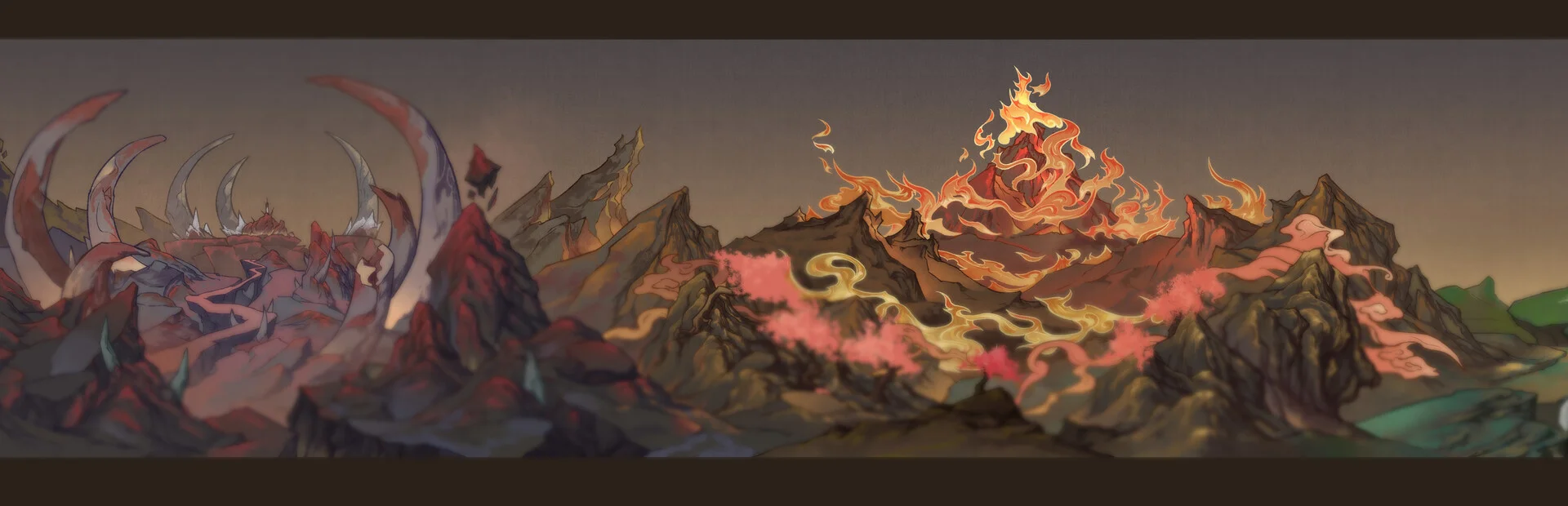
Official copy for The Scroll of Taiwu promises players a thousand ways to live (一千种活法) in an open jianghu sandbox. That phrase is marketing — but it also names a design philosophy rooted in Chinese fiction: heroes are not only swordsmen; they are smiths, physicians, merchants, poisoners, and retired farmers who still know one lethal palm strike. After our village and seasons primer, this article explains the craft layer: forging, making goods, and the 百工 (hundred crafts) tradition that makes livelihood culturally legible — without listing recipes or optimal forge loops.
Why crafting is not “side content”
Western RPGs often treat crafting as a loot multiplier. In Chinese sandbox imagination — and in Taiwu's long Early Access pitch — making things is identity:
百工
The classical “hundred crafts” — the full spectrum of skilled trades
制物
To fashion objects — tools, medicine, garments, weapons — by hand
一千种活法
Official sandbox promise: many viable life paths on one map
A knight who only loots chests never has to answer who employs you when peace returns. A Taiwu heir who forges blades, brews medicine, or weaves silk answers that question every season — and those answers feed alliances, vendettas, and the next generation's inheritance.
Not a mechanics guide: We are not listing material tiers, workshop build order, or profit tables. This is why craft play means something in wuxia culture.
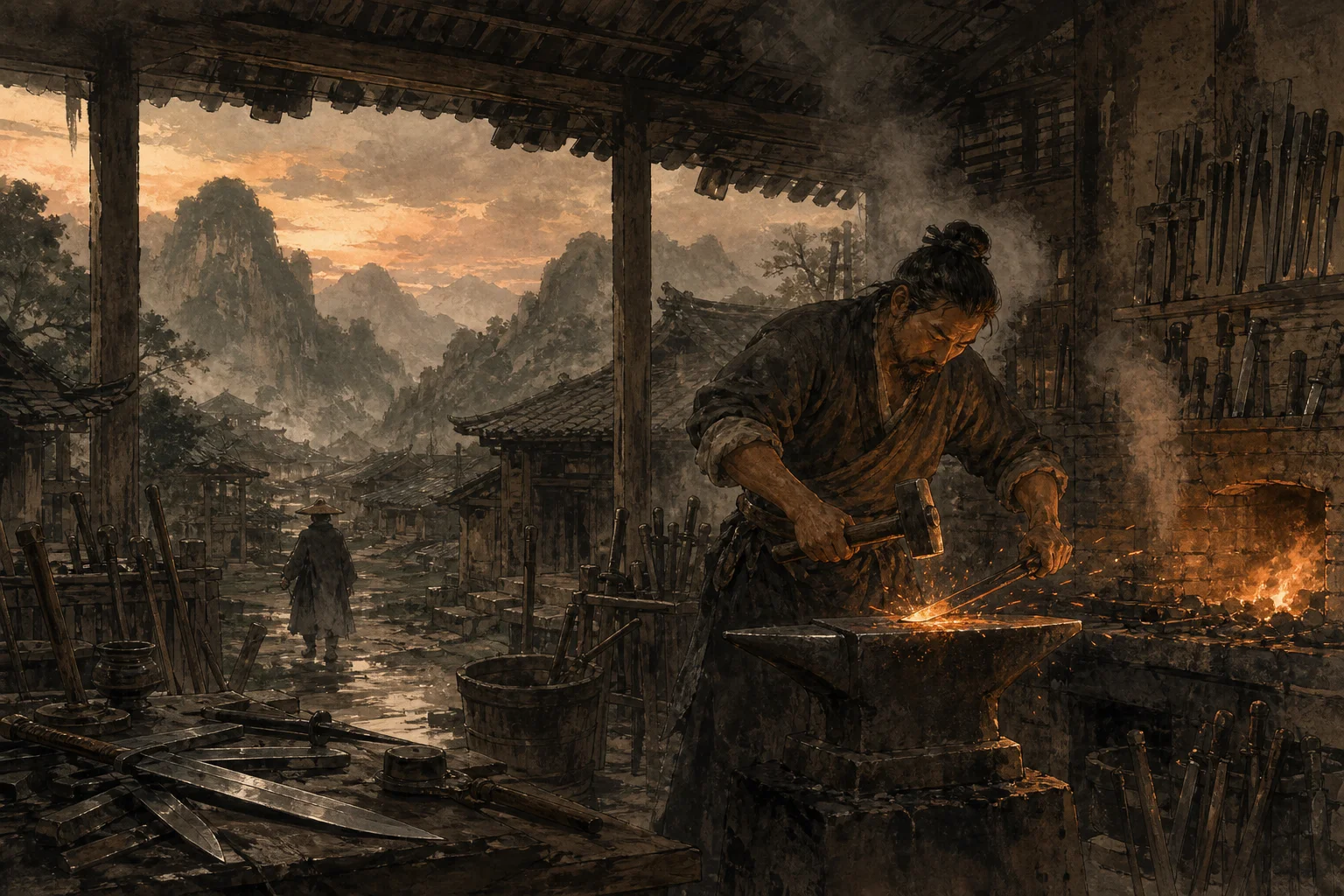
Forging in fiction and on the map
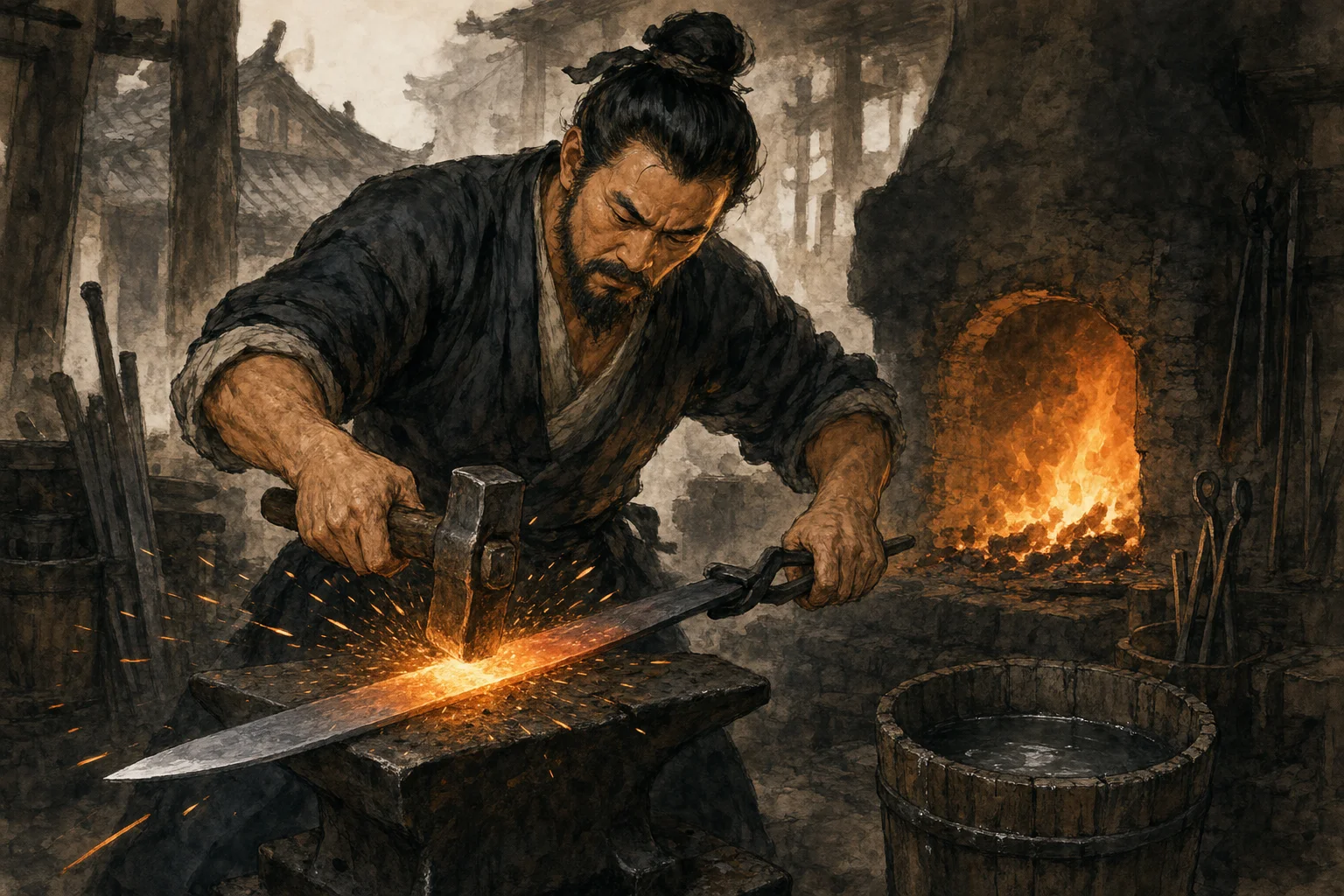
Wuxia loves named weapons because they carry provenance:
- Who forged it — a master smith's seal can outrank a sect's blessing
- What ore — rare metals signal quest lines, theft, and tomb raids
- When it breaks — repairing a heirloom blade is a loyalty test
- Who it cuts — gifting a sword is alliance; refusing to sell one is insult
Taiwu's forging and item-making systems sit in that emotional grammar. You are not abstractly “+3 attack” — you are the person who kept the village armed when bandits circled, or the heir who sold cheap knives to the wrong merchant and armed a rival sect by accident.
The hundred crafts — more than weapons
Classical Chinese texts refer to 百工 as the skilled trades that sustain civilization — not a literal count of one hundred jobs, but a cultural shorthand for everything hands can make well. Useful categories for reading Taiwu's sandbox:
| Trade family | Traditional examples | Why games care |
|---|---|---|
| Metal & wood | Smithing, carpentry, wheelwrights | Tools, weapons, village infrastructure |
| Textile & dress | Weaving, dyeing, tailoring | Status, disguise, sect uniforms, gifts |
| Food & medicine | Milling, brewing, apothecary work | Survival, poisoning plots, hospitality |
| Luxury & art | Lacquer, porcelain, calligraphy supplies | Face, patronage, collector NPCs |
| Transport & logistics | Caravans, ferries, pack animals | Jianghu travel as economy, not fast travel |
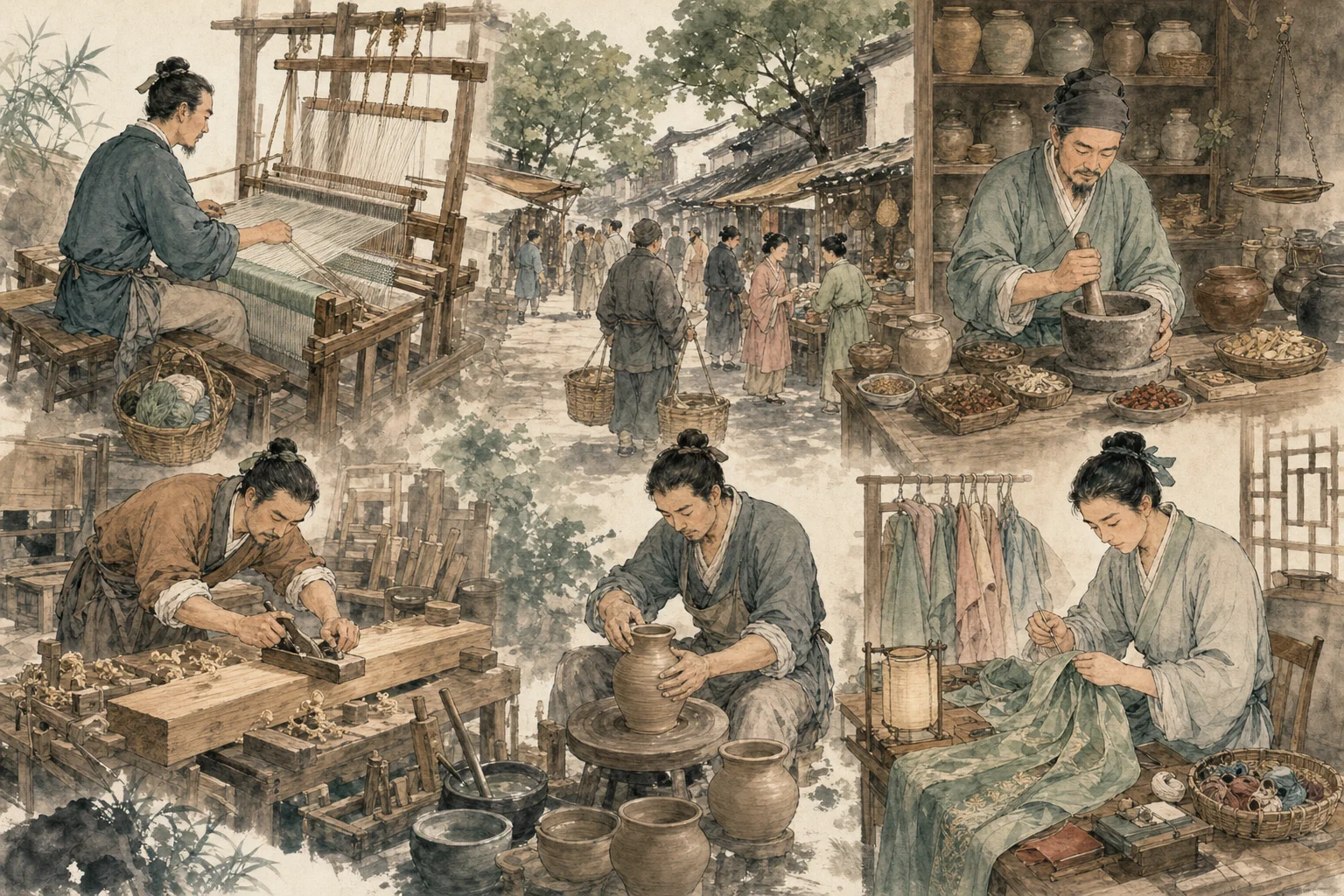
The old four occupations (士农工商) hierarchy placed scholars first and merchants last in moral rhetoric — but jianghu stories constantly violate the chart. A disgraced scholar becomes a poisoner; a farmer's son inherits a sect manual; a smith refuses to arm the villain. Taiwu's “thousand ways to live” is the game version of that flexibility: your heir can lean martial, lean craft, or oscillate as seasons and blood feuds demand.
Livelihood vs loot
When you make rather than buy, you touch a different social clock:
- Time — production ties you to place; you cannot chase every vendetta and also run three workshops
- Reputation — quality goods spread your name faster than wandering duels
- Dependency — NPCs who need your medicine or blades enter your relationship web
- Risk — stockpiles attract raids; trade secrets attract spies
That is why craft pairs with our village rhythm article. A settlement without workshops is a camp; a settlement with them is a 生计 (livelihood) — something worth inheriting, defending, or burning in a grudge war.
Jianghu needs makers
Martial fiction rarely separates combat from supply chains:
Weapons
Named blades
Sect trials, treasure hunts, and smith rivalries — the sword is a character.
Medicine
Clinic politics
Healing debts bind heroes; poisons bind villains.
Disguise
Tailor & dye
Infiltration and sect dress codes — craft as espionage.
Fiction trope
Hidden master
The forge owner who was once a legend — craft hides identity.
Taiwu does not require you to role-play a merchant simulator. But when you choose to forge, brew, or weave, you are playing a tradition where objects carry relationships — the same logic behind jianghu alliances and grudges.
Weak historical comparison (not a dynasty sim)
Taiwu does not recreate Song dynasty guild charters or Qing craft examinations. Weak parallels for mood only:
- Apprenticeship — skill passed person to person, not unlocked from a global tech tree
- Local markets — goods move at human pace; scarcity is regional, not cosmetic
- Patronage — wealthy households and sects commission work; refusal has social cost
- Guild rhetoric — trade secrets and “our family recipe” map cleanly onto clan stories
The Baixiao Manual (百晓册) catalogs in-game items and lore in detail. Culture articles like this one explain why a game built around wuxia would bother with forging at all — the manual tells you what a particular Taiwu workshop actually produces.
Questions for heirs who make things
- Are you crafting to fund martial ambition, or is the workshop the ambition?
- Whose orders do you accept — and whose do you refuse on principle?
- If your best blade ends up in an enemy's hand, is that betrayal, business, or fate?
- What does the next heir inherit — stock, recipes, or debt to suppliers?
Next in this series: meridians, vital points, and body-part combat — the martial body culture behind Taiwu's turn-based strikes.