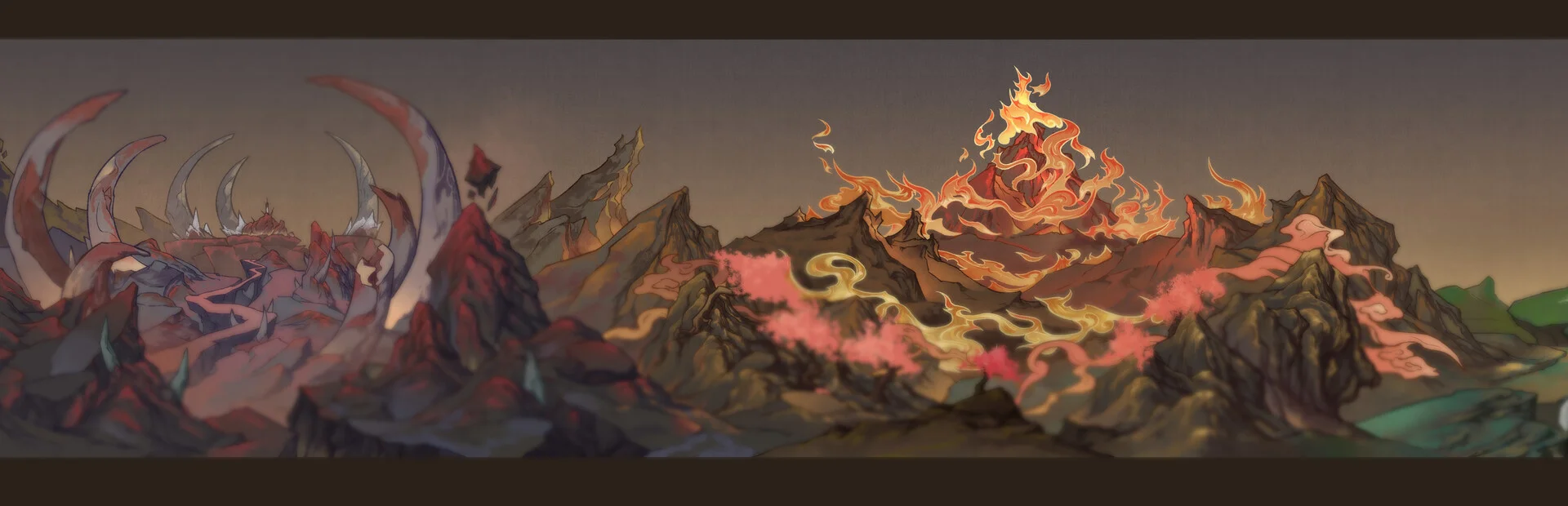
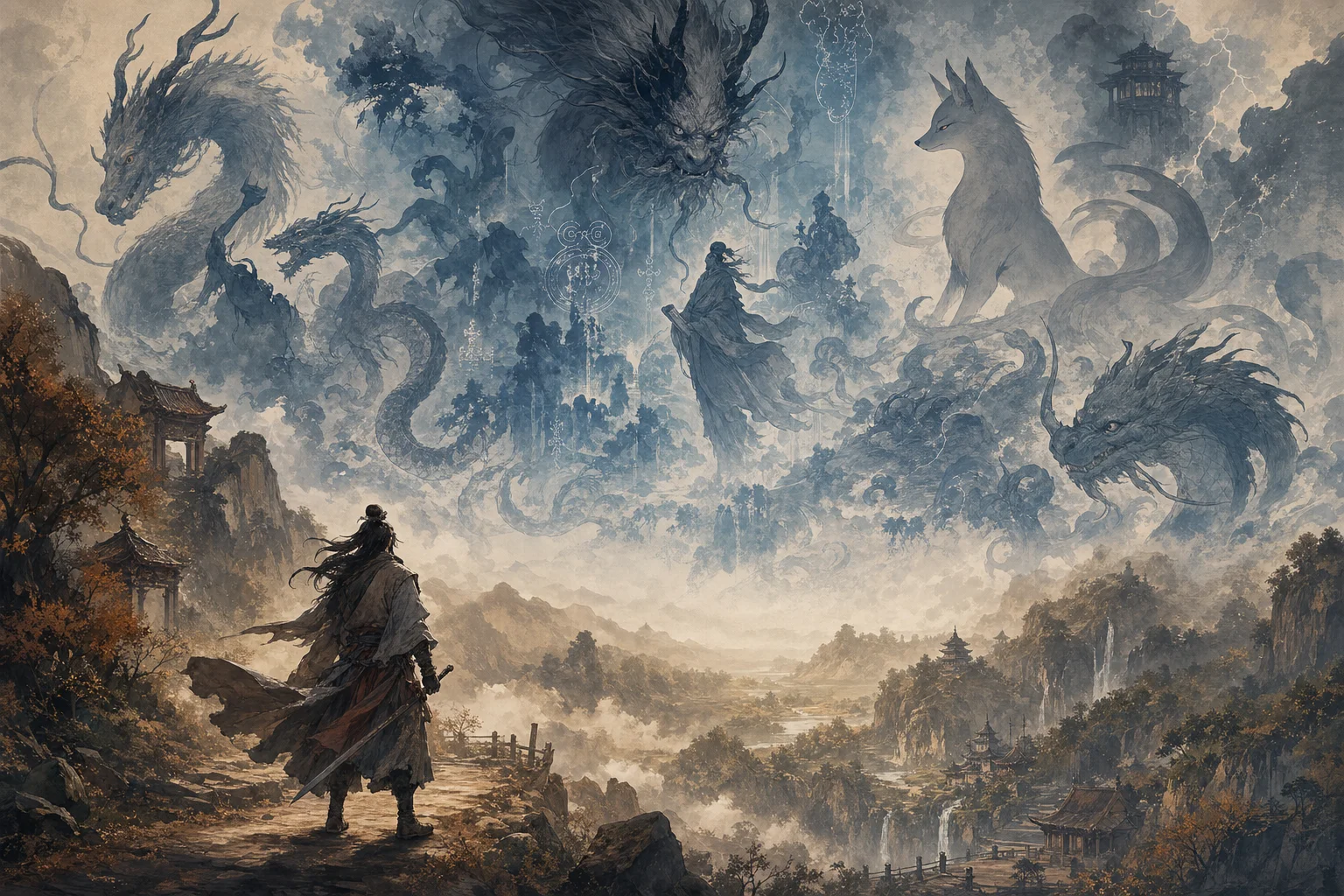
If you have read our primers on jianghu society and the Taiwu bloodline, you already know the human layer: sects, heirs, grudges, villages. Steam copy adds a second promise: Chinese mythology woven through an open-world wuxia sandbox. That is not marketing filler. Taiwu's map is built so a day of farming can end at a fox spirit's inn, a poisoned manual, or a cultivation path that would horrify your orthodox sect teachers. This eight-minute article explains the myth and strange-tale layer — what it draws from, how it differs from the social jianghu, and how to tell classical source from game fiction.
Two layers on one map
The simplest mental model:
江湖层 · Jianghu layer
People — sects, merchants, marriages, vendettas, policy and craft
神话层 · Myth layer
Beings and forces that bend natural law — spirits, esoteric cultivation, uncanny places
In Taiwu
Both run in the same procedural world; neither cancels the other
Wuxia is often described as “realistic” compared to high fantasy — no elves, no fireball wizards. But Chinese martial fiction has always leaked into myth: a hermit who is three hundred years old, a sword manual copied from a river dragon, a monk who is not entirely human. Think of mythology as the weather system above jianghu daily life. Most days are rain and harvest; then the sky turns wrong.
Where the myths come from (three traditions)
Taiwu is not adapting one sacred text like Journey to the West. It drinks from a stack of Chinese storytelling habits. Three layers matter most for players:
1. Classical bestiaries — Shan Hai Jing
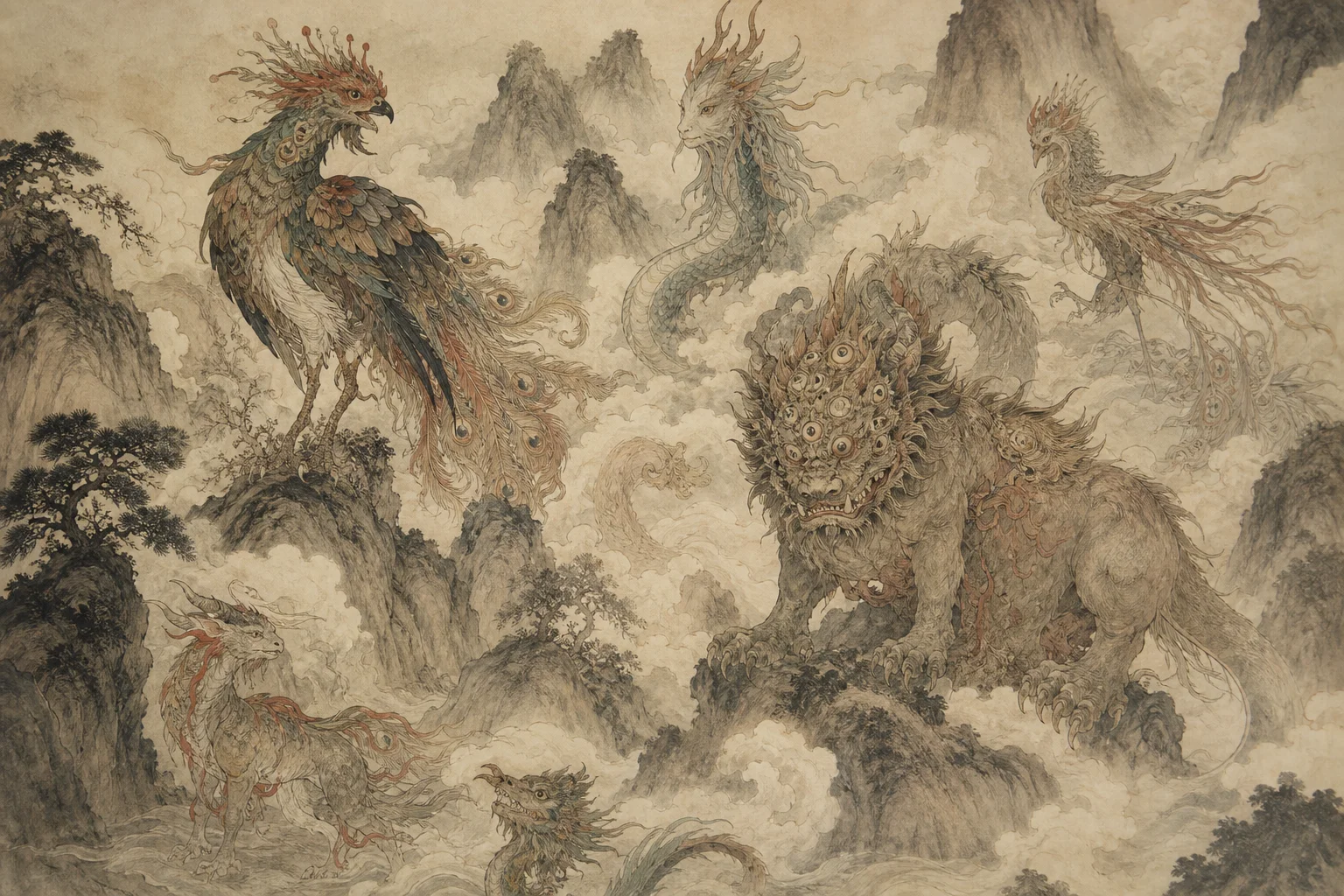
The Shan Hai Jing (山海经, Shān Hǎi Jīng) — often translated as the Classic of Mountains and Seas — is an ancient compilation of regions, rituals, and creatures that should not exist by modern biology. You will not need to memorize its chapters to play Taiwu, but you will recognize its tone: hybrid beasts, sacred mountains, rivers with agendas, tribes at the edge of the known map. When a game creature looks like a catalog entry with extra teeth, it is often tipping its hat here.
2. Strange tales — zhiguai
Zhiguai (志怪, zhìguài) means “recording the strange.” For centuries, writers collected short tales where scholars meet fox spirits at inns, dead lovers return with warnings, and objects gain souls after enough years in a drawer. Pu Songling's Strange Tales from a Chinese Studio (聊斋志异) is the famous Qing-dynasty example abroad.
Zhiguai trains a reading habit Taiwu rewards: the friendly face may not be the true form. A merchant, a child, a beautiful stranger — any of them might be testing you, borrowing your luck, or settling an old grudge. Our zhiguai primer for Black Myth: Zhong Kui goes deeper on literary history; for Taiwu, remember that episodic uncanny encounters are a native genre, not horror DLC bolted onto wuxia.
3. Folk religion and cultivation lore
Below literature sits lived belief: temples to local gods, ancestor tablets, talismans, medium trance, and the idea that discipline — martial or spiritual — can reshape the body's energy. Neigong (内功), meridians (经脉), and forbidden manuals (秘籍) belong to this stack even when a game exaggerates them for fun. v1.0 Beyond the Dome spotlights a demonic cultivation (邪道) path that converts enemy essence into forbidden techniques — we unpack the cultural logic in a later article without plot spoilers here.
Yaoguai, mo, gui — a quick taxonomy
Chinese does not use one word for “monster.” Three terms cover most of what you will see:
Umbrella term
Yaoguai 妖怪
Supernatural or uncanny beings — often transformed animals, odd spirits, or failed cultivators. Marks otherness, not automatic evil. See our yaoguai primer for Black Myth: Wukong for a fuller taxonomy.
Heavier threat
Mo 魔
Demon or mara — destruction, obsession, corrupt power. Often attached to forbidden cultivation and world-ending moods.
Restless dead
Gui 鬼
Ghosts and the improperly buried — tied to mourning, justice, and underworld bureaucracy in folk belief.
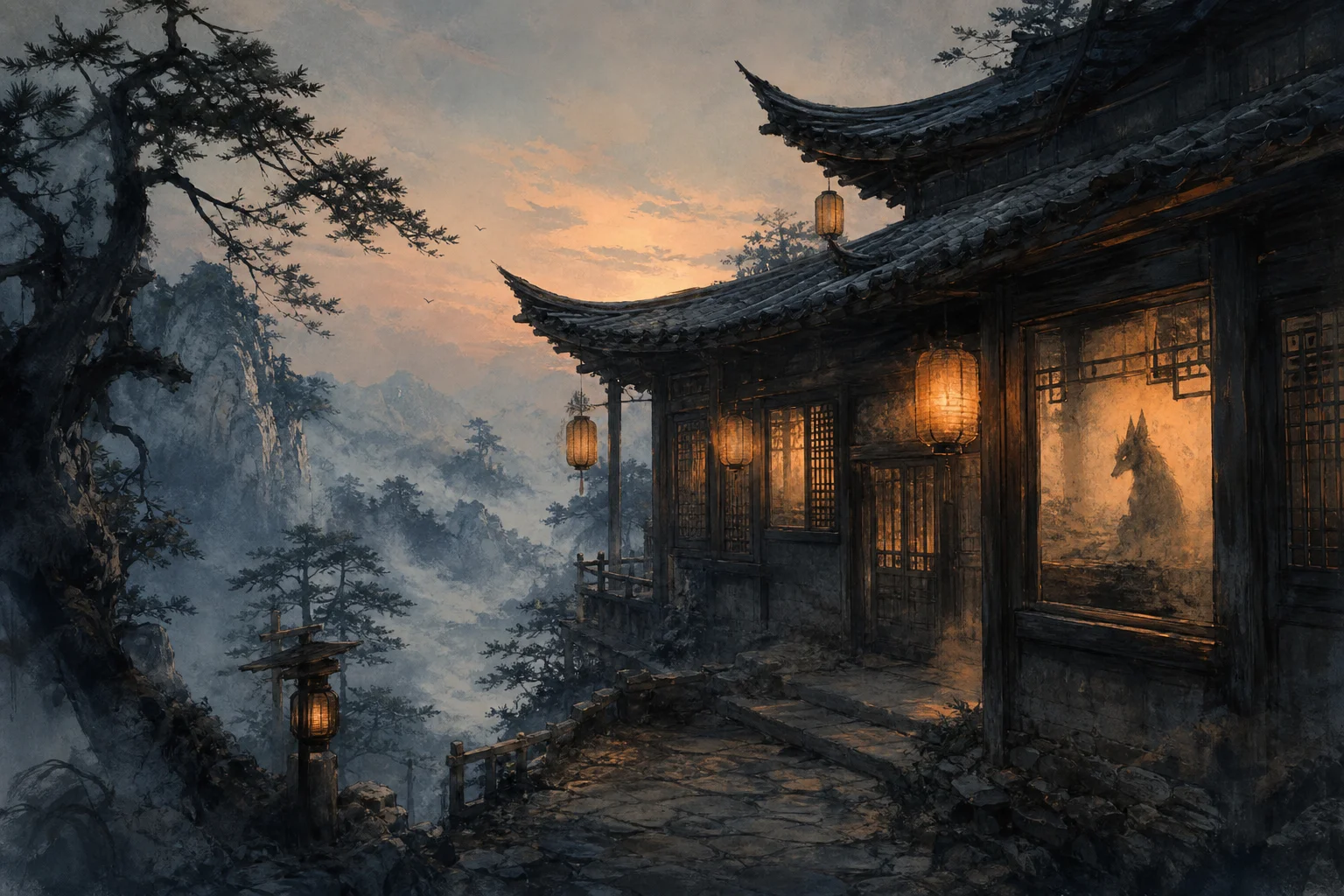
Taiwu uses this vocabulary freely because myth is already native to martial fiction. A sect elder might lecture on righteousness while keeping a sealed demon in the cellar. A village festival might honor a god who, in the next county, is considered a local tyrant spirit. Procedural NPCs and maps make these collisions feel accidental — which is how zhiguai stories often begin.
Orthodox paths and forbidden ones (without spoilers)
Chinese martial and religious culture distinguishes orthodox (正道) and heterodox or demonic (邪道) practice — not always as simplistic good-versus-evil, but as what price you pay for power and who sanctions your method. Orthodox schools claim lineage, restraint, and public reputation. Forbidden paths promise speed, revenge, or survival at the cost of taboo — consuming essences, harming innocents, or breaking natural order.
Taiwu's sandbox lets you live mostly on the human layer and still brush against myth. v1.0 marketing explicitly adds a demonic cultivation route — culturally, that places the game in a long tradition of “the manual everyone told you not to read.” We are not listing skills or bosses here; treat this as genre weather you may invite into your scroll or avoid for generations.
Spoiler boundary: Endgame mythic figures named in v1.0 materials (such as the Tianmu host or Santu demons) belong in our later major spoiler article. This primer stays at framework level.
How Taiwu uses myth differently from Black Myth
| Black Myth: Wukong | The Scroll of Taiwu |
|---|---|
| Adapts a single novel with famous episodes | Synthesizes wuxia + myth stacks without one fixed canon text |
| Player expects “which chapter is this boss?” | Player expects emergent strange encounters in a sandbox |
| Myth serves a pilgrimage plot | Myth punctuates clan chronicles, sect life, and exploration |
| Names often trace to the novel | Names may echo tradition but are game-original — check the Baixiao Manual, not Wikipedia |
That last row matters. v1.0's Baixiao Manual (百晓册) — an in-game encyclopedia with hundreds of thousands of words — is where setting detail lives. Culture articles like this one explain why the world feels Chinese-mythic; the manual lists what a specific creature or place is called in Taiwu fiction.
Three-way split: tradition, type, and game
When you meet something uncanny, ask which bucket you are in:
- Classical source — echoes Shan Hai Jing, zhiguai tales, or folk religion you can read about elsewhere
- Genre convention — a wuxia trope (forbidden manual, fox spirit test, hermit on a cliff) without a one-to-one real-world original
- Taiwu fiction — proper nouns, bosses, and plot beats invented for this game's clan saga and procedural world
Guessing “is this from the novel?” is usually the wrong question. Better: what storytelling job is this doing? A spider spirit might be a zhiguai seduction trap; a sealed cavern might be a cultivation test; a village god might be local politics wearing incense. Our next primer — How The Scroll of Taiwu Uses Tradition — is the living doc for tracking those boundaries as v1.0 evolves.
How to read along as you play
- → If an NPC offers power too fast, think forbidden manual logic before min-max logic.
- → If a creature feels like a catalog hybrid, glance at Shan Hai Jing mood — not necessarily a direct copy.
- → If a scene feels like a short ghost story, you are in zhiguai territory — episodic and moral.
- → Cross-read ghost cosmology only when the dead and underworld bureaucracy take center stage.
Key terms to remember
| English | Chinese | Quick meaning |
|---|---|---|
| Classic of Mountains and Seas | 山海经 | Ancient bestiary and geography of the strange |
| Records of the strange | 志怪 | Literary tradition of supernatural short tales |
| Supernatural being | 妖怪 | Yaoguai — broad category of uncanny beings |
| Demon / mara | 魔 | Corrupt or destructive supernatural force |
| Ghost | 鬼 | Restless dead; haunting and justice themes |
| Demonic cultivation | 邪道 | Forbidden practice — taboo methods for power |
| Baixiao Manual | 百晓册 | v1.0 in-game lore encyclopedia |
What Western players often misunderstand
- “Chinese myth = Journey to the West.” Taiwu draws a wider stack — zhiguai, bestiaries, folk religion, wuxia taboos.
- “Yaoguai always means enemy.” The word marks strangeness; morality is situational.
- “Myth layer replaces jianghu.” Most playtime is still human society — myth intrudes, not replaces.
- “I should look up every name on Wikipedia.” Many Taiwu names are original fiction; use the Baixiao Manual first.
- “Demonic cultivation is edgelord flavor.” It is a rooted trope about price, taboo, and sect scandal — not just a dark UI theme.
Where to go next
You now have the mythic vocabulary beneath the sects and villages. The next article in this series is our living doc on how Taiwu mixes tradition and fiction — including what changed in v1.0 Beyond the Dome versus Early Access. When you are ready for light spoilers on forbidden paths and clan vendetta, continue into Lineage, Sects & Jianghu Society.