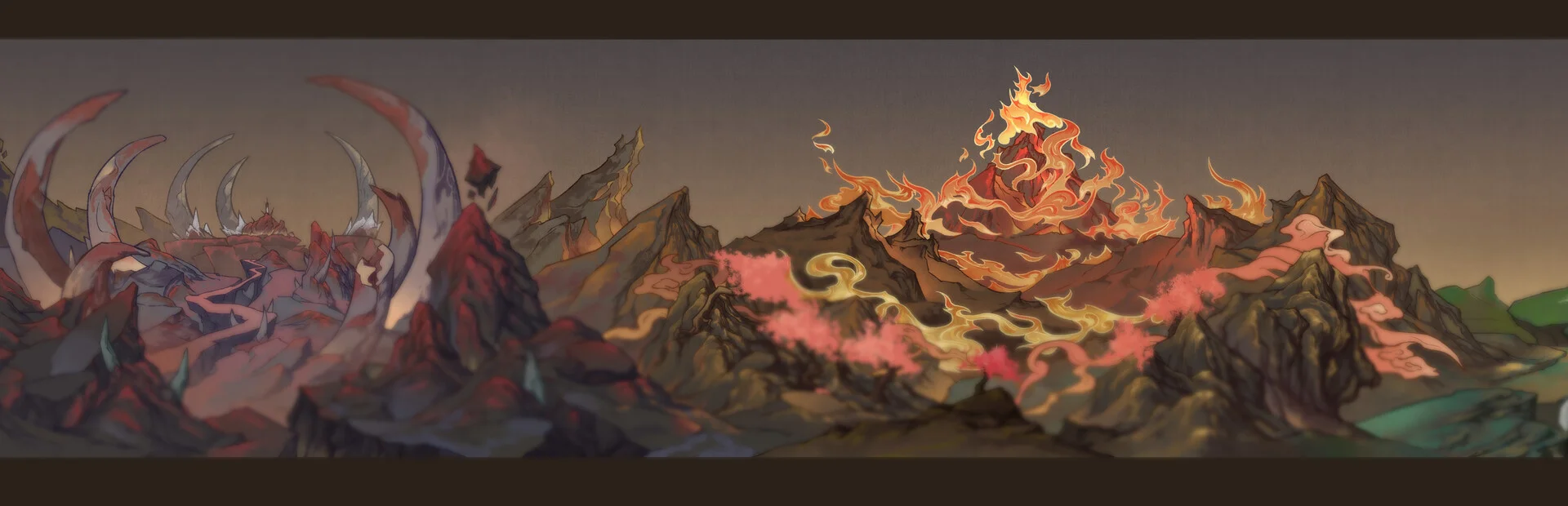
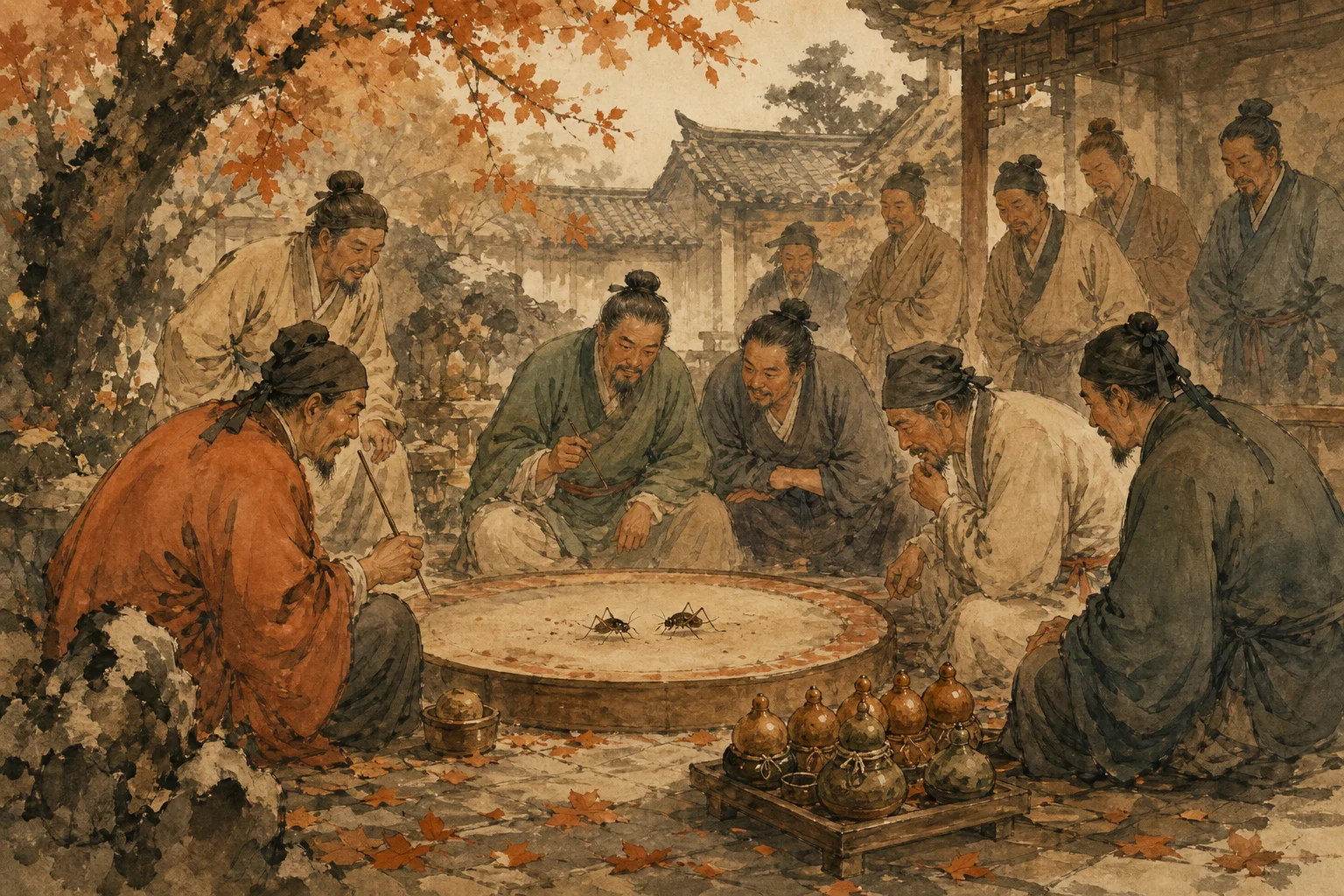
Steam screenshots of The Scroll of Taiwu show sword sects and demonic cultivation — and also cricket fighting (斗蛐蛐, dòuqūqū). That juxtaposition confuses players expecting pure combat RPGs. It should not. Wuxia fiction always had a leisure layer: teahouse wagers, board games, music, and folk sports that prove jianghu is a society, not a battlefield with shops. This article indexes Taiwu's pastime culture — cricket matches, 琴棋书画 (the four scholar arts), and why an heir can be a champion bug-fighter who never learns a sword form.
Why pastimes are main content
Our jianghu primer already noted: craft, marriage, and cricket fights can be parallel main content, not cooldown filler. Culturally:
烟火气
Everyday texture — the world exists when you are not drawing a blade
赌与名
Wagers and reputation — pastimes create debts and bragging rights
一千种活法
Official sandbox promise — leisure paths are valid life stories
A hidden master posing as a cricket vendor is a trope because ordinary hobbies hide extraordinary people. Taiwu lets you play the vendor — or the noble who loses face betting on the wrong insect.
Not a mechanics guide: We are not listing cricket stats, breeding loops, or minigame unlock order. This is the cultural frame for why these activities exist.
Cricket fighting — history in brief
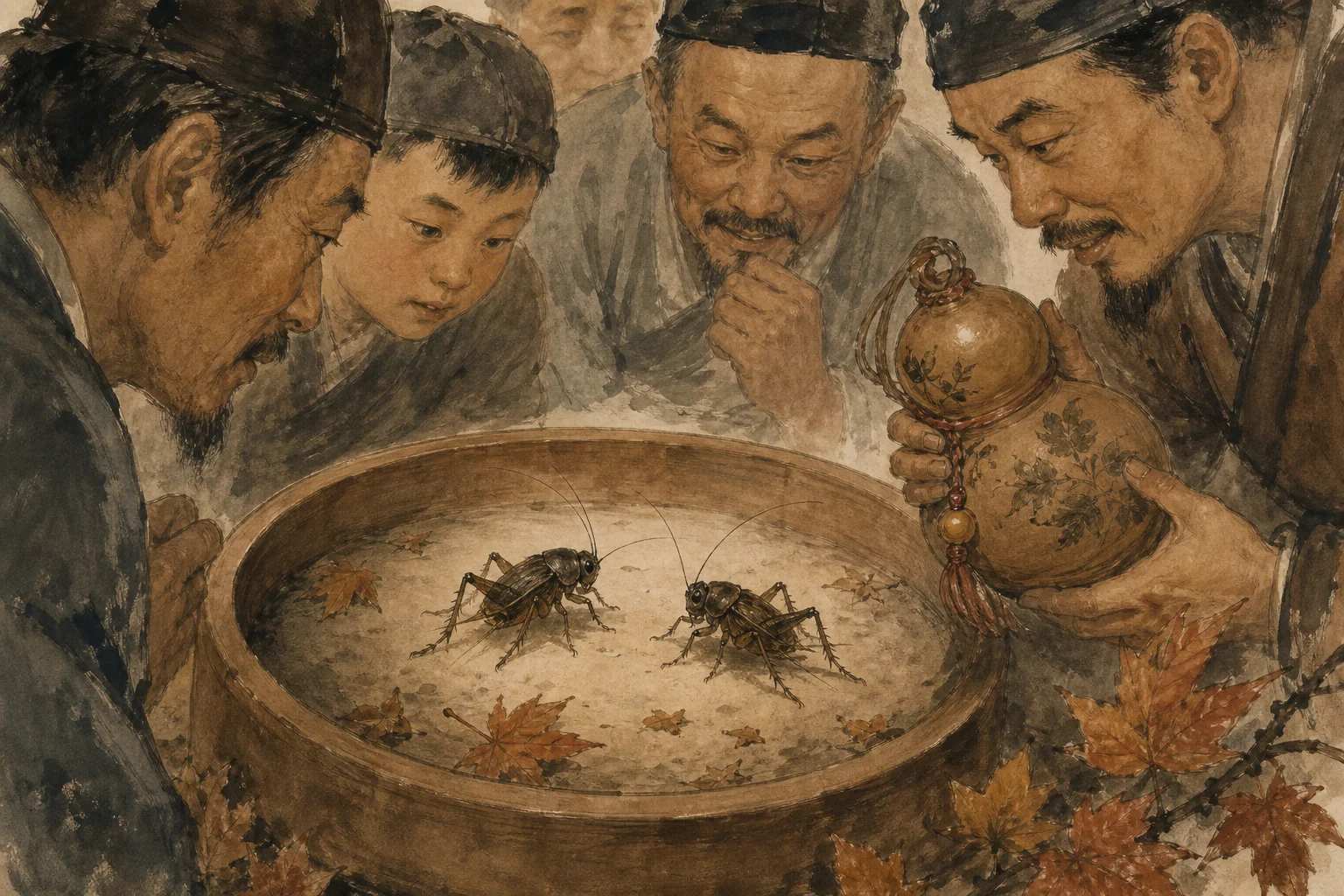
Cricket fighting has documented popularity from at least the Tang dynasty onward, peaking among urban elites and literati in the Ming–Qing eras. Useful cultural beats (not a history lecture):
- Seasonal — autumn harvest mood; crickets as timely entertainment before winter indoors
- Collecting — naming champions, housing them in gourd jars or clay pots — pet culture with pride
- Wagering — money, gifts, and face on the line — ties to jianghu gambling ethics
- Class mix — emperors and farmers both enjoyed variants; fiction loves the rich heir obsessed with bugs
In novels, a cricket match can expose character: patience, cruelty, superstition, or hidden wealth. Taiwu imports that social logic into a map that also has vendettas and sect manuals — the same design instinct behind village hearth play.
What cricket adds to jianghu
| Layer | Traditional mood | Why Taiwu cares |
|---|---|---|
| Gossip | Teahouse retelling of last night's match | NPC memory and relationship webs |
| Status | Champion cricket as movable wealth | Inheritance between heirs — odd legacies matter |
| Risk | Debt from bad bets | Sandbox pressure without a boss fight |
| Cover | Retired hero “only” fights insects | Genre camouflage for hidden skills |
Our generational play article imagined an heir who inherits fame as a cricket champion. That is not a joke ending — it is 安身立命 (establishing yourself) through folk skill instead of martial rank.
琴棋书画 — the four scholar arts
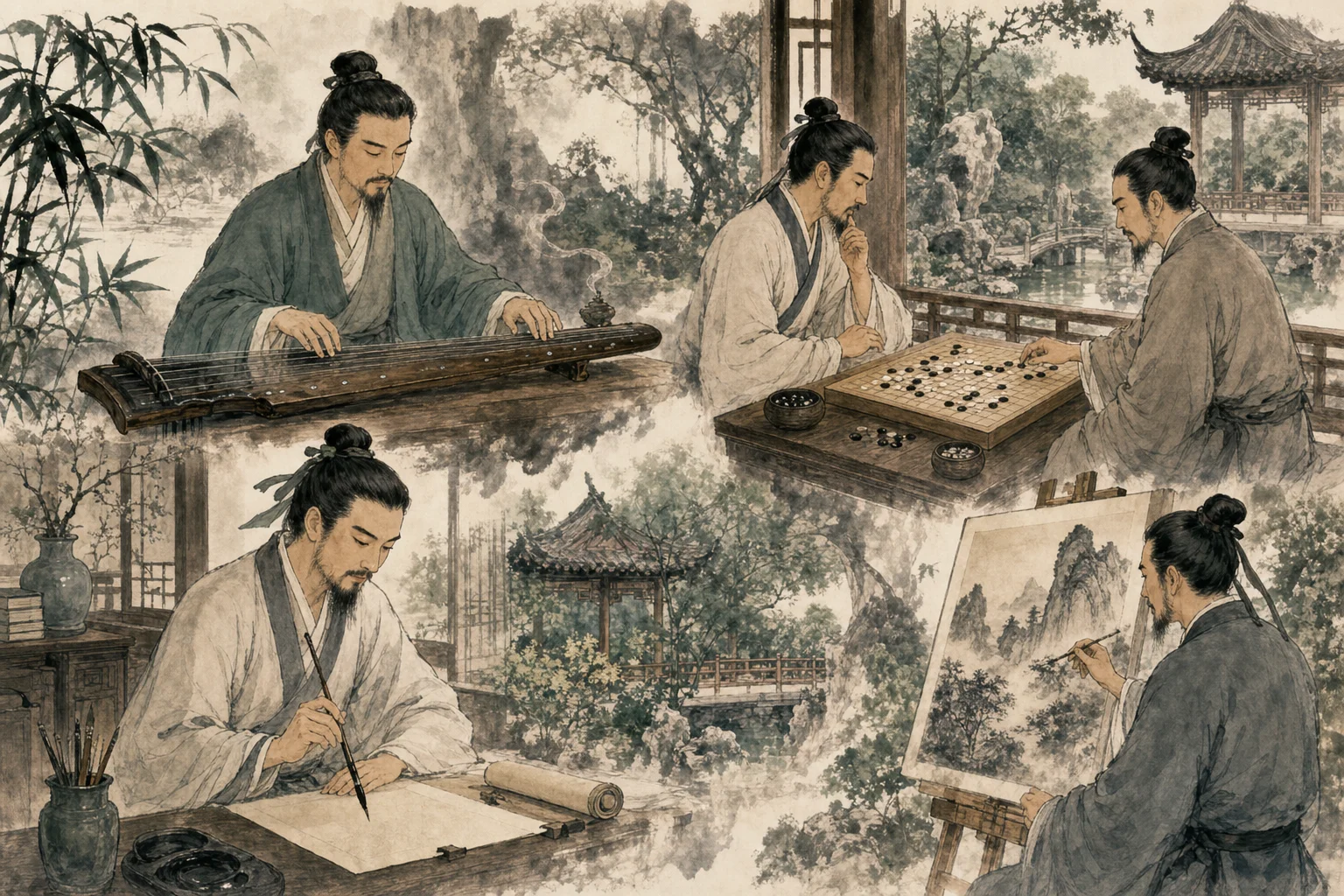
Official Taiwu copy cites 琴棋书画 alongside cricket and seasonal farming as differentiated folk texture. The phrase bundles four arts associated with the educated gentleman — and, in wuxia, with dangerous people pretending to be gentle:
- Qin (琴) — zither-like guqin; music that can soothe, seduce, or signal assassination
- Qi (棋) — usually board games such as weiqi (Go); strategy metaphors for martial mindsets
- Shu (书) — calligraphy; discipline of brush, breath, and inner calm
- Hua (画) — painting; often landscape meditation tied to travel and exile tropes
None of these replace combat in Taiwu's pitch — they share the calendar with it. A sect elder who tests you at a chess board before a sword duel is genre grammar. A player who spends a season on music and marriage is playing the same sandbox the marketing promised.
Other jianghu pastimes you may meet
Social
Teahouse talk
Rumors, matchmaking, job offers — jianghu's informal internet.
Risk
Gambling dens
Debt, cheating, revenge — small stakes spiral into vendettas.
Seasonal
Festivals
Lanterns, banquets, archery games — public face on display.
Fiction trope
Drinking contests
Heroes bond or betray over cups — hospitality as weapon.
Taiwu does not simulate every festival in Chinese history. The point is density: when you leave a sect gate, the world should feel populated by people with hobbies, not only hostile encounter tables.
Folk games vs mythic combat
Pastimes sit on the social layer of our culture map — below mythic cultivation and strange tales, above pure UI abstraction. They help overseas players see differentiation:
- Not Skyrim reskin — cricket jars and guqin lessons are specific cultural choices
- Not only Dynasty Warriors — you can lose a day to a board game, not a battlefield
- Not disposable minigames — outcomes can feed alliances and grudges
When in doubt, ask what a pastime costs in time and reputation — the same questions we use for forging blades or training meridians.
Questions for heirs who play
- Are you betting money you need for the harvest — or pride you cannot afford to lose?
- Does your cricket champion make you friends, enemies, or both at the teahouse?
- Which pastime hides your real skill — and who sees through the act?
- What does the next heir inherit — a famous insect, a gambling debt, or a guqin score?
Next in this series: the Baixiao Manual (百晓册) — how Taiwu's in-game encyclopedia and this Culture module divide the work of explanation.