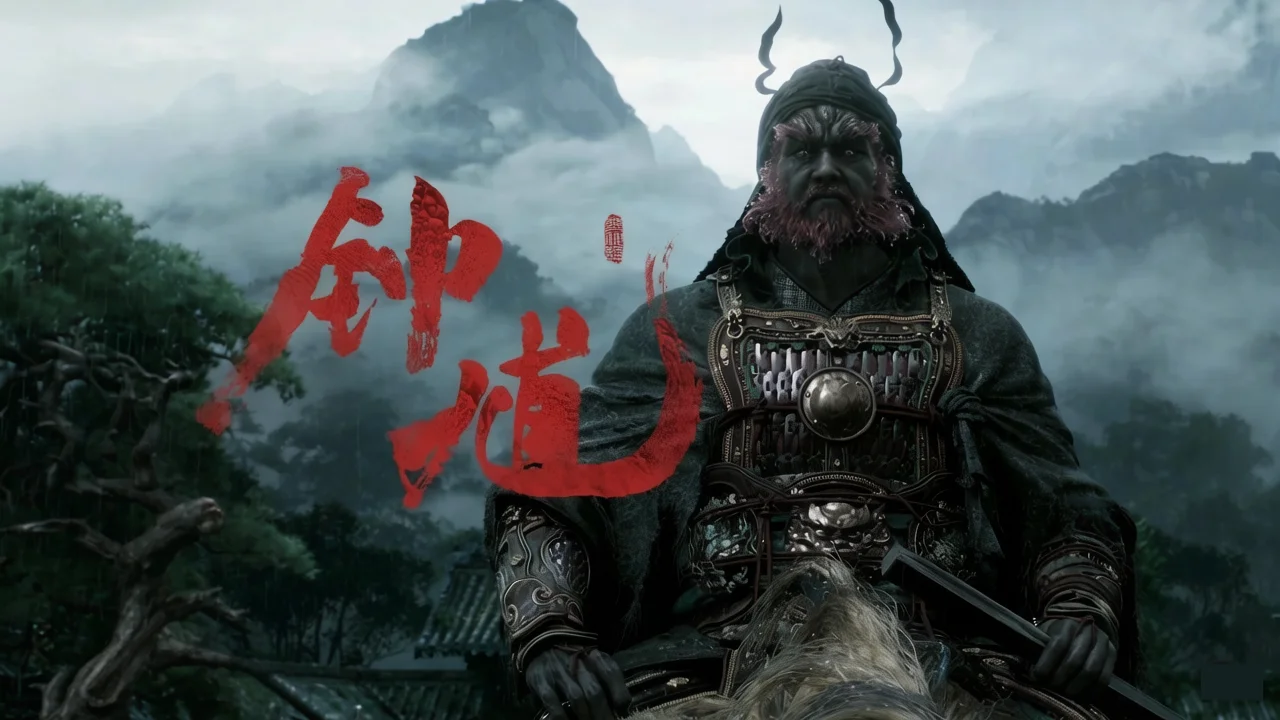
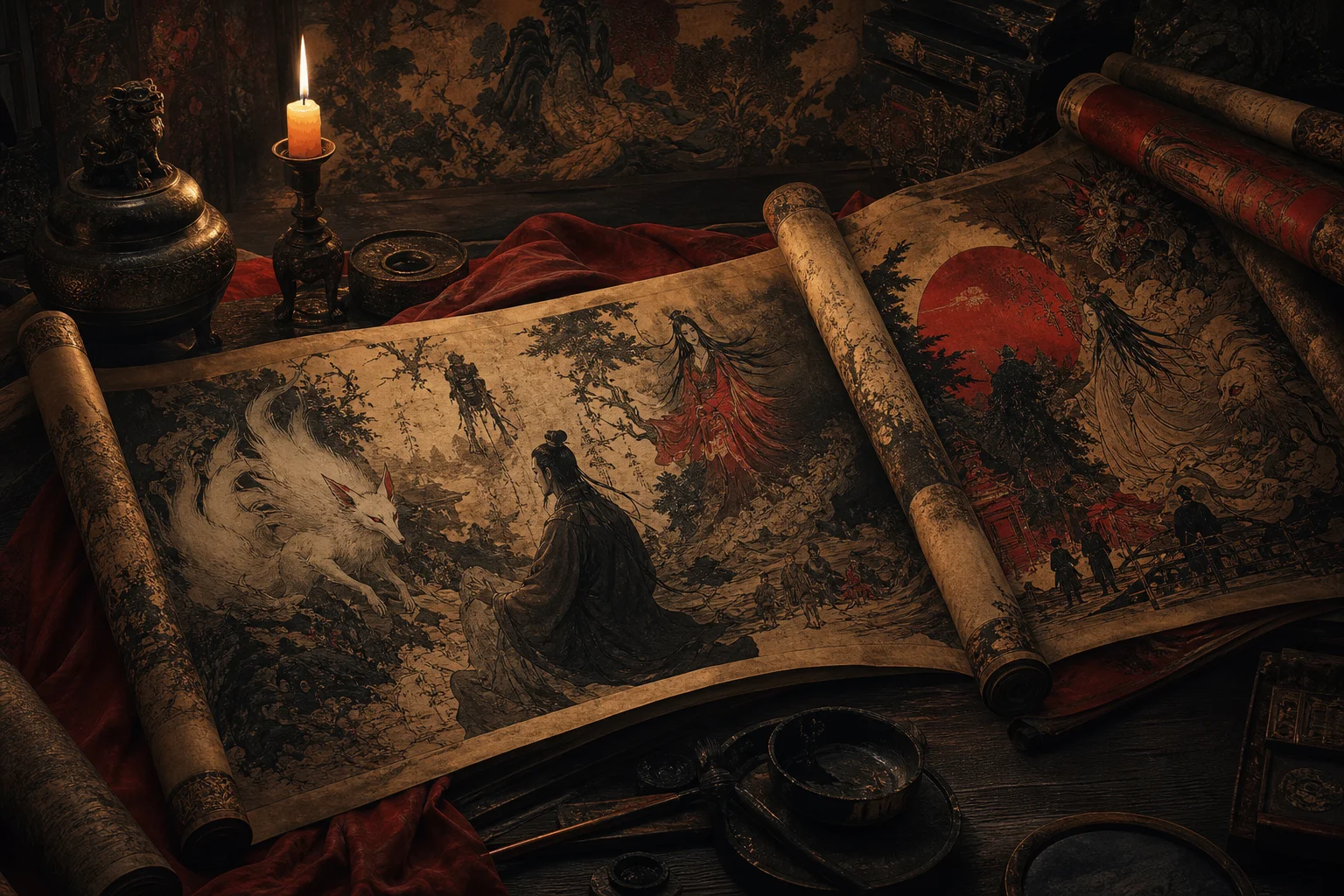
Black Myth: Wukong had one anchor novel. Black Myth: Zhong Kui draws on a tradition instead: centuries of short strange tales where ordinary people stumble into the supernatural. This seven-minute guide maps that tradition — and why it fits a darker, more episodic game.
What is zhiguai?
Zhiguai (志怪, zhìguài) literally means “recording the strange.” It names both a genre habit (note down uncanny events as if they were history) and a vast body of stories about ghosts, fox spirits, revenants, dreams that come true, and objects that should not move on their own.
These are usually short pieces — anecdote scale, not epic scale. A traveler sleeps at a temple and meets a woman who is not human. A painting bleeds. A corpse sits up to collect a debt. The pleasure is mood, twist, and moral unease — not a 100-chapter quest log.
Scale
Short tales, collections, notebooks — bite-sized uncanny
Tone
Eerie, ironic, sometimes comic — rarely cozy fantasy
World rule
The living and the strange share one world; borders leak constantly
A brief timeline of the tradition
No single author owns zhiguai. These milestones are enough context for players — scholars spend careers on the rest.
Early corpus
Soushen Ji 搜神记
Records of the Search for Spirits (4th century CE, attributed to Gan Bao) — one of the earliest major collections. Gods, ghosts, and omens recorded with straight-faced seriousness. Sets the template: strange, but told as true.
Medieval anthology
Taiping Guangji 太平广记
Extensive Records of the Taiping Era (10th century) — a massive Song-dynasty anthology preserving hundreds of earlier tales. A library of motifs later writers steal from openly.
Ming-Qing peak
Strange Tales from a Chinese Studio 聊斋志异
Pu Songling's 17th–18th century masterpiece — fox spirits, ghost lovers, corrupt officials punished by the uncanny. The most famous zhiguai book abroad; elegant prose with sharp social bite.
Parallel vein
What the Master Would Not Discuss 子不语
Yuan Mei's Qing-dynasty collection — lighter, wittier anecdotes. Proof that zhiguai is not only horror; it is also gossip about the impossible.
What zhiguai stories feel like
Forget unified canon. Recurring motifs matter more than one plot:
| Motif | What happens | Why it sticks |
|---|---|---|
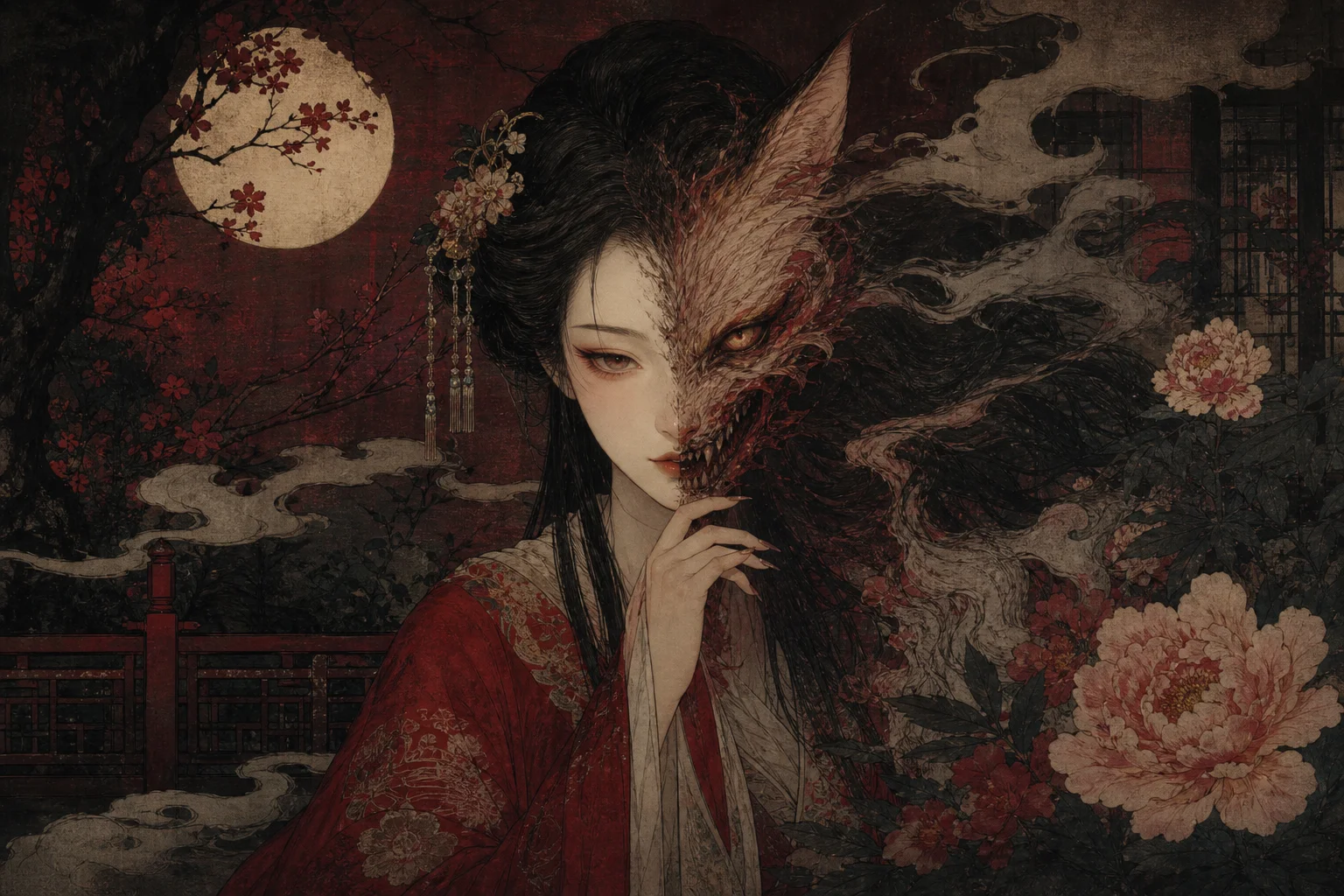
| Shapeshifter romance | A beauty is a fox or ghost; love ends in revelation or tragedy | Desire blinds; the uncanny punishes denial |
| Wronged ghost seeks justice | A victim returns to expose a crime the living covered up | Courts fail; the underworld sends reminders |
| Corrupt official punished | Power invites supernatural retribution | Social critique wearing ghost makeup |
| Object or painting comes alive | Art, idols, or tools cross the line | Visual horror — good for games and opera |
| Traveler's test | An inn, temple, or road at night — hospitality hides teeth | Episodic structure: enter, uncover, escape or die |
The “human heart” thread
- → Many tales argue monsters are made — by injustice, lust, cruelty, or hypocrisy.
- → That moral engine pairs naturally with Zhong Kui, who punishes evil spirits and symbolizes judgment on corrupt power.
- → Game Science's teaser language about household ties and worldly corruption rhymes with this tradition, not with slapstick pilgrimage comedy.
Zhiguai vs. the Four Great Novels
Journey to the West is a long, structured epic with recurring heroes. Zhiguai collections are closer to horror anthologies, urban legends, and case files — perfect when a studio wants modular set pieces and a darker palette without locking to one book's chapter list.
| Great classical novels | Zhiguai tradition | |
|---|---|---|
| Length | Massive single narratives | Short tales, often standalone |
| Hero model | Fixed pilgrimage or war party | Scholars, officials, travelers — rotating casts |
| Adaptation hook | Chapter-to-chapter mapping | Motif-to-mission mapping (“this level feels like a fox inn tale”) |
| Tone for Black Myth | Wukong: epic myth with comedy veins | Zhong Kui: uncanny, punitive, morally heavy |
Why Game Science chose this line
Public statements around the Gamescom 2025 reveal point to ghost-catching folklore plus zhiguai as creative fuel — not a sequel to Sun Wukong's novel arc. That choice buys creative freedom:
- No single “original book” to contradict — the team can invent while citing a cloud of precedents.
- Episodic DNA — strange tales already feel like discrete encounters, good for action RPG chapters.
- Darker default mood — zhiguai skews toward dread and moral reckoning, matching the series' heavier tone.
- Visual variety — fox spirits, haunted courts, cursed paintings, underworld roads — art direction can shift per tale.
Treat every future screenshot as inspired by a motif, not an adaptation of one named short story — unless the developers say otherwise.
Where Zhong Kui fits in
Zhong Kui is not the protagonist of most classical zhiguai — but he belongs to the same cultural weather. When a tale needs an exorcist, a hanging portrait, or a sword that ends a haunting, Zhong Kui is nearby. Painters and playwrights linked him to ghost suppression long before video games did.
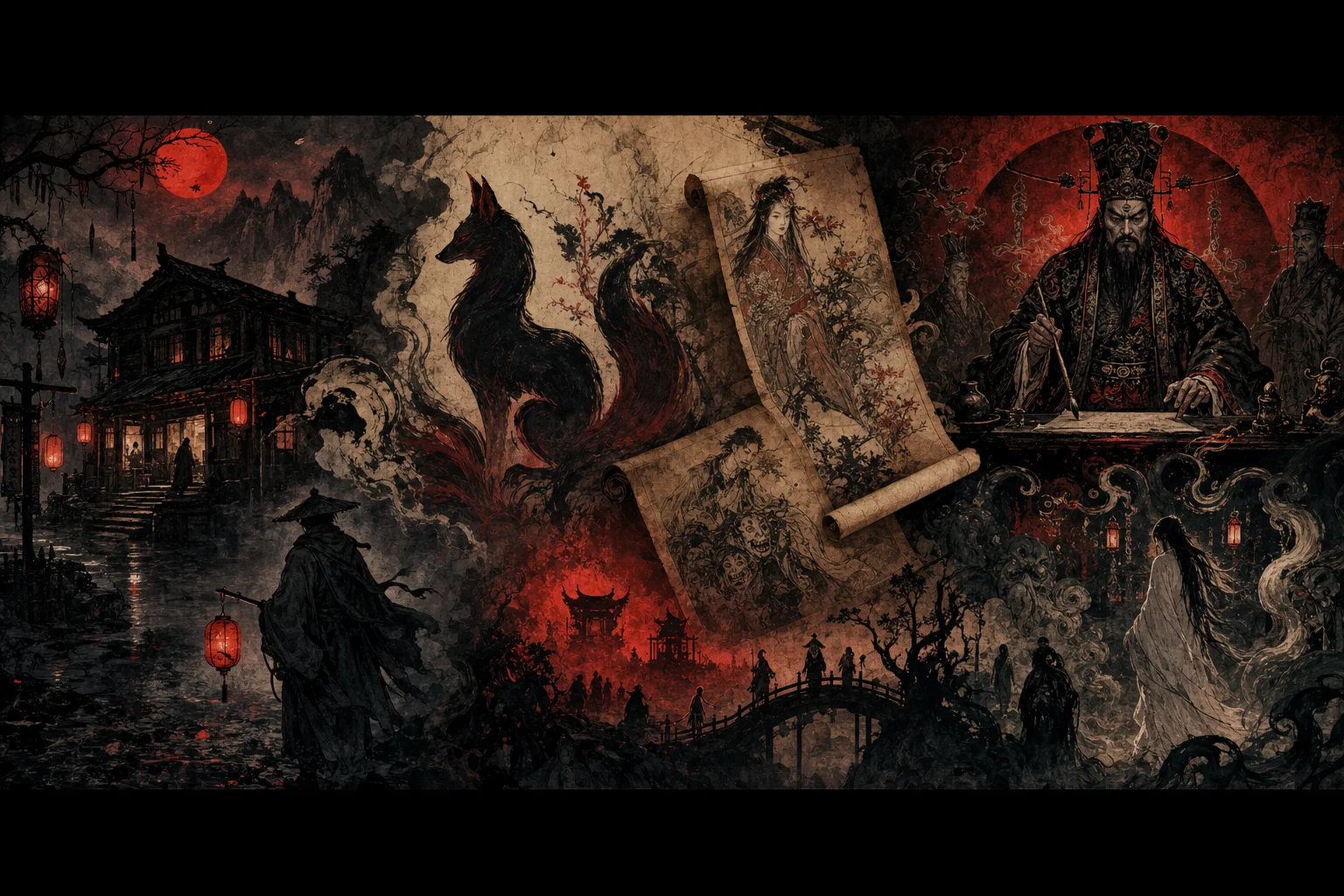
Think of the game as sitting at the intersection of: his folk cult (door guardian, demon queller) + zhiguai storytelling ( episodic uncanny ) + underworld cosmology (courts, roads, revenants).
Continue the primer path
- → What we know about Black Myth: Zhong Kui so far — living doc of official reveals (updated as material drops).
- → Underworld & ghost cosmology — the afterlife infrastructure behind many zhiguai plots.
- → Playing Black Myth: Wukong too? Compare notes via the yaoguai in folk belief article — shared vocabulary, different emphasis.
Key terms
| English | Chinese | Meaning |
|---|---|---|
| Zhiguai | 志怪 | Records of the strange — literary tradition of supernatural short tales |
| Strange / uncanny | 怪 · 奇 | The otherworldly breaking into daily life |
| Fox spirit | 狐妖 | Classic shapeshifter; beauty, danger, moral test |
| Notebook of tales | 笔记 · 小说 | Informal prose collections where zhiguai often lived |
| Liaozhai | 聊斋 | Shorthand for Pu Songling's famous strange tales |