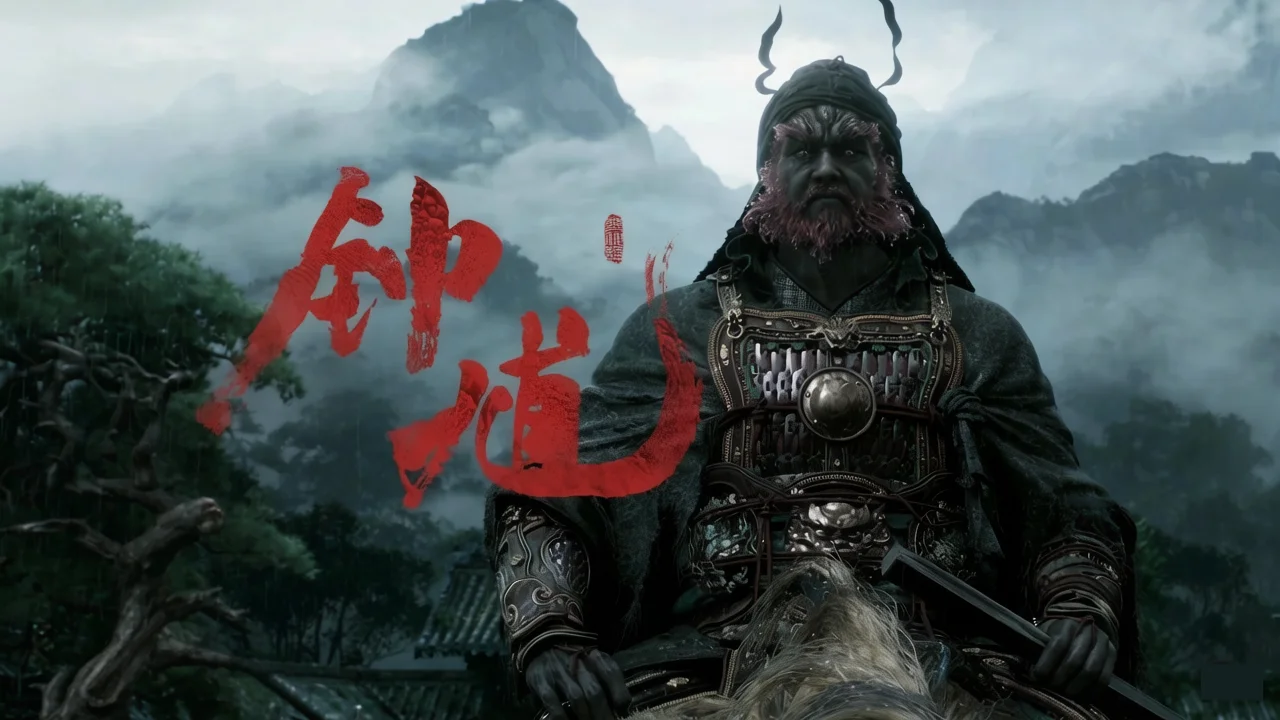
If Zhong Kui is the exorcist at your door, the underworld (阴间, yīnjiān) is the bureaucracy behind him — where souls go after death, how ghosts are sorted, and why the living still burn paper money for relatives below. This primer stays folk-first: the cosmology ordinary Chinese people grew up with, not a theology textbook.
Three layers, one shared world
Unlike a tidy Western map of heaven above and hell below, Chinese folk imagination stacks overlapping layers that stories borrow from freely. Buddhism, Taoism, and local belief all contribute — often in the same tale.
Living world
Homes, temples, festivals — where exorcists like Zhong Kui are invited in
Underworld
Diyu (地府), ghost roads, judgment halls — where most souls pass after death
Heaven & transcendence
Celestial courts and Buddhist liberation — present, but not the focus of ghost-catching lore
Black Myth: Zhong Kui appears to lean into the middle layer: darkness, judgment, restless spirits, and the moral weight of what people leave unfinished in life. Expect underworld imagery more than cloud palaces.
Diyu: the folk underworld
Diyu (地府, dìfǔ) — literally “earthly mansion” — is the everyday Chinese name for the realm of the dead. It is not a single pit of fire. Think of it as a shadow administration: offices, roads, guards, and paperwork for souls.
Souls travel inward. Ghosts who escape or refuse to move on trouble the living — that is where exorcists, judges, and figures like Zhong Kui enter the story. The underworld is supposed to contain chaos; when it leaks, heroes with swords get called.
Landmarks you will keep seeing
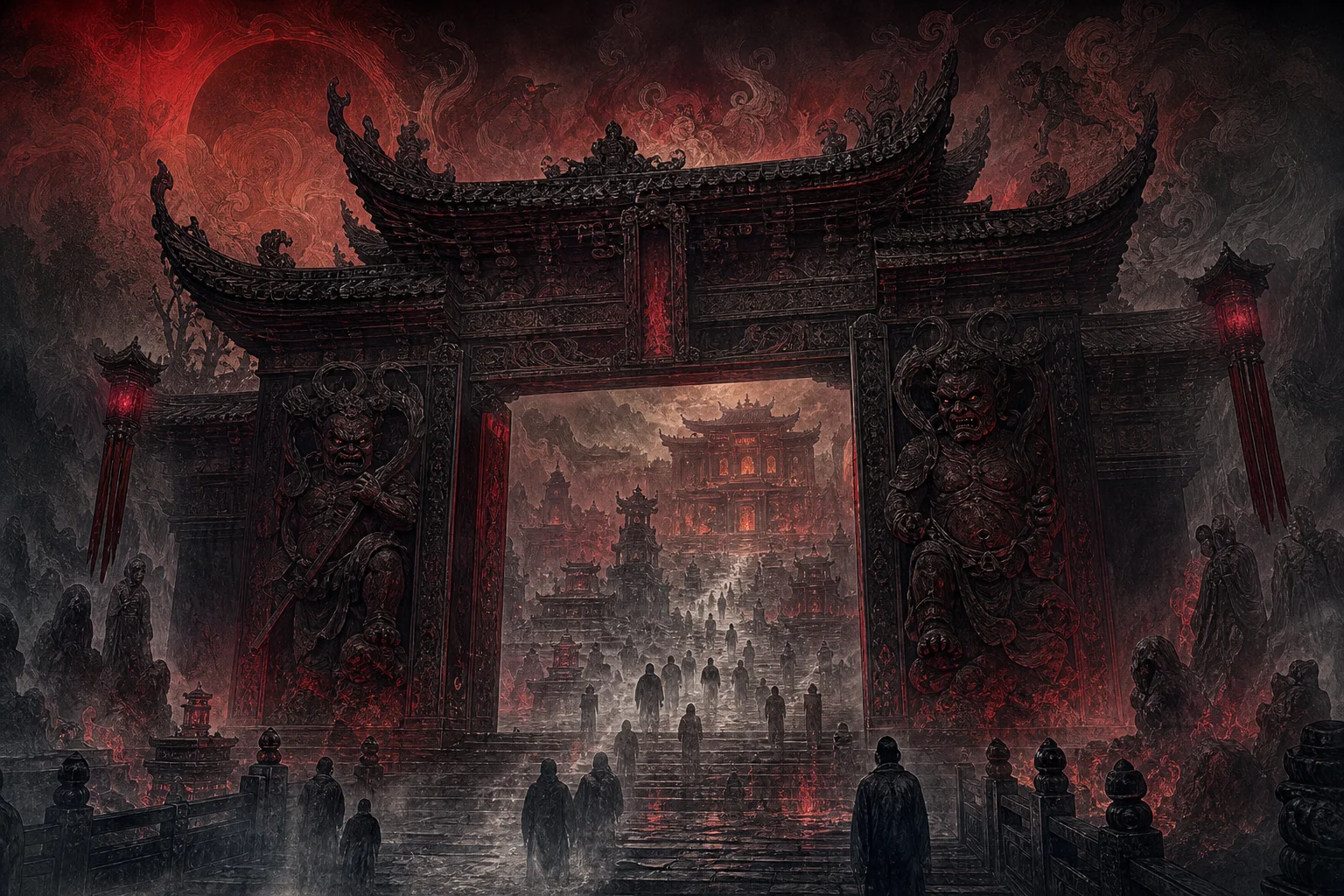
Threshold
Ghost Gate 鬼门关
The gate where the newly dead enter the underworld path. Passing through means leaving ordinary life behind — a visual shorthand for “no return.”
Road
Yellow Springs Road 黄泉路
The long road souls walk toward judgment. “Yellow Springs” (黄泉) is a poetic name for the underworld itself — not a literal yellow river, but a symbol of the boundary between life and death.
Crossing
Naihe Bridge 奈何桥
A bridge souls cross before memory fades. Beside it stands Meng Po (孟婆), who serves the broth of oblivion — drink, forget the past life, move on to rebirth.
Judgment
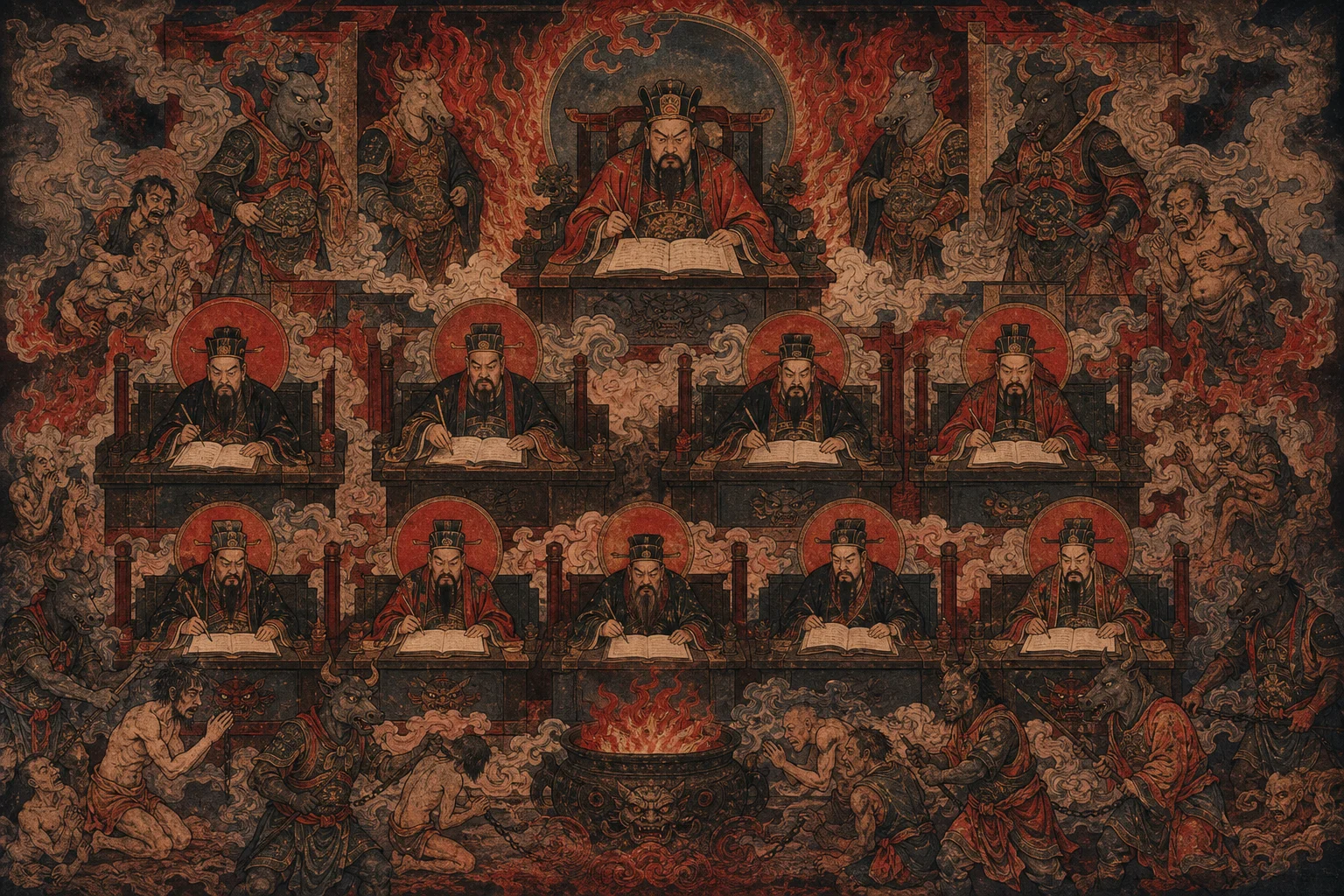
Ten Courts 十殿阎罗
Ten halls ruled by Yama kings (阎罗王), each reviewing different sins. A soul may pass through multiple courts — bureaucracy of the afterlife, not one single courtroom scene.
Who runs the underworld?
Titles overlap in folklore. These are the names worth recognizing before Black Myth throws more at you:
| Figure | Chinese | Role in folk imagination |
|---|---|---|
| King Yan / Yama | 阎罗王 | Chief judge of the dead; often stands for the whole underworld court system |
| Judge (panguan) | 判官 | Official who reads the ledger of a soul's deeds — red pen for the living record, not the same as Zhong Kui |
| Impermanence | 黑白无常 | Black-and-white envoys who escort souls to the underworld — iconic paired figures in art |
| Ox-Head & Horse-Face | 牛头马面 | Underworld guards and messengers — beast-faced attendants who haul reluctant ghosts |
| Meng Po | 孟婆 | Serves forgetfulness at the bridge — mercy and finality before rebirth |
| Zhong Kui | 钟馗 | Operates at the border — hunts rogue spirits, protects households; sometimes appointed by the underworld, sometimes independent |
Zhong Kui ≠ the judge at the desk
- → The panguan (判官) weighs ledgers and assigns fates — courtroom logic.
- → Zhong Kui is the enforcer who runs down spirits that already escaped or harm the living — action-hero logic.
- → Both can appear in the same cultural world; confusing them is like mixing a judge with a bounty hunter.
Kinds of ghosts and spirits
Folk categories are flexible — stories mix labels for effect. Still, these distinctions help when a game name sounds unfamiliar:
Ordinary dead
Ghosts 鬼
Souls of the deceased, especially those with unfinished business, improper burial, or strong resentment (yuan / 怨). Not every ghost is evil — many want justice or a message delivered.
Malicious
Demons & ogres 妖魔 · 厉鬼
Harmful spirits that actively prey on the living. Zhong Kui's sword targets these — the “catch ghosts” (捉鬼) mandate is practical violence against real threat.
Uncanny beings
Yaoguai & strange creatures 妖怪 · 怪
Fox spirits, tree demons, shapeshifters — the wider zoo of Chinese strange tales (zhiguai). Overlaps with Journey to the West; see our Black Myth: Wukong glossary for shared vocabulary.
Moral metaphor
Ghosts from the heart 心生鬼
A recurring theme: corruption, greed, or cruelty creates monsters. The scariest spirits mirror human failure — a thread Game Science's teaser hints at with “worldly corruption.”
Rebirth, merit, and why the living still intervene
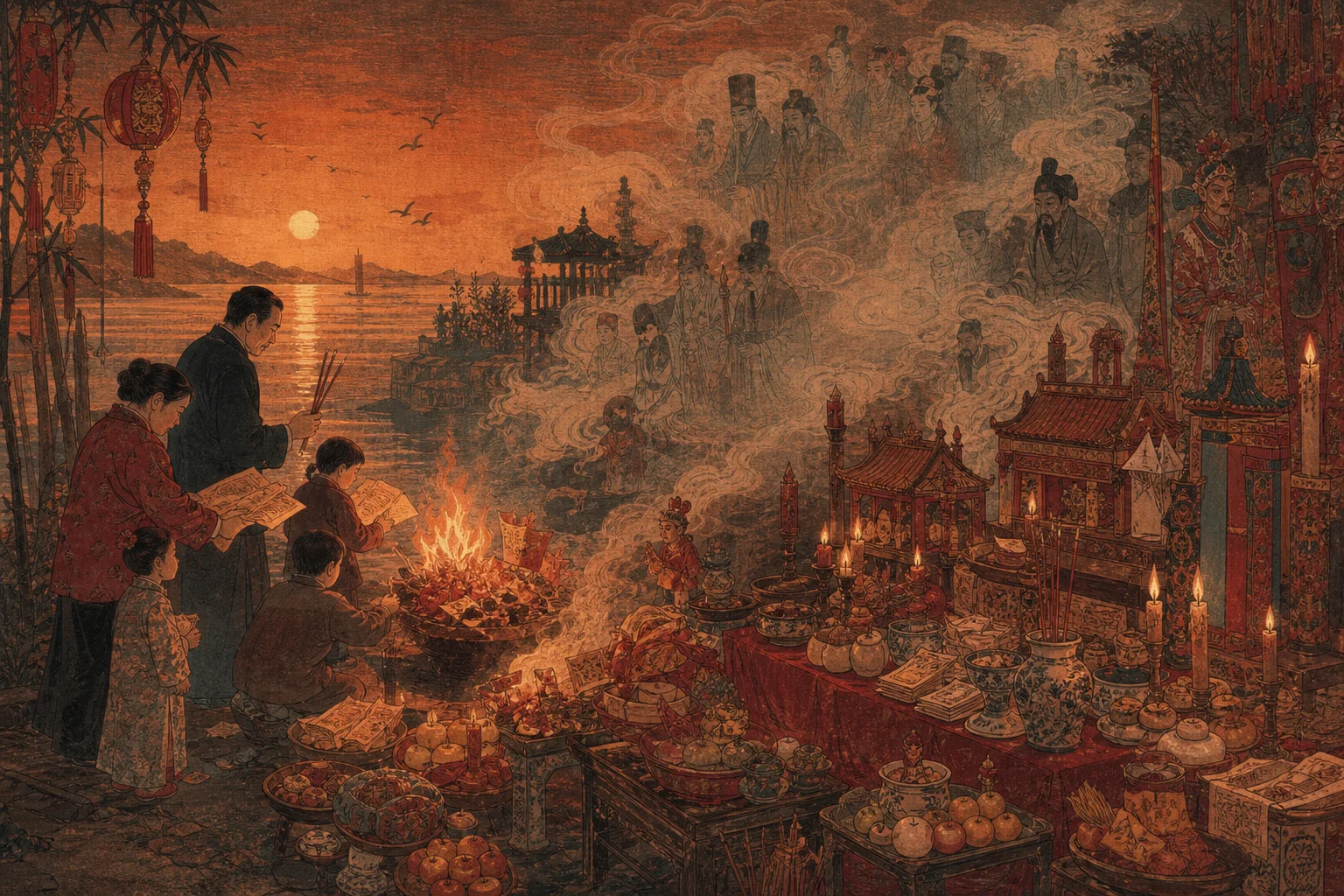
Buddhist ideas of reincarnation (轮回, lúnhuí) and karma (因果) soaked into folk practice over centuries. Most people did not read sutras — they performed rituals: burning incense, offering food, sending paper goods to the dead, asking temples to ease a relative's passage.
That two-way traffic between living and dead keeps the underworld emotionally close. It is not a distant afterlife; it is family business. Ghost festivals, tomb-sweeping days, and home altars all assume the dead still matter and sometimes need help — or restraint.
Folk underworld vs. Buddhist hell
Western players often flatten everything into “Buddhist hell.” Chinese sources are messier — and more useful — when kept separate:
| Folk Diyu | Buddhist hell imagery |
|---|---|
| Story-driven courts, familiar officials, family rituals | Cosmic moral law, liberation as ultimate goal |
| Zhong Kui, Meng Po, Ox-Head and Horse-Face — pop culture of the dead | Different hell realms tied to specific sins in scripture |
| Flexible, regional, theatrical | Doctrinal, translated, debated by monks |
| What door gods and operas usually show | What temple murals may preach |
Black Myth: Zhong Kui will almost certainly blend layers for drama — the novel-inspired Wukong game did the same. Your advantage is knowing which ingredients are folk (household fear, underworld offices) versus imported doctrine (karma, emptiness).
Local gods: the underworld's street-level branch offices
Above individual households and below the Ten Courts sit local deities who manage everyday space:
- City God (城隍, chénghuáng) — patron of a city or district; watches the living and reports on the dead.
- Earth God (土地, tǔdì) — village-level guardian of land and boundaries; small shrines everywhere.
- Kitchen God (灶神) — flies to heaven on New Year to report on household behavior — domestic surveillance with folklore charm.
Zhong Kui sometimes appears alongside these protectors as a specialist — called when generic guardians are not enough. That hierarchy (local god → underworld court → roaming exorcist) gives storytellers plenty of room for quests and politics.
Why this matters for Black Myth: Zhong Kui
- → Trailer imagery of rain, tigers, and attendant ghosts fits an underworld-adjacent hero — not a heavenly champion.
- → If levels look like courts, bridges, or fogged roads, they likely echo Diyu landmarks, not random dark fantasy.
- → Continue with zhiguai — China's tradition of strange tales to see how writers turned this cosmology into stories.
Key terms
| English | Chinese | Quick meaning |
|---|---|---|
| Underworld | 阴间 · 地府 | Realm of the dead; administrative afterlife in folk belief |
| Ten Courts of Yama | 十殿阎罗 | Ten judgment halls for sorting souls |
| Impermanence envoys | 黑白无常 | Paired escorts who fetch souls |
| Reincarnation | 轮回 | Cycle of rebirth; souls may return after judgment and forgetting |
| City God | 城隍 | Local deity linking community to cosmic order |