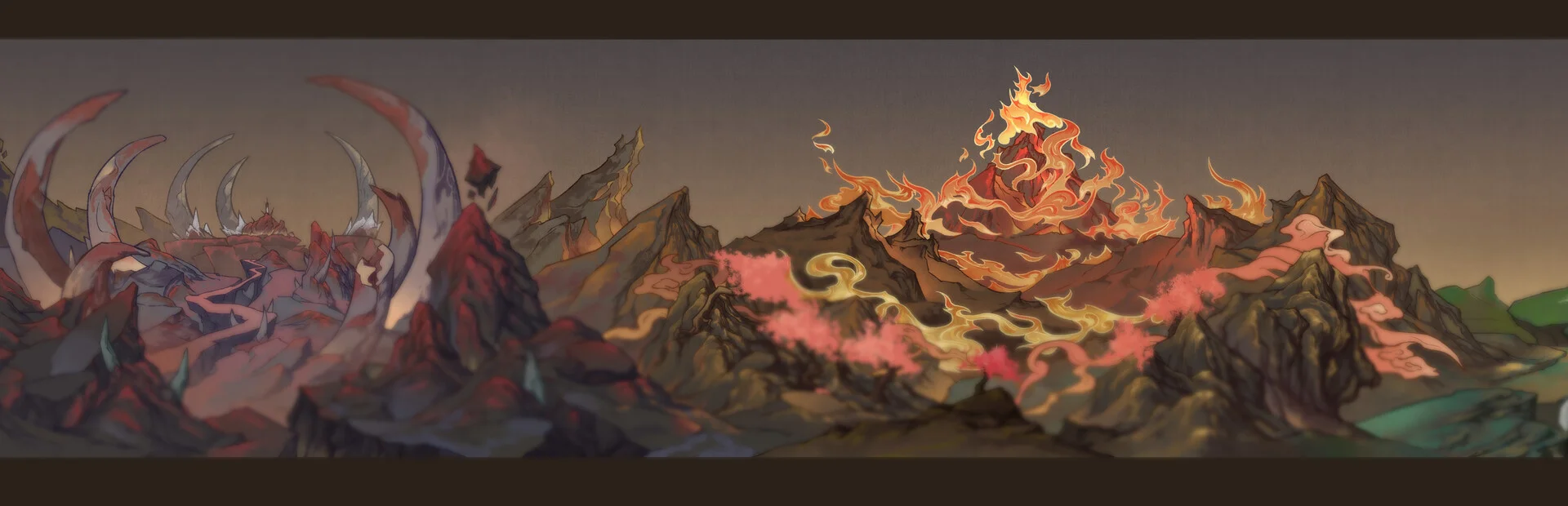
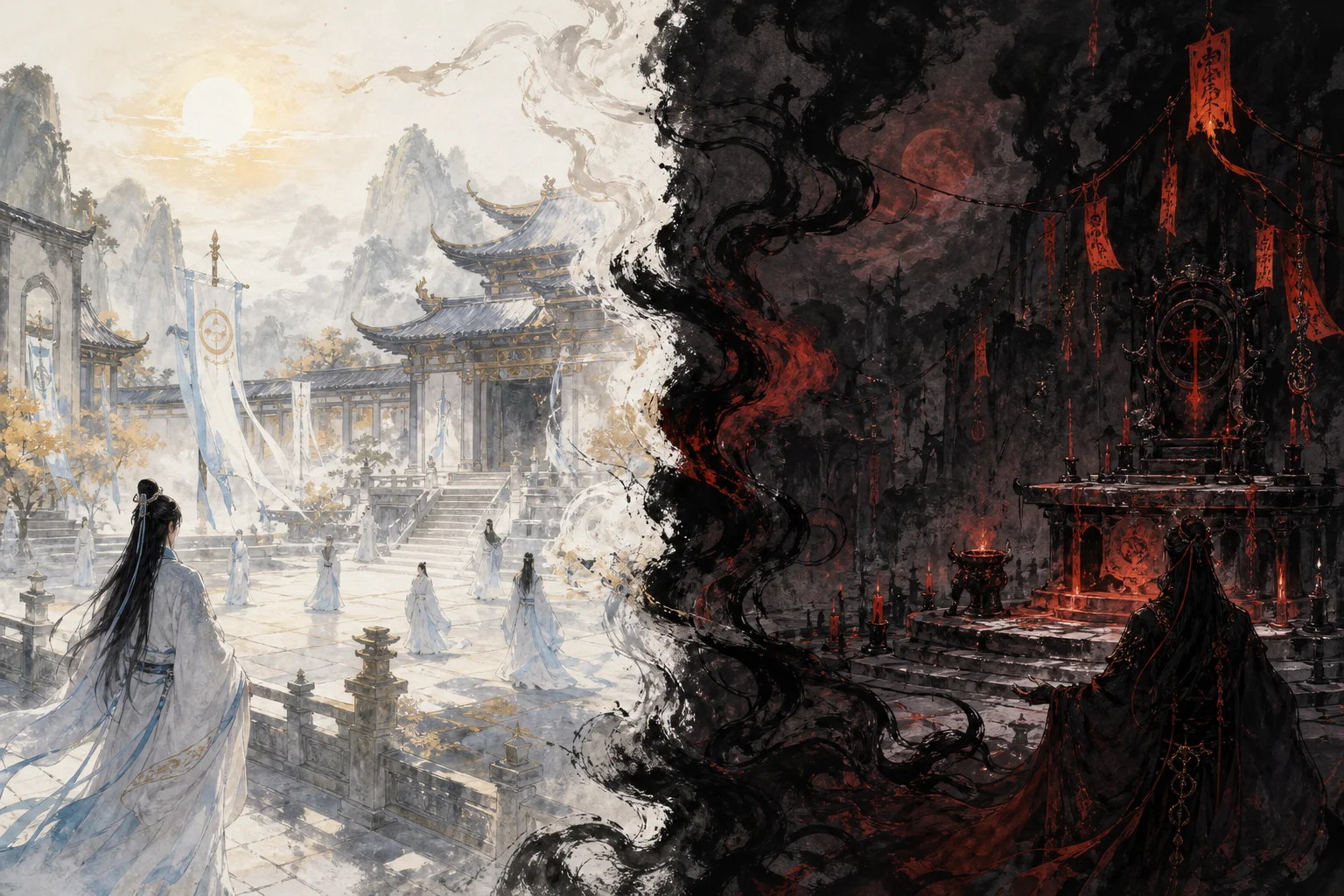
Light spoilers: Cultivation paths and moral taboos — no specific boss or ending details. v1.0 Beyond the Dome spotlights a demonic cultivation (邪道) route that converts enemy essence into forbidden techniques. That headline shocked some players and felt inevitable to wuxia readers. This article explains what orthodox (正道) and demonic (邪道) mean in martial fiction and folk religion — and how to read Taiwu's taboo path as genre weather, not edgelord flavor.
Orthodox does not mean boring
Zhengdao (正道) — the orthodox path — claims:
Lineage
Legitimate master, traceable manual, sect approval
Restraint
Rules on who you may fight and how you train
Public face
Righteous branding — useful for alliances and markets
Orthodox schools can still be hypocrites, cowards, or tyrants. The label is social license — permission to teach openly, hold tournaments, and call enemies “demonic.”
Demonic cultivation — speed, taboo, price
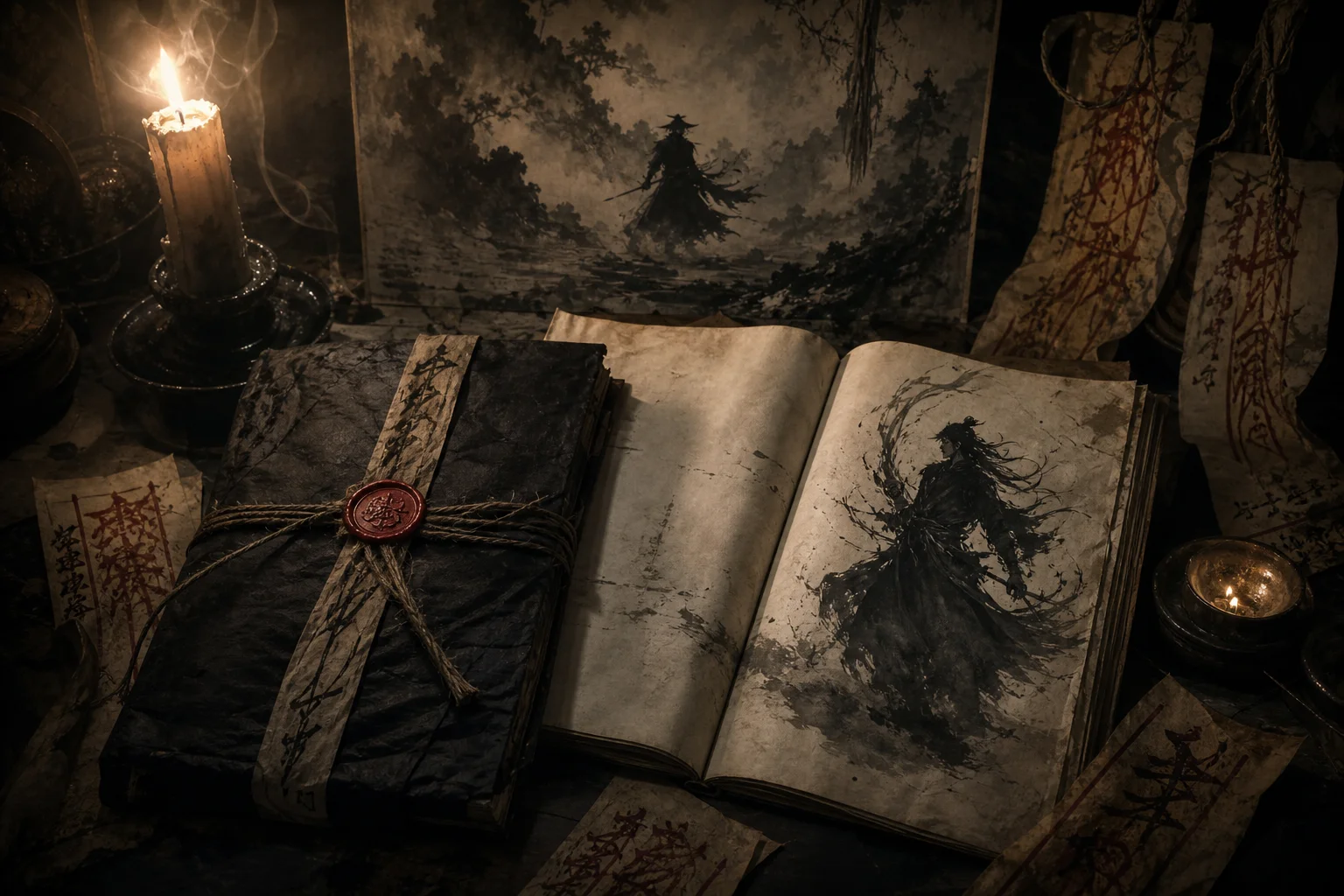
Xiedao (邪道) — heterodox or demonic paths — usually promise:
- Faster power — skipping decades of orthodox discipline
- Forbidden inputs — poisons, corpses, enemy essence, blood oaths
- Social exile — sects unite against you; allies become scarce
- Inner corruption — madness, deformity, or moral collapse in fiction
Taiwu's v1.0 demonic route — marketing describes converting enemy essence into techniques — sits in this tradition. Culturally it asks: what will you absorb to win faster, and who will still speak to you afterward? We are not documenting skill trees or optimal corruption builds here.
Religious and folk echoes
Martial taboo borrows from broader Chinese ideas about proper cultivation:
- Daoist self-cultivation emphasizes harmony and natural law — violent shortcuts violate dao (道)
- Buddhist rhetoric condemns harming sentient beings — blood methods stain karma
- Folk belief warns that wronged dead attach to practitioners who desecrate bodies
Games exaggerate for drama; the emotional shape — power with spiritual debt — is familiar to readers.
Orthodox vs demonic in wuxia plots
| Trope | Orthodox version | Demonic version |
|---|---|---|
| Training montage | Dawn forms, medicinal baths, elder lectures | Midnight rites, stolen qi, pain as fuel |
| Enemy handling | Capture and deliver to authorities | Refine enemy into resource |
| Romance | Forbidden but redeemable | Corrupting partner or tragic sacrifice |
| Ending mood | Restore sect honor | Win while becoming what you hated |
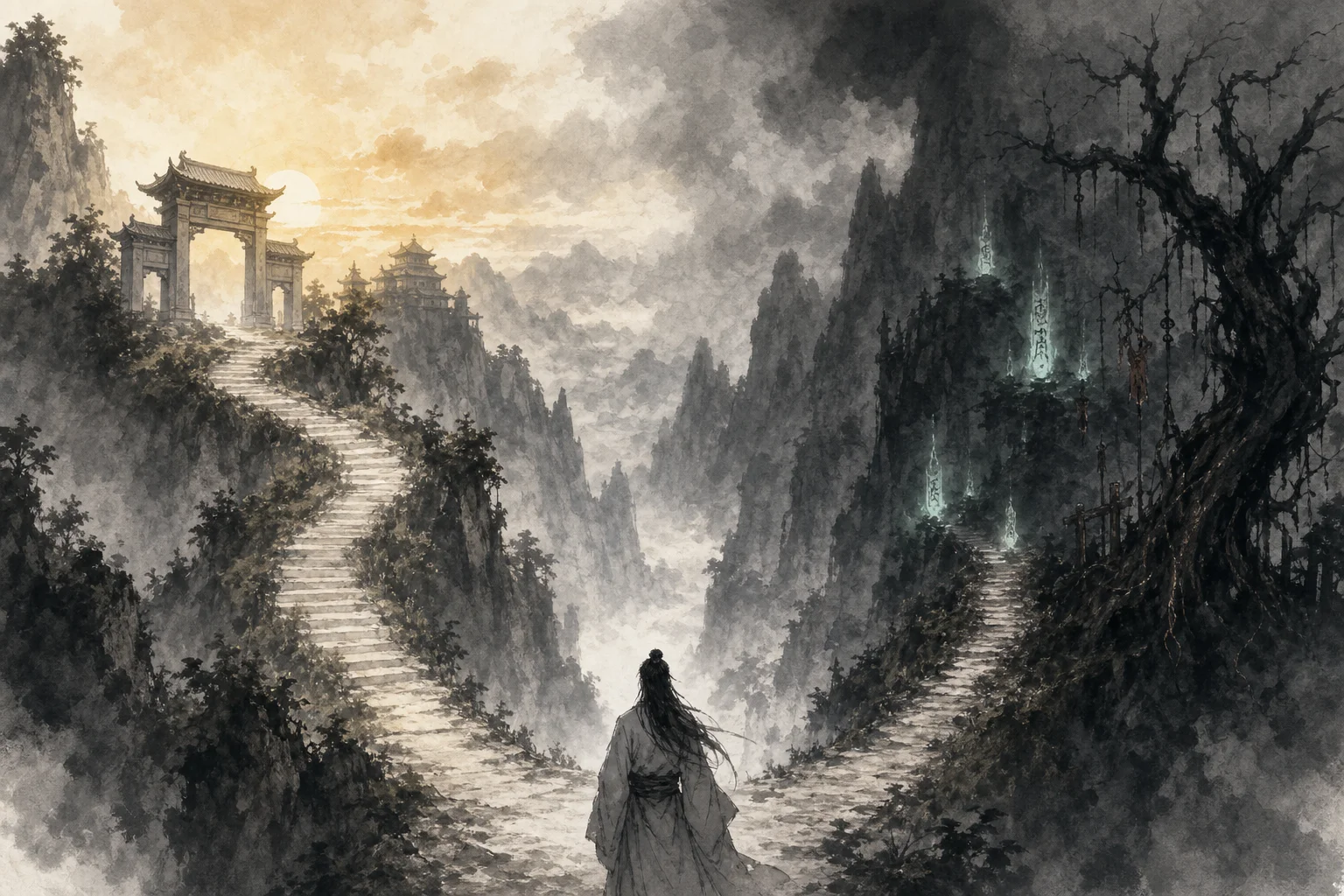
Playing a Taiwu heir on the wrong path
Generational design complicates demonic play:
- An heir who goes demonic may poison the Taiwu name for children
- Sects that welcomed your grandfather may shut gates on your daughter
- The hereditary enemy may exploit your corruption as propaganda
- A later heir can try to rehabilitate the clan — a classic redemption arc
Cross-read: For mythic beings behind taboo power, see our myth primer. For endgame cosmology, continue to the major spoiler Tianmu article next.
Where to go next
Taboo cultivation raises personal stakes; v1.0's endgame raises cosmic ones. The final article in this series covers the Tianmu host, Santu demons, and late-game myth — with full spoiler warnings.