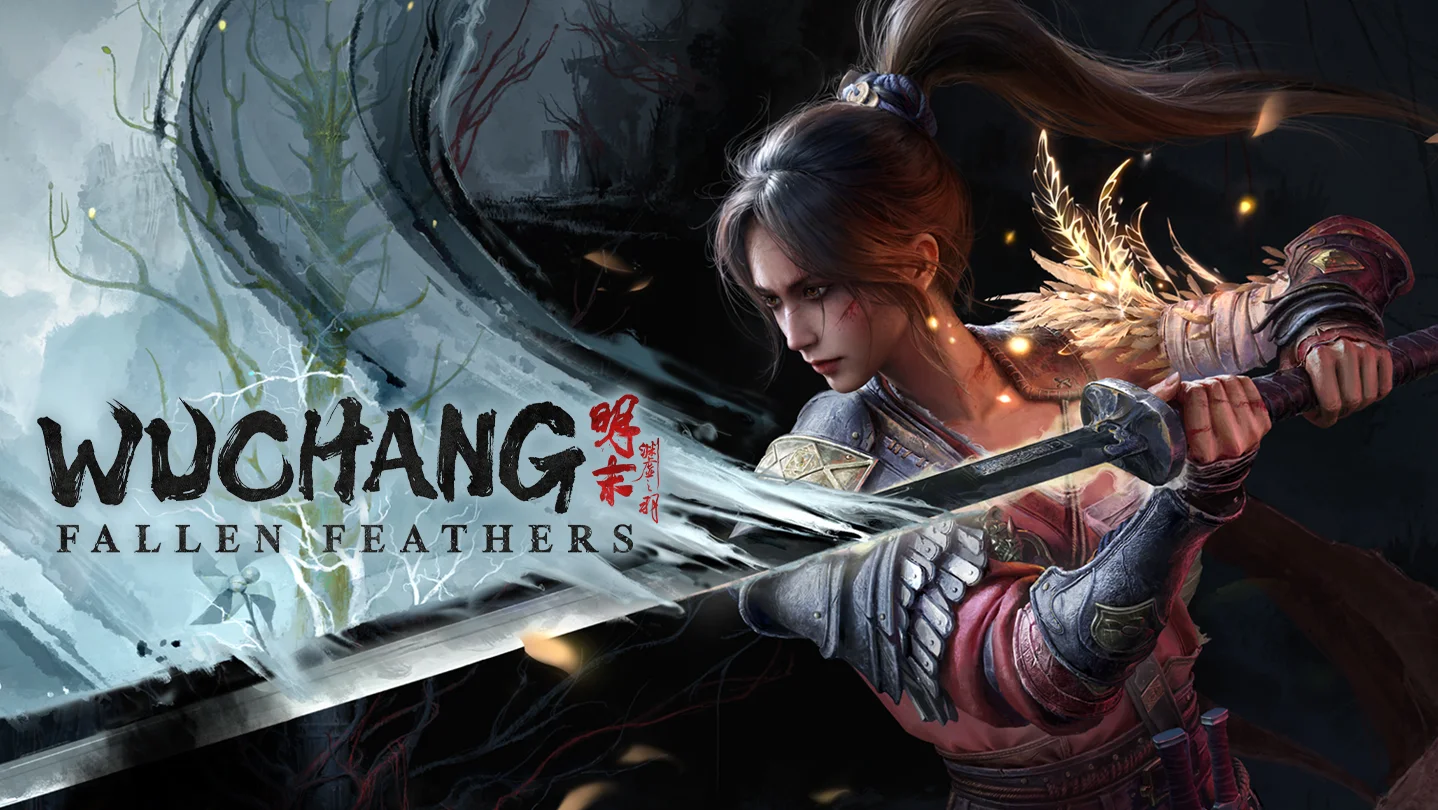
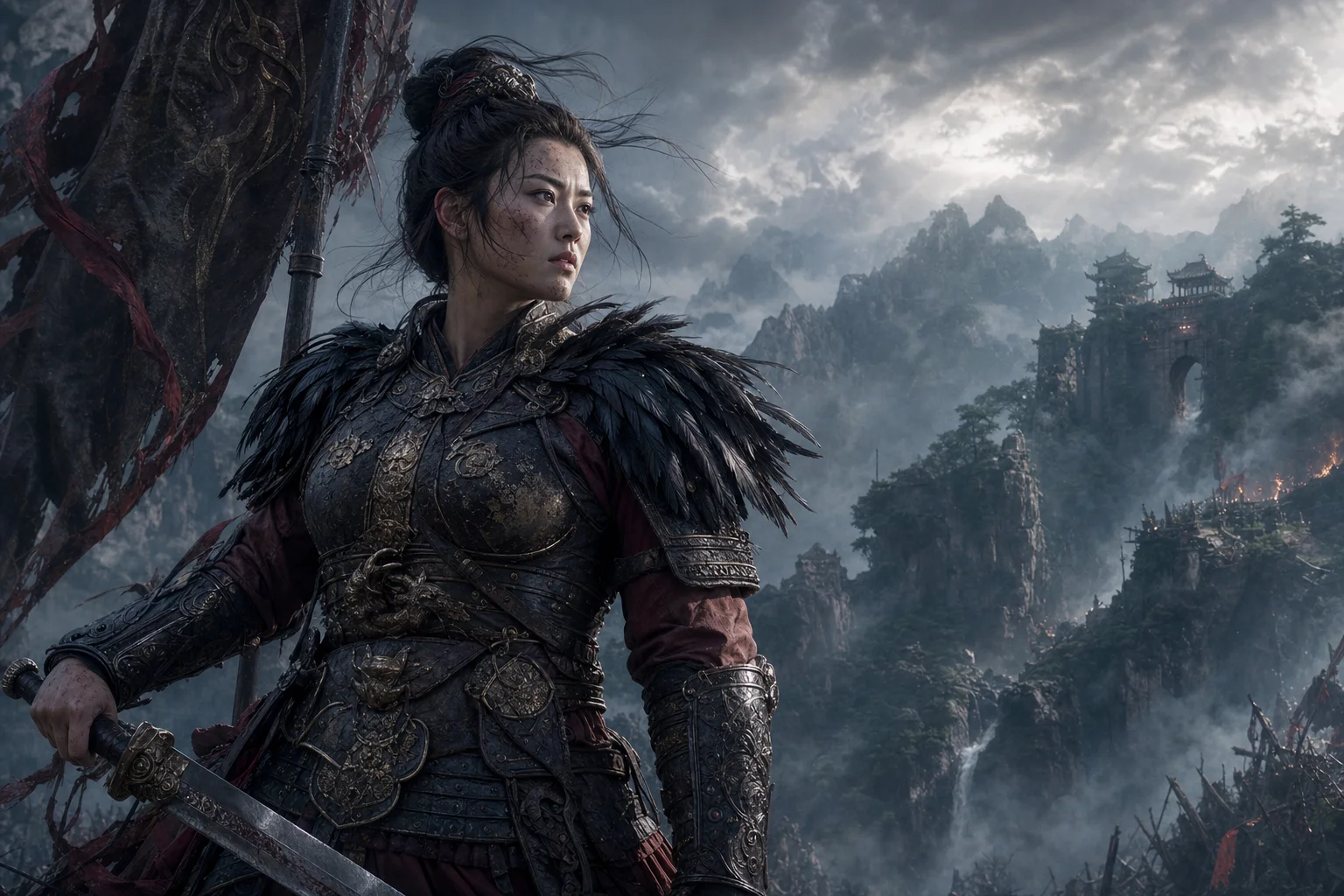
The English title puts her name first: WUCHANG: Fallen Feathers. In Chinese she is 无常 (Wúcháng) — two characters that echo Buddhist philosophy, underworld folklore, and a completely separate pair of famous ghost officials. This article introduces who she is before the plot twists, why her name confuses Western players, and how to read her without mixing her up with Black Myth: Zhong Kui's cosmology homework.
Who is Wuchang in the game?
Official materials describe Wuchang as a skilled warrior who washes up in late Ming Sichuan with amnesia and an advancing case of Feathering (羽化病). She fights with soulslike precision — melee weapons, spells, harvested enemy skills — while searching the ruins of Shu for answers about her past.
Backstory confirmed at a high level (no ending spoilers):
- She is the daughter of a Jinyiwei regional commander (锦衣卫镇抚使, Jǐnyīwèi Zhènfǔshǐ) — a Ming-era military/intelligence officer
- After family catastrophe, she and her younger sister Bai Yu (白钰, Bái Yù) fell into life on the sea as pirates
- Bai Yu later died on a raid; Wuchang heard of a resurrection method tied to their homeland in Sichuan
- Years of investigation lead to 1647 — then a monster attack leaves her wounded, memory-scattered, and infected
Role
Playable protagonist; pirate-trained warrior; Feathering carrier
Drive
Recover memory; save herself from the plague; learn what happened to Bai Yu
Era
Returns to Shu circa 1647 — see our Late Ming primer
She is a fictional composite, not a person you will find in Ming history books. Leenzee placed a personal tragedy inside a documented catastrophe — similar to how other Chinese games insert original heroes into real timelines.
What does the name “Wuchang” mean?
无常 literally means impermanence — the Buddhist insight that nothing fixed lasts: health, empire, memory, even identity. The word appears in classical phrases about the world's flux. Naming a heroine Wuchang signals themes of loss, change, and unreliable selfhood before you finish the tutorial.
English localizations keep the romanization Wuchang rather than translating it as “Impermanence,” partly because the same syllables carry other cultural baggage (see below) and partly because character names in Chinese games usually stay phonetic for global branding.
Not the Black and White Impermanence
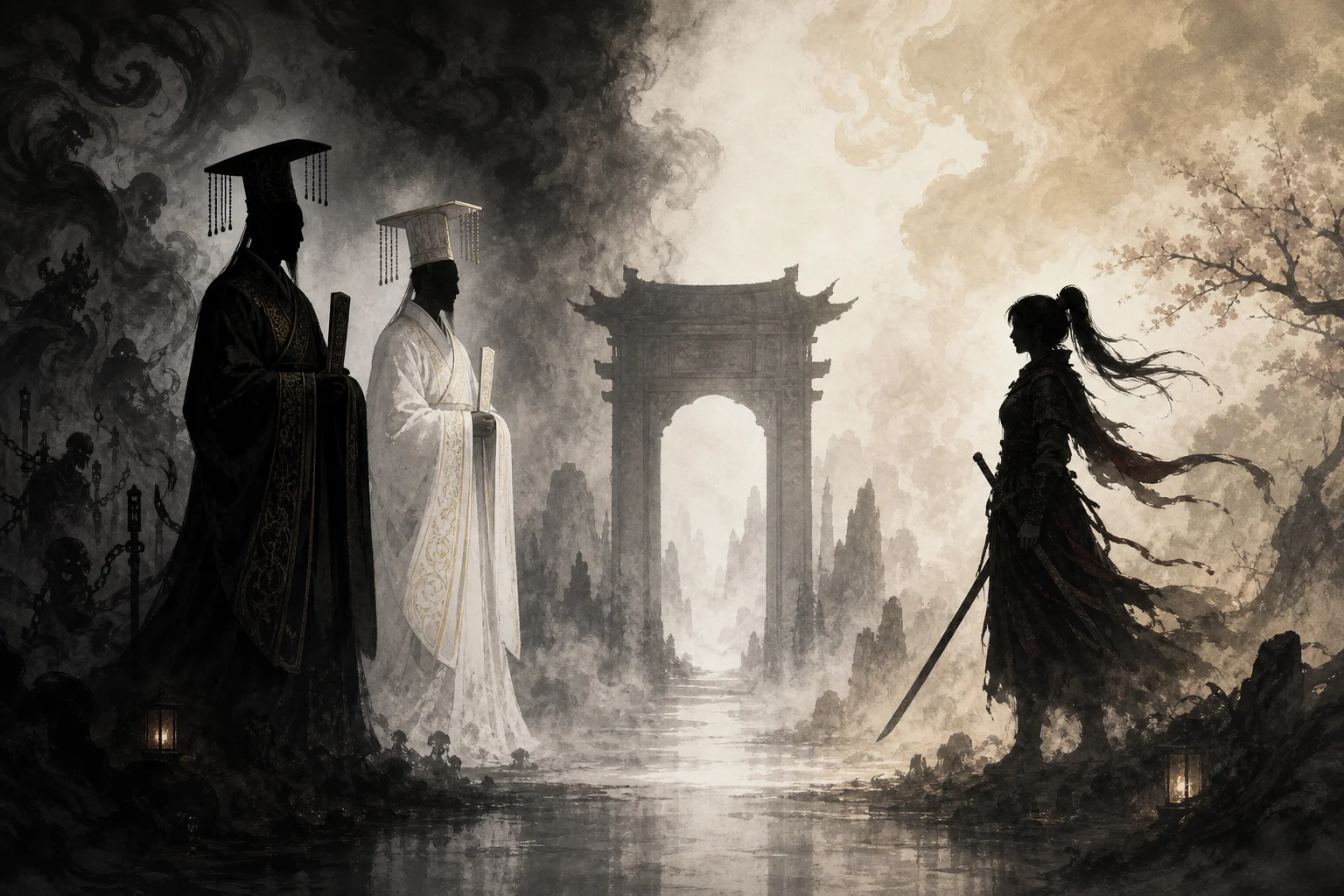
Here is the confusion every Chinese player expects foreigners to make:
Folk religion and ghost stories feature a paired duo often called Black Impermanence (黑无常, Hēi Wúcháng) and White Impermanence (白无常, Bái Wúcháng) — underworld messengers who escort souls, announce death, or hunt fugitive ghosts depending on regional tradition. They are servants of the dead's bureaucracy, not Ming pirates.
The protagonist 无常 shares the word wuchang (impermanence) but is not those deities:
- She is a living woman with a personal arc, not a paired underworld official
- Her story centers on Feathering and Shu myth, not soul escort duty
- Leenzee uses the name for thematic resonance — mortality, memory loss, empire collapse — rather than a direct avatar of the folk duo
Cross-read: For the full underworld officer roster (Judges, Ox-Head, Horse-Face, etc.), see our Underworld & Ghost Cosmology primer for Black Myth: Zhong Kui — useful context, different game.
Jinyiwei daughter to pirate: why that arc?
The Jinyiwei (锦衣卫, “Embroidered Uniform Guard”) were Ming dynasty enforcers — part secret police, part honor guard — feared for investigations and political arrests. Making Wuchang the daughter of a Zhenfushi (regional commander) places her in the elite violence of the dynasty's final act without making her empress or general.
When the world breaks, elite status becomes a target. Falling from court-adjacent power to pirate crew compresses late Ming chaos into one biography:
- Central authority collapses → protection vanishes
- Coastal and river banditry rises → survival through raiding
- Sisters as each other's only family → emotional core when Bai Yu dies
Pirates in Chinese historical fiction often carry Robin-Hood ambiguity — outlaws who still live by codes. Wuchang's combat animations and weapon mastery reflect that hardened mobility; her return inland swaps open sea for claustrophobic mountain ruins.
Amnesia, Feathering, and the unreliable hero
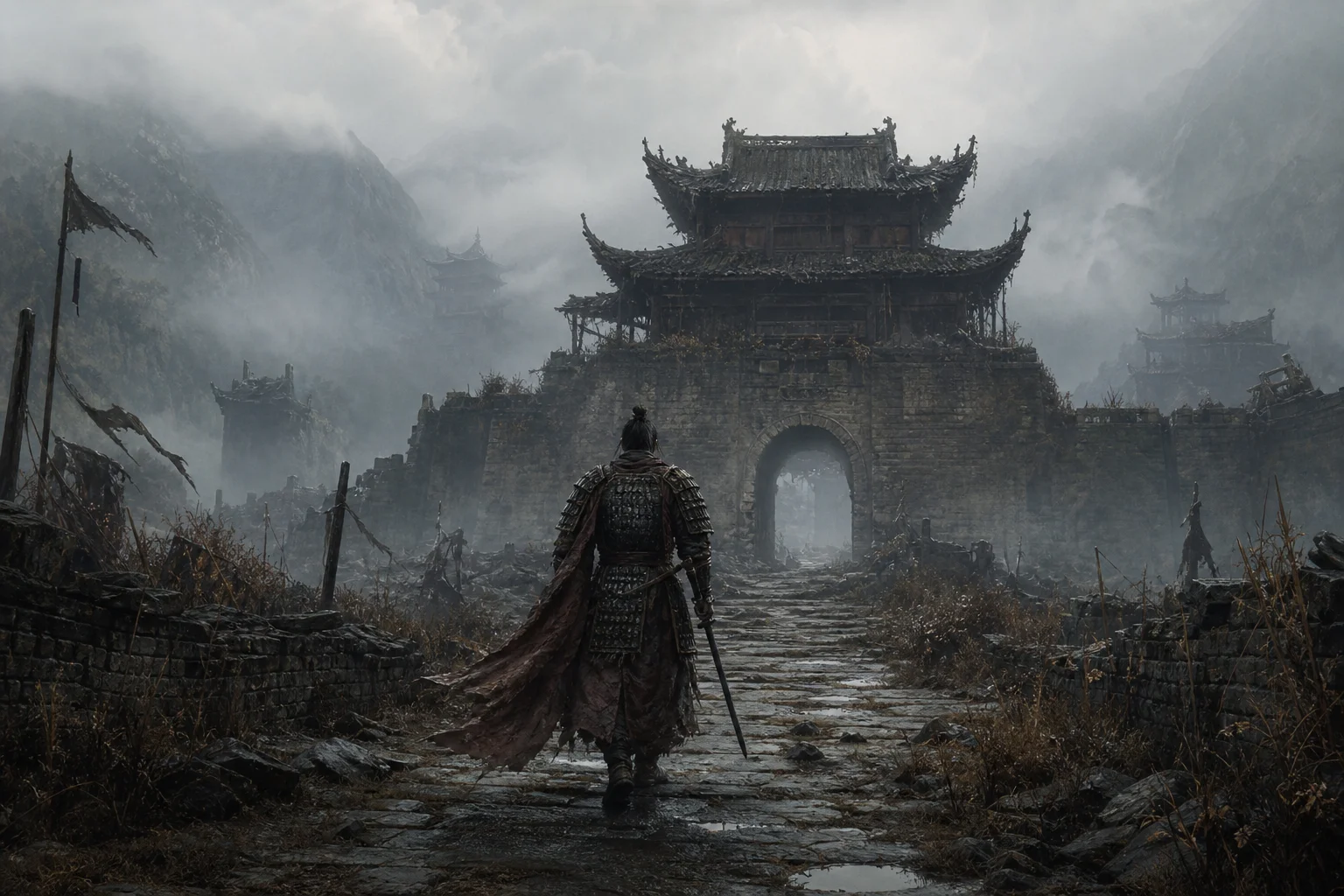
Soulslike games love amnesia because it aligns player discovery with character discovery. Here it also fits the name: if 无常 is impermanence, then identity is the first thing that decays.
Feathering adds body horror to mental gaps — you watch the protagonist's flesh drift toward the same winged fate as the enemies you kill. Official copy states she is already infected when play begins; managing that corruption ties into Red Mercury progression (see Feathering & Red Mercury).
We avoid main-quest specifics here, but the structural point matters culturally: Wuchang is not a chosen immortal or prophesied savior from classical texts. She is someone the era broke, who keeps swinging anyway — a late Ming ordinary hero inflated to action-game scale.
How Wuchang differs from other Chinese action heroes
| Figure | Source | Contrast with Wuchang |
|---|---|---|
| Sun Wukong | Journey to the West | Canon trickster god; Wukong is pre-saint rebellion. Wuchang is mortal, infected, historically grounded. |
| Zhong Kui | Folklore exorcist | Judge of ghosts; Wuchang only shares underworld vocabulary, not job description. |
| Black / White Impermanence | Folk underworld | Paired death messengers; not the protagonist despite the shared word wuchang. |
| Historical Ming generals | Archives | Real politicians and warlords; Wuchang is fiction inserted beside Zhang Xianzhong's era. |
What to listen for while you play
NPCs and item text may pun on impermanence, feathers, or sisterhood. When audio mentions 无常, check context: philosophical lament, folk ghost reference, or the heroine's name? If a line sounds like underworld bureaucracy, it probably is atmosphere — not proof that Wuchang secretly is Hēi Wúcháng in disguise.
Multiple endings reshape how much memory returns. Culture articles marked major spoilers will cover those branches later; this page stays safe for chapter-one players.
Next in this series: The mythic kings beneath her quest — Du Yu, Bie Ling, and the Shu chronicles that frame the chisel legend.