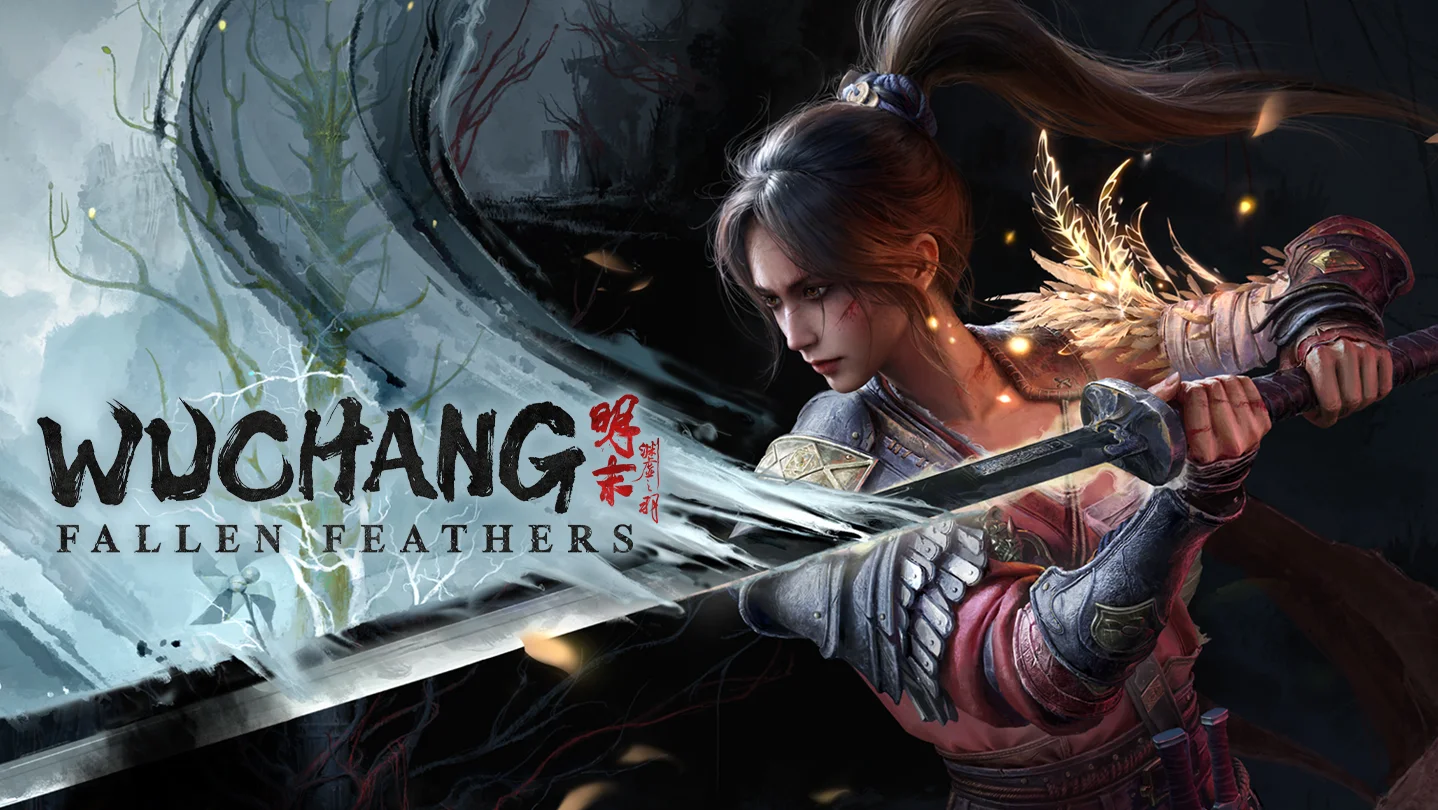
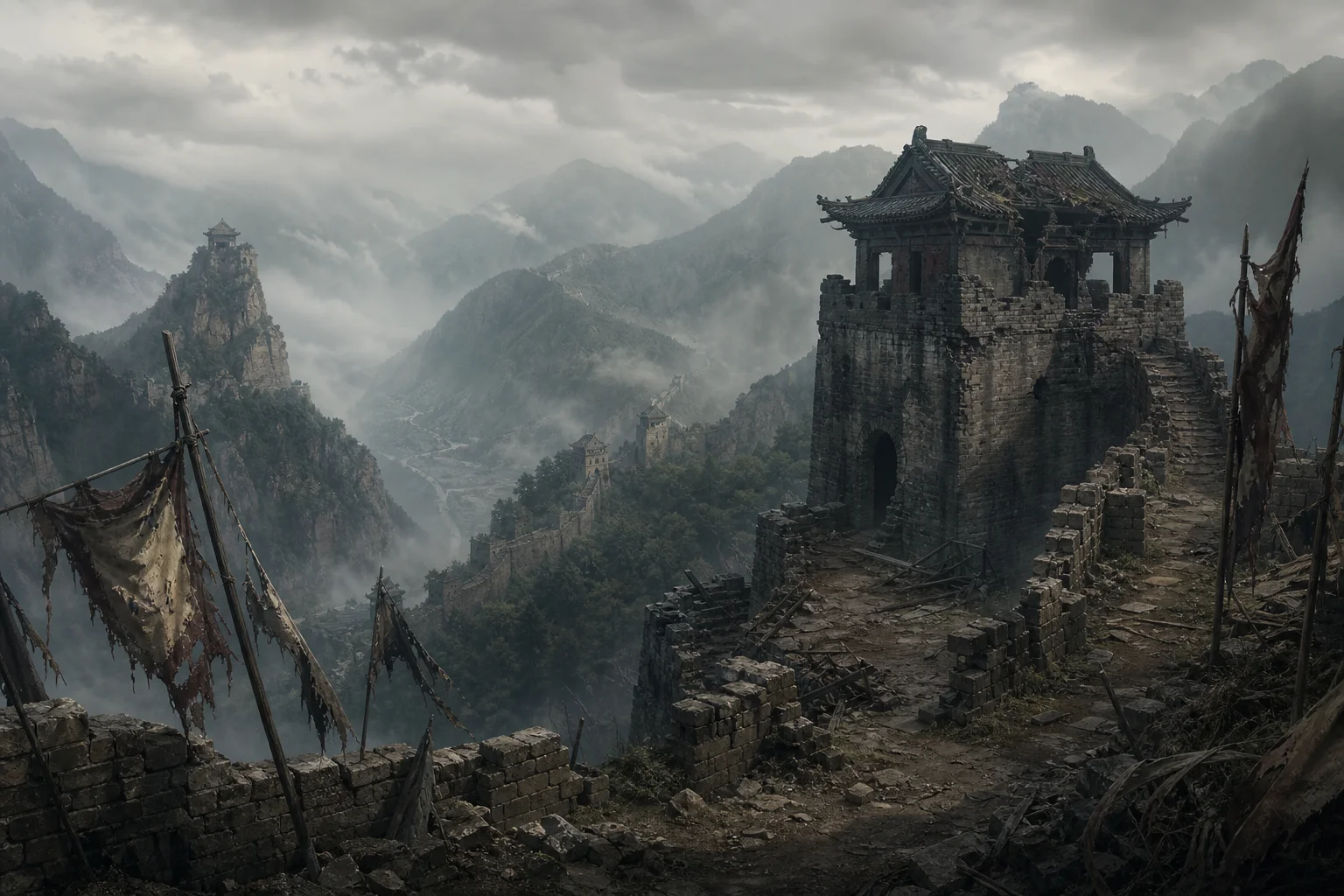
In 1644, the last Ming emperor hanged himself in Beijing. Within months, rebel armies and foreign invaders carved China into competing zones. One of the bloodiest theaters was Sichuan — the ancient land of Shu (蜀, Shǔ) — where warlord Zhang Xianzhong (张献忠) built a short-lived regime called Great West (大西, Dà Xī). By 1647, Zhang was dead, the Ming dynasty was gone, and no one fully controlled the province. WUCHANG: Fallen Feathers (明末:渊虚之羽) is set in that year. This ten-minute primer gives you the timeline, the factions, and why 1647 is the worst possible moment to return home.
The year in one paragraph
For centuries, Sichuan had been a rich, defensible basin — the "Land of Abundance" (天府之国, Tiānfǔ zhī Guó) — protected by mountain passes and fed by the Yangtze and its tributaries. The late Ming collapse shattered that stability. After Beijing fell in 1644, Zhang Xianzhong marched into Sichuan, declared himself emperor of Great West in Chengdu (成都), and ruled through terror and taxation. Qing armies pressed from the north; Southern Ming loyalists still claimed legitimacy from the south; local bandits and remnant militias fought over whatever remained. In early 1647, Zhang Xianzhong was killed in an ambush at Xichong (西充). His death did not bring peace — it removed the strongest warlord and left a power vacuum. That is the historical frame when the game begins: a province already gutted by years of war, now without a clear master.
When
1644 Ming collapse; Zhang Xianzhong in Sichuan; game set in 1647 after his death
Where
Shu / Bashu (巴蜀) — Sichuan Basin and surrounding mountains
Who
Zhang Xianzhong (Great West); Qing forces; Southern Ming remnants; local warlords and bandits
How did the Ming fall?
The Ming dynasty (1368–1644) ruled China for nearly three centuries. By the early 1600s it was exhausted: fiscal crisis, corrupt eunuch factions at court, peasant rebellions in the north, and pressure from the Manchu (满洲) state rising beyond the Great Wall — the force that would become the Qing dynasty.
Two rebel leaders dominated the final act. Li Zicheng (李自成) captured Beijing in April 1644; the Chongzhen Emperor (崇祯帝) hanged himself on Jingshan hill behind the Forbidden City rather than be taken alive. Days later, the Ming general Wu Sangui (吴三桂) opened the Shanhai Pass to Manchu troops — a decision that historians still debate — and the Qing entered China proper.
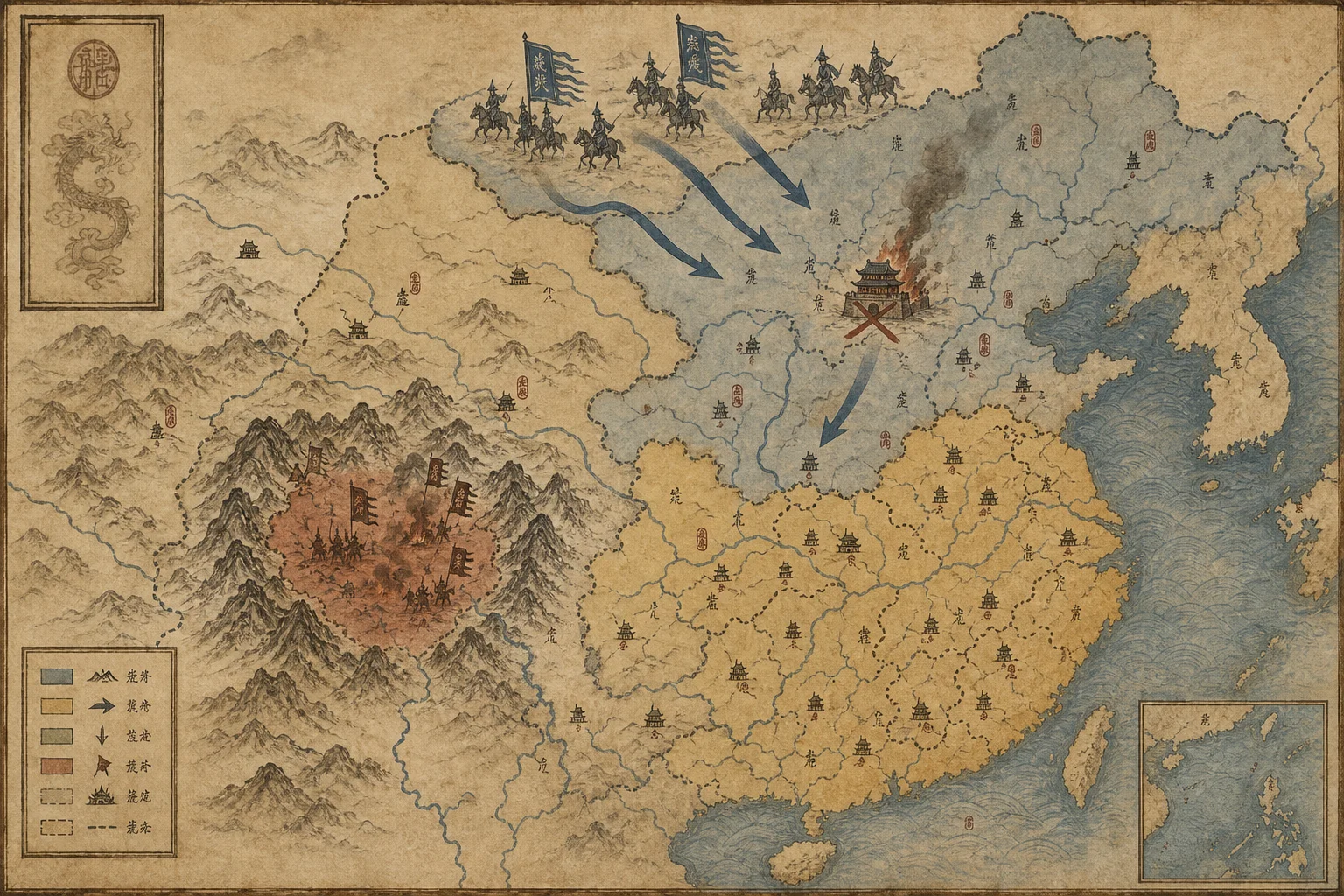
Li Zicheng's regime collapsed almost immediately. The Qing moved to claim the mandate of heaven. In the south, Ming princes set up Southern Ming (南明, Nán Míng) courts — short-lived governments that insisted the dynasty was not finished. China was no longer one country on one map. It was a patchwork of zones where the question "who is emperor?" had no single answer.
Who was Zhang Xianzhong?
Zhang Xianzhong (张献忠, Zhāng Xiànzhōng, 1606–1647) was a peasant rebel who rose during the late Ming chaos. Fierce, literate enough to manage armies, and famously brutal, he operated across central China before turning toward Sichuan in 1644. That autumn he entered the province, captured Chengdu, and in late 1644 declared himself emperor of Great West (大西), taking the reign title Dashun (大顺 — not to be confused with Li Zicheng's regime, which used the same name earlier).
Historical sources portray Zhang's rule in Sichuan as catastrophic. Ming and Qing records accuse him of mass killings; Qing-era population registers later showed Sichuan's population had collapsed compared to late Ming counts. Modern historians debate the exact numbers and how much to attribute to Zhang personally versus decades of warfare, famine, and migration — but there is broad agreement that Sichuan suffered one of the worst demographic disasters of the seventeenth century.
Zhang's regime taxed and conscripted aggressively to fund armies against both Qing and Southern Ming forces. Local elites who resisted were destroyed; ordinary farmers faced impossible demands. When harvests failed, violence compounded hunger. By the time of his death, much of the province's social fabric was gone.
A note on sources: Zhang Xianzhong is one of the most controversial figures in Chinese history. Qing chronicles had reasons to exaggerate his cruelty; rebel accounts are scarce. This article sticks to widely accepted framework events (entry into Sichuan, Chengdu as capital, death in 1647) rather than disputed casualty figures. For the game, treat him as a historical anchor — a real warlord whose shadow still lies over the map — not as a character you necessarily meet.
Why 1647 specifically?
WUCHANG pins its present-day action to 1647 — roughly three years after the Ming emperor's suicide and shortly after Zhang Xianzhong's death. That timing matters for three reasons:
- The Ming is over, but the Qing is not finished winning. No Southern Ming court has reunified the empire; the new dynasty is still consolidating.
- Great West is headless. Zhang's death removed the strongest single authority in Sichuan. Remnant Daxi forces, Qing scouts, Southern Ming envoys, and local bandits all moved into the gap.
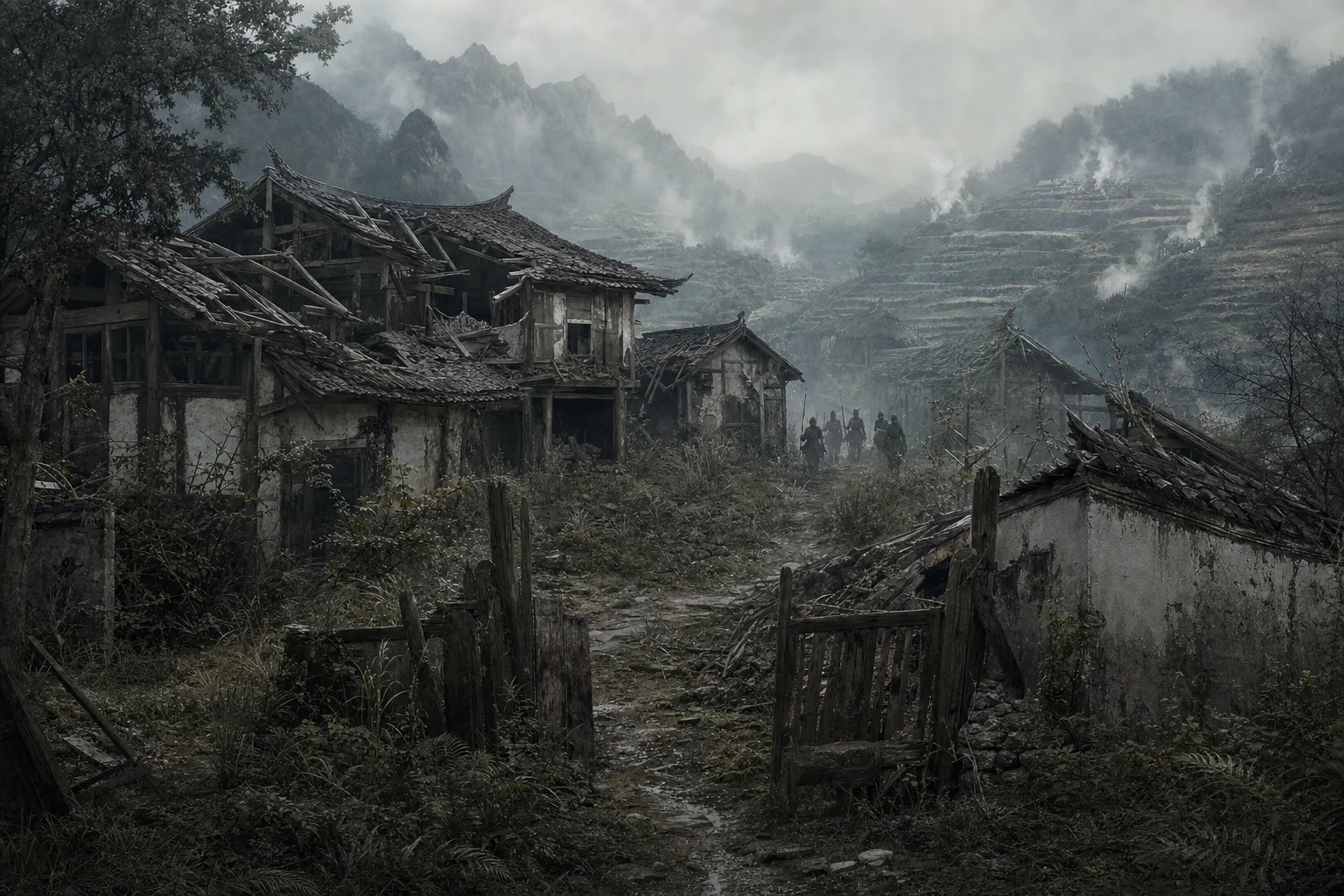
- Sichuan is already hollowed out. Years of occupation and scorched-earth warfare left villages empty, fields fallow, and roads dangerous. Returning "home" means walking into a graveyard with competing predators.
Zhang's death at Xichong
In January 1647, Zhang Xianzhong was camped near Xichong (西充), north of Chengdu. Qing forces under Prince Haoge (豪格) — son of the Qing founder Hong Taiji — launched a surprise attack. According to standard accounts, an arrow struck Zhang; he was beheaded and his army scattered. Great West effectively ended as a coherent state, though loyalists and bandits claiming his banner lingered for years.
Who else was fighting over Shu?
Sichuan in 1647 was not a simple Qing-versus-rebels story. Multiple powers overlapped:
- Qing armies — pushing southwest to annex the province and eliminate remaining rebel bases
- Southern Ming remnants — still claiming loyalty to the fallen dynasty; some sought to recruit Sichuan warlords or establish footholds
- Great West holdouts — troops and officials who had served Zhang Xianzhong and had nowhere else to go
- Local bandits — including groups known in sources as Yaohuang bandits (摇黄贼, Yáo Huáng zéi) and other roaming militias that preyed on travelers and villages
- Isolated garrisons and temples — Ming-era military posts and religious communities trying to survive without central support
For ordinary people, the distinction between "army," "rebel," and "bandit" often meant little. All three requisitioned grain, seized able-bodied men, and killed those who resisted. The game's atmosphere of ruined temples, overgrown battlefields, and hostile strangers reflects this historical reality — before any supernatural plague enters the picture.
What was life like in late Ming Shu?
Before the collapse, Sichuan was famous for rice, silk, salt wells, and trade routes linking Yunnan, Guizhou, and the Yangtze downstream. Chengdu was a major cultural center. The province also carried deep mythic memory — the ancient Shu kingdom, legends of kings who turned into cuckoos, and archaeological sites (like Sanxingdui) that modern players recognize from the game's visual design. That layered past sits beneath the immediate horror of the 1640s.
By 1647, daily life for survivors meant:
- Food insecurity — fields abandoned; stored grain looted by passing armies
- Displacement — families fled to mountains, joined bandit groups, or died on the road
- Broken law — no reliable courts, no trusted magistrates; violence as the default dispute resolution
- Fear of conscription — any armed group might press you into service or execute you as a spy
Official game materials describe additional catastrophe — a plague called Feathering (羽化, Yǔhuà) that mutates the infected. That disease is the game's fictional layer on top of real historical ruin. The historical primer stops here; the next articles in this series explain the mythic and gameplay side.
Timeline at a glance
| Year | Event |
|---|---|
| 1640s (early) | Late Ming fiscal and military crisis worsens; peasant rebellions spread across north and central China |
| April 1644 | Li Zicheng captures Beijing; Chongzhen Emperor suicides; Ming central government collapses |
| May–June 1644 | Qing forces enter Beijing; Wu Sangui's alliance with Manchu troops; Southern Ming courts form in the south |
| 1644 (late) | Zhang Xianzhong enters Sichuan; captures Chengdu; declares Great West (Daxi) regime |
| 1644–1646 | Years of warfare, taxation, and devastation under Zhang; Qing and Southern Ming both contest the southwest |
| January 1647 | Zhang Xianzhong killed at Xichong; Great West disintegrates |
| 1647 (game present) | Power vacuum in Sichuan; WUCHANG: Fallen Feathers opens — three years after the Ming fell, with plague and myth layered onto historical wreckage |
Why this history matters for WUCHANG
Leenzee (灵泽) and publisher 505 Games did not pick a random "dark China" wallpaper. They anchored the game in a specific province at a specific breaking point: Sichuan after the Ming, under and after Zhang Xianzhong, when the question of who rules Shu has no good answer. Understanding that frame helps you read the environment — abandoned garrisons, competing banners, refugees, mass graves — as historical before it becomes mythic or monstrous.
The protagonist Wuchang (无常) returns to this Sichuan not as a tourist but as someone with personal stakes in a land that no longer resembles home. The real-history layer explains why the world feels politically incoherent: because in 1647, it genuinely was. The game's deeper layers — ancient Shu kings, feathered immortals, Red Mercury — stack on top of that chaos. Start with the history; the feathers will make more sense once you know what they are falling into.
Next in this series: The world beneath the war — ancient Shu, Sanxingdui, and the feather-people legends that the game draws from.