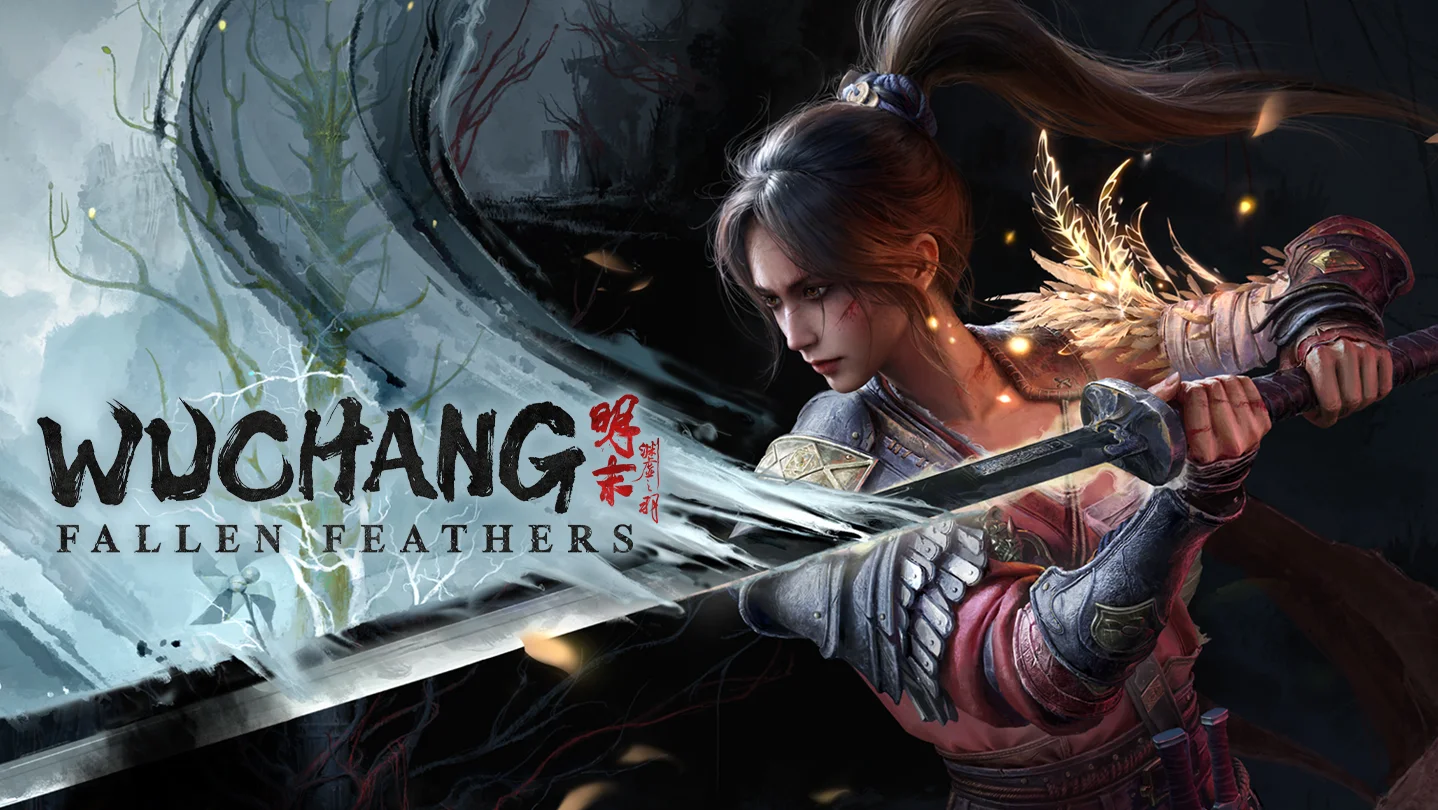
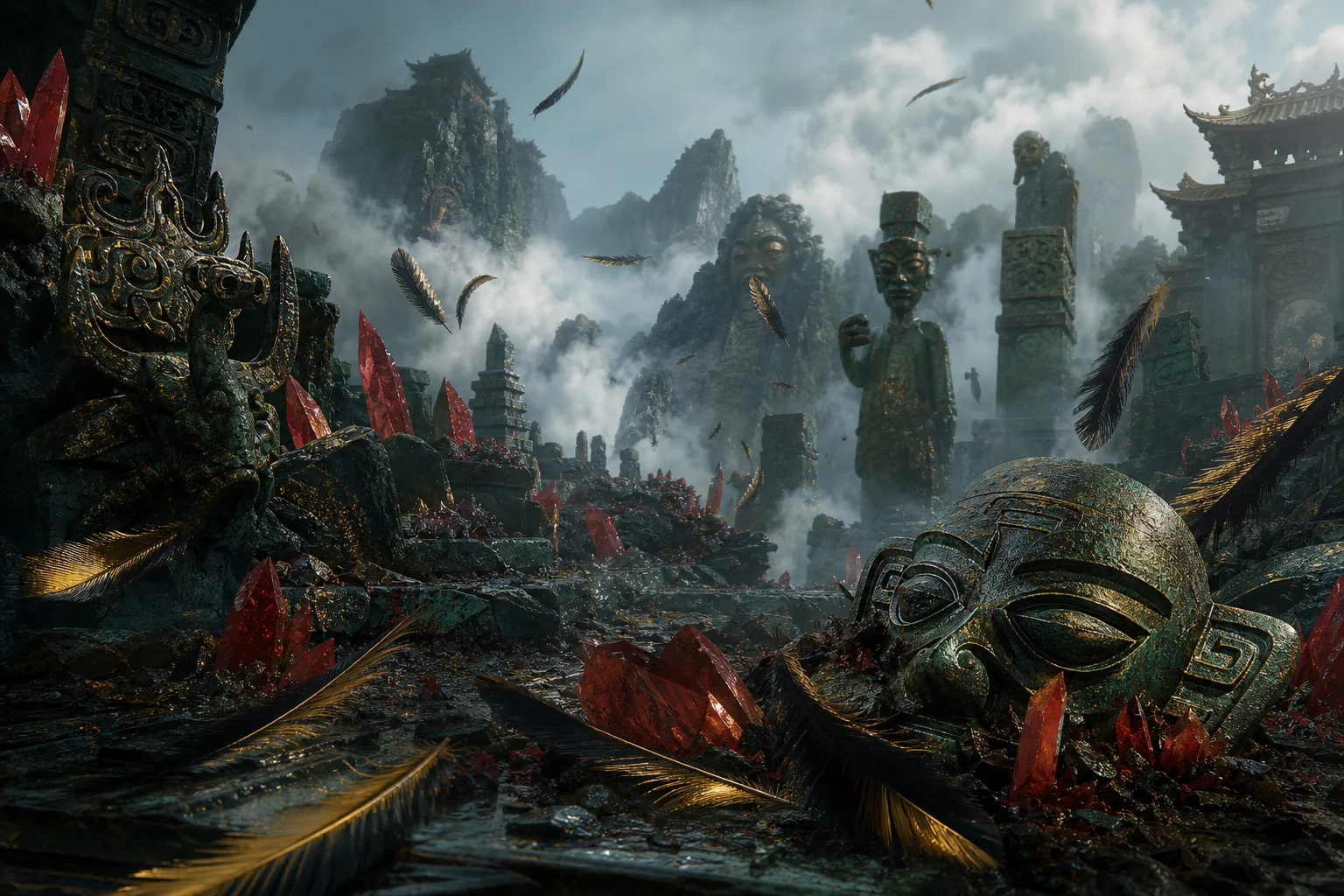
After the late Ming primer and the ancient Shu myth layer, the symbols that players actually touch in every hour of gameplay are feathers and mercury. Feathering (羽化, Yǔhuà) is the plague emptying villages; Red Mercury (赤汞, Chì Gǒng) is the ore everyone fights over; Fallen Feathers (渊虚之羽) is the title tying story, combat, and myth into one word: 羽 (feather). This article explains all three — without spoiling the main plot.
Why "feather" is the game's central pun
In ordinary Chinese, 羽化 often means something beautiful: in Daoist and literary tradition, it describes ascending to immortality — the body transforms lightly, like a bird lifting off, leaving the mortal shell behind. Poets and monks dreamed of "feathering away" from the world of dust.
WUCHANG: Fallen Feathers inverts that dream. The same characters now name a disease that grows feathers into flesh instead of lifting the spirit out of it. Immortality imagery becomes body horror. That irony only lands if you know both meanings — which is exactly why the developers chose the word.
Story
Feathering plague; ancient feather-people myth; title Fallen Feathers
Combat
Skyborn Might (羽势) — build and spend feather momentum for heavier attacks
Progression
Red Mercury — sacrifice ore to evolve skills, enchant gear, push back infection
Feathering: the plague in three stages
Official materials and player-facing descriptions present Feathering as a progressive mutation — not an instant monster conversion. Think of it as three recognizable phases (exact in-game labels may vary by translation; the progression is consistent):
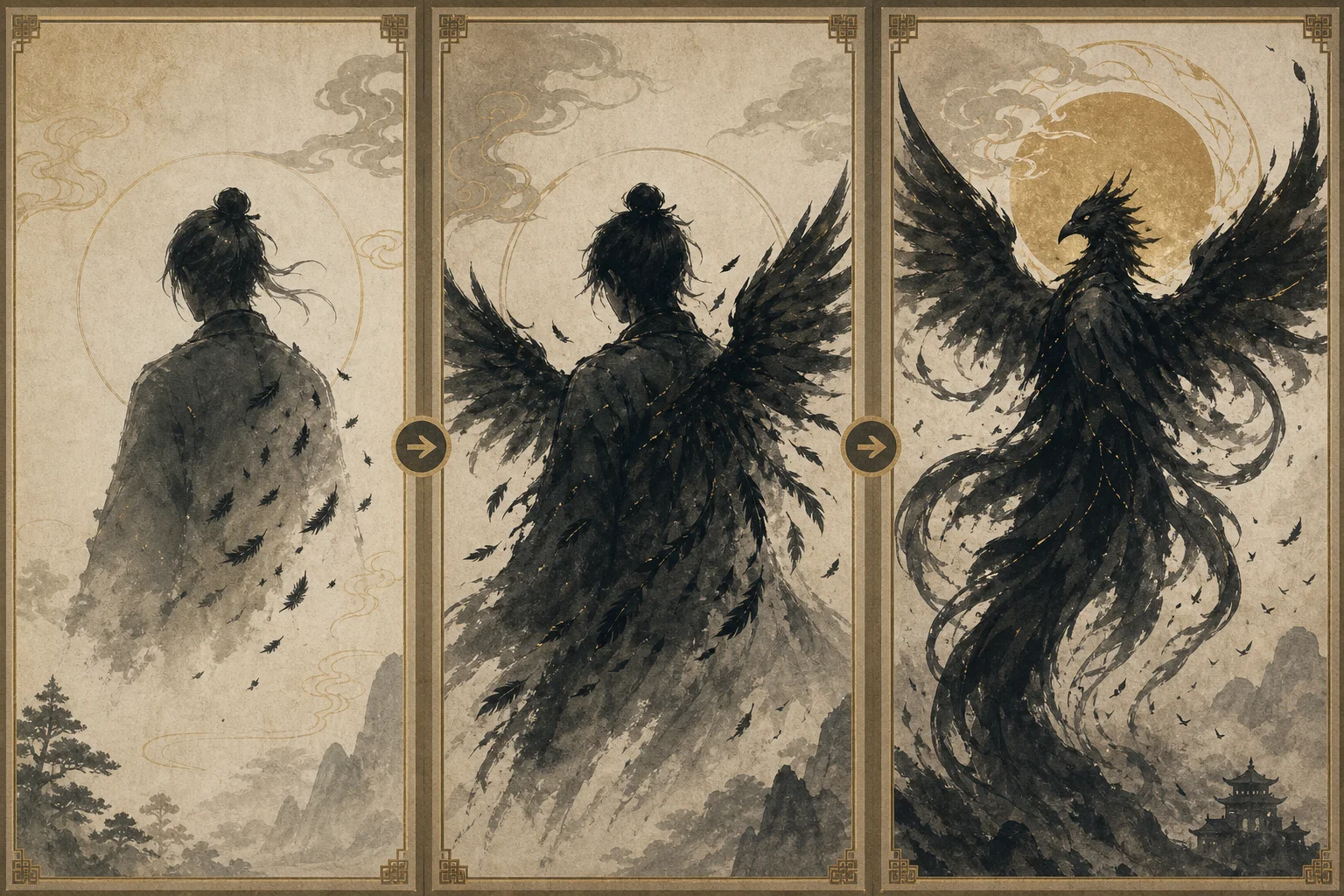
Stage 1 — feathers on the living
Early infection shows as feathers piercing the skin — often on arms, shoulders, or back. Victims may still speak and reason. Neighbors may hide them, kill them, or hope for a cure. This stage is the game's social horror: you can recognize the person underneath the plumage, which makes exile and betrayal feel personal.
Stage 2 — the body rewrites itself
As Feathering advances, faces distort, posture warps, and wing-like growths emerge from the back. Strength and speed increase; pain tolerance changes. Humanity thins — memories fragment, speech slurs, aggression rises. Many enemies you fight in ruins and battlefields are mid-stage carriers: still human enough to horrify, already too strong to safely spare.
Stage 3 — the winged abomination
Late-stage Feathering produces full winged monsters — fast, lethal, and no longer recognizably the person they were. They embody the game's cosmic-horror tone: something older than the late Ming war has hijacked the body and finished the transformation immortality myths only promised. Community discussions often link this stage to ancient "feather people" lore from the previous article — but in gameplay terms, it is the plague's end state, not a voluntary ascension.
Protagonist note (no plot spoilers): Wuchang (无常) is infected with Feathering and carries amnesia when the story opens. You will manage — and sometimes exploit — that infection through systems tied to Red Mercury and combat. The game does not treat the disease as a simple "corruption meter" with one moral outcome; choices across routes matter.
What Feathering is not (clarifying expectations)
Feathering is game fiction built on real cultural echoes — not a documented late Ming epidemic. Seventeenth-century Sichuan suffered war, famine, and banditry; historical records do not describe a feather-growing plague. When trailers show winged crowds in ruined cities, read that as the developers merging:
- late Ming societal collapse (real)
- Shu immortality and bird-king myths (literary)
- soulslike "world disease" storytelling (genre)
That distinction keeps Culture articles honest: we explain the symbols without claiming Zhang Xianzhong's soldiers grew wings.
Red Mercury: the ore everyone wants
Red Mercury (赤汞) is a vivid red mineral mined from Shu earth — part cinnabar symbolism, part fantasy macguffin, part soulslike currency. In-game, desperate factions seek it because rumors claim it can strengthen the body, slow Feathering, unlock hidden powers, or even feed rituals tied to resurrection.
Real-world cinnabar (朱砂, mercury sulfide) has a long history in Chinese alchemy, medicine, and tomb symbolism — red, heavy, associated with yang force and transcendence. WUCHANG borrows the color and cultural weight, then makes the ore a gameplay resource you sacrifice to evolve:
- weapon techniques and spell paths
- skill harvests from defeated foes
- enchantments and build specialization
The moral tension is built in: the same substance that might save you is mined in a dying land by people who may already be infected. Red Mercury is why warlords, Southern Ming remnants, and cultists all converge on Shu in 1647 — not only for territory, but for a red stone that promises control over feathers and fate.
Gameplay vs. history: Do not eat or handle real mercury/cinnabar — the game's Red Mercury is a fantasy resource. The cultural link is symbolic: red ore as boundary-crossing substance between mortal, immortal, and monstrous.
Skyborn Might: feathers as combat resource
Combat system Skyborn Might (羽势, Yǔ Shì — literally "feather momentum" or "feather posture") treats feathers as mechanical power, not just lore text. As you fight, you accumulate feather energy (similar in role to posture meters in other soulslikes). Spending it empowers attacks, techniques, and weapon styles.
This is the third meaning of 羽 in the package:
- Narrative — plague and myth
- Title — Fallen Feathers
- Mechanics — risk/reward tempo in every duel
You are encouraged to build high feather momentum for devastating bursts — while Feathering narrative warns what feathers do to flesh. The system asks you to wield the symbol that is destroying the world. That tension is deliberate Eastern dark-fantasy design, not a translation accident.
What the title means: 明末 · 渊虚之羽 · Fallen Feathers
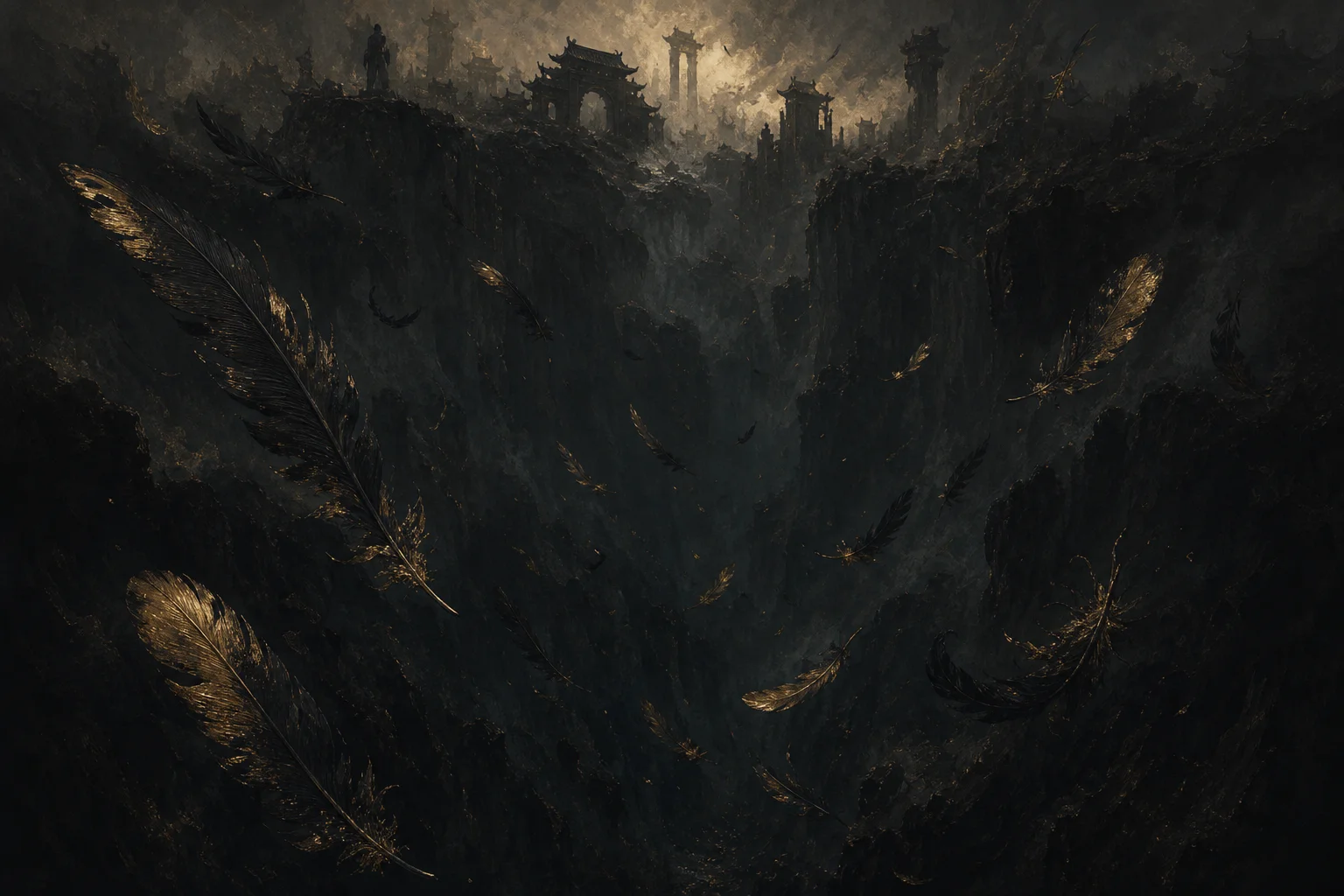
The Chinese title 明末:渊虚之羽 (Míngmò: Yuān Xū zhī Yǔ) packs three ideas:
- 明末 (Late Ming) — the historical when; the dynasty's end as stage
- 渊虚 (abyssal void) — depth, corruption, something sunken or lost; the English Fallen catches this sense of descent
- 之羽 (feathers of…) — possession or origin: feathers belonging to the abyss, or feathers that have fallen from grace
The English WUCHANG: Fallen Feathers keeps the protagonist's name up front for global marketing, then compresses 渊虚之羽 into Fallen Feathers — feathers that have dropped from the sky, from immortality, from humanity. Community readings also hear echoes of:
- fallen immortals / fallen Shu civilization
- feathers as plague debris littering battlefields
- the protagonist's own infection and memory loss
No single official gloss rules out the others; the title is designed to stay multivalent — like 羽 itself.
How the three symbols lock together
| Symbol | In-world role | Player-facing role |
|---|---|---|
| Feathering (羽化病) | Epidemic mutating the population; ties to ancient bird immortality inverted | Enemy types, environmental horror, protagonist condition |
| Red Mercury (赤汞) | Ore fought over by factions; alchemical hope and exploitation | Upgrade currency, build evolution, risk-reward progression |
| Feathers / Skyborn Might (羽势) | Cultural motif linking Shu myth to bodily change | Combat meter, skill expression, title theme |
Pull the camera back: late Ming war (Article 1) broke society; ancient Shu myth (Article 2) left bird-and-immortality symbols in the soil; Feathering and Red Mercury (this article) are how the game makes you feel those layers in mechanics and mood.
What we are not spoiling here
This primer deliberately stops before main-quest revelations: the full origin of Feathering, the complete role of the five chisels (凿子), faction endgames, and memory outcomes stay for later articles marked with higher spoiler levels. You now have the vocabulary to read trailers, item text, and early chapters without confusion — and to notice when the game rewards you for understanding the pun inside 羽化.
Next in this series: How WUCHANG blends documented history, Shu myth, and cosmic horror — and where each layer stops being "real."