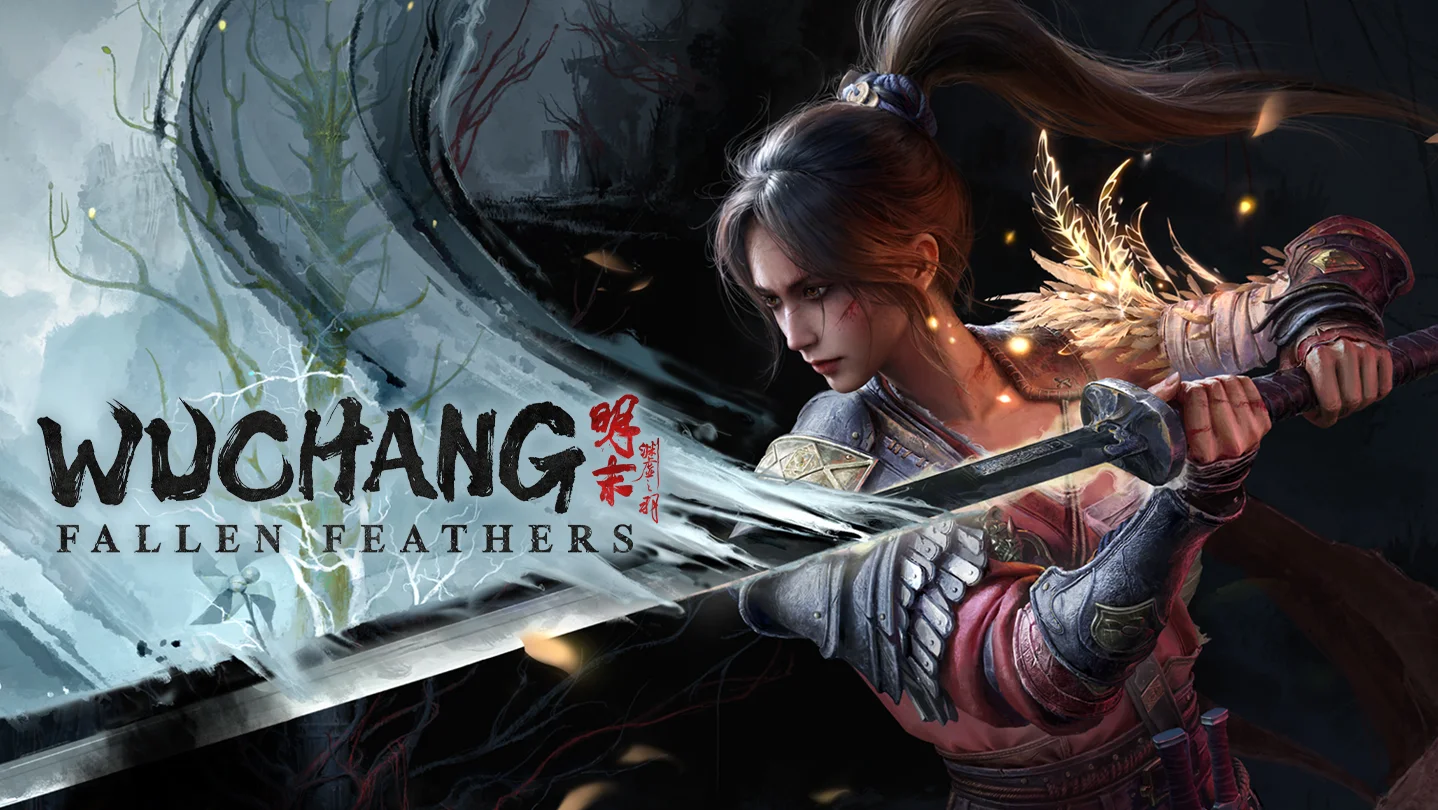
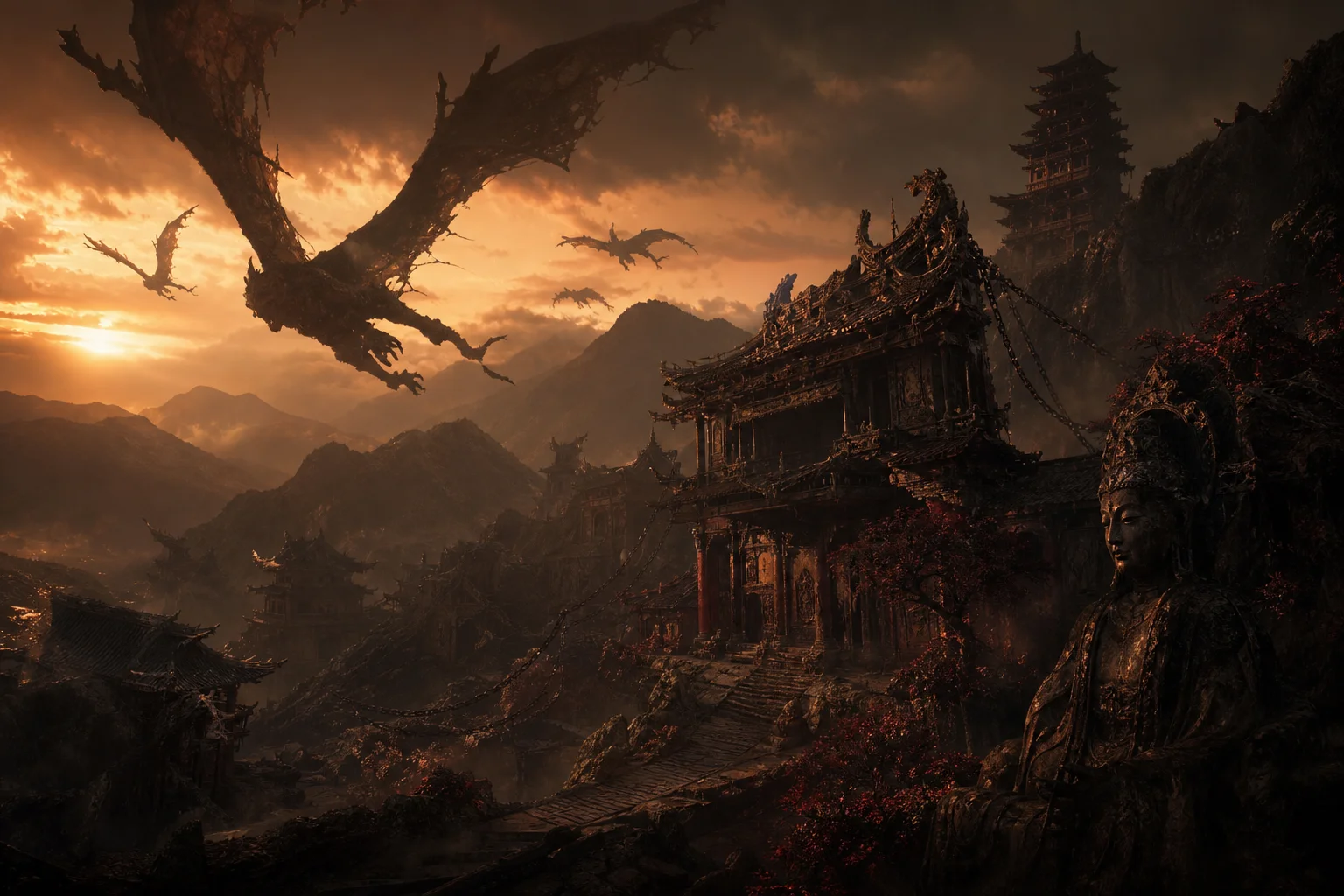
You have read what Feathering (羽化病) means on paper — three stages, Red Mercury, the pun on immortality. This article goes one step further: how transformed humans populate Shu as enemies, what cultural logic their designs borrow, and why the game insists infected people may remember who they were even as their bodies betray them. Light spoilers for mid-game enemy types and boss names; no ending walkthroughs.
Not hollow — haunted
Soulslike players reach for the Dark Souls comparison: Feathering looks like Hollowing — humanity draining until only a hostile shell remains. Leenzee's writers push a different horror: many afflicted retain memories, sometimes speech, sometimes recognizable armor and rank insignia. You are not only fighting empty shells; you are fighting people who may know exactly what they have become.
Culturally, that aligns with Chinese ghost and plague stories where the monster still accuses — grievance outlives flesh. Feathering is 羽化 (ascension) inverted: the spirit does not leave cleanly; it stays trapped while wings grow through the ribcage.
Stage 1–2
Village exiles, deserters, quest NPCs on borrowed time
Stage 3
Elite enemies and bosses — fully winged or hybrid forms
Theme
Identity persists → guilt, taunts, tragic loot descriptions
Three stages in the world (not just the stat screen)
Our primer Feathering, Red Mercury & What the Title Means outlined biological stages. On the map they map to social roles:
Stage 1 — the hidden sick
Feathers under bandages; families locking doors; soldiers hiding rash under pauldrons. Gameplay: environmental storytelling, optional NPC arcs, the dread that any ally might turn. Culturally echoes late Ming paranoia — who is still human when the province already collapsed once?
Stage 2 — the walking siege weapons
Distorted limbs, partial wings, still wearing faction colors — Ming general, bandit chief, priest. These are the grunts and mini-bosses that make Feathering political: war continues inside the infected body. Combat teaches that mercy and risk are the same calculation.
Stage 3 — the feathered apex
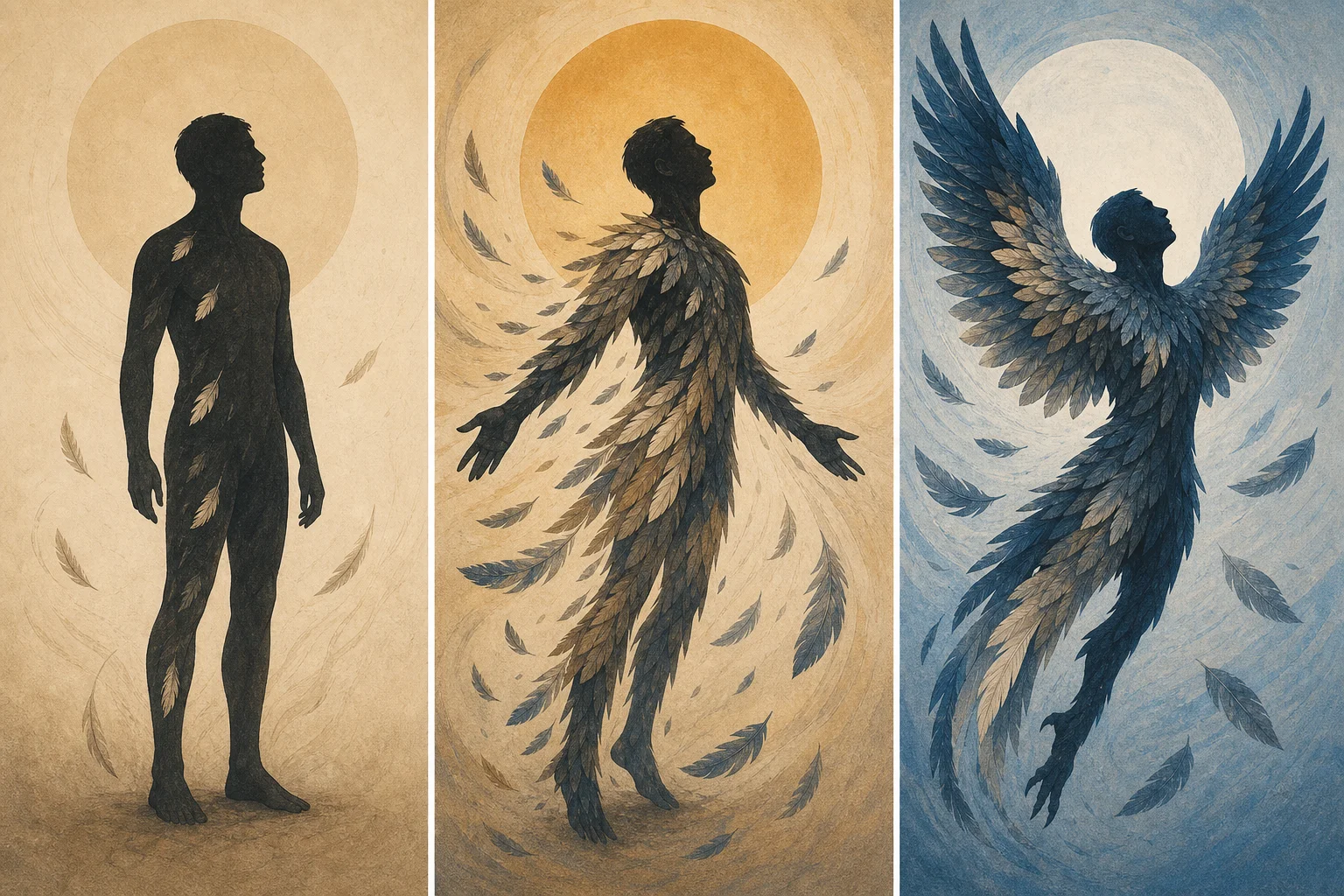
Fully transformed elites move like bosses: vertical arenas, dive attacks, feather projectiles syncing with your own Skyborn Might meter. Mythic layer: they resemble 羽人 (feather people) from classical geography texts — but stripped of wonder, leaving only predation.
Cultural sources the enemy roster quotes
| Tradition | What it celebrates | What Feathering monsters invert |
|---|---|---|
| Daoist 羽化登仙 | Light body, leaving dust | Heavy flesh, feathers growing inward |
| Shanhai Jing feather peoples | Winged distant tribes, wonder | Local neighbors turned aerial predators |
| Shu bird kings (Du Yu) | Sacrifice, seasonal grief | Permanent scream in monster form |
| Late Ming war dead | Martyrs, bandits, refugees | Same uniforms, now unrecognizable |
Reading boss names as cultural lenses
Boss titles are not random fantasy — they anchor fights in history, Shu myth, or plague metaphor. Below: cultural reading, not strategy guides.
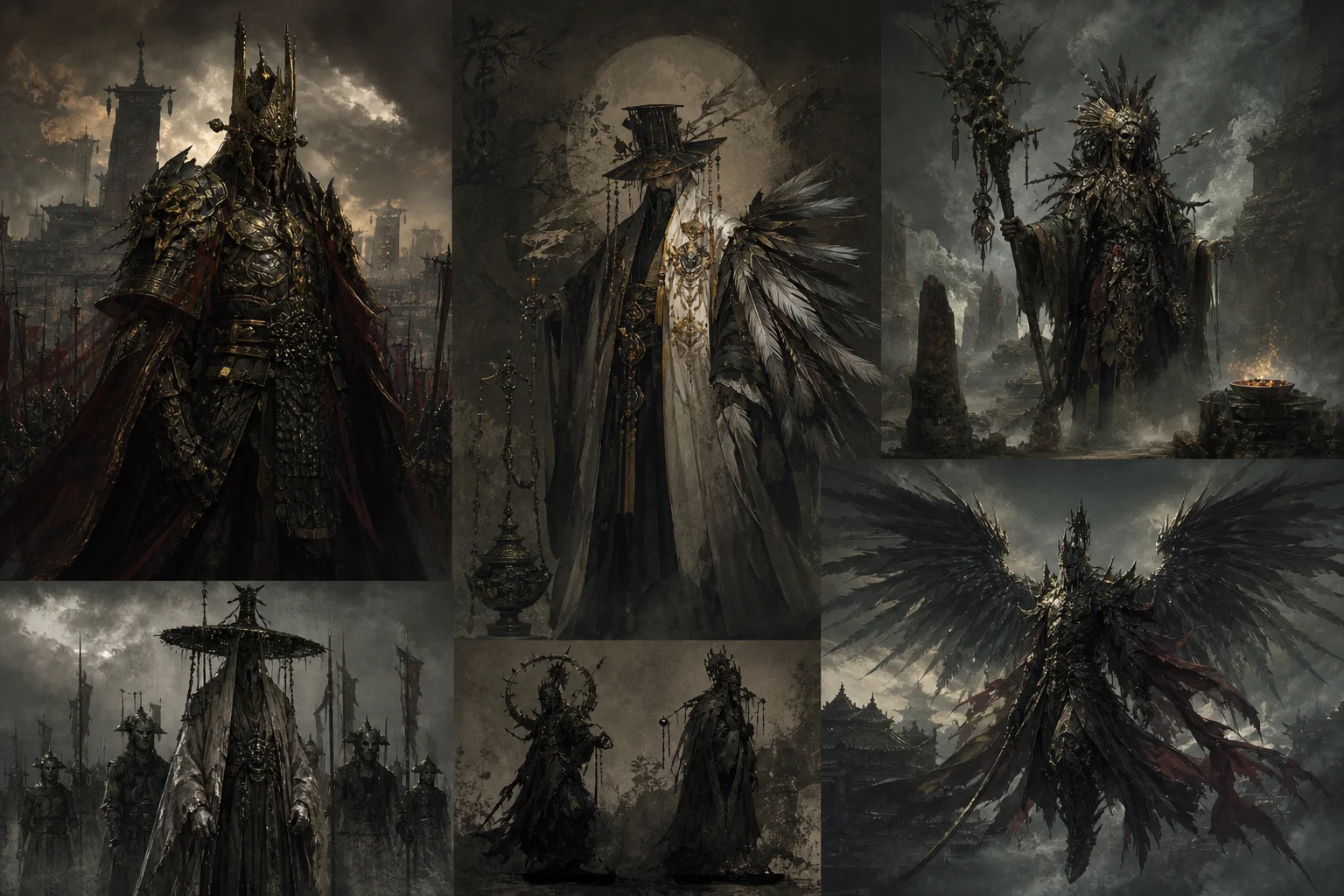
History
Fierce Tiger Zhang Xianzhong 张献忠
The real warlord as boss — history's tiger nickname made literal through Feathering. Fighting him is the game stating: Sichuan's wound has a face.
Ming remnant
Ming General Liu Cheng'en 刘承恩
Loyalist military title + mutation — empire defending itself after the empire is already dead.
Shu myth
Bo Sorcerer / Bo Magus 僰
Tie ancient Bo people to forbidden rites — feather magic as corrupted prehistory, not generic cultist skin.
Religion twisted
Feathered Priest Lu Bingzhang 吕秉章
Clerical authority + plumage — sanctified disease; echoes real anxiety that temples could not stop plague.
Color symbolism
Vermilion Feathers Honglan 红羽
Red feathers link mercury, blood, and cinnabar motifs — Feathering as visual poetry, not only anatomy.
Historical echo
Dragon Emperor Zhu Youjian 崇祯
Name aligns with the last Ming emperor Chongzhen (朱由检) — imperial fall rendered as monstrous boss encounter. Major lore spoiler territory beyond the name.
Spoiler discipline: We stop at name-level and thematic reading. Why Zhu Youjian appears as a feathered emperor, what Xuanyangzi wants, or how Honglan ties to earlier chapters — those deserve dedicated major articles after you finish the route you care about.
Ordinary monsters still tell stories
Not every enemy is a named boss. Watch repeated silhouettes:
- Feathered soldiers — faction wars continuing after humanity ends
- Plague beasts in ruins — animals twisted; rural economy gone feral
- Tree / root hybrids (e.g. soulwood motifs) — Shu sacred-tree bronze art turned hostile
- Child-shaped horrors — folk fear of corrupted lineage; handle as horror trope, not history claim
Item drops — Echo rewards, bone needles keyed to Feathering damage — reinforce that you harvest the dead's mastery. That is mechanically soulslike, but culturally it mirrors taboo texts about absorbing a monster's qi to survive.
Wuchang on the knife-edge
The protagonist stays playable while infected — feathers on her model increase as systems progress. She accumulates Skyborn Might from the same symbol that destroys villagers. The game asks whether using plague-power to fight plague is salvation or early surrender.
Unlike Stage 3 monsters, Wuchang retains agency, dialogue, and memory quests (even when amnesiac). She is the control case: proof Feathering is not instant loss of self — which makes every NPC's slower slide more tragic.
How to use this while fighting
- See wings → think Shanhai Jing inverted, not generic demon
- See Ming armor → late Ming politics still killing after 1647
- See Bo iconography → deep Shu prehistory, not random tribe name
- See priestly feathers → corrupted ritual, not holy ascension
- Hear human voice from monster → memory horror; read item flavor text after the fight
For places where these creatures spawn — Sanxingdui ruins, Zhenwu Mountain, Bo Capital — continue to Places, Artifacts & Shu Heritage starting with Sanxingdui archaeology.
Continue with Shu heritage and places: Sanxingdui masks, landmarks, and the geography behind the arenas.
Cross-series: Sanxingdui, Jinsha & What the Masks Mean — module C.