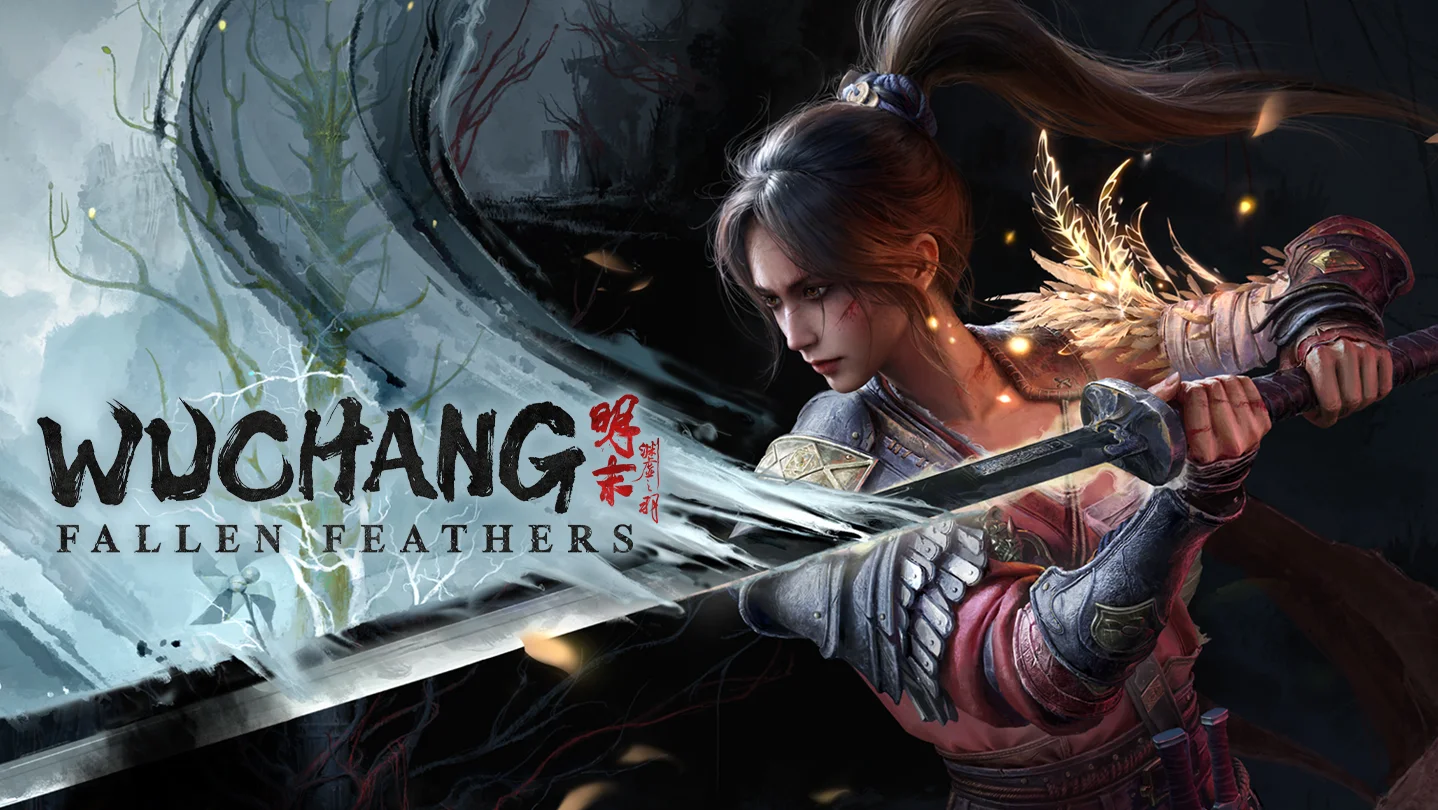
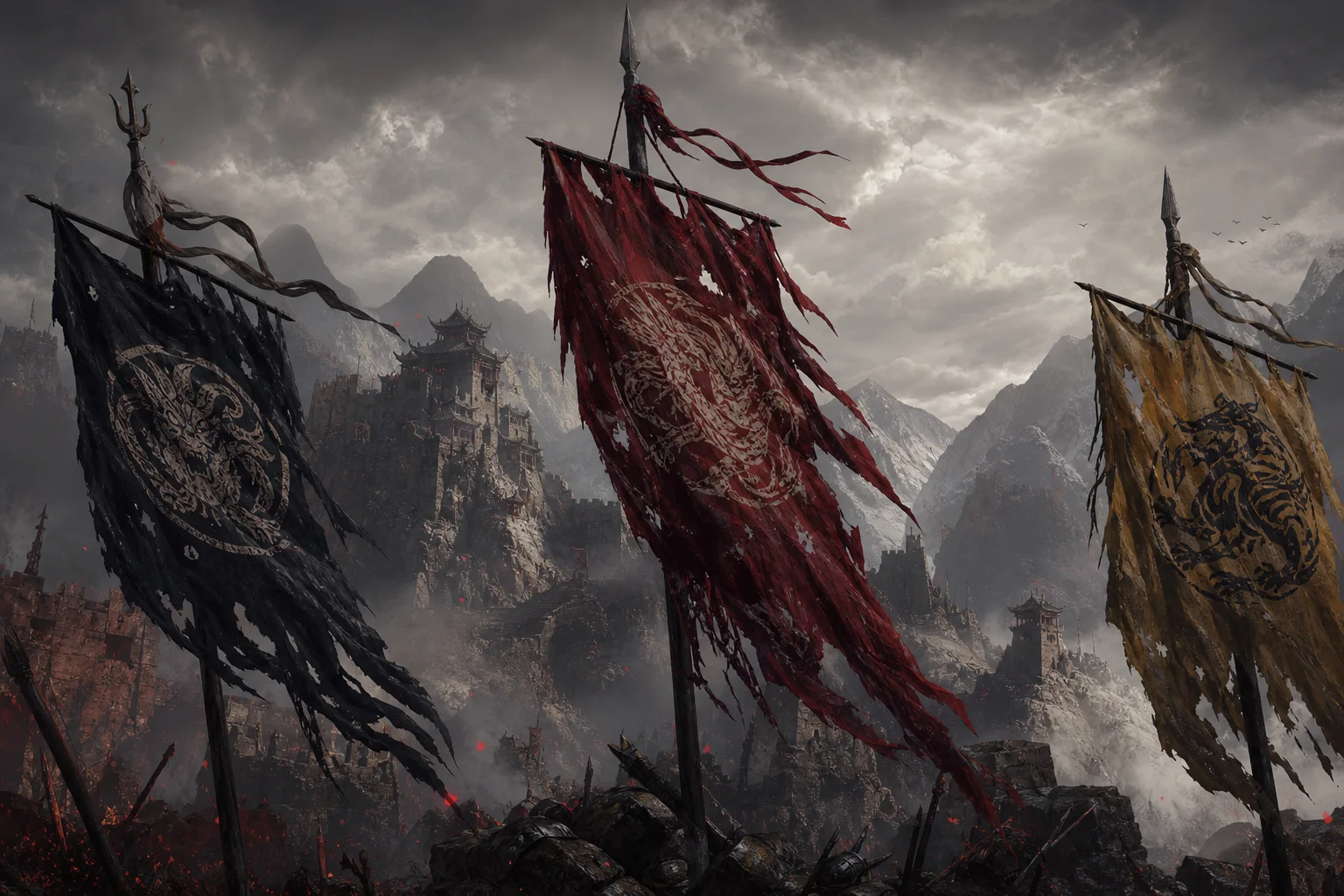
Mythic kings and feather plagues explain why Shu feels cursed. Warlords explain who is shooting at you in 1647. This article maps the major historical powers — Zhang Xianzhong's Great West, Southern Ming loyalists, Qing invaders, and local bandits — and how WUCHANG: Fallen Feathers uses them as faction scaffolding. Light spoilers for early-to-mid game political context only.
1647: the power map in one glance
Great West (大西)
Zhang Xianzhong's regime — emperor dead, armies and terror linger
Southern Ming (南明)
Ming princes' loyalist courts — legitimacy without unified force
Qing (清)
Manchu-led dynasty pushing southwest to annex Sichuan
The Ming central government is gone. The Qing has not finished winning. Southern Ming still flies Ming banners while negotiating, begging, and bleeding. In Sichuan, Zhang Xianzhong's Great West (大西) collapsed with his body, but holdouts, deserters, and imitators remain. Into that gap rush local bandits — including groups remembered as Yaohuang bandits (摇黄贼) in regional accounts — plus cultists, mercenaries, and anyone hunting Red Mercury or chisel rumors.
Official game framing: multiple factions converge on Shu seeking resurrection or control of ancient power — a fiction layered onto real 1647 chaos. History gives you war exhaustion; the game gives each army a supernatural excuse to keep killing.
Zhang Xianzhong and Great West
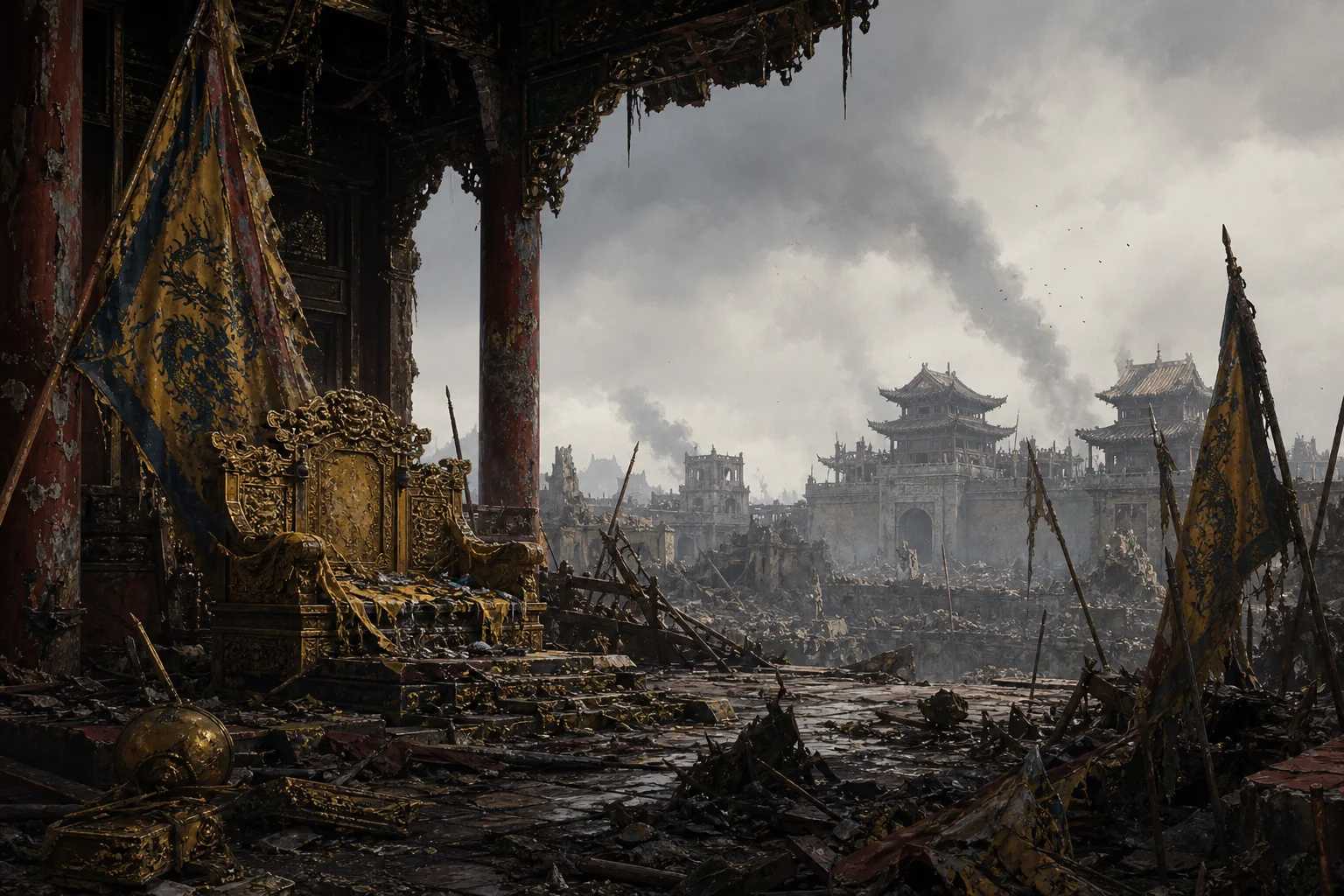
Zhang Xianzhong (张献忠, 1606–1647) was the dominant warlord in Sichuan when the game's backstory begins. After years of roaming rebellion, he entered the province, seized Chengdu, and proclaimed the Great West (大西) dynasty — a rival empire inside the collapsing Ming world.
Framework facts useful for players:
- His court minted coins and issued titles — he behaved like a real emperor, not a mere bandit chief
- He taxed and conscripted brutally to fight Qing and Southern Ming pressure
- He died in an ambush near Xichong in early 1647 — weeks before the game's present
- After death, loyalists, looters, and terrorized civilians each claimed pieces of his legacy
In WUCHANG, Great West remnants may appear as enemies, quest givers, or haunted propaganda — banners without an emperor. You do not need to believe every horror story Qing archives tell about Zhang to understand why Shu still flinches at his name: the province genuinely broke under his reign.
Historiography note: Population collapse in Sichuan is documented; exact death tolls and Zhang's personal share are debated. Culture articles cite framework events, not sensational numbers.
Southern Ming: emperors without empires
When Beijing fell, Ming princes fled south and proclaimed competing courts — collectively called Southern Ming (南明). The most relevant for southwest China:
- Longwu (隆武) court in Fujian — short-lived, oriented toward coastal resistance
- Yongli (永历) court — longer struggle in southwestern China; associated with Ming loyalism deep into the 1650s
- Regional generals who kept Ming titles while acting as warlords — Li Dingguo (李定国) and others later fought Qing in the southwest
Southern Ming forces did not "rule" Sichuan in 1647, but they claimed it, sent envoys, recruited allies, and fought Qing advances through the region. In game terms, Ming-loyalist NPCs often represent:
- legitimacy nostalgia — restoring the old dynasty
- pragmatic alliances with anyone anti-Qing or anti-Zhang
- desperation projects — including occult hope that ancient Shu power could reverse defeat
Light spoiler: early and mid-game quests sometimes pit you between Ming-loyalist rhetoric and obviously doomed strategy — the game uses their idealism as tragedy fuel.
Qing: the conquerors closing in
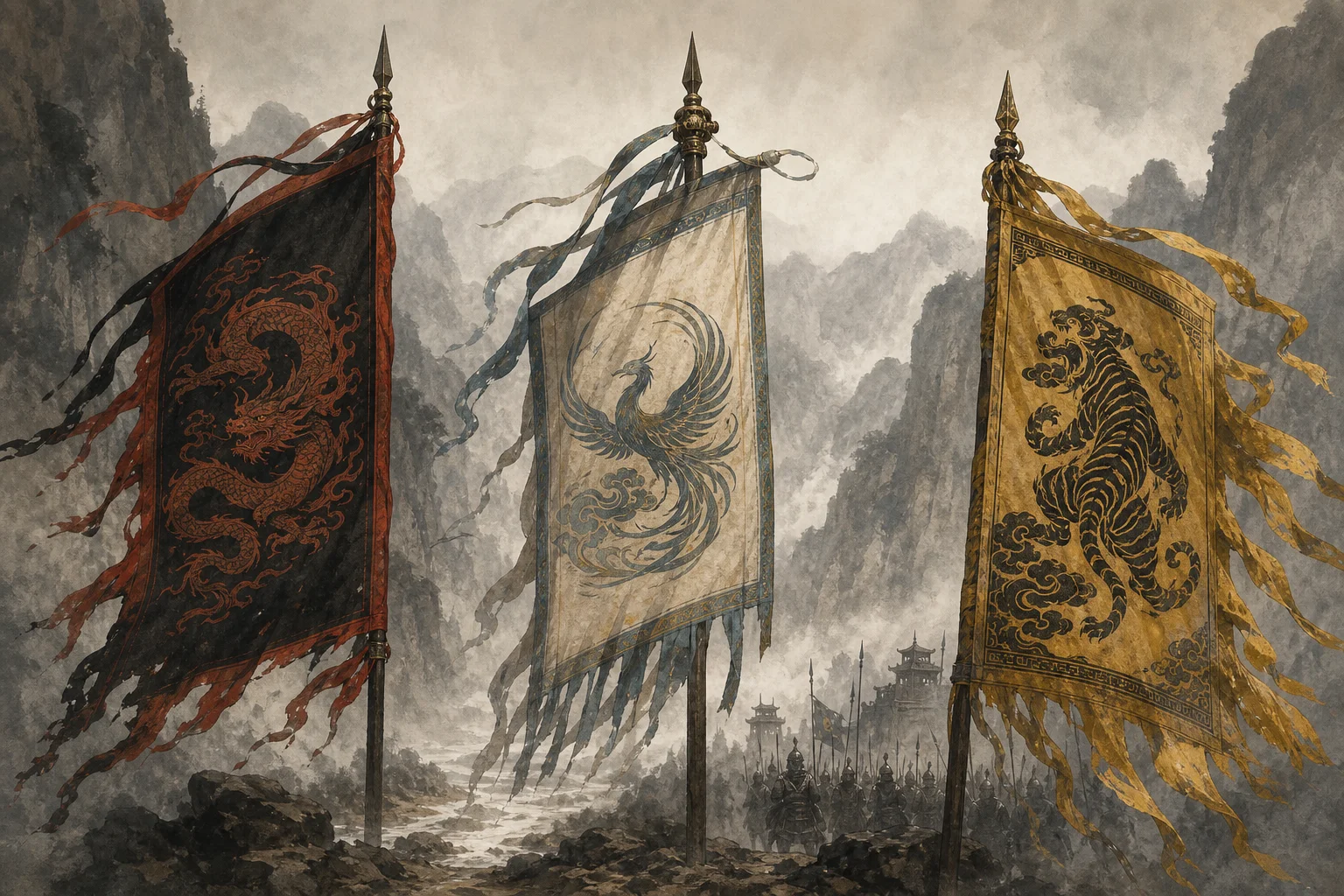
The Qing (清) dynasty entered Beijing in 1644 and spent the next decades mopping up resistance. In Sichuan, Qing Prince Haoge (豪格) led the campaign that killed Zhang Xianzhong — a victory that did not instantly pacify the province.
Qing soldiers and allied Han militias appear in-game as:
- occupation forces seizing passes and grain
- scouts hunting Great West holdouts
- authorities suspicious of any local with Ming or pirate past — relevant to Wuchang's Jinyiwei origins
Culturally, Qing presence reminds you the game is not "timeless wuxia" — it is specifically post-Ming, with queue hairstyles, banner armies, and Manchu elite command arriving from the north.
Bandits, deserters, and Yaohuang
Not every enemy wears an imperial banner. Late Ming Sichuan teemed with:
- Deserters from Zhang's armies — armed, hungry, leaderless
- Local strongmen who fortified villages and taxed travelers
- Yaohuang bandits (摇黄贼) — named in Sichuan sources for roving gangs that flourished amid collapse
- Cultists and occult seekers — game fiction intensifying real panic around plague and mine rumors
These groups explain random checkpoint battles and ruined farmsteads without a main-quest villain speech. They are what impermanence looks like on the ground: yesterday's soldiers become today's wolves.
Why everyone converges on Shu (history + game)
| Faction type | Historical motive in 1647 | Game-layer motive |
|---|---|---|
| Great West remnants | Survive, loot, restore local control | Exploit Red Mercury; deny chisel shards to rivals |
| Southern Ming loyalists | Anti-Qing resistance; hold southwest | Resurrection legends as morale / weapon |
| Qing forces | Annex Sichuan; eliminate rebels | Suppress occult plague sources; seize mines |
| Bandits / cults | Profit from chaos | Feathering fear; black-market mercury; mad kings |
| Wuchang (player) | — (fictional) | Personal quest: memory, sister, survival |
History alone cannot explain every boss faction — but it explains why the map is crowded. Shu is rich, defensible, and psychologically central in Chinese geography (天府之国). In 1647 it is also empty enough to hide armies, tombs, and mines. Add a rumor that ancient tools can raise the dead, and every side sends scouts.
Reading factions while you play
Useful habits for light-spoiler navigation:
- Banner colors and titles — Ming dragon motifs vs Great West vs Qing flags; mismatched uniforms mean deserters
- Dialogue about mercury or chisels — marks faction interest in game macguffins, not historical records
- Anti-Zhang venom — almost universal; even enemies agree the province suffered
- Feathered enemies mixed with soldiers — plague erases faction lines; humans and monsters overlap
Deeper political arcs and named warlord bosses vary by route — we tag major spoilers in later articles. This page stops at the historical scaffolding.
For the mythic layer beneath the warlords, see Du Yu, Bie Ling & the Kings of Ancient Shu. For what Feathering does to soldiers and civilians, continue to the next article on winged monsters and transformation.
Next in this series: From Human to Monster — Feathering, winged abominations, and the loss of self.