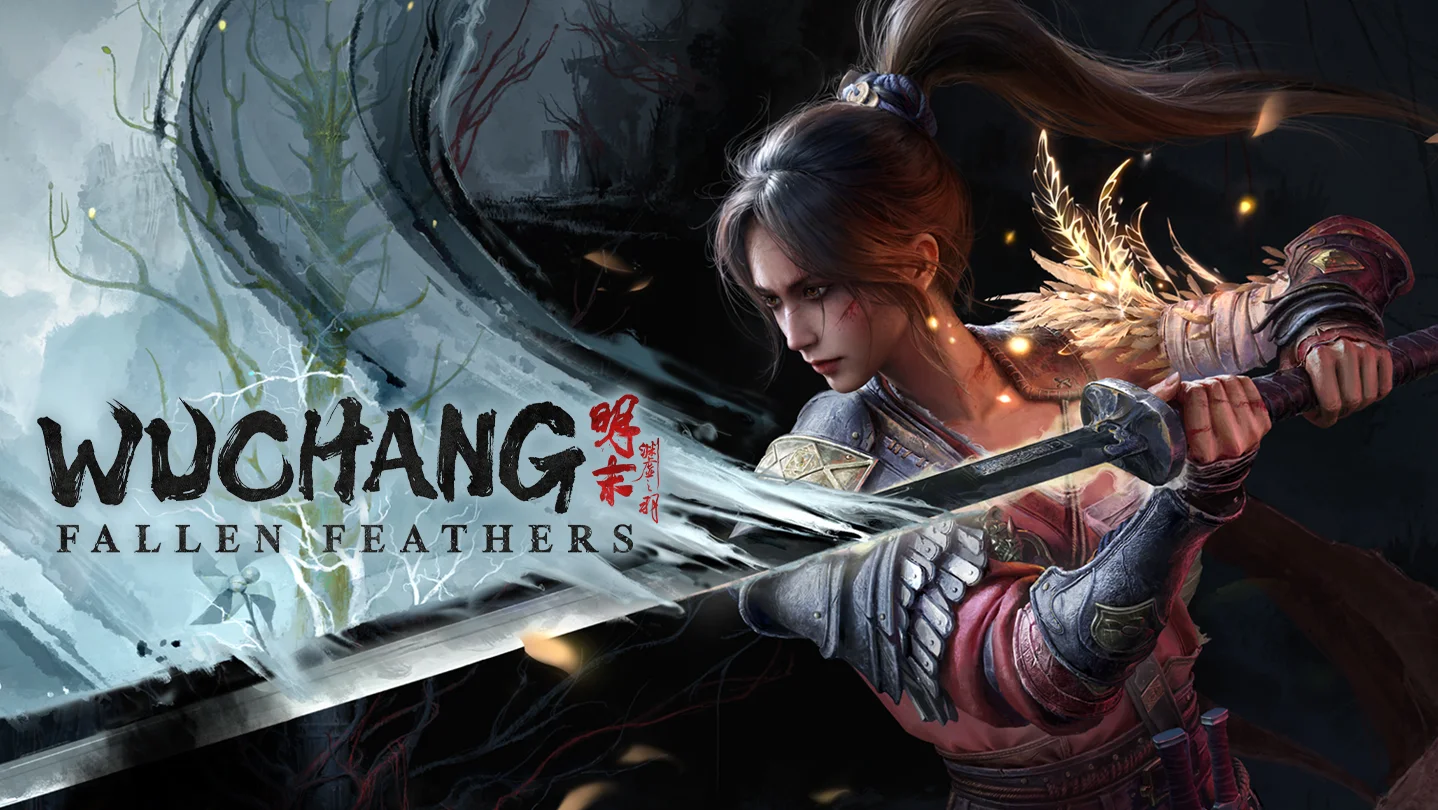
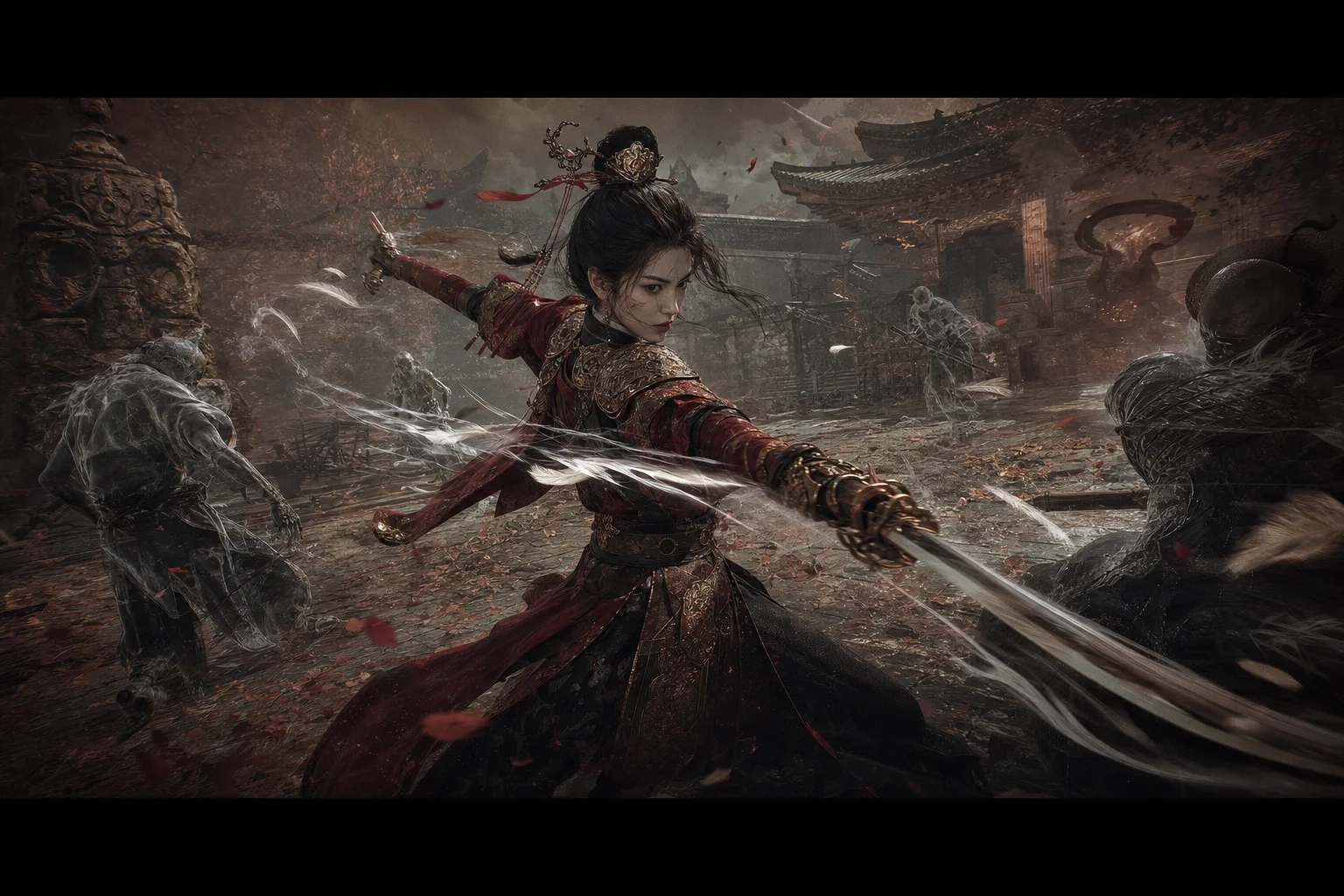
Module A explained what Feathering and Red Mercury mean in story terms — see Feathering & Red Mercury. This closing Places article asks a cultural question: why does the combat system make you powerful through feathers? No build guides or tier lists — only how weapons, Skyborn Might (羽势), and sacrifice mechanics echo Chinese action-game grammar and the game's inverted immortality pun.
Combat as argument, not appendix
Soulslike games often bolt generic fantasy onto generic swords. Leenzee ties mechanics back to symbols you already learned in Culture Hub:
- 羽化 promised ascension — Feathering delivers mutation
- 羽势 lets you spend feather-momentum for heavier strikes anyway
- 赤汞 is sacrificed in the Impetus Repository to grow stronger while the world dies
You are not fighting despite the plague metaphor — you are fighting with it, which is the same moral discomfort Wuchang carries in cutscenes.
Five weapon families — martial variety in one heroine
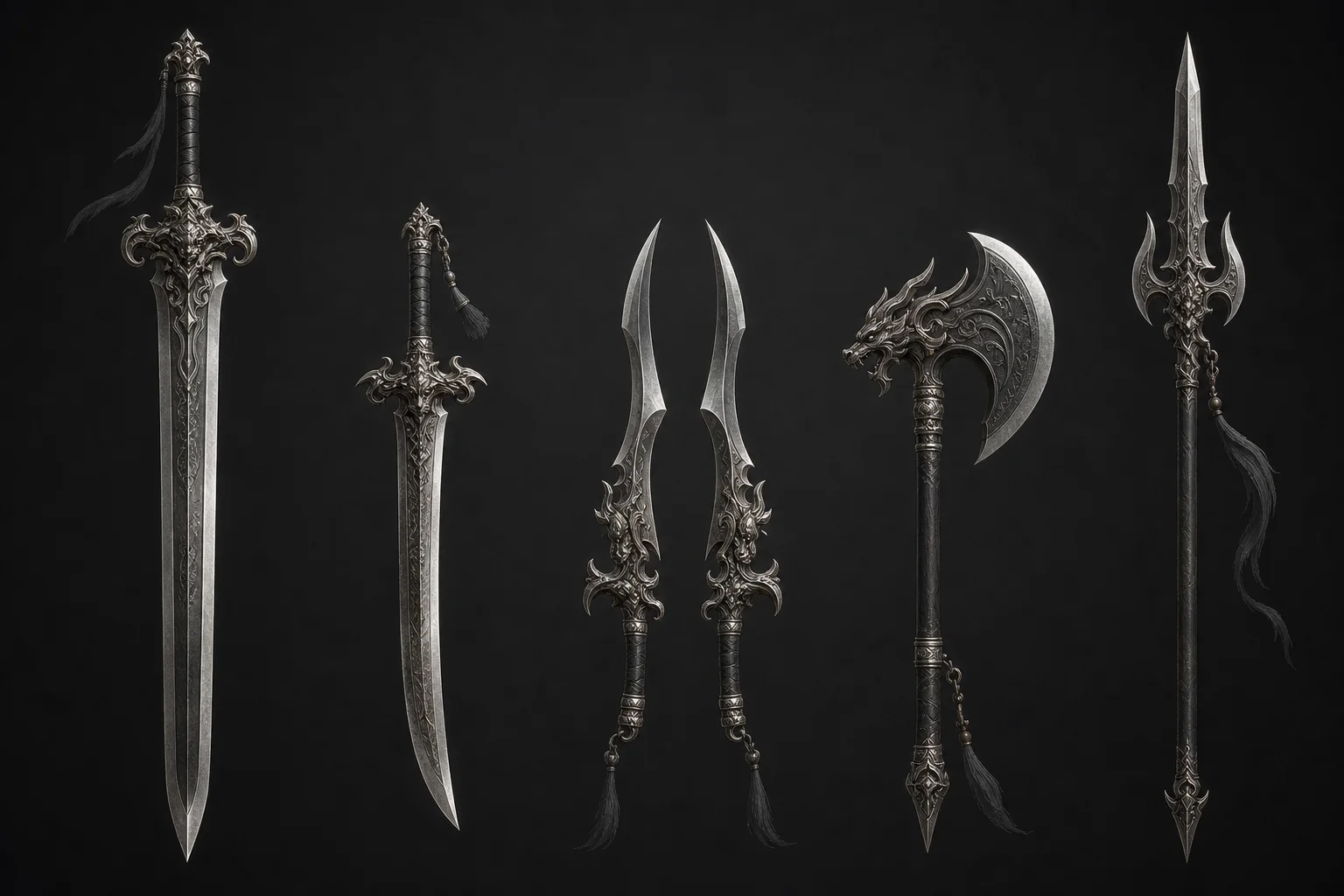
Official materials describe five melee families, each with its own combo rhythm and Discipline (法门-style weapon skill) slot:
| Weapon type | Chinese frame | Cultural read (not historical manual) |
|---|---|---|
| Longswords | 长刀 / 陌刀类长刃 | Wuchang's default Cloudfrost's Edge — pirate-Ming changdao fantasy; deflect-heavy, wuxia duel pacing |
| One-handed swords | 单剑 | Officer's sidearm speed; mobile, less commitment — fits Jinyiwei-adjacent upbringing without cosplaying a real rank |
| Dual blades | 双刀 | River-bandit cinema grammar — flurry, clash chains, high tempo; “Bladeborn” buff reads as entering flow state |
| Axes | 斧 | Heavy labor turned war — peasant and siege tool energy in a province of broken fortifications |
| Spears | 枪 / 矛 | Formation weapon shrunk to duel scale; reach as discipline in chaos armies (1647 mood) |
You equip a primary and secondary weapon — swap mid-fight like a veteran who picked up whatever the dead left behind. That loadout flexibility matches Wuchang's biography (naval raider, not single-school disciple) better than a lone katana hero trope.
Each type also owns a branch in the Impetus Repository (动机库) — the shrine skill tree where you spend Red Mercury Essence. Culturally: alchemy currency unlocking formalized moves — discipline purchased with the ore everyone kills for.
Skyborn Might — 羽势 as risk meter

Skyborn Might (羽势, Yǔ Shì) accumulates during combat — from successful combos, clashes, deflects, and specific Impetus nodes. Spend stacks to:
- cast Spells (法术) — you cannot cast at zero stacks; magic is feather-dependent
- trigger enhanced Disciplines — weapon skills hit harder with 羽势 invested
- fuel Swift Strikes / Swift Draws — burst movement attacks tied to the same resource
The cap starts at one stack and expands to five via Repository nodes — mirroring the five chisel fragments and five-phase numerology without claiming a one-to-one myth map. What matters culturally: the same 羽 that names the plague also meters your strongest moves.
Compare to Western soulslikes' stamina or posture: 羽势 is explicitly on-theme. You feel the pun every time the HUD feather icon fills — ascension iconography powering violence.
Clash, Deflect, Shimmer — wuxia timing in systems
Chinese action games since the wuxia film boom trained players to read:
- Deflect (格挡完美时机) — blade meets blade at the perfect frame; full negation, counter window
- Clash — weapon collision that trades force instead of dodging; builds 羽势 on success
- Shimmer — perfect-dodge afterimage; rewards spacing over tanking
These are mechanical names, but their feel comes from decades of Hong Kong and mainland wuxia choreography imported into interactive form. Longsword Disciplines like counter-raise moves teach patience; dual-blade Clash chains teach aggression — two moral temperaments in one system.
Feathering enemies often retain martial memory — see Feathered Monsters — so duels sometimes feel like fighting a corrupted master of the same grammar you wield.
Red Mercury progression — sacrifice for power
Beyond moment-to-moment 羽势, long-term growth runs on Red Mercury and its refined forms:
- Red Mercury Essence — level-up currency for Impetus Repository nodes (stats, Disciplines, Skyborn cap)
- Feather offerings — faint / lustrous red feathers for higher upgrades and weapon mastery past early caps
- Sacrifice language — official copy describes offering ore to evolve; alchemical 丹术 echo without claiming real Daoist practice
The cultural tension repeats: mining cinnabar-colored ore in a plague province to punch harder is the same exploitation loop warlords run for chisel shards — you just experience it as menu choices at shrines.
Harvesting enemy skills — taboo mastery
Defeating foes can yield harvestable techniques (community and UI often frame these as skill absorption / Echo rewards). Mechanically it is soulslike move-collecting; culturally it rhymes with:
- martial novels where heroes steal manuals from rivals
- folk taboo on absorbing a monster's qi to survive
- Feathering logic — taking something essential from the dead to extend your own trajectory
You are not copying Sun Wukong's seventy-two transformations from a master. You scrape survival skills from infected soldiers in 1647 — much grimmer source text.
Supporting systems (quick cultural gloss)
Manna Vases
Healing flask analog — upgraded via Aurum chisel node; alchemical vessel in a land without clinics
Temper / Temperance
Weapon affix slots — smithing your blade as identity; Cyan chisel unlocks final slot
Benedictions
Weapon blessings — Jade chisel opens portable menu; ritual buff layered on steel
Dream at shrine
Ancient Chisel respawn — time-cut, not bonfire; ties combat loop to artifact myth (C3)
How to read fights while playing
- Feather icon fills → you are borrowing plague symbolism for power — remember A3's inversion
- Spell fails → you ran out of 羽势, not mana — magic is subordinate to feather economy
- Red Mercury spent at shrine → same red ore NPCs die for in dialogue
- Weapon swap → pirate pragmatism, not class selection screen fluff
- Clash spark → wuxia honor duel inside horror landscape
What this article skips on purpose
Optimal Discipline picks, boss weakness charts, and mastery farming routes belong in gameplay guides — not Culture Hub. You came here for why feathers gate spells and why five weapon families exist in Shu at all. With Module C complete, the hub has connected archaeology (C1), geography (C2), artifacts (C3), poetry (C4), and combat symbols (this page).
Module C complete. Keep the Glossary open while playing — quick lookups for 羽势, 赤汞, and every name the HUD throws at you. For game ↔ source mappings, use the Quick Reference.
Cross-series: Glossary: Names, Terms & Translations · Quick Reference: Game ↔ Sources — module D reference.