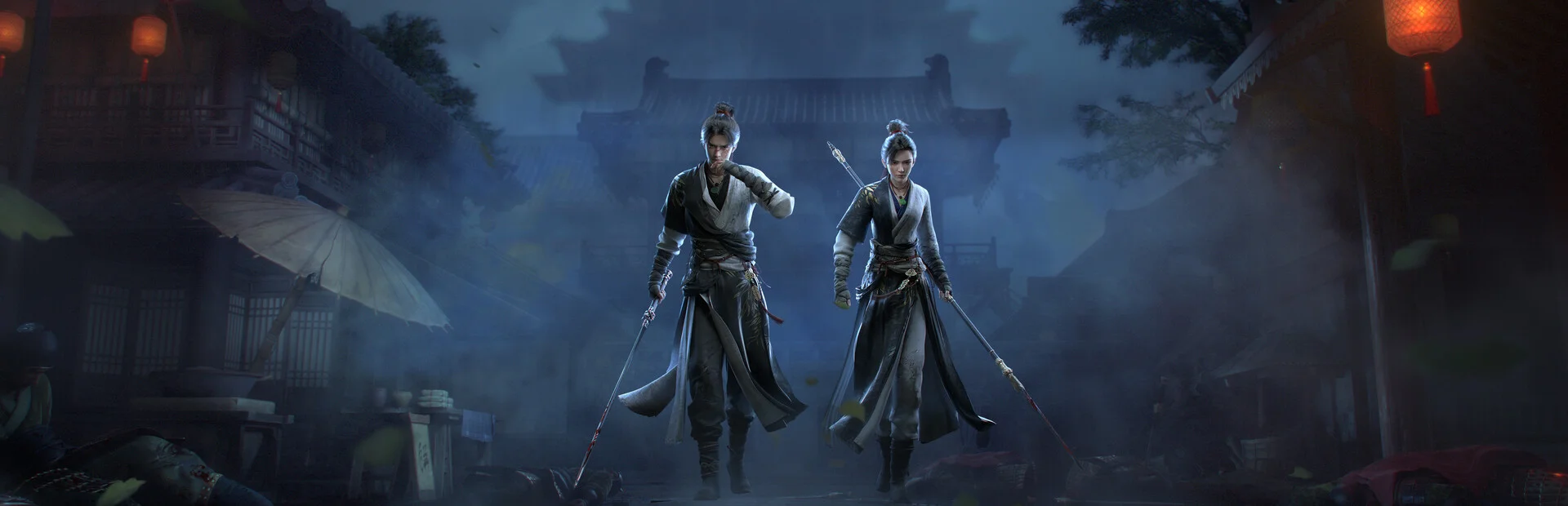
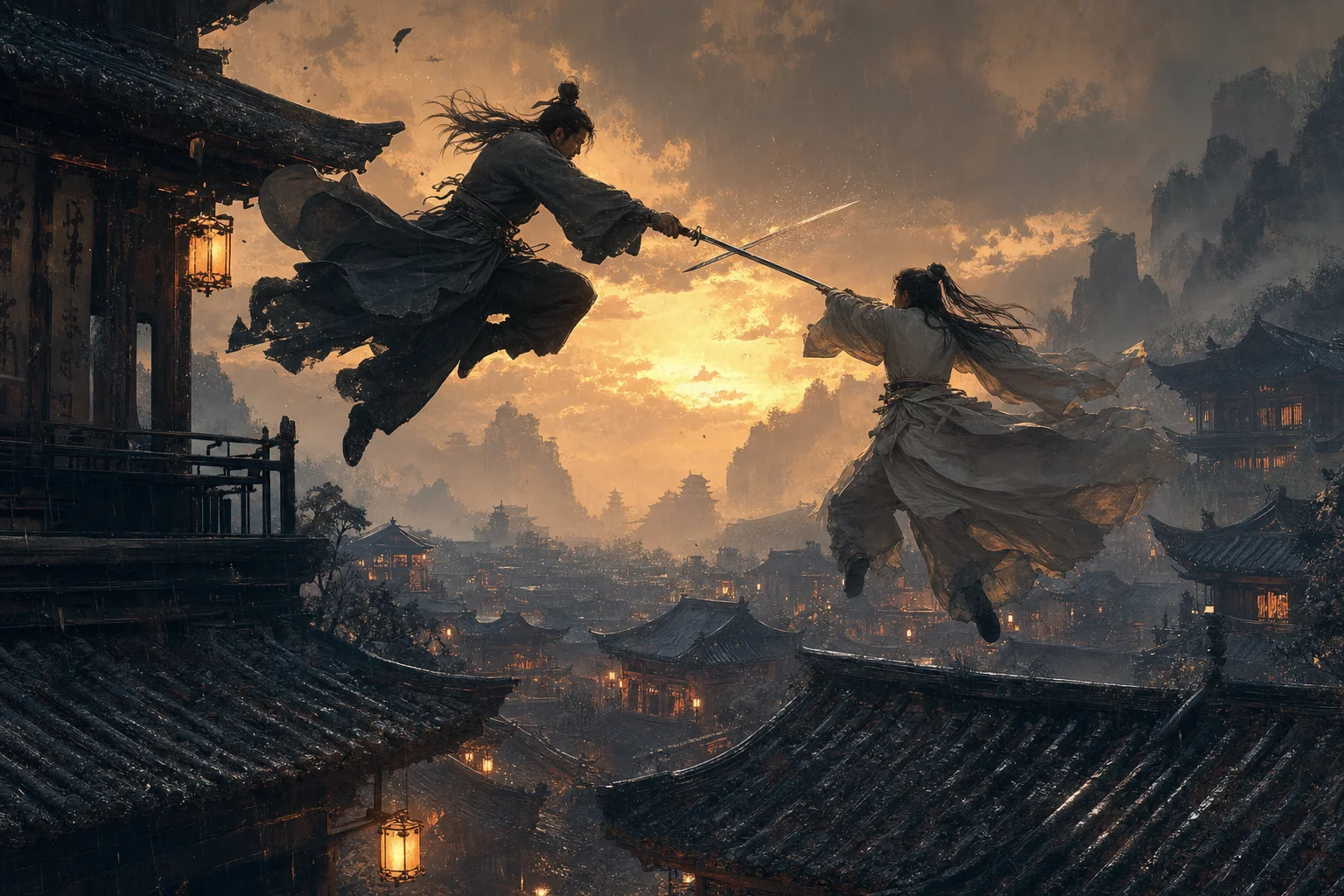
When a Where Winds Meet fight lands — umbrella snapping shut into a blade, rope dart answering a spear, two bodies selling the collision before the UI flashes — you are seeing more than animation polish. Everstone brought Hong Kong action cinema onto the motion-capture stage: martial arts director Stephen Tung (董玮, Dǒng Wěi / Tung Wai) shaped weapon vocabularies with live performers and wire teams; legendary choreographer Yuen Woo-ping (袁和平, Yuán Hépíng) later joined as Global Action Consultant, with the Yuen Clan refining disciplines through mocap. This article reads that pipeline as screen grammar entering a game — not a celebrity checklist.
No plot spoilers. We discuss publicly announced creative credits and combat language. Film titles appear as cultural vocabulary, not as required homework.
Why cinema mattered to an open-world jianghu
Wuxia games often face a familiar trap: spectacle moves that float, then fail the eye because nothing hits. Everstone's stated aim was a “cinematicisation” of martial fantasy — romantic jianghu feeling built on actions that still read as rational, antagonist, and weighty. That ambition sits next to the weapon costume map in our combat-as-culture primer: fans and umbrellas only feel earned when the body language persuades.
Stephen Tung
Martial arts director — R&D movesets, film-level mocap, wire-assisted antagonistic performance
Yuen Woo-ping
Global Action Consultant — Yuen Clan mocap for expanding martial disciplines and impact fluency
Shared craft
Real performers, opposing partners, cinema timing — not pure keyframe fantasy
Stephen Tung — authenticity through opposition
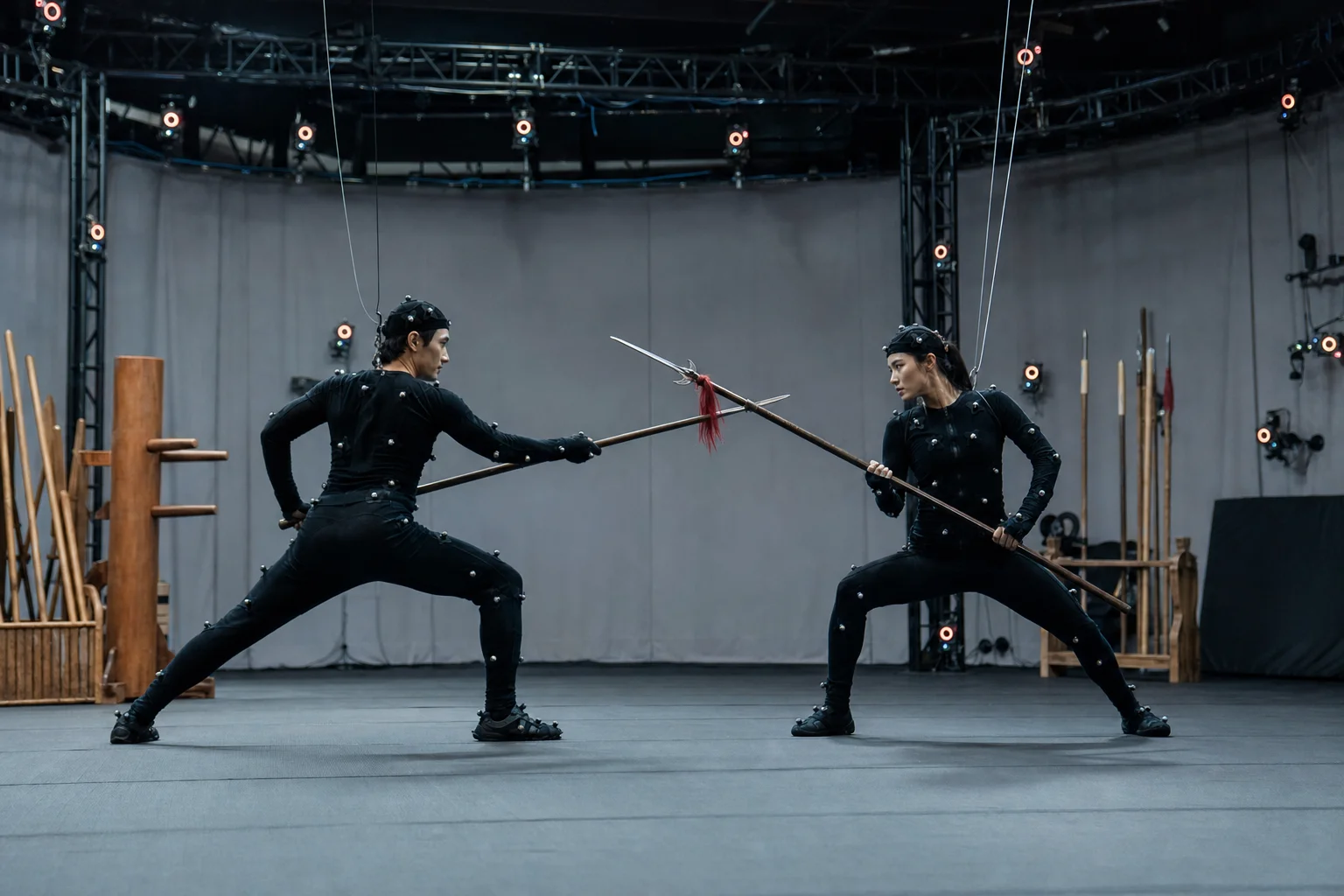
Public behind-the-scenes material shows Tung on set directing professional martial artists. Studio interviews stress points that matter culturally as much as technically:
- Authenticity over empty flourish — less of the unbound cartoon leap some older wuxia games lean on; more readable physics and intention
- Weapon personality — mo blade, spear, fan, umbrella, rope dart and others choreographed as distinct dialects
- Antagonistic capture — even “solo” techniques often require at least two performers so hits have receivers, not only senders
- Wirework as craft — flying and lofted beats treated as cinematic technique, not floating props
That last point is the bridge to Hong Kong film literacy: wire-fu (钢丝武术) is not “cheating gravity for fun” — it is an old grammar for rhythm, silhouette, and emotional elevation. Games inherit it only when designers insist on the same rehearsal patience films demand.
Yuen Woo-ping — consultancy with a global film dictionary
Yuen Woo-ping is one of the few martial-arts directors whose filmography overseas players already carry in their eyes: Crouching Tiger, Hidden Dragon, The Matrix, Kill Bill, Kung Fu Hustle, and a lifetime of Hong Kong action before the Hollywood chapter. NetEase / Everstone announced him as Global Action Consultant, with the Yuen Clan joining mocap sessions — a claim aimed less at name-dropping than at raising fluency for new martial disciplines (studio materials have cited lines such as drunken boxing, spear, and staff refinements).
Read the credit correctly: Tung's early R&D direction and Yuen's later consultancy are overlapping lineages of the same screen tradition, not interchangeable job titles. Both point the game toward the same thesis — combat should feel directed.
What “wuxia on screen” trains you to see
Before you chase director filmographies like checklists, learn the eye habits cinema teaches — then notice them in game timing:
| Screen habit | What it trains | How games echo it |
|---|---|---|
| Telegraph then answer | A wind-up, a breath, then steel | Colour tells, deflect windows, dodge reads |
| Impact sold by the body | Receivers stumble, cloth and balance react | Hit reaction, camera punch, weapon weight |
| Prop as character | Umbrella, fan, staff each imply a social mask | Weapon costumes — see combat culture article |
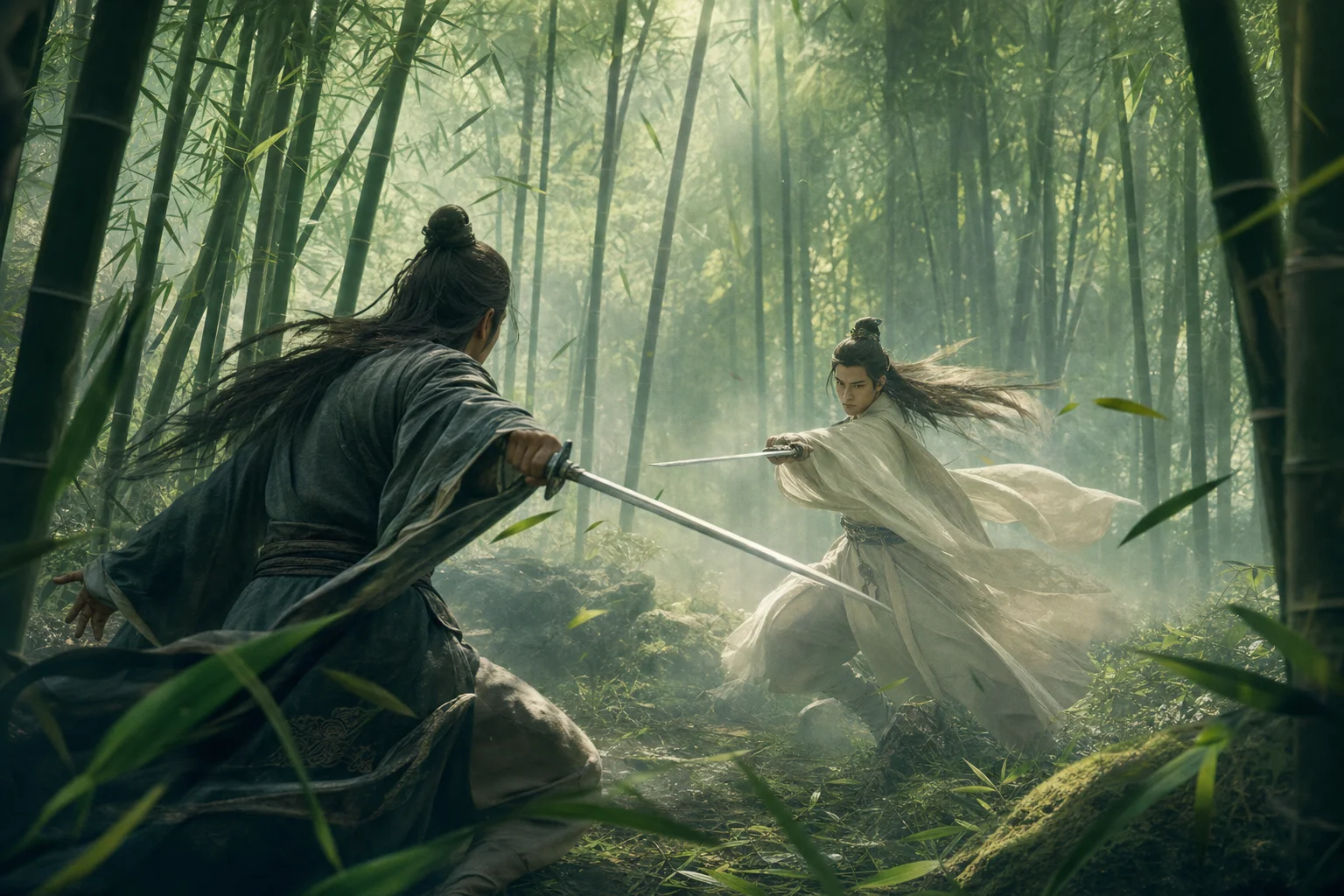
| Vertical jianghu | Roofs, bamboo, cliffs as stages | Traversal fights, aerial tools, elevation drama |
| Wire silhouette | Bodies draw calligraphy mid-air | Lofted finishers that still resolve into readable landings |
Starter films for that literacy (also noted in our further reading guide): King Hu's Come Drink with Me, Yuen's Iron Monkey, and Ang Lee / Yuen Woo-ping's Crouching Tiger, Hidden Dragon. They are not “sources” the game remakes scene-for-scene — they are the shared grammar that makes a soft prop like an umbrella feel serious.
Dance mocap beside martial mocap
Combat is not the only body language Everstone captures. Regional design notes — including Dunhuang flying-deity dance with Beijing Dance Academy choreography — sit beside martial mocap as a reminder that grace and violence share a kinetic lineage in Chinese performance culture. See our Qinghe & Hexi regional article for that strand.
History, genre, game fiction — quick filter
| Layer | What belongs |
|---|---|
| Documented history | Tenth-century soldiers had drills — not HK wire-fu or ranked deflect meters |
| Wuxia genre / cinema | Wire grammar, prop weapons, rooftop duels, choreographed impact poetry |
| Game fiction | Mocap pipelines, skill trees, colour telegraphs, dual-weapon loadouts |
Confusing the three is how players overclaim that every special is “historical martial arts.” Keep the layers straight with our living history doc.
How to watch your own fights
Listen
Timing before DPS
Cinema trains patience for the telling gesture. Treat yellow/red wind-ups as director cues, not noise.
Read props
Costume first
Fan mercy, umbrella theatre, spear doctrine — match the screen habit of judging character by what they carry.
Credit craft
Bodies on stage
Behind every “game juice” celebration sit martial performers selling hits — the same labour movies hide in credits.
Read next
- Swords, Fans, Umbrellas & Tai Chi — props as social costume
- Jianghu & Youxia — the fiction world those fights inhabit
- What to Read (and Watch) — films and novels after you play
- Glossary — Yuen Woo-ping, Stephen Tung entries
Dragon Forge Culture is editorial — not affiliated with NetEase or Everstone Studio. Credits and quotes summarized from studio interviews, behind-the-scenes materials, and public launch / expansion announcements.