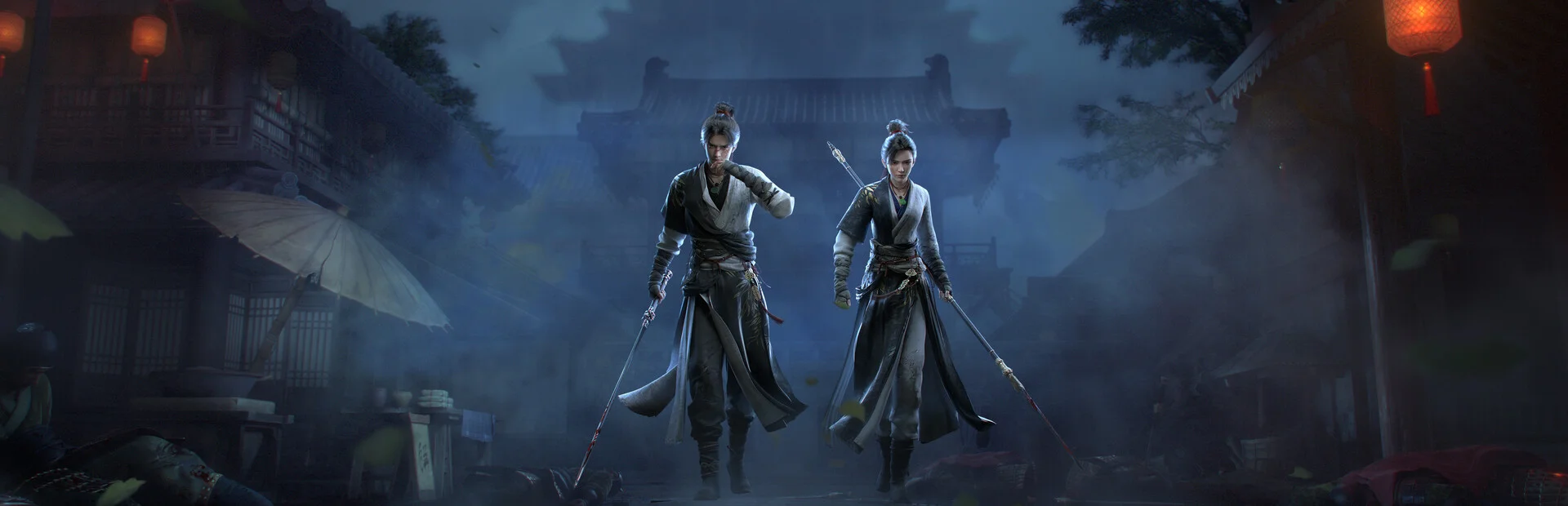
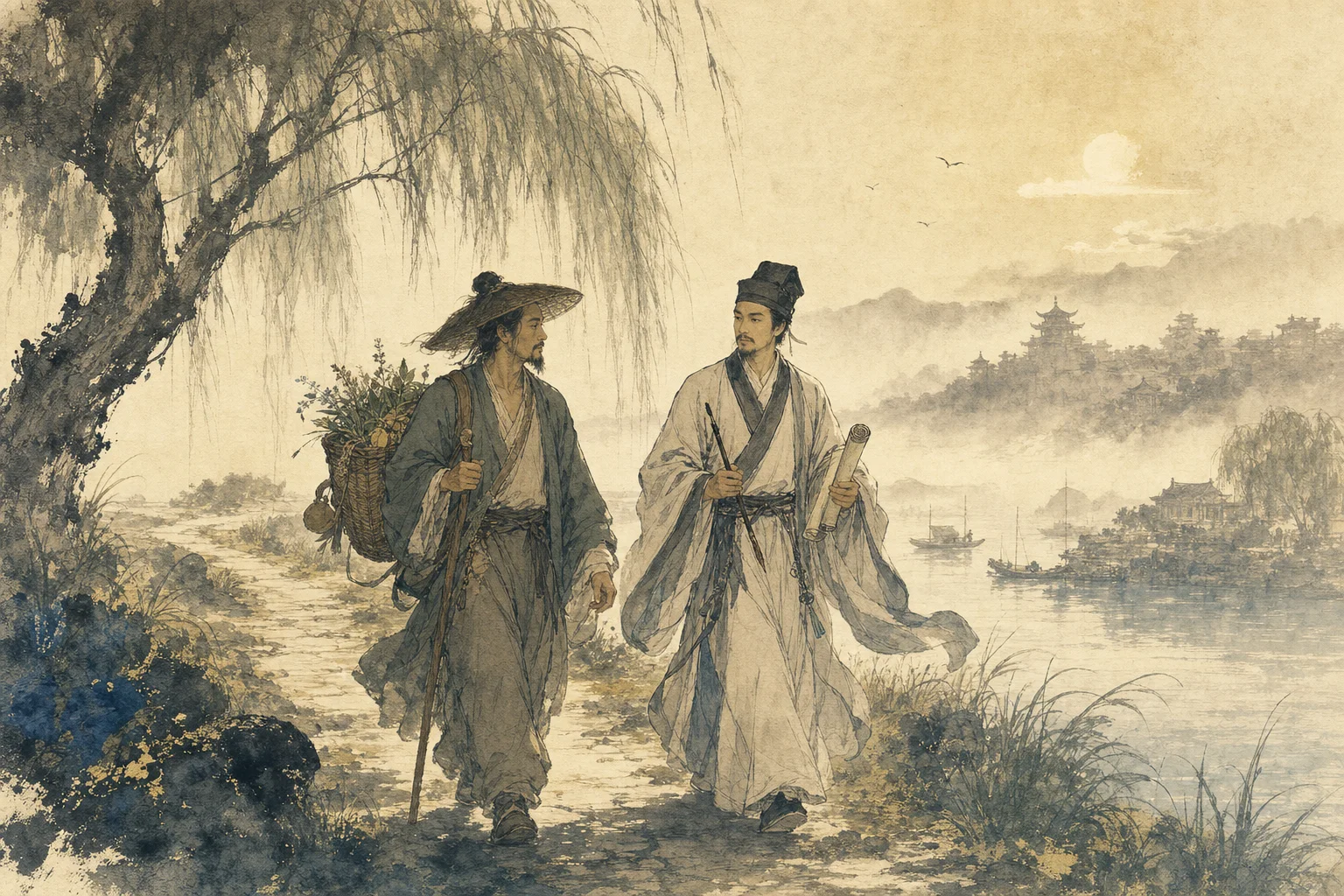
In Where Winds Meet, combat is loud — but the jianghu also remembers quiet expertise. At launch, two professions (also called careers / 江湖职业) sit at the centre of that quiet: Healer (医者, yīzhě) and Scholar (学者, xuézhě). They are optional paths that let you treat the sick, craft medicines or talismans, debate NPCs, and even clear other players of false accusations — solving problems with compassion or eloquence instead of (or before) steel. This article reads those paths as cultural roles, not as profession-leveling checklists.
Not a leveling guide: Unlock quests, Career Notebooks, and minigame card lists belong to gameplay wikis. Culture asks why healer and scholar feel native to wuxia life.
Why professions matter in a sword game
Wuxia fiction is stuffed with non-duel skills: roadside doctors, travelling teachers, lawyerly talkers who untangle grudges in teahouses. Official courts are weak in a fractured Fifth Dynasties mood — so private expertise becomes social power. Everstone frames professions the same way their wiki phrasing does: less “crafting job for gold” and more interaction with NPCs and other players.
Healer
Treat illness; craft combat medicines; answer healing bounties for NPCs and players
Scholar
Win Gift of Gab debates; craft buff talismans; defend players against false accusations
Shared spine
Both optional; both can be learned; both compete for Career Notebook progression
Your character remains a youxia — see our jianghu primer — but professions answer a different question than sects do: sects ask whose robe?; professions ask what useful skill do strangers trust you for?
Healer — the travelling physician
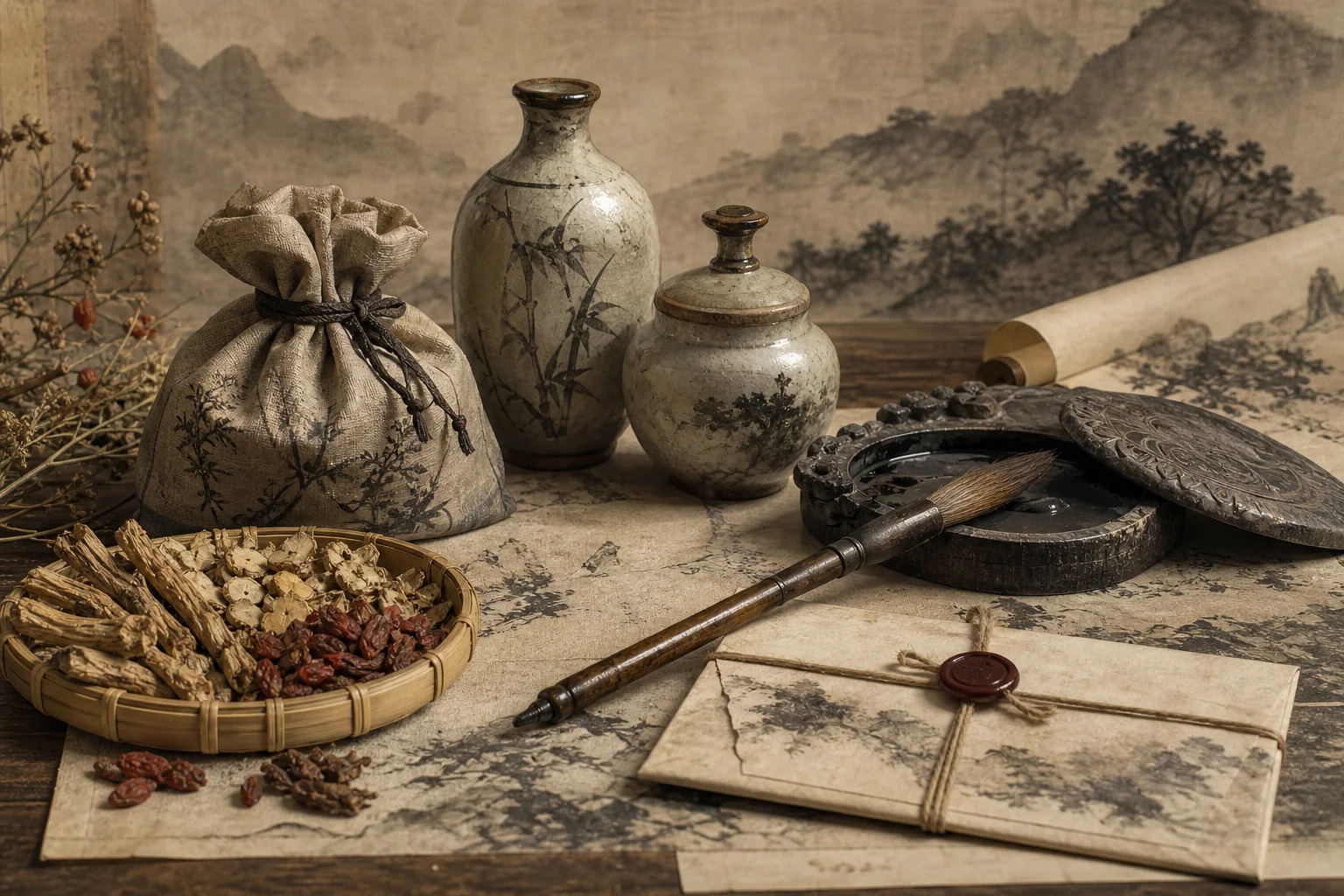
Chinese narrative loves the wandering doctor: diagnosis by pulse or observation, bitter decoctions, debts of gratitude that outlast silver. In chaos eras, a reliable healer is rarer than a second sword. Game Healer channels that romance into a dedicated healing activity and medicine crafting — helping local NPCs, answering player postings when illness outruns NPC clinics, and producing combat medicines other wanderers need.
- Cultural echo: 悬壶济世 — “hang the gourd and aid the world,” the physician's vocation phrase
- Genre echo: doctors who know everyone's secrets because everyone must trust them
- Game expression: healing encounters + medicine craft + multiplayer help economy
Silver Needle's fan martial arts (see our weapons article) rhyme with this path visually, even when Healer occupation is a separate systems track. Together they say: mercy can be a loadout.
Scholar — tongue as technique
The Scholar profession packages quick wit, debate, and a kind of jianghu advocacy. Its flagship loop, Gift of Gab, turns persuasion into a minigame: win oral contests with NPCs to unlock rewards and advance skills. Scholars can also answer bounties to clear other players of false accusations — a fantasy of the eloquent defender who fights with words when blades would only worsen the scandal.
| Layer | Scholar meaning |
|---|---|
| Historical culture | Literacy, rhetoric, and persuasion as prestige — especially looking forward to Song civil ideals |
| Wuxia genre | Scholars who outtalk villains; teahouse verdicts; “kill with speech” set pieces |
| Game fiction | Gift of Gab cards, talismans that buff combat, player-to-player legal-defense services |
In Chinese, 学者 can mean academic; in this jianghu it plays closer to 辩士 / 说客 energy — someone whose social capital is language. That fits a Five Dynasties world where warlords change, but people still need someone who can negotiate, shame, or vindicate.
Professions vs sects vs weapons
Sect
Moral brand
Well of Heaven, Silver Needle, Midnight Blades, Nine Mortal Ways — robe and rulebook. Sects primer →
Weapon
Fighting costume
Fan, umbrella, mo blade — how your body announces intent in a duel. Weapons primer →
Profession
Social service
Healer / Scholar — skills strangers hire or thank you for when combat is the wrong tool.
Mixing them is the point: an assassin-coded youxia who is also a Healer is a classic novel contradiction; a righteous sect member who cannot debate is half-armed for Kaifeng politics.
Soft power in a hard century
Module B's history arc ends toward Song reunification — a culture that later prized civil skill (文) beside martial skill (武). Healer and Scholar let players rehearse that dual value early, inside a period still bleeding from coups:
- Care stitches communities warlords ignore
- Speech rewrites reputations faster than armies rewrite borders
- Craft (medicines, talismans) turns expertise into trade between wanderers
More professions may arrive as the live game expands — bodyguards, artisans, and other jianghu jobs are natural sequels. Until then, Healer and Scholar are enough to prove the thesis: life paths exist beside sword paths.
How to role-play it (without a build guide)
- Treat sick NPCs as neighbourly duty, not loot Pinatas
- Use Gift of Gab outcomes as character personality — soft persuasion vs sharp humiliation
- Answer player bounties when your profession fits: doctor on call, advocate on call
- Remember both tracks can coexist over time — notebooks are shared; pace is a story choice
Read next
- Co-op, PvP & “Blood and Rain” — how online play becomes genre weather
- Kaifeng — city where soft skills matter as much as parksour roofs
- Glossary — expand with profession terms as the hub grows
Dragon Forge Culture is editorial — not affiliated with NetEase or Everstone Studio. Profession availability and names follow global client localization at writing time.