Light spoilers: Relationship systems and social consequences — no late-game plot reveals. Taiwu advertises alliances or blood feuds in the same breath as village building. That pairing only makes sense if NPCs operate on jianghu relationship logic — not quest-giver indifference. This article explains the social grammar behind friendships, marriages, betrayals, and grudges: en (恩, debt of kindness), yuan (怨, grievance), and mianzi (面子, face).
En and yuan — the paired ledger
恩 · En
Owed kindness — rescue, teaching, gift, silence when accused
怨 · Yuan
Grievance — insult, theft, humiliation, murder
恩怨 · En-yuan
The paired moral physics of jianghu — rarely one-sided for long
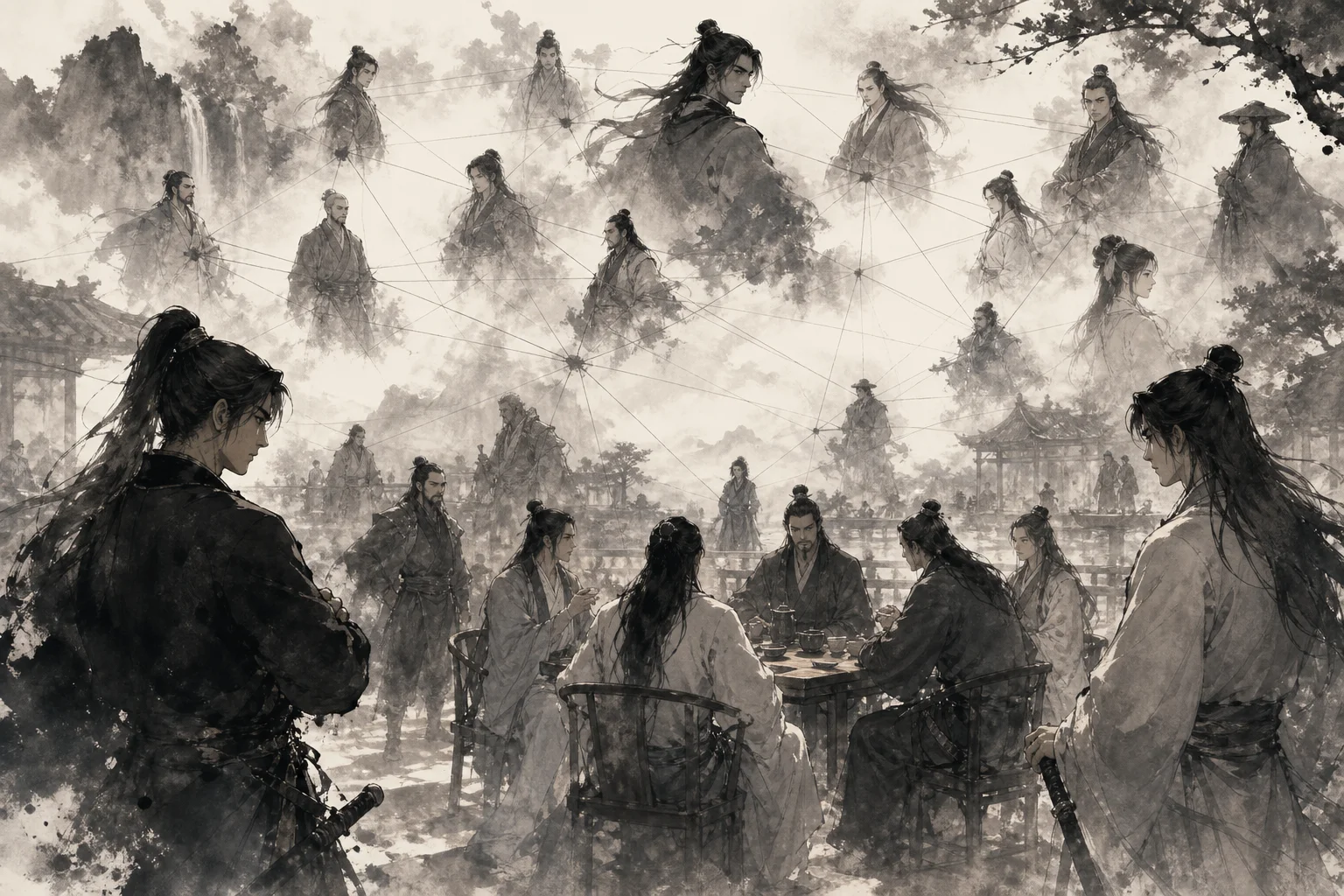
Western RPGs often track disposition as a number. Wuxia tracks stories: who saved whom at the inn, who witnessed the slap, who spread the rumor. When Taiwu NPCs demand repayment or pursue revenge, they are simulating a gossip economy where debts are public currency.
Face (面子) — public dignity
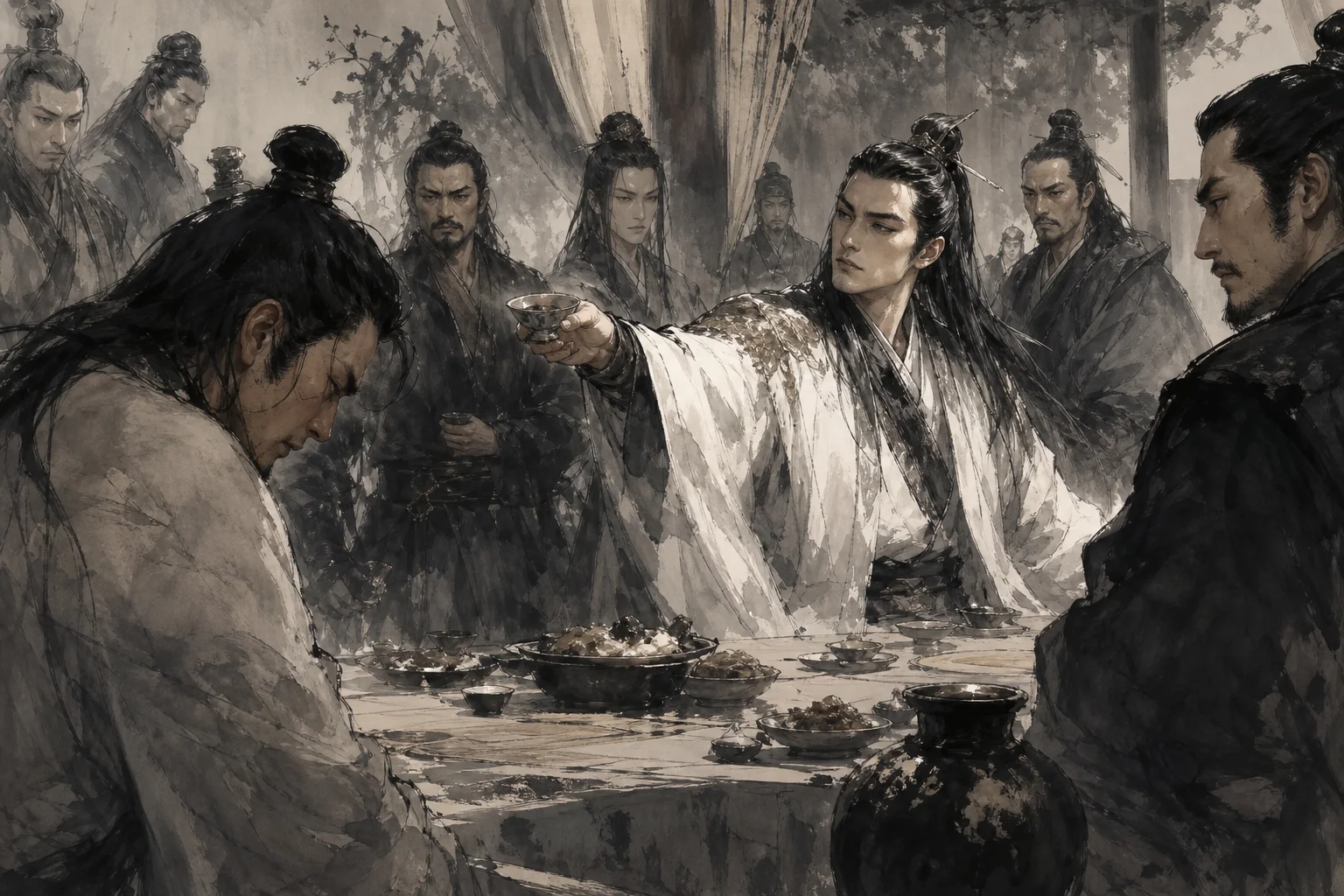
Mianzi is reputation as a tangible asset. Losing face at a tournament, wedding, or sect meeting can force a duel even when everyone would profit from calm. Gaining face for the Taiwu name helps the next heir; losing it paints a target across generations.
- Refusing a toast — insult
- Correcting an elder in public — insult
- Defeating a sect's champion unexpectedly — mixed gift and threat
- Marriage below or above expected rank — family politics
Alliances (结盟)
Alliances in wuxia are rarely pure friendship. They bundle:
Martial
Mutual defense
Join forces against a third sect or bandit coalition.
Economic
Trade & shelter
Village grain for escort protection; shop partnerships.
Marriage
Kinship tie
Children link clans — betrayal becomes incestuous scandal.
Sworn siblings
结义
Non-blood brotherhood — famous in Water Margin and wuxia oath scenes.
Taiwu's alliance systems give sandbox players leverage — and liabilities when the ally's enemies become yours.
Betrayal and blood feuds
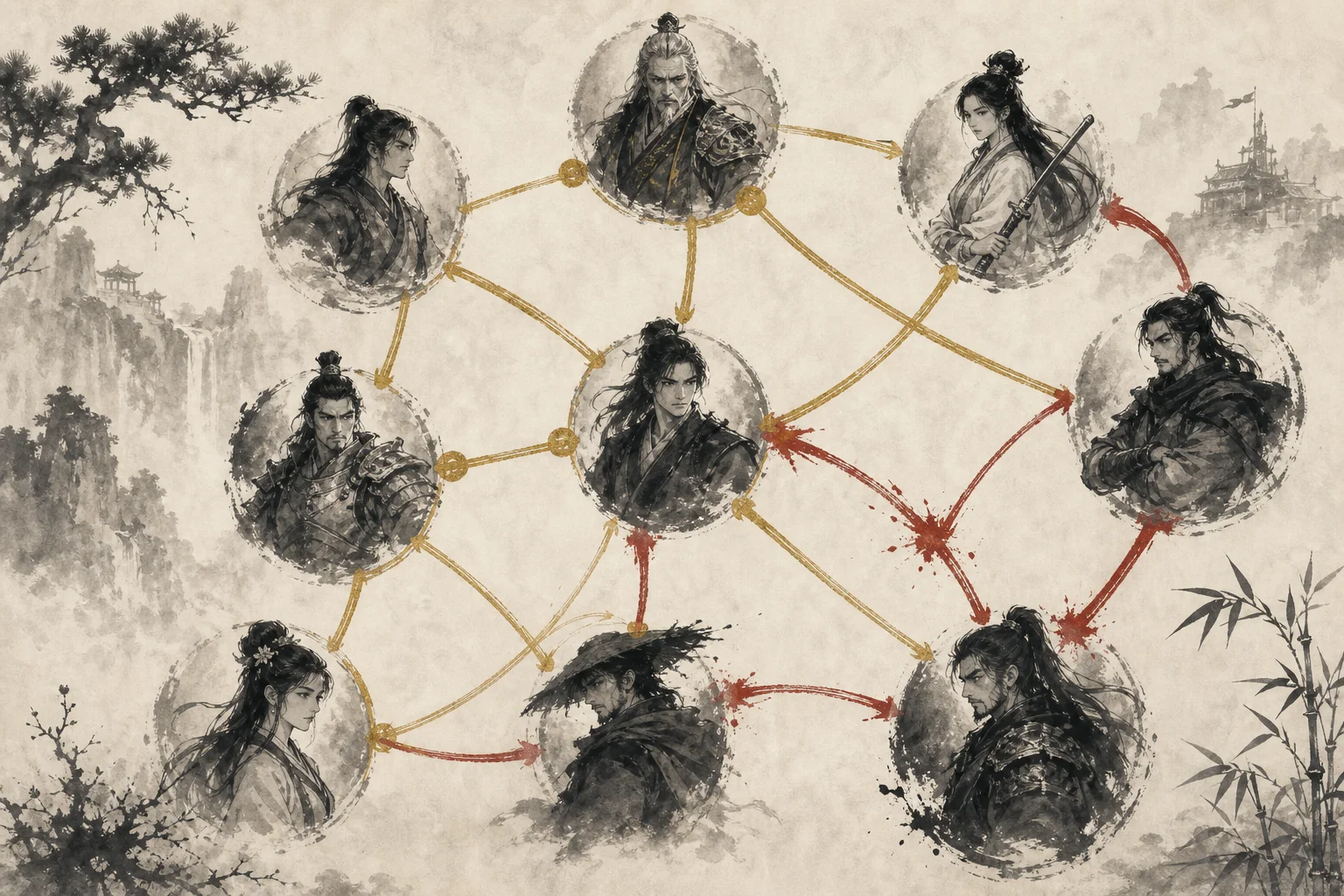
Blood feuds (血仇) escalate when yuan crosses a line — murder, destroyed lineage, stolen ancestral manual. Betrayal inside an alliance is worse than open war because it breaks trust rituals (oaths, gifts, witnessed promises).
| Act | Social weight | Typical response in fiction |
|---|---|---|
| Public insult | Face damage | Duel, apology banquet, or grudge |
| Theft of manual | Sect property crime | Hunt across provinces |
| Broken marriage pact | Clan humiliation | Political feud, economic sabotage |
| Murder of disciple | Blood debt | Generational vendetta |
NPC memory as genre realism
When NPCs migrate, gossip, or refuse service, treat it as relationship persistence — the sandbox echo of village rumor mills and jianghu wanted posters. Your heir may never meet the NPC your grandfather wronged; the grudge can still arrive as higher prices, closed gates, or assassins.
Practical reading habits
- → Before helping a stranger, ask what en you are buying.
- → Before humiliating anyone with an audience, ask who will hear by nightfall.
- → Check the glossary for quick term lookups.
Where to go next
Relationships supply the social fuel; cultivation paths supply the moral taboo line. The next article contrasts orthodox (正道) practice with demonic (邪道) forbidden methods — including v1.0's controversial new route.