
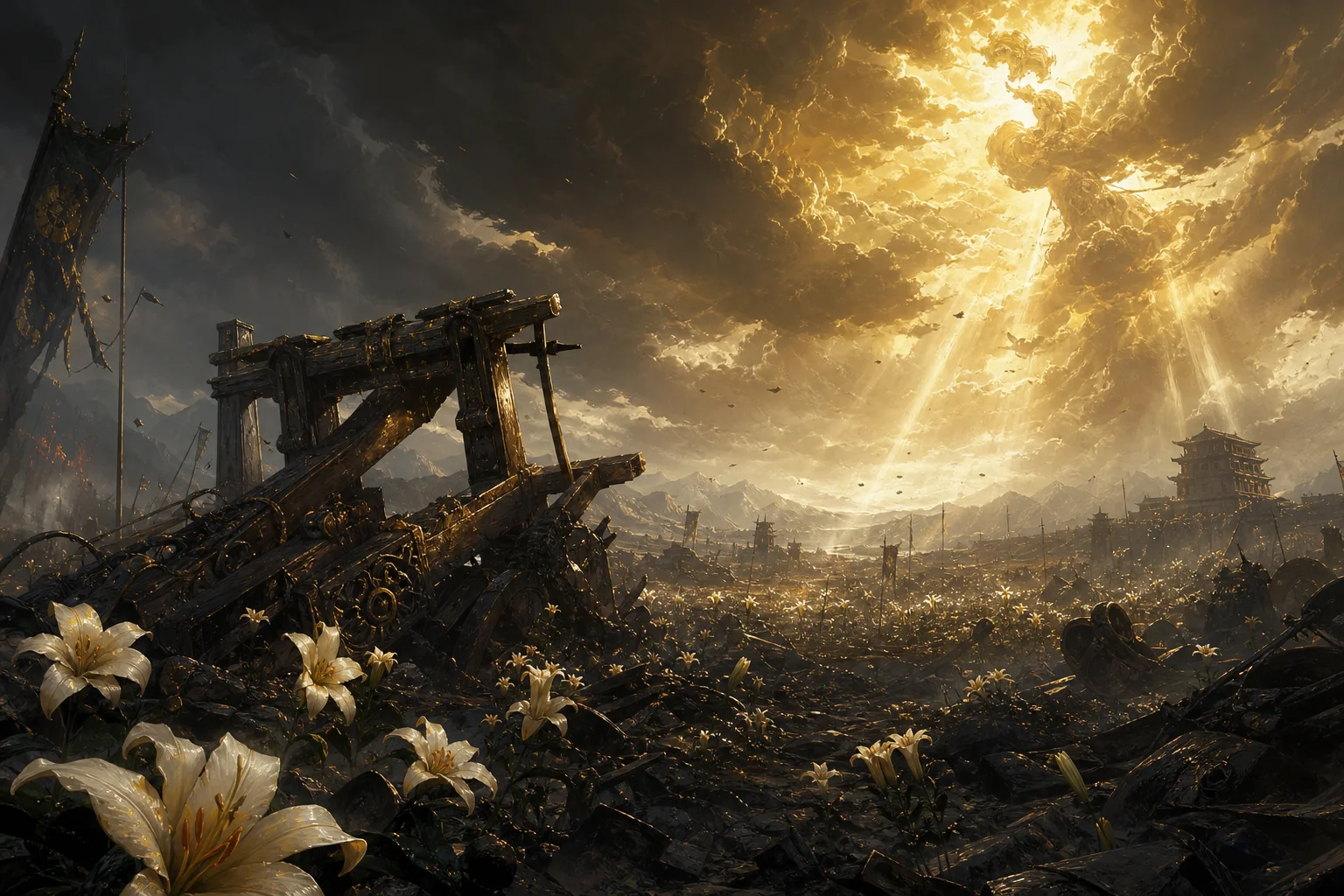
Modern Liyue Harbor looks eternal — jade terraces, lantern nights, contracts stamped in Mora. But the nation you explore is built on a battlefield. Thousands of years ago, rival gods tore through the plains now called Guili, killed the God of Dust Guizhong, flooded the marshes, and forced Morax to crown himself Geo Archon and start again. This article maps that history for players ready for major spoilers, and explains which beats echo Chinese mythic patterns — without claiming Genshin is retelling one classical novel.
Major spoilers
Covers Guizhong's death, Osial's defeat, the Guili Assembly's fall, Rex Lapis's staged Rite of Descension, and Zhongli's retirement. Assumes you have played through the Liyue Archon Quest or accept full lore summary.
What was the Archon War?
In Teyvat cosmology, the Archon War was an era when divine powers fought for the seven elemental thrones granted by Celestia. Only one victor could remain per element; losers died, fled, or were sealed. The war reshaped every nation — but Liyue's scars are unusually visible on the map.
When the war ended roughly 3,700 years ago (in-game timeline terms), Rex Lapis held the Geo seat and moved survivors south to found Liyue Harbor. Ruins, seals, and ballistae still litter the old territory — history you can walk through, not only read in books.
Before the harbor
Guili Assembly — co-ruled by Guizhong, Morax, and Marchosius
Turning point
Guizhong slain at Guili Plains; flood destroys the assembly
Aftermath
Yaksha summoned; Osial sealed; harbor built; later Rex Lapis steps back
Guili Assembly: Liyue before Liyue Harbor
Long before the port city, the heart of civilization was the Guili Assembly (归离集) on the northern plains. Its name blends Guizhong (归终, God of Dust) and the name Morax used at the time — "Gui" from her, "Li" from him. The plains themselves are Guili Plains (归离原): "Plains of Returning and Departing," a poetic name for a place that would see both prosperity and exodus.
Guizhong was a gentle, inventive god — agriculture, mechanics, the Guizhong Ballista, and fields of Glaze Lilies (琉璃百合). She co-ruled with Morax and Marchosius (马科修斯), God of the Stove — whose legacy survives in-game through Guoba, Xiangling's companion. Together they built a thousand-mile polity centered on craft, food, and defense — a pre-harbor Liyue that felt like community rather than merchant empire.
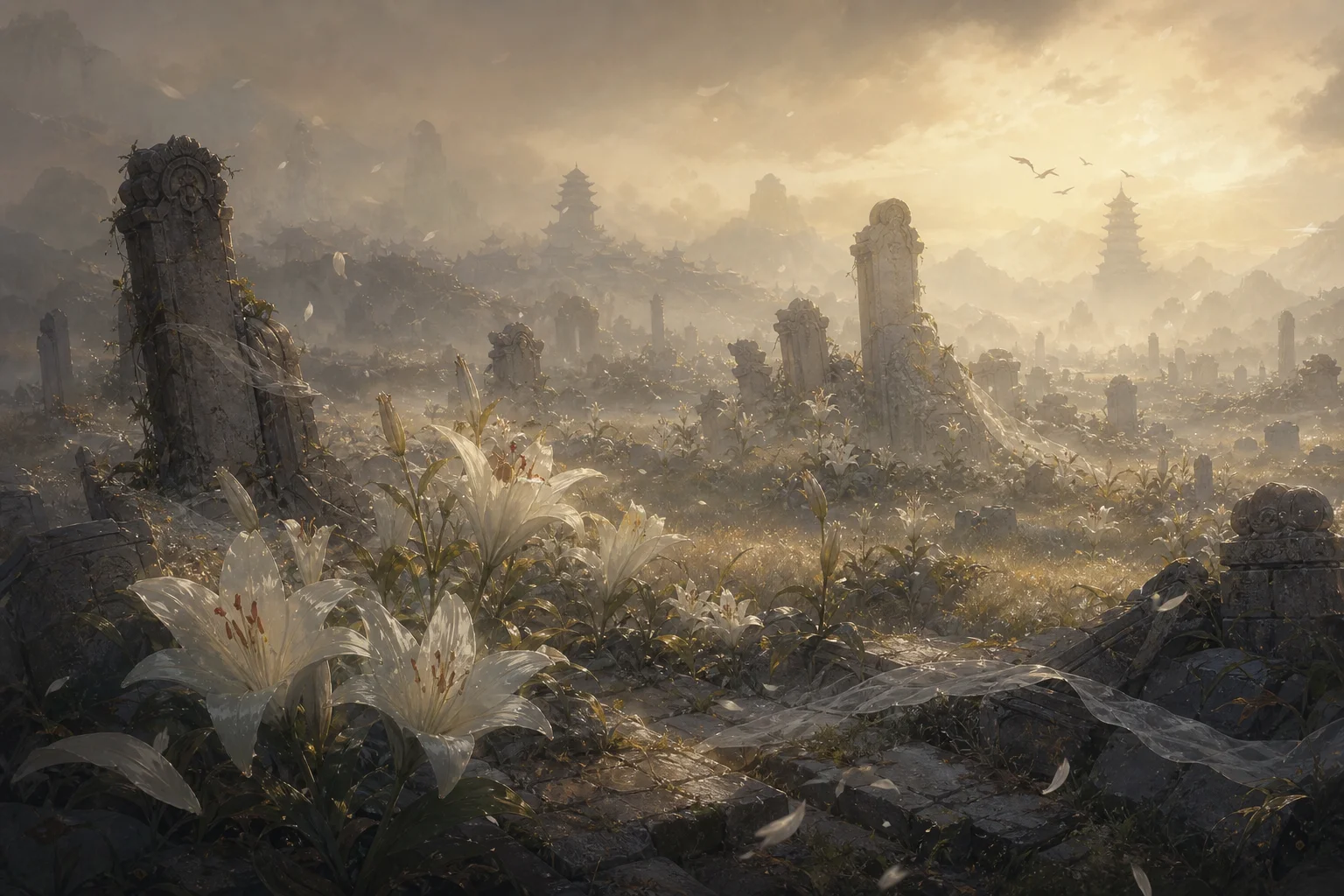
Her final gift to Morax, the Memory of Dust, encodes a pledge to protect their people. Lantern Rite content later visualizes her story — a rare moment when Liyue lore steps out of item descriptions into festival theater. For the living contract god who received that pledge, see Morax, Zhongli & the God of Contracts.
The fall of Guizhong
During a climactic Archon War battle, enemy gods and monsters overran Guili Plains. Texts describe black dust choking the heavens and a thousand rocks splintering — Geo catastrophe language that matches Morax's element. Guizhong fell despite adeptus aid; Cloud Retainer and Madame Ping arrived too late.
Scholarly debate in-game (Soraya's research) asks how any single enemy could defeat both Guizhong and Morax together. The implied answer is corruption, numbers, or war's chaos — not a fair duel. Some players read tragedy into the possibility Morax himself had to fulfill a contract at unbearable cost; HoYoverse leaves room without confirming a single culprit on-screen.
After her death, yaksha appear containing the lingering energy she expelled — tying the fall of Guili directly to the yaksha tragedy. Then a great flood swept Dihua Marsh and the plains, scattering the assembly. Survivors marched south for ten days with Marchosius and the adeptus to build a new city on Mt. Tianheng's slopes — the harbor you sail into in Chapter 1.
Other gods of the war: Osial, Havria, and sealed powers
Liyue's war was not one battle. Multiple rival dominions contested the land:
| Power | Fate | Where you see it now |
|---|---|---|
| Osial — Overlord of the Vortex | Defeated by Rex Lapis; sealed under Guyun Stone Forest | Main story raid on Liyue Harbor; ancient stone spears in the sea |
| Beisht — Osial's wife | Attacks during a later Lantern Rite event | Continues the sea-god vendetta against Morax's Liyue |
| Havria — God of Salt | Slain; her people scattered; land became a salt flat | Sal Terrae region — a quieter, tragic war memorial |
| Azhdaha — Geo Dragon King | Ally turned mad by erosion; sealed at Nantianmen | See Azhdaha & the Chasm |
| Marchosius — God of Stove | Survived into harbor era; eventually diminished into Guoba | Wanmin Restaurant's stove god in miniature |
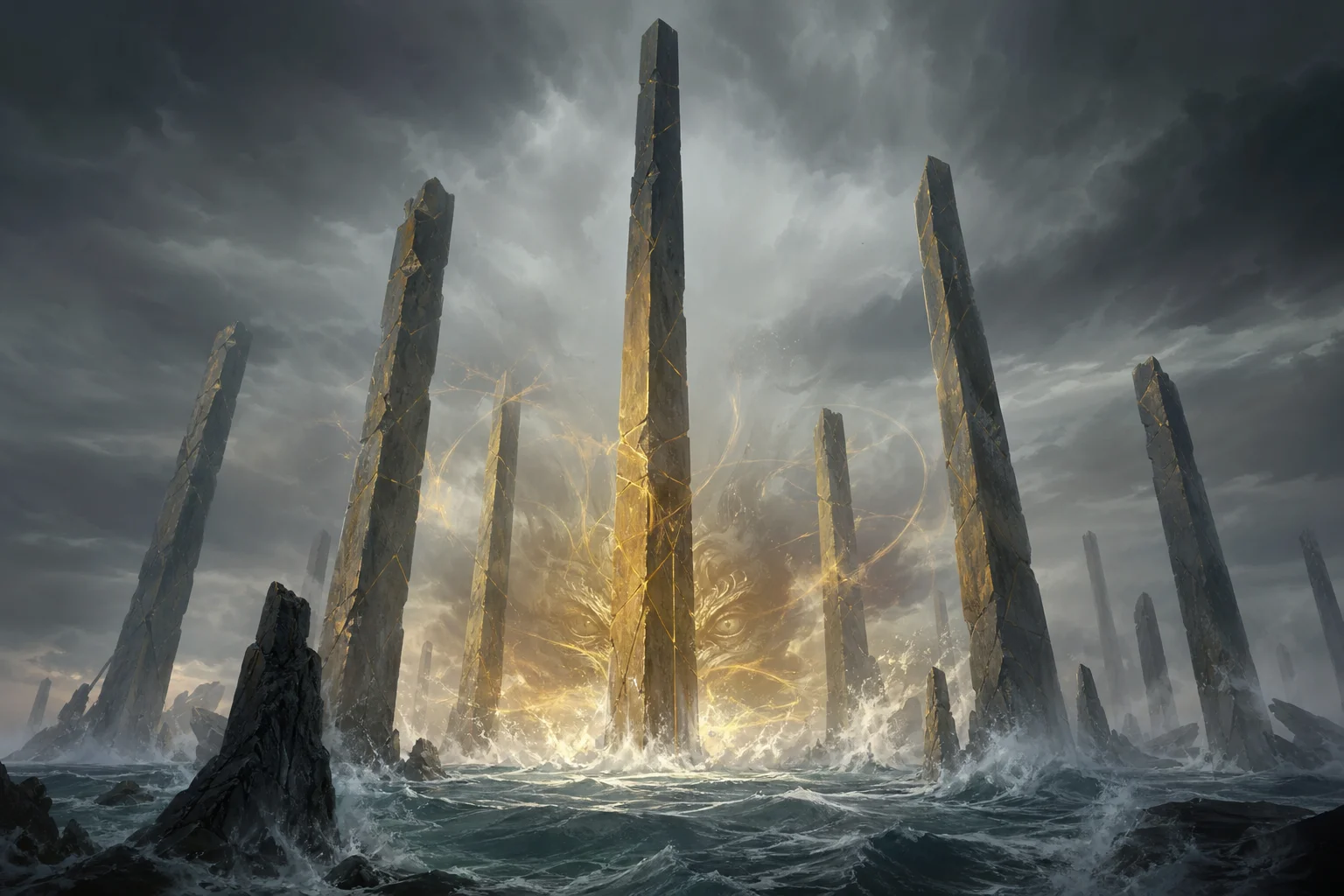
Osial's assault on the harbor reuses Guizhong's old weapon — the Guizhong Ballista — now operated by Ningguang and the Qixing. Culture and war technology loop across millennia: the god of dust dies defending a plain, but her ballista still guards the port her people migrated toward.
Morax wins Geo — and carries the cost
When the Archon War ended, Morax took the Geo Gnosis and the title Rex Lapis. Liyue Harbor rose as a contract state: Mora as currency, adeptus pacts, Qixing administration, and a god who remembered every debt. But victory did not mean peace inside Morax's memory — Guizhong gone, yaksha broken, Azhdaha sealed, Osial pinned under the sea.
Chinese readers sometimes compare the Archon War's "many gods, one throne" structure to epics like the Investiture of the Gods (封神演义) — a Ming novel where rival factions of immortals and kings fight until heaven assigns new offices. The parallel is thematic: divine civil war reorganizes the pantheon. Genshin is not running Fengshen's plot; it borrows the narrative shape of consolidation after chaos.
Flood myths after divine conflict also feel familiar — waters sweeping Guili echo stories where civilization resets before a new order (Yu the Great taming floods, or local deluge tales). Again: motif, not screenplay.
Yaksha: the war's unpaid invoice
After defeating gods, Morax summoned yaksha to cleanse karmic corruption from the land — the spiritual pollution wars leave behind. Five great yaksha served; most died or went mad. Only Xiao still stands routine vigil at Wangshu Inn.
This is Liyue's sharpest fusion of Buddhist guardian lore and game tragedy: the soldiers who win the war for heaven but lose themselves. The Archon War article is incomplete without them — Guizhong's death releases energy they must absorb; Osial's hatred persists in the sea; Xiao still pays nightly.
From ancient war to modern story: Rex Lapis "dies"
Fast-forward to the main story you play. Rex Lapis appears to fall during the Rite of Descension — a staged death so Zhongli can test whether Liyue mortals can govern without a god, and so he can relinquish his Gnosis in a Fatui transaction. Osial's seal breaks amid the chaos; the Qixing, Wangsheng, adepti, and Traveler hold the harbor.
Culturally, this arc dramatizes a question Chinese history also asks in different clothing: When the sage-king steps away, can ritual and law carry the realm? Keqing's skepticism, Ningguang's pragmatism, and Zhongli's trust in contracts mirror debates about human agency after divine mandate — not as political theory, but as story flavor.
Zhongli's retirement completes an loop Guizhong began: protect mortals even when gods depart. The harbor is the answer built after Guili failed.
Reading the map as history
- Guili Plains — battlefield archaeology; glaze lilies as living memorial
- Sal Terrae — Havria's salt flat; small gods' fates without fanfare
- Guyun Stone Forest — Osial's prison; sea god vendetta
- Guizhong Ballista — surviving tech from the assembly era
- The Chasm — older catastrophe predating some harbor history; ties to southern migration
- Liyue Harbor — post-war resettlement city; contracts replace direct god-king rule on the surface
For landscape context without war spoilers, start with Liyue Harbor & Chinese Landscapes.
Tradition vs. Teyvat fiction — keep the line
| Chinese mythic pattern | Liyue Archon War use |
|---|---|
| Warring immortals reorganized under heaven | Seven Archons replace countless local gods |
| Flood or ruin, then rebuild | Guili destroyed; harbor founded by refugees |
| Sea monsters and dragon kings subdued | Osial sealed; Azhdaha bound under tree |
| Exorcist guardians pay a personal price | Yaksha madness and Xiao's vigil |
| Sage withdraws; humans must govern | Rex Lapis's staged death and Zhongli's retirement |
None of these rows mean Guizhong is a specific deity from a classical text. HoYoverse builds original characters whose names and arcs feel Chinese — dust, contracts, stove, salt — inside Teyvat's Gnosis system. For the general blending rules, see How Genshin Blends Myth, History & Fantasy.
Quick lore reference
| Name | Chinese | Role |
|---|---|---|
| Guizhong | 归终 | God of Dust; fell at Guili Plains |
| Guili Assembly | 归离集 | Pre-harbor civilization |
| Guili Plains | 归离原 | Plains of Returning and Departing |
| Osial | 奥赛尔 | Overlord of the Vortex; sealed at Guyun |
| Havria | 赫乌莉亚 | God of Salt; slain in the war |
| Marchosius | 马科修斯 | God of the Stove; later Guoba |
| Archon War | 魔神战争 | War for the seven elemental thrones |
That completes Places, Festivals & Liyue Lore. For quick term lookups while you play, keep the Liyue glossary open — or wait for our Game ↔ Tradition quick reference in the reference module.