
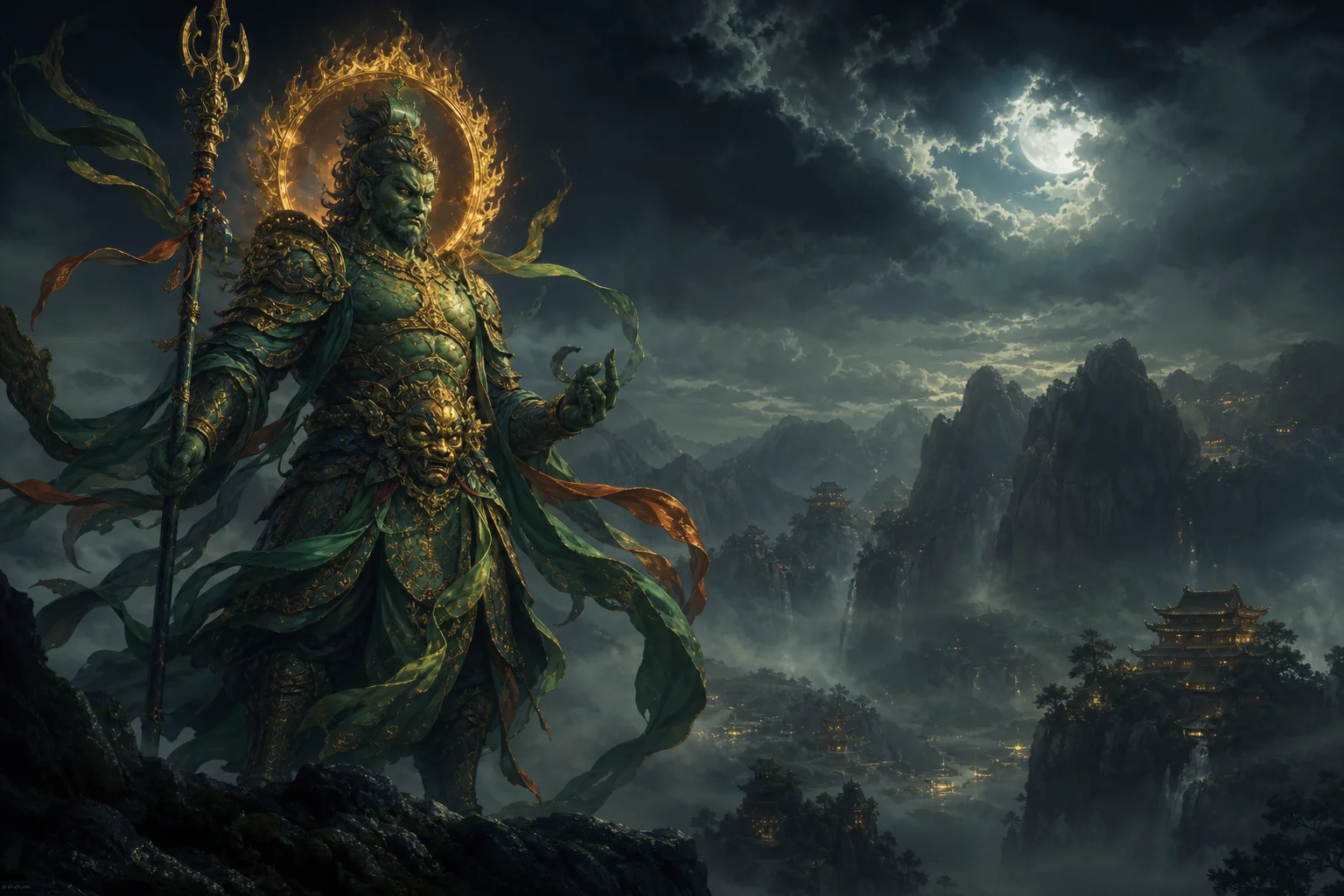
Long before you meet the Qixing in their jade offices, Liyue asks you to climb toward Wangshu Inn (望舒客栈) and speak with a short, sharp-tongued guardian who refuses to stay for breakfast. That is Xiao (魈) — titles include the Conqueror of Demons (降魔大圣, Xiángmó Dàshèng) and, among adepts, the last of the yaksha (夜叉) who answered Rex Lapis's call. This article goes deeper than our adepti & yaksha primer: who Xiao is in Chinese tradition, what yaksha were before Teyvat, and why his story hurts in a specifically Chinese way.
Light spoilers
Covers Xiao's role as the last active yaksha, the Archon War's toll on his kind, and his bond with Rex Lapis. Does not walk through every story quest beat or later region-specific plot twists.
Who is Xiao?
In-game, Xiao is an adeptus-aligned guardian who fights karma-corrupted monsters — the residue of ancient wars and buried hatred. He wields a polearm with brutal speed, wears a mask in combat, and keeps mortal distance not from pride but from habit: the people he protects should sleep without knowing what stood between them and the dark.
His personal name 魈 (Xiāo) appears in older Chinese texts for mountain spirits — sometimes one-legged ogres, sometimes uncanny wild beings. Genshin reworks that uncanny edge into a hero who became uncanny on purpose: a protector so fierce that children grow up on stories, not playdates.
Title
降魔大圣 — Conqueror of Demons
Post
Wangshu Inn — gateway between safe roads and wild Liyue
Contract
Bound to Rex Lapis's order to quell evil
Yaksha before Genshin
Yaksha (夜叉) entered Chinese religion through Buddhism as a class of powerful spirits — quick, violent, ambiguous. In some texts they eat ghosts; in temple sculpture they flank Buddhas and bodhisattvas as wrathful guardians, the kind of face that scares demons so pilgrims can pass unharmed.
That dual nature matters: yaksha are not gentle immortals like the mountain sages in our primer. They are weapons with conscience — closer to exorcist soldiers than to poets. Daoist and folk traditions later mixed them into a broader zoo of spirits, but the Buddhist guardian image is what Liyue leans on hardest.
In temples
Wrathful guardians 护法
Fierce faces at gates — meant to subdue evil, not to welcome tourists. Xiao's mask and combat stance echo this visual language.
In folklore
Fast night spirits 夜叉
Older stories sometimes paint yaksha as dangerous. Liyue keeps the speed and otherness, but aims them at monsters, not villagers.
The Archon War and the yaksha toll
Liyue's history includes an Archon War era when gods and monsters tore the land apart. Rex Lapis summoned yaksha to cleanse karmic filth left by defeated powers — work that saved mortals but poisoned the cleaners. Most yaksha fell to madness, mutuality of violence, or each other; names like Alatus (Xiao's adeptus name) survive in adepts' memory as a short list of tragedies.
Culturally, this is a Chinese-flavored take on an old theme: the exorcist who absorbs what they banish. Buddhist logic talks about karmic debt; folk tales warn that ghost-hunters carry ghosts home. Xiao's pain — insomnia, harsh speech, refusal of comfort — reads as that debt still on the ledger.
For the god who issued those orders, see Morax, Zhongli & the God of Contracts. Zhongli's retirement does not erase what the yaksha paid upfront.
Conqueror of Demons vs. adeptus
Players sometimes lump all Liyue immortals into one category. Useful split:
| Adepti (仙人) | Yaksha (夜叉) | |
|---|---|---|
| Role | Mountain guardians, crafters, contract holders | Demon quellers, front-line shock troops |
| Mood | Eccentric sages, distant but sometimes cozy | Wrathful, isolated, costumed for battle |
| Cultural root | Taoist immortals, cave heavens | Buddhist wrathful guardians, exorcist soldiers |
| Xiao | Allied with adepts, invited to festivals | Last of his kind still doing the old job |
Exorcism, masks, and why he stays alone
Xiao shares a cultural shelf with exorcists (方士, demon-quelling ritualists) — a thread we develop further in our article on Yun Jin, Hu Tao & Chongyun. Where Chongyun represents family trade and talisman comedy, Xiao is the extreme case: full-time war against corruption, no normal life left.
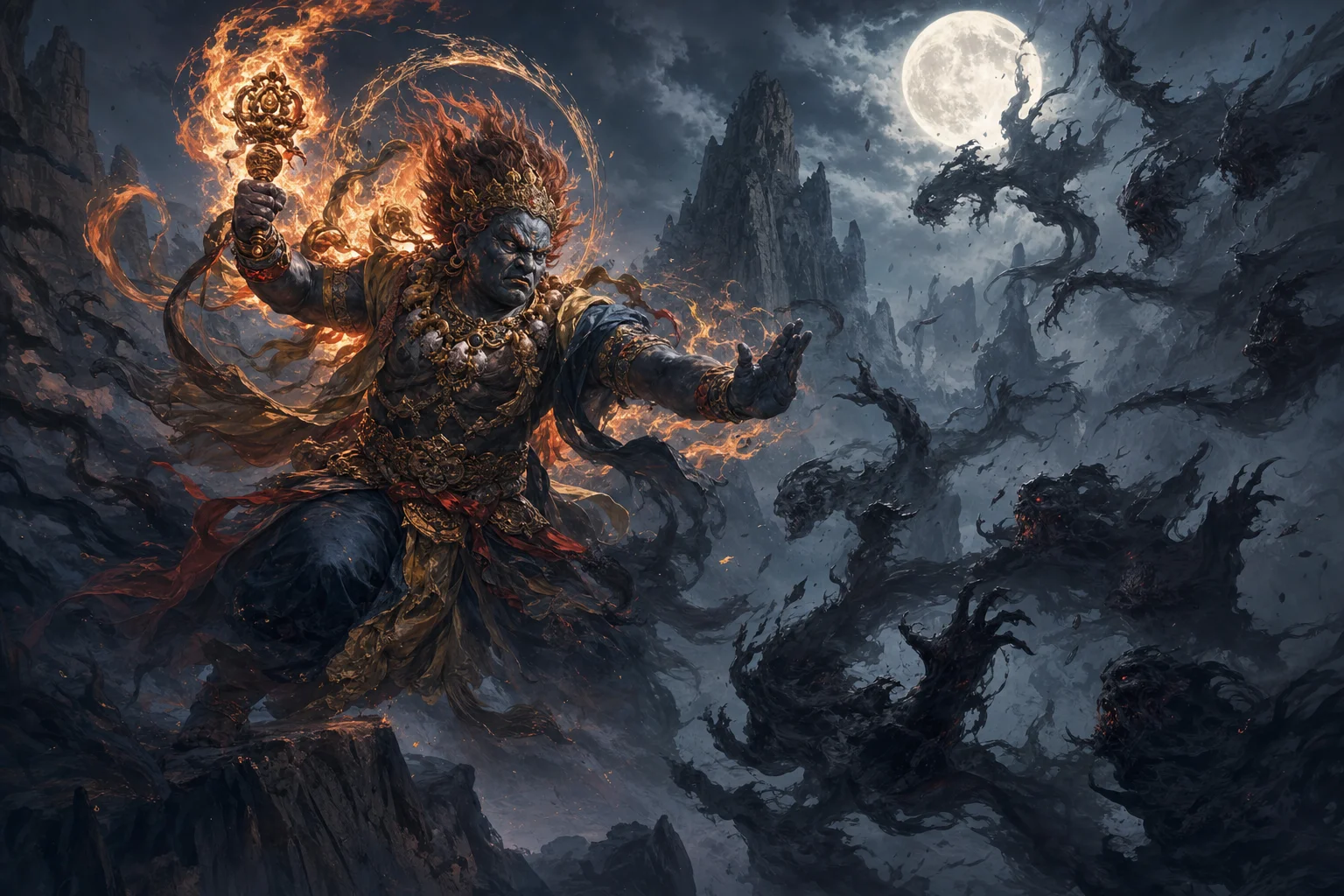
His mask is not random cosplay. Wrathful guardian statues grimace so evil sees judgment before it sees mercy. Xiao's combat mask performs the same story — become the thing that frightens demons so others need not.
How to read Xiao while you play
- When he refuses a meal at the inn, that is not only tsundere writing — it is a guardian avoiding bonds mortals cannot keep.
- When Liyue festivals invite adepts to the harbor, his hesitation dramatizes wrathful protectors vs. public joy — a tension temple art also encodes.
- When story quests send you to clear "karma" near old battlefields, remember: Chinese fantasy often treats evil as residue, not just a monster spawn timer.
- His voice lines about Rex Lapis are contract language — loyalty expressed as duty, not fan worship.
Related reading on Dragon Forge
For ghost-catching and zhiguai (志怪) exorcist tradition in another game, see Black Myth: Zhong Kui — different tone, shared vocabulary of demons and specialists.
What Xiao is not
He is not Sun Wukong, not Zhong Kui, and not a direct copy of any single Buddhist deity name you can look up in one line. HoYoverse built him from guardian yaksha + mountain-spirit name + exorcist tragedy — a composite tuned for Liyue's Geo contract world.
Key terms
| English | Chinese | Quick meaning |
|---|---|---|
| Xiao | 魈 | Guardian's name; mountain-spirit resonance in older texts |
| Conqueror of Demons | 降魔大圣 | Xiao's exorcist title — demon-quelling great sage |
| Yaksha | 夜叉 | Wrathful guardian spirits; Xiao's order |
| Wangshu Inn | 望舒客栈 | Border inn; Xiao's strategic watchpost |
| Demon quelling | 降魔 | Subduing evil — core of Xiao's function |
| Karmic debt | 业障 | Buddhist echo in Liyue's "karma" corruption lore |
Next in this series: Yun Jin, Hu Tao & Chongyun: Opera, Exorcism & Funeral Customs — three other Liyue faces of public ritual and private fear.