Liyue is not only harbor lanterns and tea terraces. Beneath the mines of The Chasm and the roots of Nantianmen, the Geo nation tells one of its oldest stories: an earth dragon who fought beside Rex Lapis, lost his memory to erosion, and was sealed beneath a tree. This article explains what dragon kings mean in Chinese tradition, how Azhdaha's name mixes Persian myth with a Chinese title, and why the Chasm matters for Liyue's map — without replacing the game's story beats with a folklore quiz.
Light to major spoilers
Assumes you know Zhongli is Rex Lapis. Summarizes Azhdaha's backstory, erosion, and the seal at the Dragon-Quelling Tree. Mentions Chasm mining history and ties to Chenyu Vale refugees. No full story-quest walkthrough.
The Chasm: Liyue's underground frontier
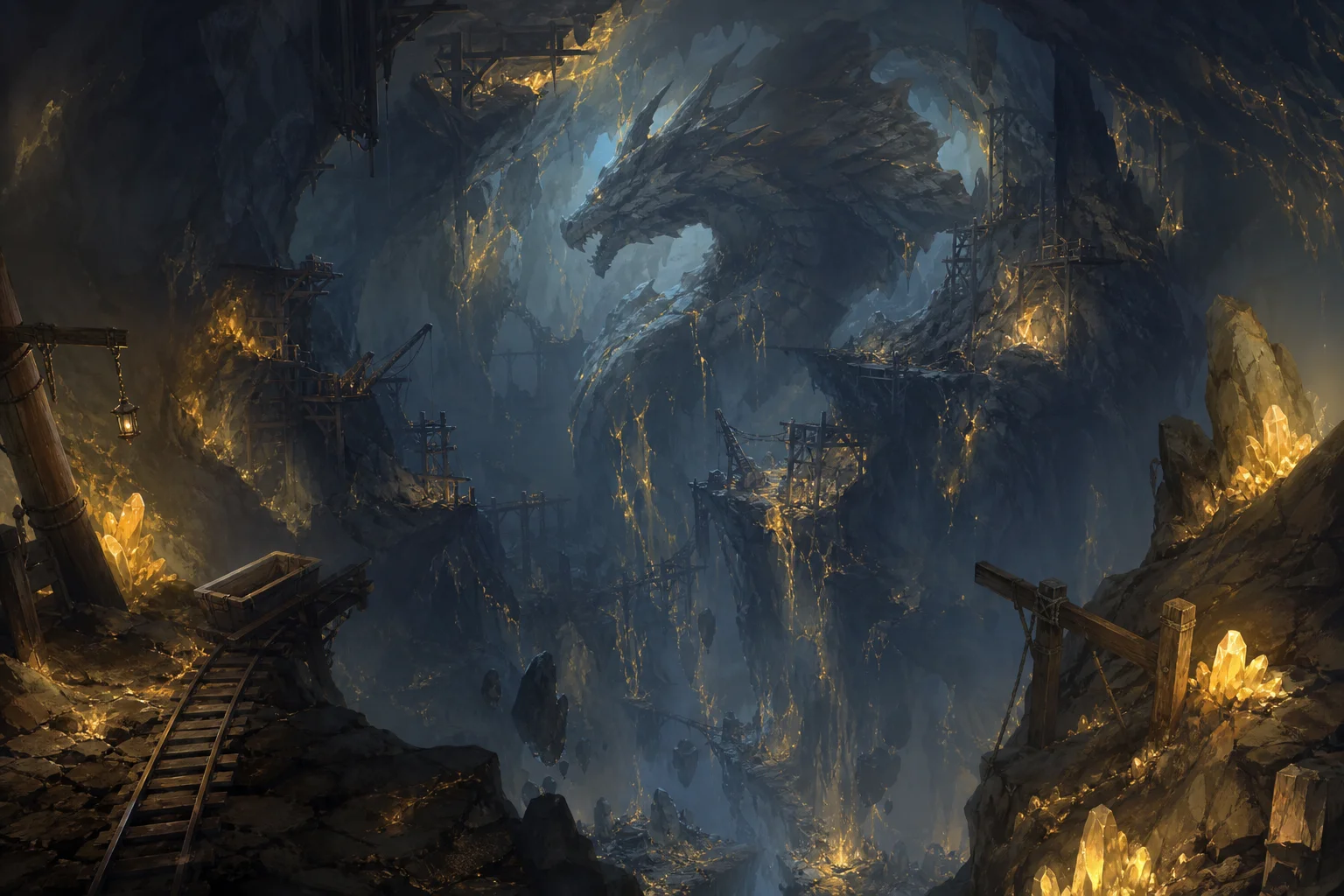
The Chasm (层岩巨渊, Céngyán Jùyuān) — literally "layered rock giant abyss" — is Liyue's deep mining region, a vertical wound in the earth where crystal veins, ruined camps, and abyssal tunnels stack into a frontier world below the harbor economy. In lore, the Chasm opened in an ancient catastrophe roughly six thousand years ago; survivors fled to what would become Chenyu Vale, carrying jade rituals and tea culture into the northwest hills.
Culturally, the Chasm reads as resource extraction China — the mine towns, migrant workers, and state-or-guild controlled digging that built real industrial provinces. Genshin adds fantasy layers (Abyss corruption, ley-line machinery, automatons), but the surface mood matches historical mining frontiers: wealth pulled from darkness, accidents remembered in local memory, and the sense that the surface city depends on labor it rarely sees.
In-game role
Underground exploration zone; bridge between harbor trade and Geo abyss lore
Story hook
Ancient disaster, displaced peoples, Azhdaha's rampage and seal
Real echo
Mining regions, subterranean sacred fear, dragon-as-landscape spirit
Dragon kings in Chinese tradition
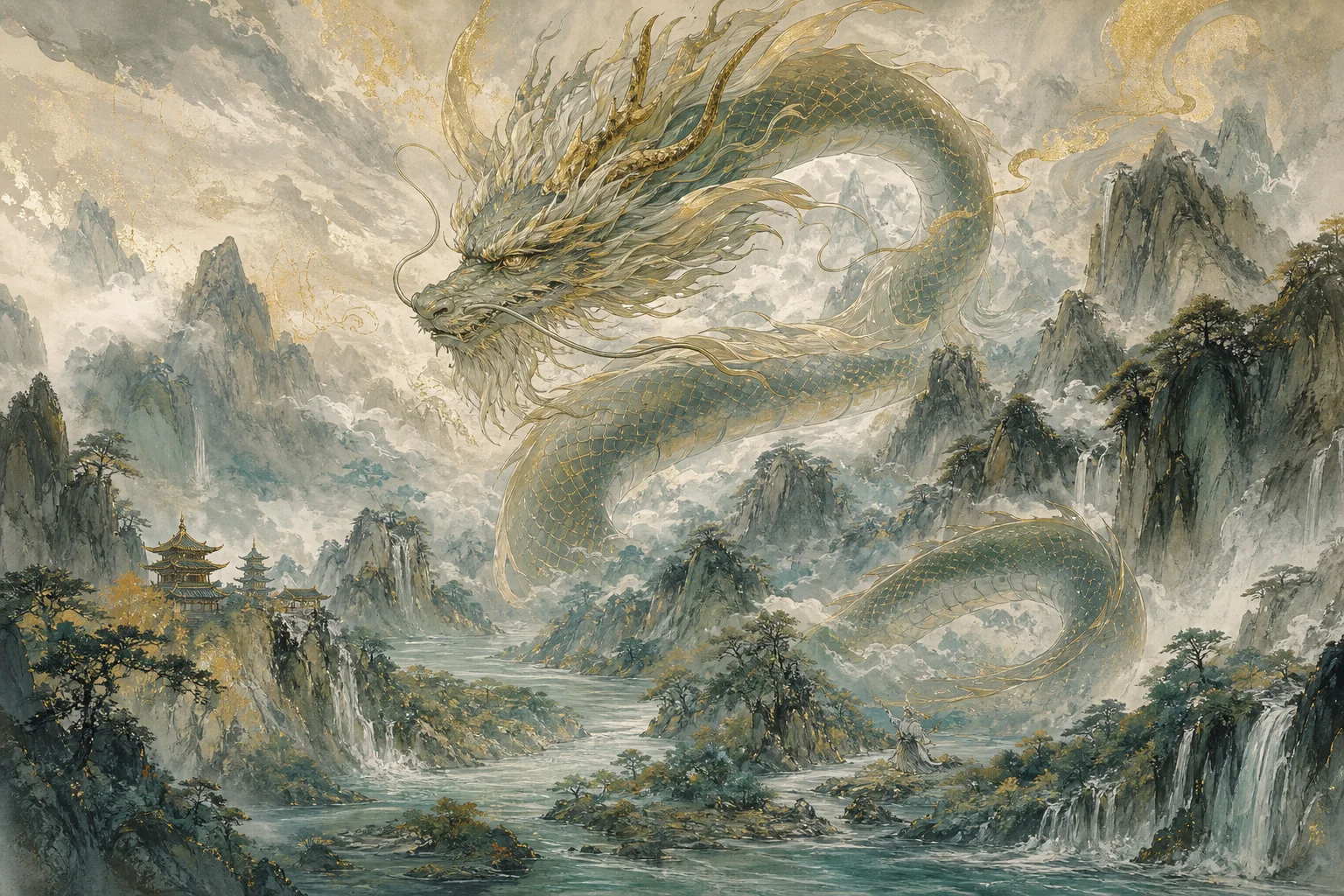
Azhdaha's title is 龙王 — Dragon King. In Chinese culture, dragons are not generic fantasy lizards; they govern water, weather, rivers, and sometimes mountains — forces that communities need to appease, not only slay.
Useful reference points for players coming from Western dragon lore:
- Four Dragon Kings (四海龙王) — guardians of the four seas in Buddhism and folk religion; rain, storms, and flood control
- River dragons — local dragons tied to one watershed; temples and offerings ask for safe passage and good harvests
- Earth and mountain dragons — spirits whose movement shakes the ground; earthquakes read as a dragon turning in sleep
- Imperial dragon (龙) — symbol of authority, not a single boss monster — but the same creature family as kings of rivers and seas
Azhdaha is a Geo dragon — an earth elemental sovereign tied to ley lines and mineral formation. That fits the Chinese habit of treating mountains and mines as living powers with whom rulers negotiate. Morax does not "tame" him like a pet; he contracts with him — the same contract culture that defines Liyue Harbor.
Azhdaha: a Persian name on a Chinese throne
HoYoverse's design team has noted that 若陀 (Ruòtuó) adapts the Persian mythic dragon Aži Dahāka — a buried calamity that sleeps until it returns. The full title 若陀龙王 still uses the Chinese royal frame 龙王 (Dragon King). The mix is deliberate: Liyue often pairs a foreign-sounding proper name with a classical Chinese office or epithet, the way real Silk Road ports blended vocabularies.
Official commentary also frames Azhdaha as a story about human progress vs. nature — mining and settlement as Liyue's forward drive, the dragon as the ancient earth that cannot absorb change without pain. That theme has deep roots in Chinese writing about dams, mines, and floods: civilization wins productivity, but something underground remembers.
The story in brief: eyes, contract, erosion, seal
For players who have not finished Zhongli's story content, here is the cultural skeleton (see also our Morax & Zhongli primer):
| Beat | What happens | Cultural reading |
|---|---|---|
| Blind dragon underground | Azhdaha slumbers in Nantianmen; his stirring causes earthquakes | Earth powers beneath human settlements — classic dragon-as-seismic myth |
| Morax grants sight | The Geo Archon brings him to the surface and gives him eyes | God as mediator between human world and chthonic spirit |
| Three-part contract | Coexist with humans; if order breaks, return to darkness | Liyue contract logic applied to a non-human ally |
| Archon War companion | Azhdaha fights beside Morax; befriends blacksmiths | Dragon as patron of craft — metal and stone from the earth |
| Erosion | Memory and sanity wear away over millennia | Impermanence even for immortals — a Teyvat law with Chinese poetic echoes |
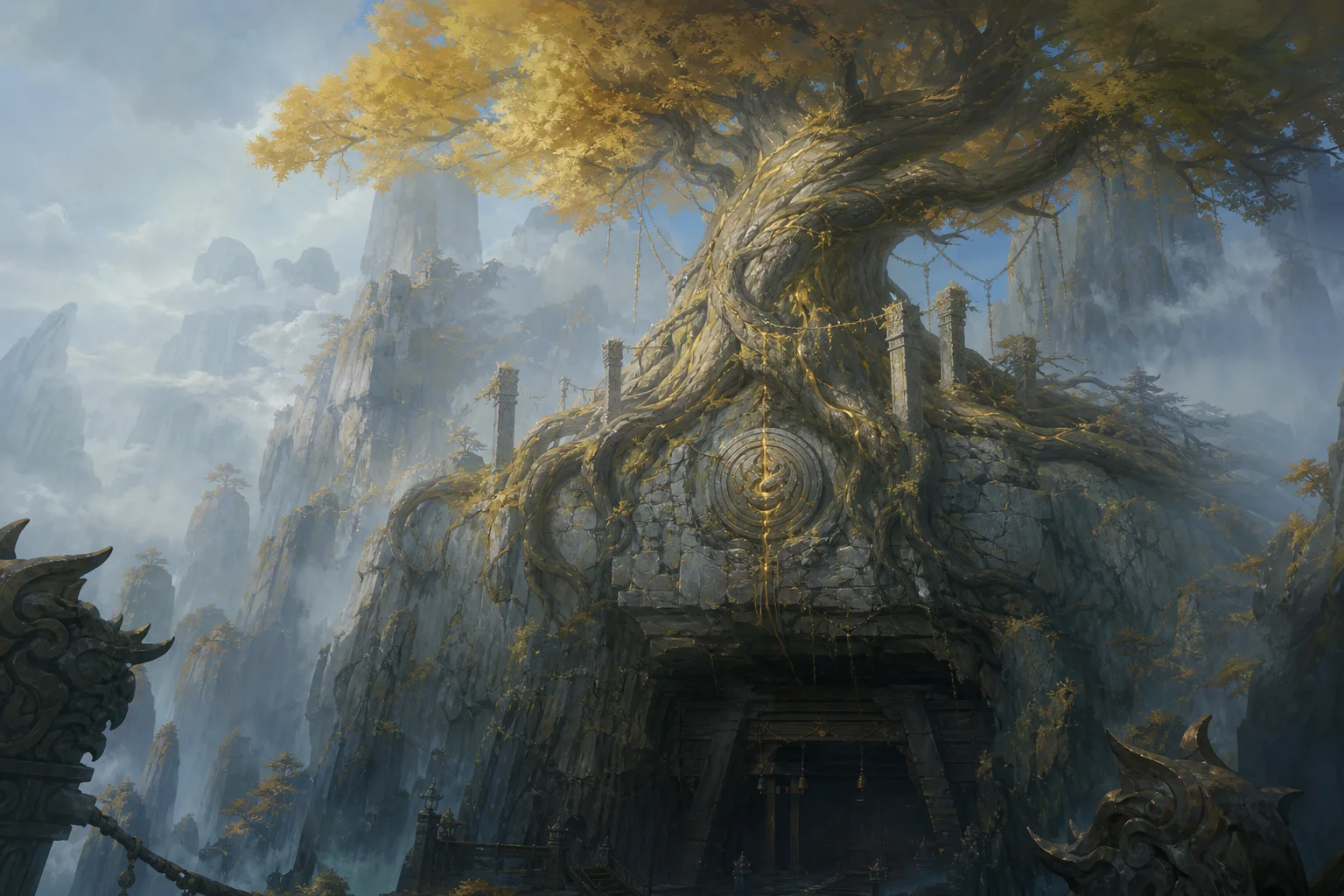
| Rampage and seal | He attacks the Chasm; Morax and adepti seal him at the Dragon-Quelling Tree | Dragon suppression — temples and trees that "lock" local spirits |
The tragedy is not betrayal in a simple sense. Azhdaha agreed to the seal when sane; erosion later made him forget why he accepted it, recasting Morax as a tyrant. When you fight him with Zhongli in the party, the dialogue lands because the contract still binds both sides — a Geo story about oaths outlasting memory.
Erosion: when even gods forget
Erosion (磨损) in Teyvat is a cosmic rule: long-lived beings lose memory and identity over time. Azhdaha is the clearest Liyue example — his mind erodes until friendship, gratitude, and voluntary sacrifice all unreadable.
Chinese philosophy does not use the word "erosion" this way, but it constantly warns that nothing endures unchanged — mountains shift, dynasties fall, even immortals in fiction grow lonely or mad across aeons. Azhdaha makes that abstract idea playable: the dragon who loved the surface world cannot remember why he protected it.
Zhongli once tried to share Geo power to slow Azhdaha's erosion; it failed. That beat matters culturally because it shows contracts and mercy have limits — Morax is not omnipotent caretaker, but a god who must sometimes choose the harbor over one friend.
Geovishaps, miners, and dragon descendants
The Chasm and Nantianmen overflow with Geovishaps — smaller earth dragons and reptilian elementals. In game taxonomy they are Azhdaha's line or influenced offspring; in cultural reading they resemble local dragon broods — lesser river spirits, mine ghosts, and stone beasts that miners learn to respect.
Liyue mining quests and world lore treat the underground as both worksite and shrine: explosives beside superstition, Millelith orders beside folk warnings about digging too deep. That mix is historically accurate for mining communities across China and the wider world.
Chasm vs. harbor vs. vale
| Region | Mood | Cultural layer |
|---|---|---|
| Liyue Harbor | Contracts, Mora, diplomacy | Maritime merchant city |
| Chenyu Vale | Tea, jade, Hui villages | Southern countryside; refugees from Chasm disaster |
| The Chasm | Mines, abyss, lost camps | Industrial frontier; dragon rage and seal |
| Nantianmen / Dragon-Quelling Tree | Ancient seal, weekly boss domain | Dragon king bound under sacred landscape marker |
What is tradition vs. game fiction?
- Documented — Dragon kings as water/earth powers; earthquake dragon myths; mining frontier society; impermanence themes in classical thought
- Mythic motif — Sealed dragon under tree/mountain; god granting sight; craft patron spirits
- Game fiction — Erosion as Heavenly Principles law; ley-line sovereignty; exact Chasm timeline; Aži Dahāka name choice layered on 龙王
Full Archon War context — Osial, Guizhong, and other defeated gods — belongs in The Archon War in Liyue: Myth Meets Fantasy (major spoilers).
Quick term reference
| English | Chinese | Meaning hint |
|---|---|---|
| Azhdaha | 若陀龙王 | Dragon King Ruòtuó; Persian Aži Dahāka echo |
| The Chasm | 层岩巨渊 | Layered rock great abyss |
| Dragon-Quelling Tree | 伏龙树 | Tree that subdues the dragon |
| Nantianmen | 南天门 | Southern Heaven Gate — mountain pass name |
| Dragon King | 龙王 | Longwang — lord of dragons / waters |
| Erosion | 磨损 | Wear — memory loss in Teyvat's long-lived |
| Geovishap | 岩龙蜥 / 幼岩龙蜥 | Geo dragon — smaller earth drake family |
Continue with the full divine war timeline in The Archon War in Liyue: Myth Meets Fantasy, or return to harbor geography in Liyue Harbor & Chinese Landscapes.