Liyue feels grounded in Chinese tradition — but it is still a fantasy nation in a gacha RPG. This article draws a line between documented cultural sources and Teyvat-original fiction, so you can enjoy the references without treating every NPC as a historical figure in disguise.
Living document
Genshin Impact is a live-service game. New regions (like Chenyu Vale), characters, and events may extend this list. We update this page when major additions clearly draw on new cultural material.
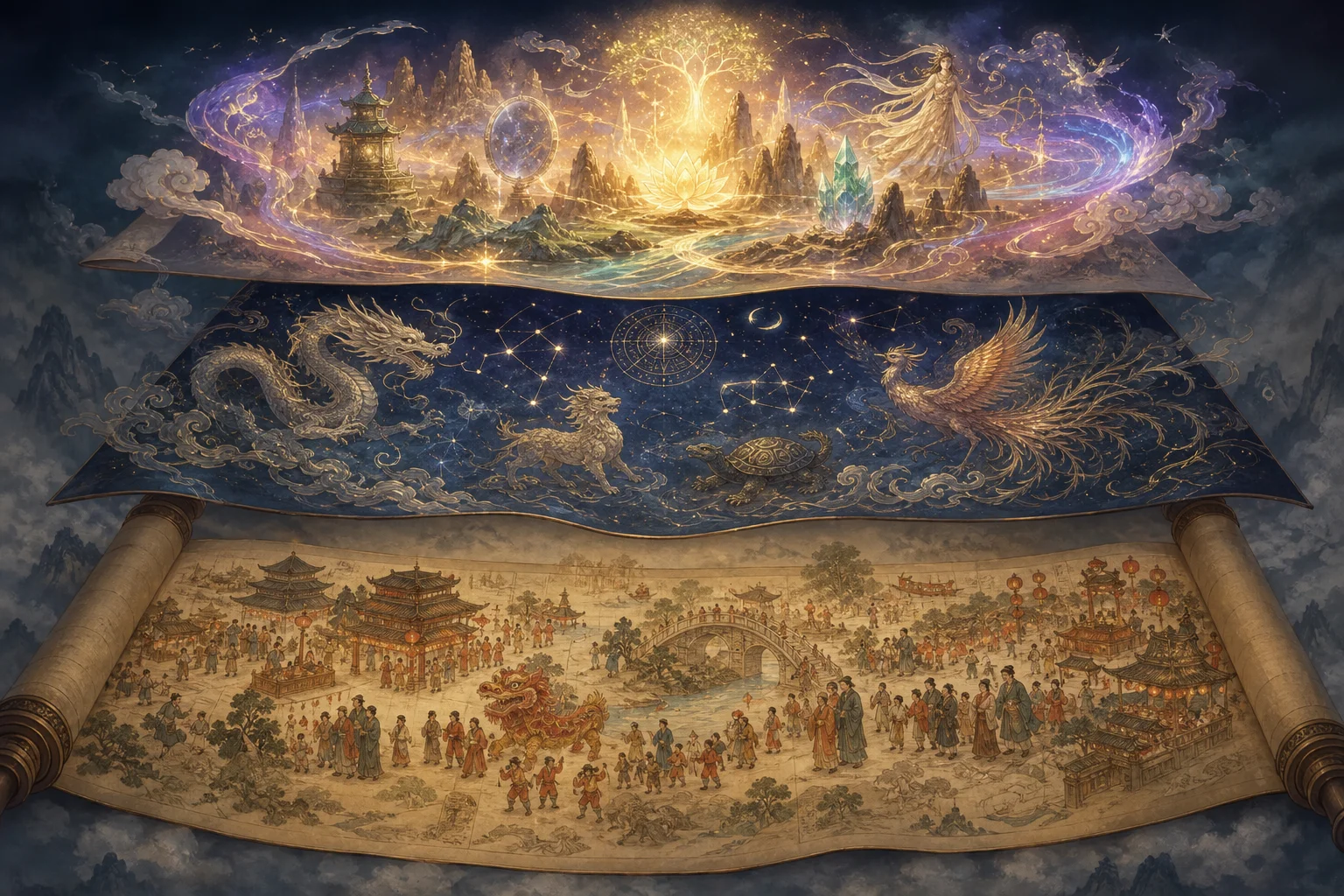
Three layers to keep straight
Layer 1
Documented tradition — festivals, immortals, opera, medicine, architecture types with real histories
Layer 2
Mythic motifs — qilin, dragons, yaksha, star names, contract gods as narrative patterns
Layer 3
Game fiction — Archon War outcomes, Vision system, Fatui plots, character backstories invented for Teyvat
What the game clearly draws from
- Festivals — Lantern Rite and Moonchase echo Lantern Festival and Mid-Autumn customs (see our festival primer).
- Immortals and yaksha — Adepti and Xiao's order map to Taoist xian and Buddhist guardian lore.
- Opera — Yun Jin's performances reference Peking opera and traditional stage culture.
- Funeral and exorcism trades — Wangsheng Funeral Parlor and exorcist characters reflect real ritual specialists and folk beliefs about death.
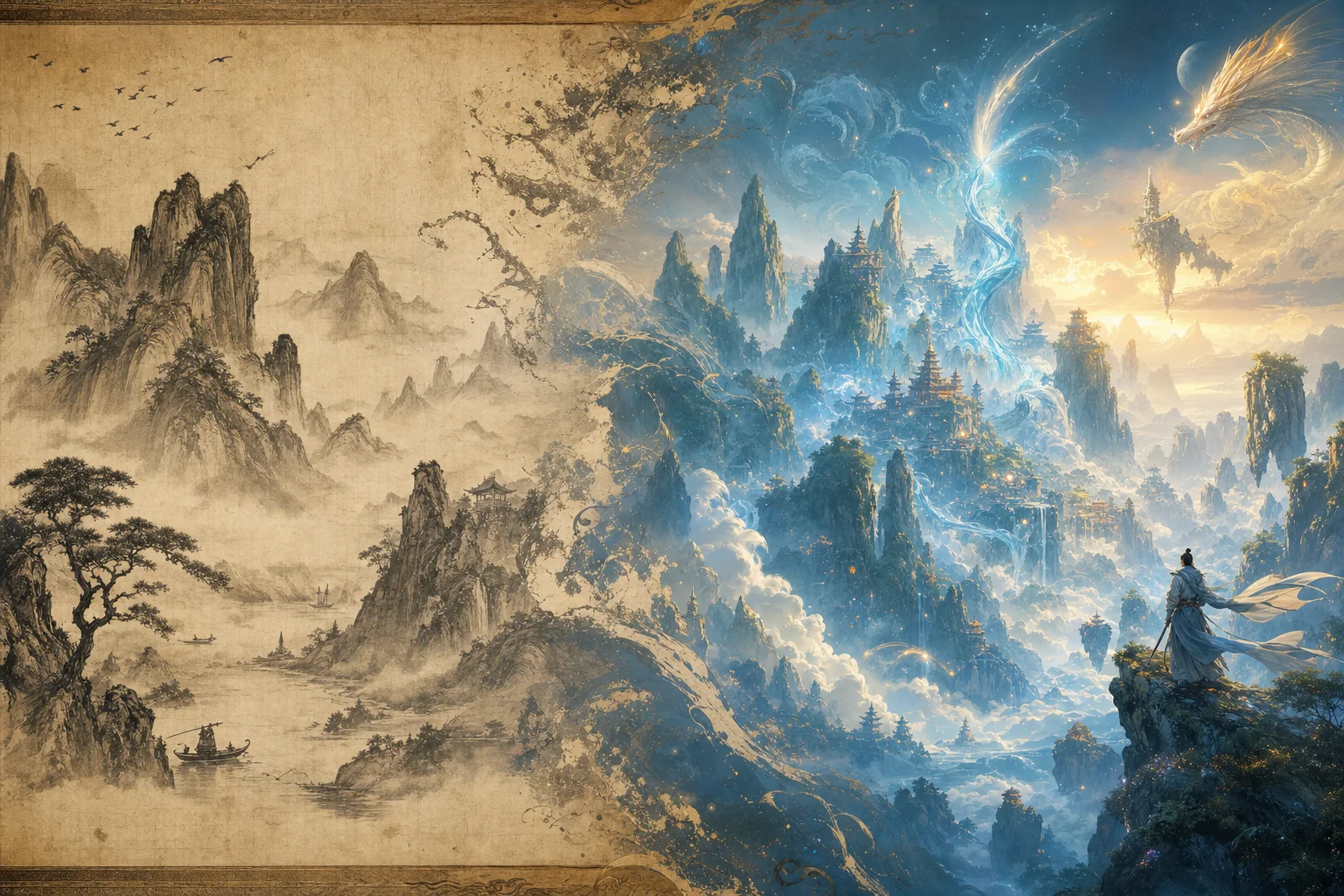
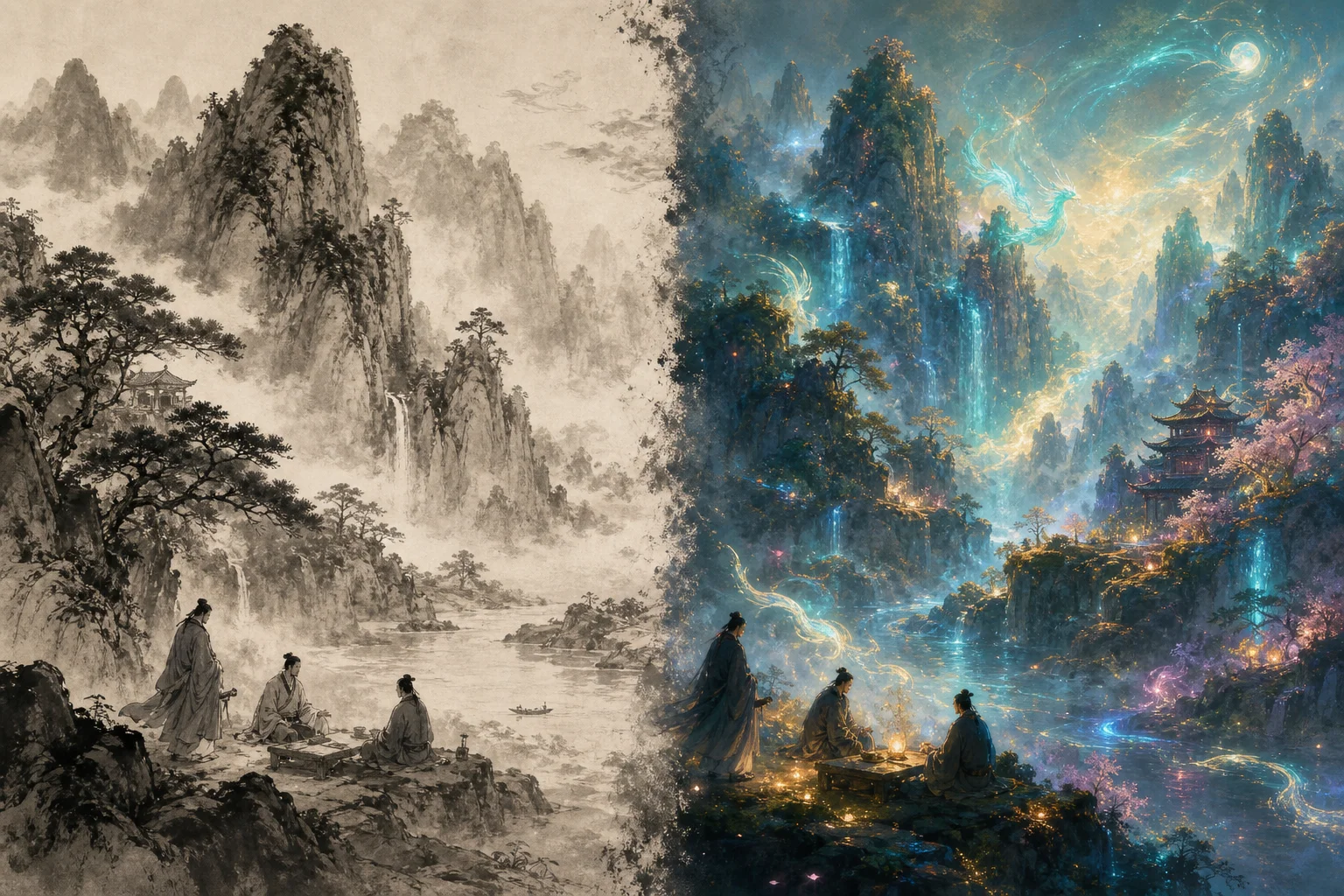
- Landscape art direction — Karst peaks, mist rivers, and harbor skylines cite Zhangjiajie, Guilin, and classical shanshui (mountain-water) painting — as aesthetic inspiration, not a labeled map.
- Commerce and contracts — Liyue's merchant republic vibe echoes Silk Road ports and Chinese emphasis on written agreements (see also our Blood Message hub for real Tang-era trade history).
What the game freely invents
- The seven Archons and Visions — Teyvat's divine economy has no single classical source; it is original worldbuilding with mythic seasoning.
- Character identities — Zhongli is not a one-to-one portrait of any historical person; Keqing is not a biography of a Tang official. Names carry poetic meaning, not biographical claims.
- Archon War history — Guizhong, Osial, and other defeated gods are game lore first; any myth parallels are thematic, not canonical crossovers.
- Modern-anime tone — Humor, costume design, and companion quests follow global game conventions as much as classical texts.
Safe language when talking about influences
| Say this | Avoid this |
|---|---|
| "The game appears to draw from Mid-Autumn reunion themes." | "Moonchase is Mid-Autumn Festival." |
| "Yun Jin's role evokes Peking opera performers." | "Yun Jin is a specific historical actor." |
| "Liyue Harbor references Chinese port architecture." | "Liyue Harbor is Shanghai / Guangzhou." |
Why miHoYo blends instead of copying
Open-world RPGs need quest freedom, combat kits, and ongoing updates. A strict historical simulation would break the moment a character flies with an elemental skill. Liyue's design strategy is recognizable cultural texture + fantasy permission — enough for Chinese players to feel seen, enough for international players to enter through beauty and story, and enough legal/creative room for original trademarks and characters.
When new content arrives
Ask three questions before adding it to your mental map:
- Does official material cite a real festival, text, or archaeological culture?
- Is the name a star, beast, or virtue from classical Chinese vocabulary?
- Does the quest require Teyvat-only rules (Visions, Fatui, Irminsul)?
If 1–2 are yes and 3 is also yes, you have a blend — the pattern most of Liyue follows.
Finish the primer with What to Read (and Watch) After Your Liyue Adventure, or keep the glossary open while you explore.