
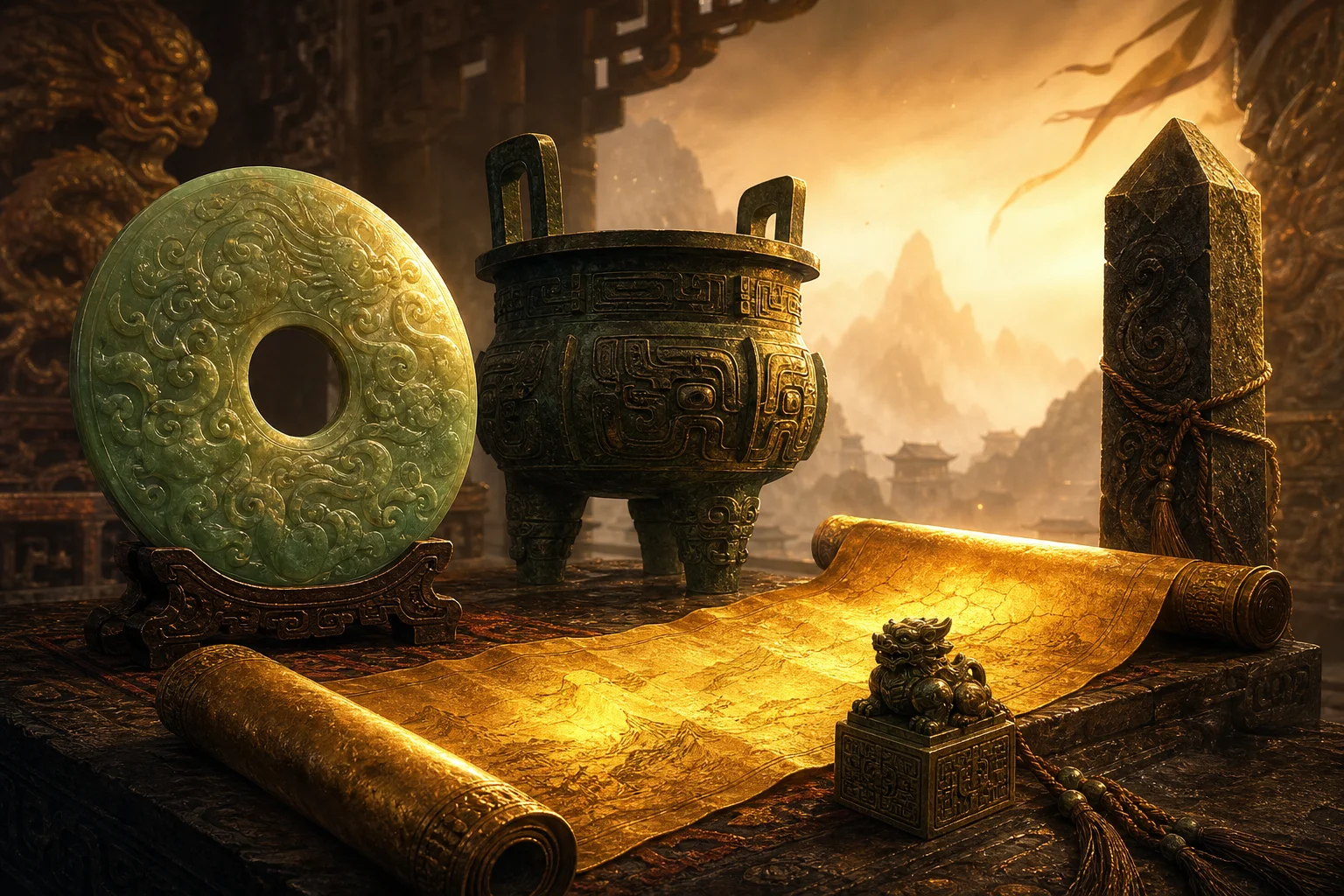
If you have played through Liyue, you have met Zhongli (钟离) — the unhurried consultant at Wangsheng Funeral Parlor who knows every ruin, every antique, every line of harbor history. You may also know he is Rex Lapis (岩王帝君), the Geo Archon Morax (摩拉克斯), walking among mortals after an era of godhood. This article explains the names, the contract theme, and the Chinese cultural logic behind Liyue's most important figure — without treating him as a disguised entry from a history textbook.
Light spoilers
This article assumes you know Zhongli is Rex Lapis in mortal form — revealed during the Liyue Archon Quest. We do not recap the full quest ending, Signora's role, or late-game lore beats.
Three names, one god
Liyue's Geo Archon accumulates titles the way a long-lived civilization accumulates epithets. Players encounter at least three layers:
| Name | Chinese | Role in Liyue |
|---|---|---|
| Morax | 摩拉克斯 | Divine name; linked to currency Mora (摩拉) |
| Rex Lapis | 岩王帝君 | Worship title — "Rock King Emperor Lord" |
| Zhongli | 钟离 | Mortal alias while consulting at Wangsheng |
Rex Lapis is the name on shrines and in festival prayers — the god who shaped mountains, brokered peace among rival powers, and founded the economic order that made Liyue Harbor rich. Morax is the older, more formal divine designation used in adeptus contracts and ancient records. Zhongli is the name he uses when buying tea, haggling (badly), and guiding the Traveler through Liyue's past — a human mask with deliberate gaps.
Element
Geo — stone, endurance, memory etched in rock
Domain
Contracts — oaths, trade law, the sacred weight of a promise
Mortal front
Funeral parlor consultant — death, memory, and what nations leave behind
The god of contracts
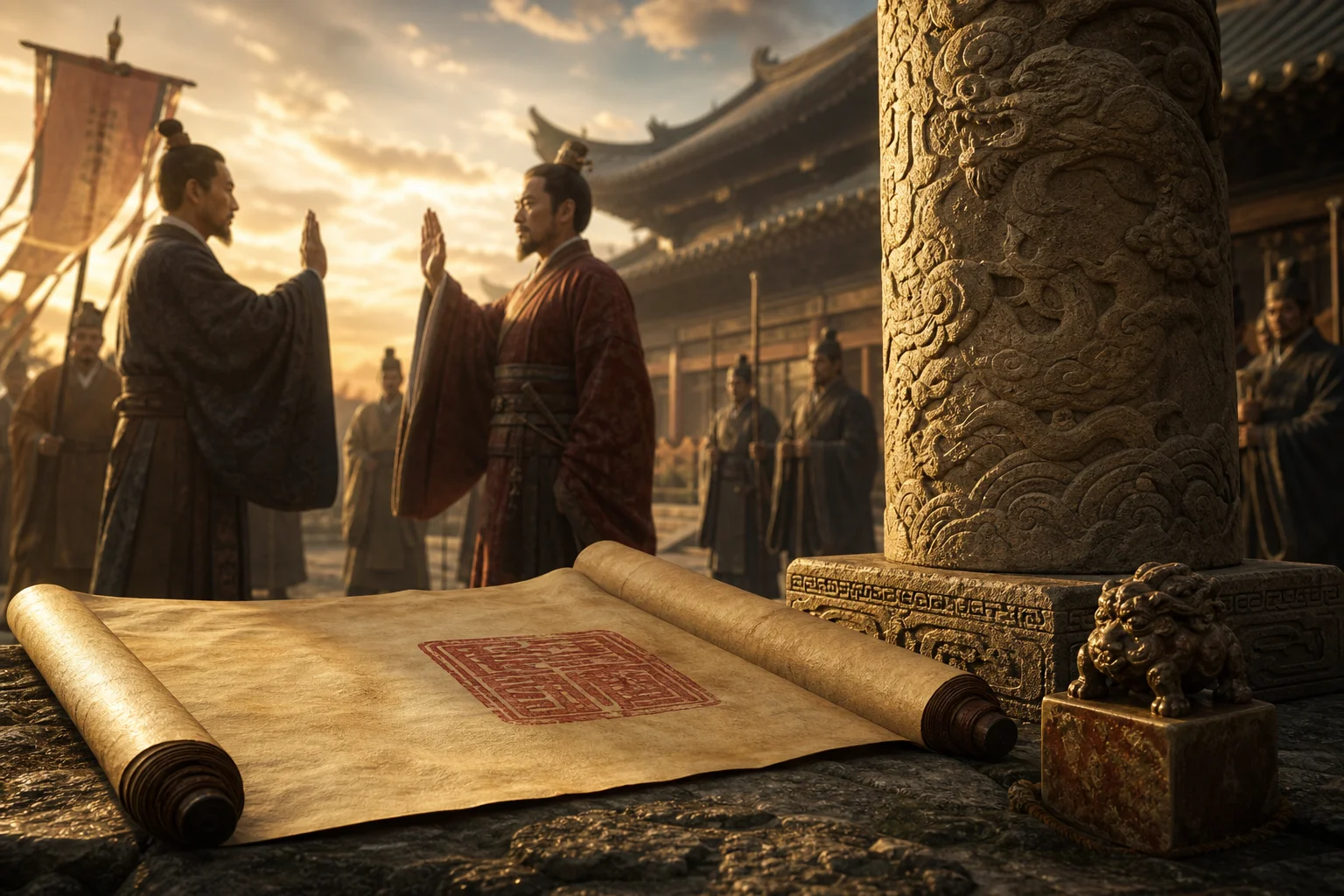
Chinese political and merchant culture has long treated written agreements as moral facts, not mere paperwork. Temple vows, business seals, and imperial edicts all share a logic: what is spoken and signed must hold. Liyue exaggerates that logic into divine law — break a contract in Rex Lapis's domain and you are not just rude; you are cosmically out of order.
Zhongli's gameplay and story beat this theme constantly. His Elemental Skill and Burst manifest as pillars of geo — literal stone guarantees. Story quests send you to verify old agreements, pay debts, and witness what happens when mortals try to outsmart terms they never read. The Geo Archon is less a thunderbolt judge and more a notary with six thousand years of precedent.
Mora: when the god is the currency
Mora (摩拉) is Teyvat's standard coin — and the name deliberately rhymes with Morax (摩拉克斯). Every transaction quietly reminds Liyue that commerce itself was chartered by the Archon. Real-world history has seen rulers put their faces on coins to claim economic authority; Genshin makes the link explicit and mythic.
This is original game worldbuilding with Chinese flavor: the Tang–Song world prized both cash economy and ritual sincerity. Liyue Harbor's wealth is not just geography — it is a culture that treats profit and promise as two sides of one coin.
Stone, jade, and the weight of history
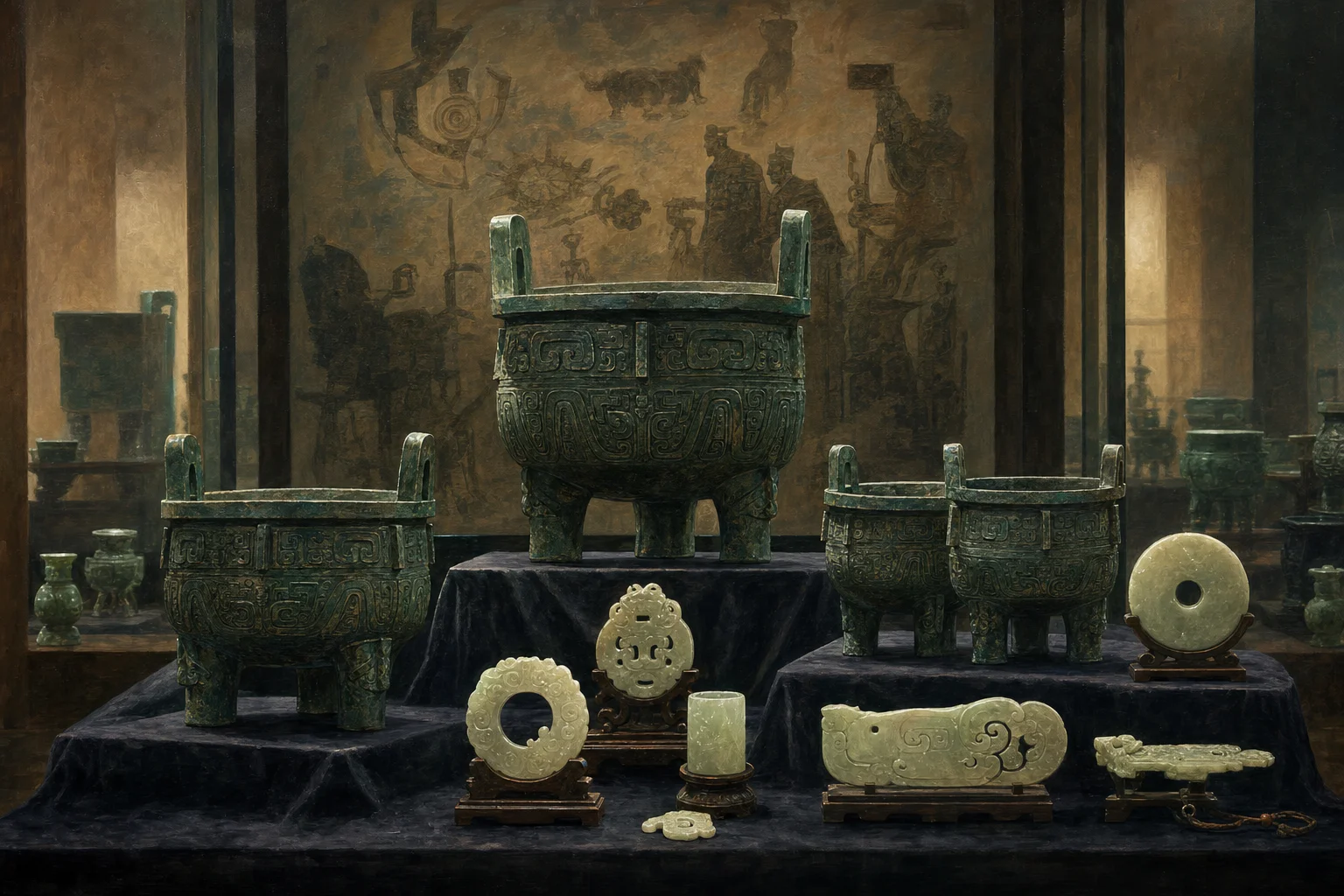
Geo is the element of what lasts. In Chinese aesthetics, mountains are moral monuments; jade is purity and status; bronze ritual vessels carry the voice of ancestors. Zhongli embodies that material memory — he can date a vase by its glaze, explain why a mine collapsed, and mourn a civilization from a single cracked tablet.
The real academic tradition of epigraphy and antiquities (金石学) treats objects as historical documents. Song-dynasty scholars collected bronze and stone rubbings to reconstruct lost rituals and dynasties. Zhongli plays like a fantasy version of that scholar-official — except he was present when the objects were new.
Material
Jade 玉
Virtue, refinement, and Liyue's merchant elite — Ningguang's world of jade and contracts sits in the same moral universe as Rex Lapis.
Material
Bronze 青铜
Ritual authority and ancient state power; Zhongli's geo constructs feel like ritual vessels raised to city scale.
Material
Rock / geo 岩
Endurance and landscape itself — the Archon who carved harbors and mountain roads into being.
Zhongli the mortal mask
After the Rite of Descension, Rex Lapis appears to die. Zhongli then hires himself out as a consultant — still guiding Liyue, but without sitting on the throne of godhood. Culturally, this mirrors a recurring Chinese narrative pattern: the sage who withdraws from office but keeps shaping events through advice, ritual, and memory. Laozi leaving civilization, hermits who correct kings from the mountains, retired ministers who ghost-write policy — the trope is old.
His placement at Wangsheng Funeral Parlor (往生堂) is not random comedy. Death is when contracts end and accounts close. A god of oaths who chooses to work beside mortals who handle the dead is a god thinking about legacy — what outlives the signer.
What Morax is not
Fan forums sometimes map Rex Lapis onto a specific Chinese deity — earth gods, furnace lords, or named immortals from Investiture of the Gods. HoYoverse has not confirmed a one-to-one model. Safer framing:
- Morax is a composite — contract law, earth element, jade-bronze antiquity culture, and the retired sage archetype.
- He is not a biography of a Tang official, a Shang king, or a single entry from a god list you can look up and "solve."
- His visual design cites Chinese ritual aesthetics; his story beats follow Genshin Archon narrative needs first.
For the adaptation boundary in more detail, see How Genshin Blends Myth, History & Fantasy.
Why Zhongli matters for the rest of Liyue
Understanding the Geo Archon unlocks half of Liyue's cast:
- The Qixing inherit a merchant republic he designed — their star names and trade politics assume a god who already wrote the rules.
- The adepti signed contracts with him — read our adepti & yaksha primer for that layer.
- Ganyu still serves the terms of an ancient employment contract — half-immortal bureaucracy as character drama.
- Hu Tao and Zhongli share Wangsheng — comedy on the surface, but both handle transitions mortals prefer not to think about.
Key terms
| English | Chinese | Quick meaning |
|---|---|---|
| Contract | 契约 | Core moral technology of Liyue and Geo Vision philosophy |
| Rock King Emperor Lord | 岩王帝君 | Public worship name for Rex Lapis |
| Geo Archon | 岩神 | God of Geo; Liyue's divine protector |
| Mora | 摩拉 | Currency; homophone play on Morax |
| Epigraphy / metal-and-stone studies | 金石学 | Real scholarly tradition echoed in Zhongli's antiquarian knowledge |
Next in this series: The Liyue Qixing & the Big Dipper — how mortal governors carry star names into trade and policy. Or return to the Liyue glossary for quick name lookups.