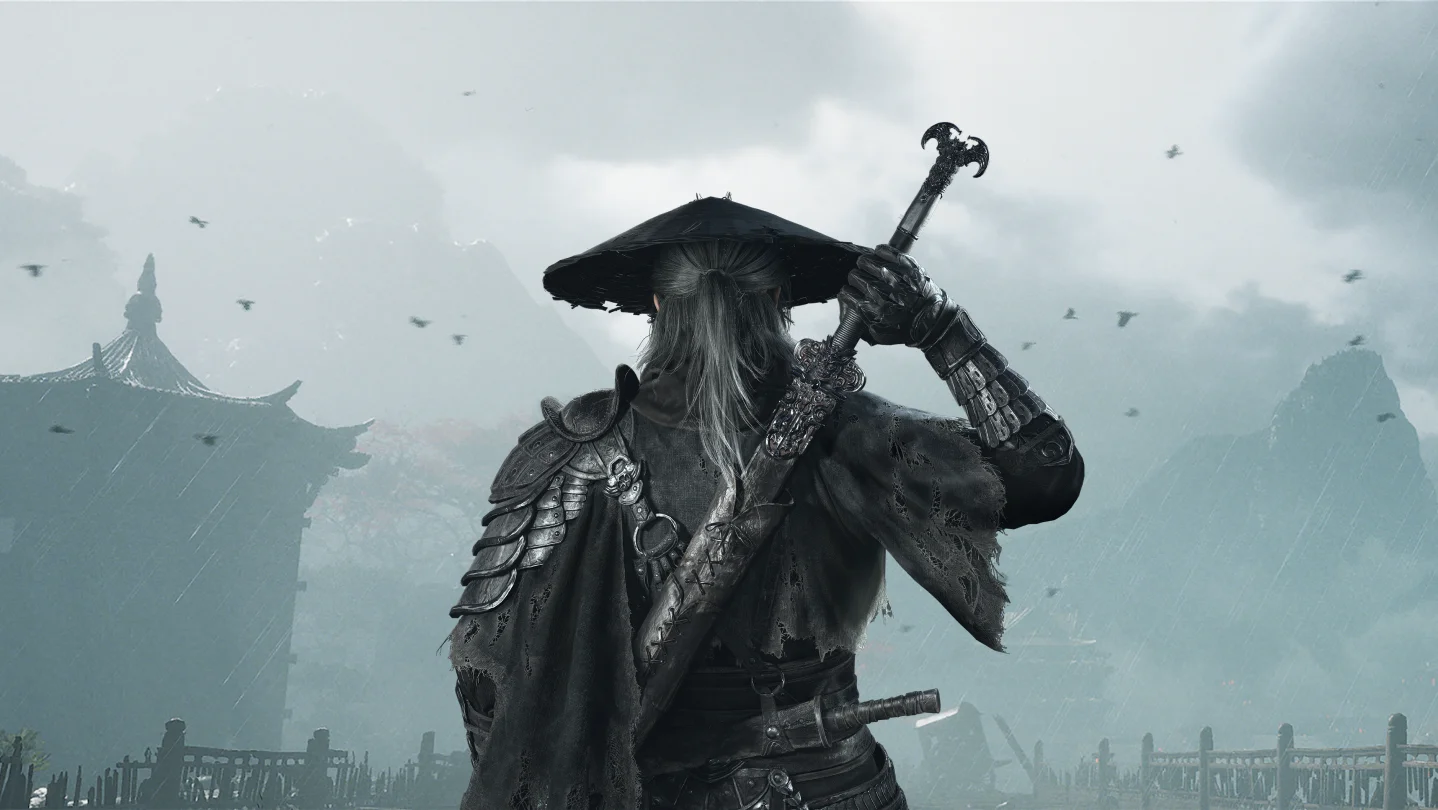
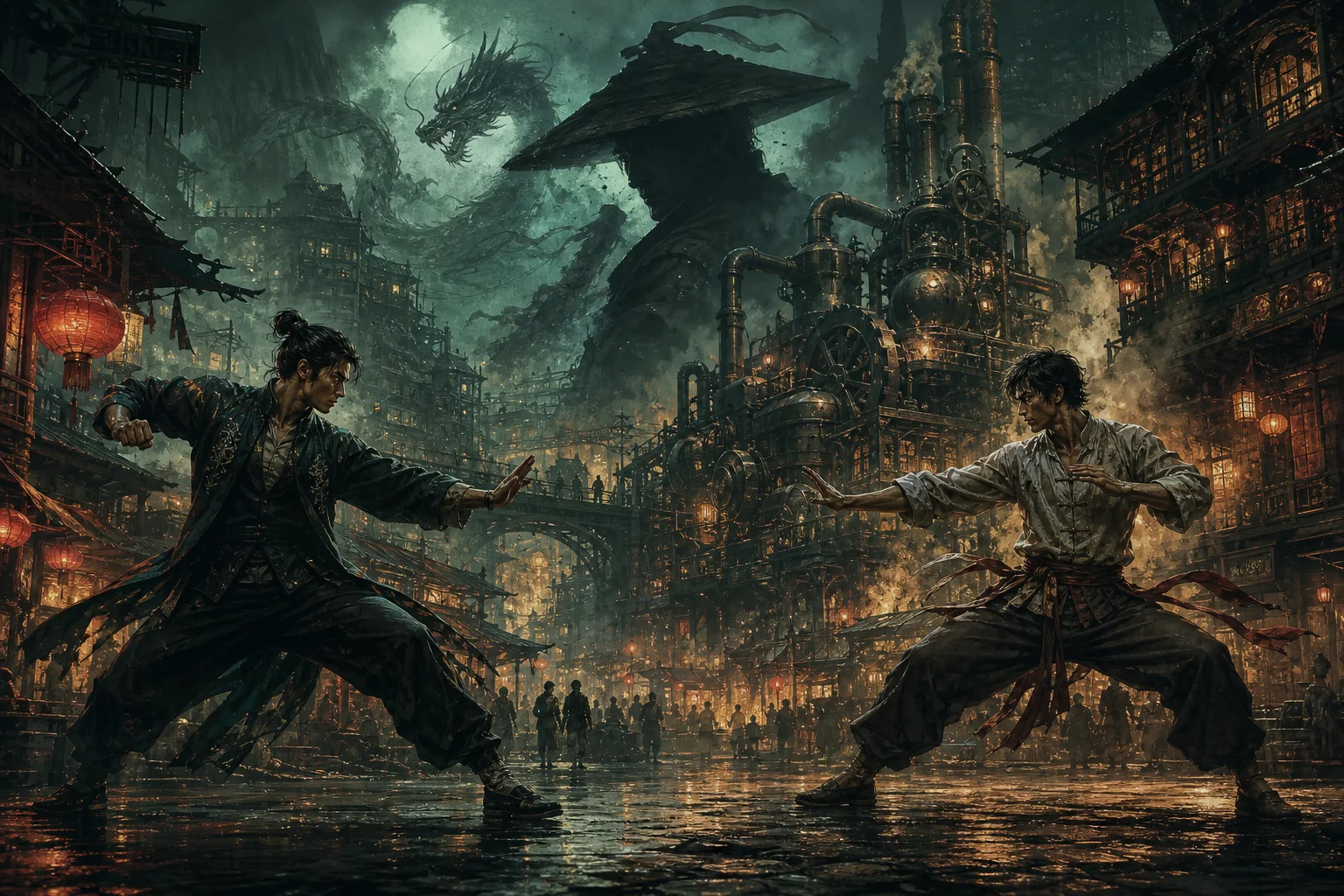
Living document. Unlike Black Myth: Wukong, which adapts one famous novel, Phantom Blade Zero has no single source text and no pinned historical year. It still claims deep roots — wuxia jianghu logic, Hong Kong martial-arts cinema, martial weapon tradition, and the Rainblood / Phantom Blade IP — while asking you to play an original kungfupunk conspiracy starring Soul in Shadow Realm. This page separates what S-GAME has officially confirmed from what comes from genre tradition, martial & cinematic sources, and Shadow Realm fiction. Last scoped: Steam store text, official PBZ site, and State of Play / trailer materials through June 2026. Dragon Forge is editorial — not affiliated with S-GAME Studio.
Status at a glance
Developer / publisher
S-GAME Studio (灵游坊) · Guangzhou · self-published as S-GAME Publishing for PBZ
Launch target
September 9, 2026 · PS5, Steam, Epic Games Store · English VO + multi-language subtitles
Genre pitch
Third-person wuxia action RPG · kungfupunk · weapon-driven combat · story conspiracy
| Item | Confirmed? | Notes |
|---|---|---|
| Original world Shadow Realm (影境) | Yes | Kungfupunk setting — not a map of Qing China |
| Kungfupunk aesthetic label | Yes | Wuxia + steam / machinery + mysticism per official copy |
| Protagonist Soul (魂), 66-day limit | Yes | Framed for master's death; hunted by comrades |
| Martial-world conspiracy | Yes (framework) | Details in spoiler-tagged articles as story releases |
| 30+ weapons, dual-weapon switching, 20+ Phantom Edges | Yes | Claim foe weapons & signature techniques |
| Guai Mian (怪面) corrupted warriors | Yes | Mechanical modification + moral corruption |
| Hong Kong martial-arts cinema motion capture | Yes | UE5 presentation; films cited in interviews |
| Story blueprint from Rainblood 1: Dead Town | Yes | Rebuild — not a 1:1 remaster of old plot beats |
| Soul/body split, parallel dream spaces | Partial | Mentioned in interviews; treat unreleased story as TBD |
| Direct novel adaptation (Journey to the West, Jin Yong book, etc.) | No | Genre inheritance, not chapter mapping |
| Requires mobile Phantom Blade plot homework | No | Standalone global entry per store positioning |
| Historical dynasty simulation | No | Shadow Realm is fiction-first |
Three layers (not one "adaptation")
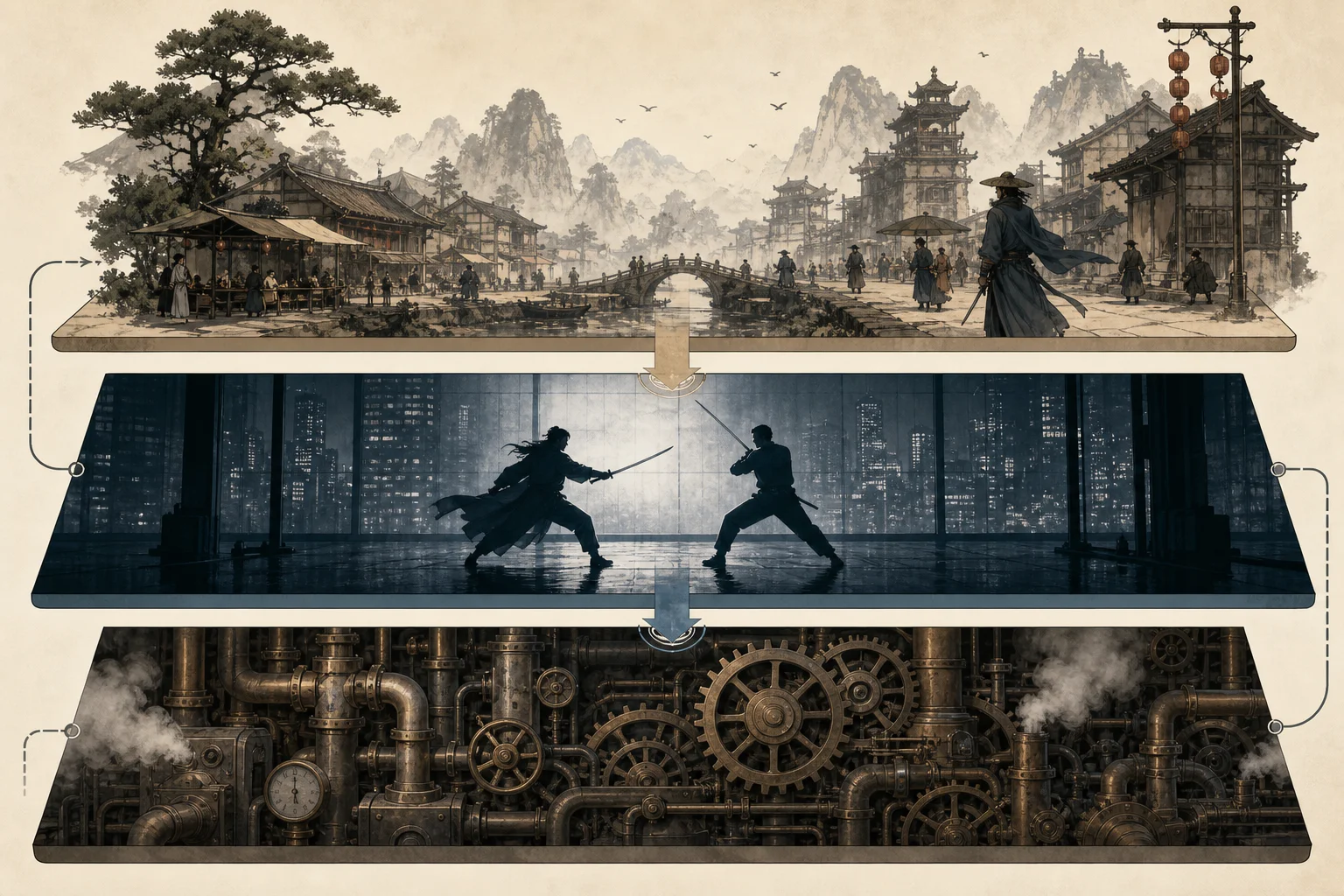
Use this filter whenever a scene feels “traditional” or “sci-fi”:
| Layer | Question to ask | Example in PBZ materials |
|---|---|---|
| Genre tradition | Is this how wuxia / jianghu stories usually behave? | Master–disciple betrayal; comrade hunt; face and vendetta; weapon schools |
| Martial & cinematic source | Does this echo real weapon logic or a film grammar? | Soft sword vs mo blade feel; HK cinema pacing; cited wuxia films in interviews |
| Shadow Realm fiction | Is this invented for PBZ / Rainblood IP? | Guai Mian type; Phantom Edge system; Shadow Realm place names; 66-day clock |
A duel might use meridian language from cultivation fiction (genre), move like a Hong Kong wire-fu scene (source), and reward a Phantom Edge only found in this game (fiction). All three can be true at once. See our jianghu primer and kungfupunk explainer for the first two layers in depth.
What official materials treat as "traditional"
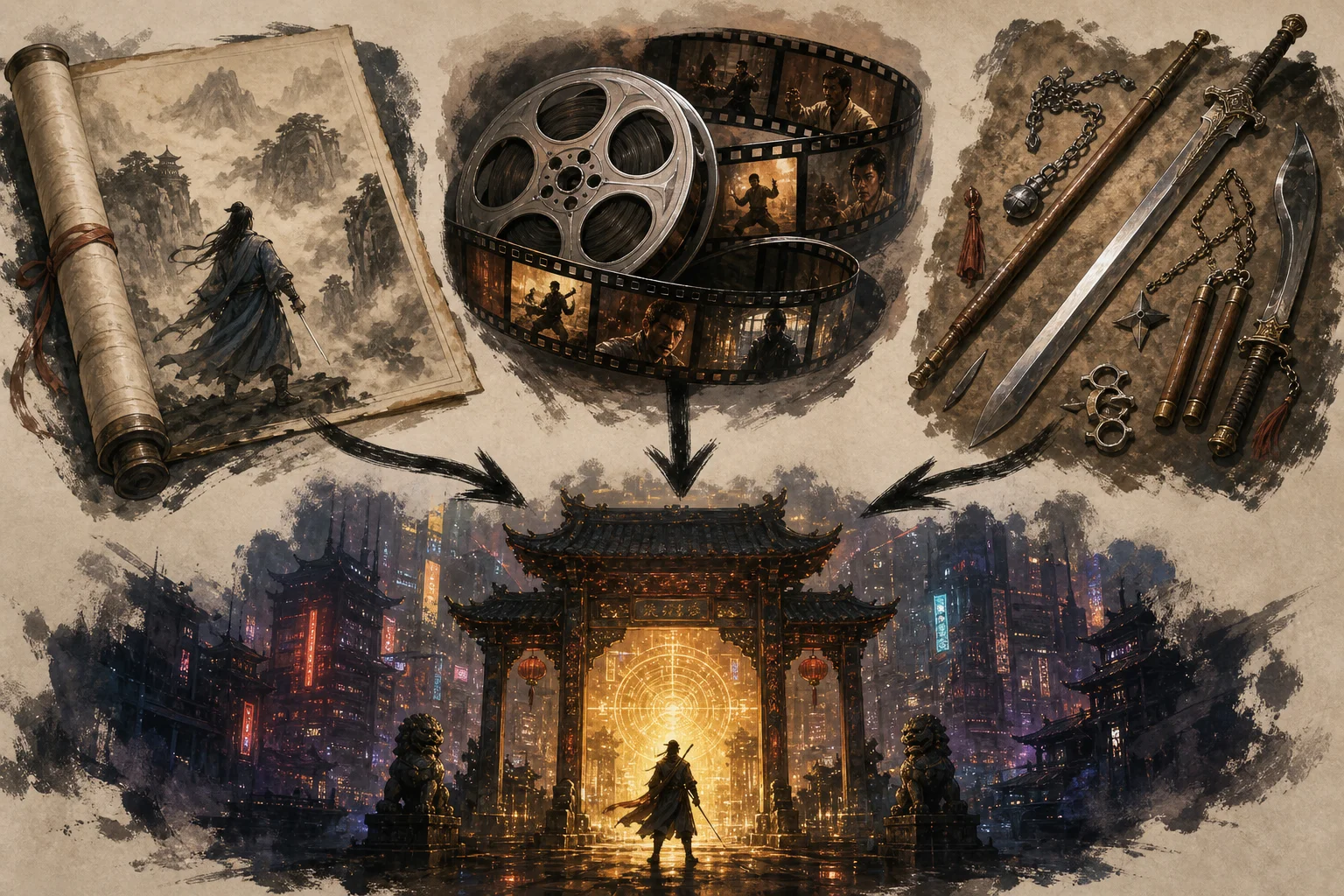
Steam, the official PBZ site, and producer interviews emphasize roots in martial culture, not homework in one dynasty or novel:
- Jianghu social logic — loyalty, betrayal, conspiracy, reputation
- Xia emotional core — chivalry, passion, fate (侠义、情仇、宿命)
- Weapon identity — each arm carries cultural logic before it becomes a stat
- Cinematic martial arts — golden-age Hong Kong film as combat reference
- Kungfupunk fusion — steam, machinery, mysticism layered on martial society
- IP continuity — Soul and Rainblood themes, rebuilt for global standalone action
When marketing mentions kungfupunk or Phantom Edges, it signals genre + IP depth — not a claim that every machine is historically accurate to 19th-century China or that every boss maps to a novel character.
What is dramatization vs documented tradition
| Topic | Tradition / source | PBZ treatment |
|---|---|---|
| Jianghu conspiracy | Wuxia genre staple | Shadow Realm plot engine — Soul frame-up is game fiction |
| Soft sword / mo blade feel | Martial arts & wuxia fiction | Combat design principle — not a documentary |
| Steamships & factories | Steampunk tradition + industrial fantasy | Shadow Realm technology — no claim to one real era |
| Mechanical body horror | Cyberpunk / biopunk influences cited in interviews | Guai Mian fiction — not medical realism |
| Soul name & Rainblood lineage | S-GAME IP history | Character continuity — story details rebuilt in PBZ |
| Hong Kong film citations | Real films (Blade, New Dragon Gate Inn, etc.) | Creative influence — not in-universe cameos unless confirmed |
Common mix-ups (quick fixes)
- “Guai Mian = documented folk monster.” Treat as PBZ enemy type unless future lore cites a classical source.
- “Shadow Realm = late Qing China.” Fiction-first kungfupunk world — no official dynasty name pinned.
- “Interview influence = canon setting.” Ghost in the Shell explains body themes; it does not relocate the game to Japan.
- “Mobile Phantom Blade plot = PBZ prerequisite.” Not required for comprehension — optional deep lore for series fans.
- “Kungfupunk replaces jianghu rules.” Machines change visuals; betrayal and honor still drive the story.
Revision log
We update this page when S-GAME releases new story-confirmed material. Major beats only — not every trailer shot.
| Version | Date | Changes |
|---|---|---|
| v0.1 | June 2026 | Initial living doc at PBZ Culture Hub launch — Steam / site / pre-release trailers only |
Spotted a mismatch after launch?
If official English text contradicts this page post-release, trust the game and store patch notes first — then we revise here. For fast lookups, bookmark our glossary.
Where to go next
You now have a filter for genre, source, and fiction. Finish module A with our reading list for wuxia novels and Hong Kong films — or jump to the glossary if you only need quick translations while playing.