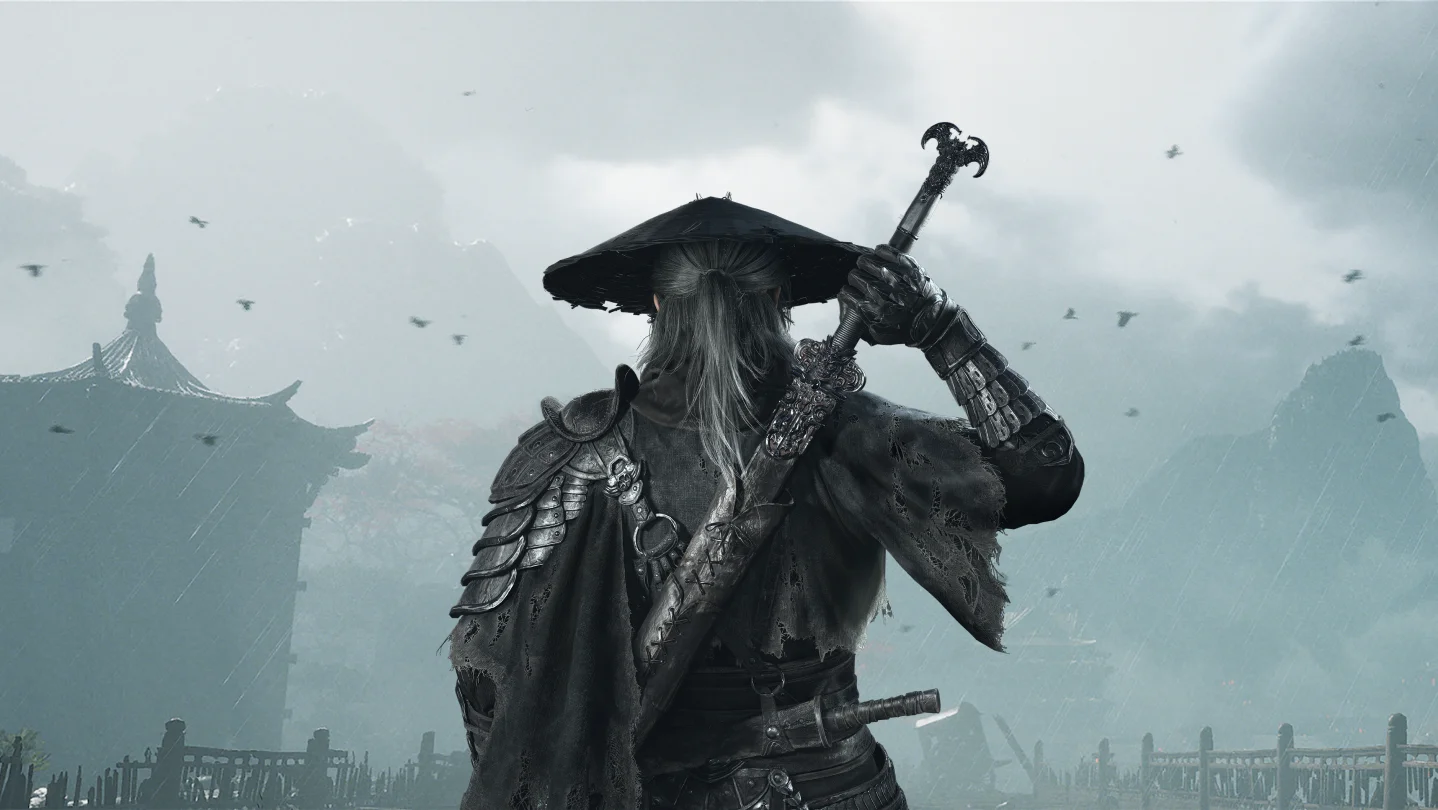
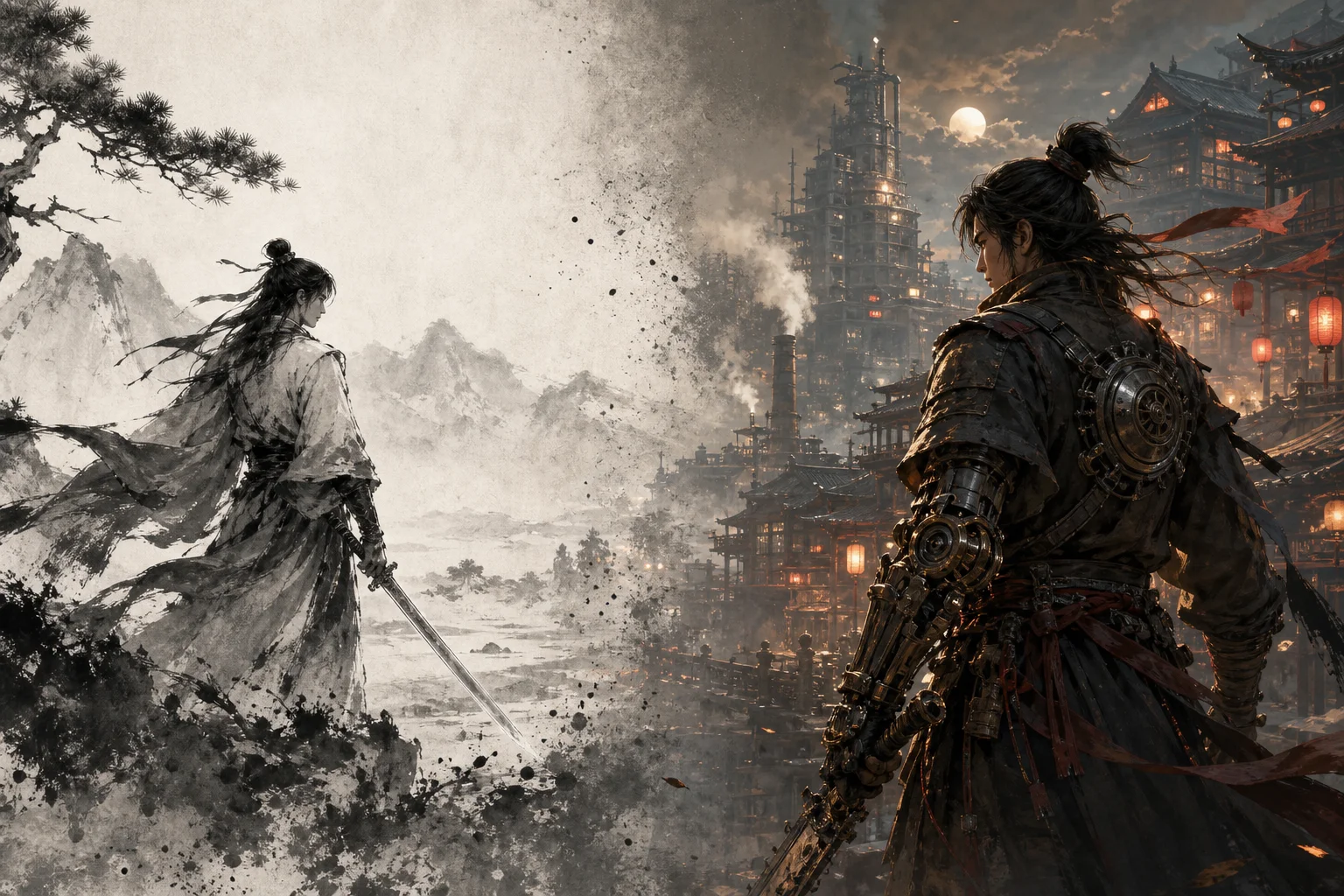
Phantom Blade Zero is not a brand-new name on a generic wuxia template. It is the latest entry in a line that Chinese players have followed for more than a decade — from the student-made Rainblood (雨血) series, through mobile Phantom Blade (影之刃) titles, to this Unreal Engine 5 return to standalone action. If you read our primers on jianghu and kungfupunk, you already know the cultural frame. This eight-minute article answers the practical question overseas players actually ask: Do I need the back catalog? (No.) And the useful follow-up: What carries over anyway?
The short answer
Must-play backlog?
No. PBZ is built as a global standalone action RPG with its own Shadow Realm pitch.
Worth knowing?
Yes. Names like Soul (魂), the Rainblood lineage, and S-GAME's long arc explain fan expectations and design choices.
Story relationship
Official materials describe PBZ as rooted in Rainblood 1: Dead Town (《雨血1:死镇》) — a rebuild, not a direct sequel checklist.
Think of the older games like knowing that The Witcher 3 grew from Polish short stories — helpful context, not homework. PBZ reuses symbols and emotional history; it does not require you to memorize mobile gacha plots.
Who makes this — and why the founder's nickname matters
S-GAME Studio (灵游坊) is the Guangzhou-based developer behind PBZ, self-publishing under S-GAME Publishing for this title. The studio's public face for years has been founder Liang Qwei (梁其伟) — architecture-trained (Tsinghua, then Yale), often nicknamed Soulframe or "S" in fan communities. That nickname is not random: Soul (魂), PBZ's protagonist, was already the hero of the earliest Rainblood games. When interviews compare PBZ to a spiritual return to the series' roots, part of what they mean is literal — the creator and his first hero share a long history.
Timeline: from dorm-room RPG to Phantom Blade Zero
| Era | Title (English / Chinese) | What it was |
|---|---|---|
| ~2010 | Rainblood 1: Dead Town / 雨血1:死镇 | Liang's breakthrough student indie — RPG with distinctive ink-wash look; introduced Soul and jianghu conspiracy seeds |
| 2011 | Lingyoufang / S-GAME founded / 灵游坊成立 | Studio formalized after Rainblood's indie success and investment |
| 2013 | Rainblood 2: City of Brightness / 雨血2:烨城 | Follow-up RPG expanding factions and the "Organization" (组织) storyline |
| 2013 | Rainblood Prequel: Mirage / 雨血前传:蜃楼 | Side-scrolling action pivot; last Rainblood-branded standalone PC release of that era |
| 2013–2014+ | Phantom Blade mobile series / 影之刃 | IP renamed for mobile action after NetEase investment; multiple online titles (including later numbered sequels) |
| 2020s | Phantom Blade Zero / 影之刃零 | UE5 third-person action RPG; global console/PC launch target 2026-09-09; kungfupunk Shadow Realm rebuild |
Dates above are approximate public milestones — useful for orientation, not a lore chronology inside Shadow Realm. Chinese fan discourse often treats the Rainblood era as "indie auteur" history and the mobile Phantom Blade era as commercial scale-up; PBZ marketing deliberately echoes a return to standalone craft without asking every new player to adjudicate that debate.
What the Rainblood games actually established
Soul and the conspiracy thriller tone
The early Rainblood RPGs centered on Soul (魂) and fellow disciple Zuo Shang (左殇) inside a secretive martial underworld faction called the Organization (组织). Betrayal, hidden hierarchies, and noir-flavored jianghu politics were the draw — closer to a wuxia crime syndicate story than to fairy-tale fantasy. PBZ's official premise — Soul accused of killing his master, hunted by comrades, racing a death sentence while unraveling a martial-world conspiracy — rhymes with that origin even if Shadow Realm rebuilds the details.
Ink-wash identity
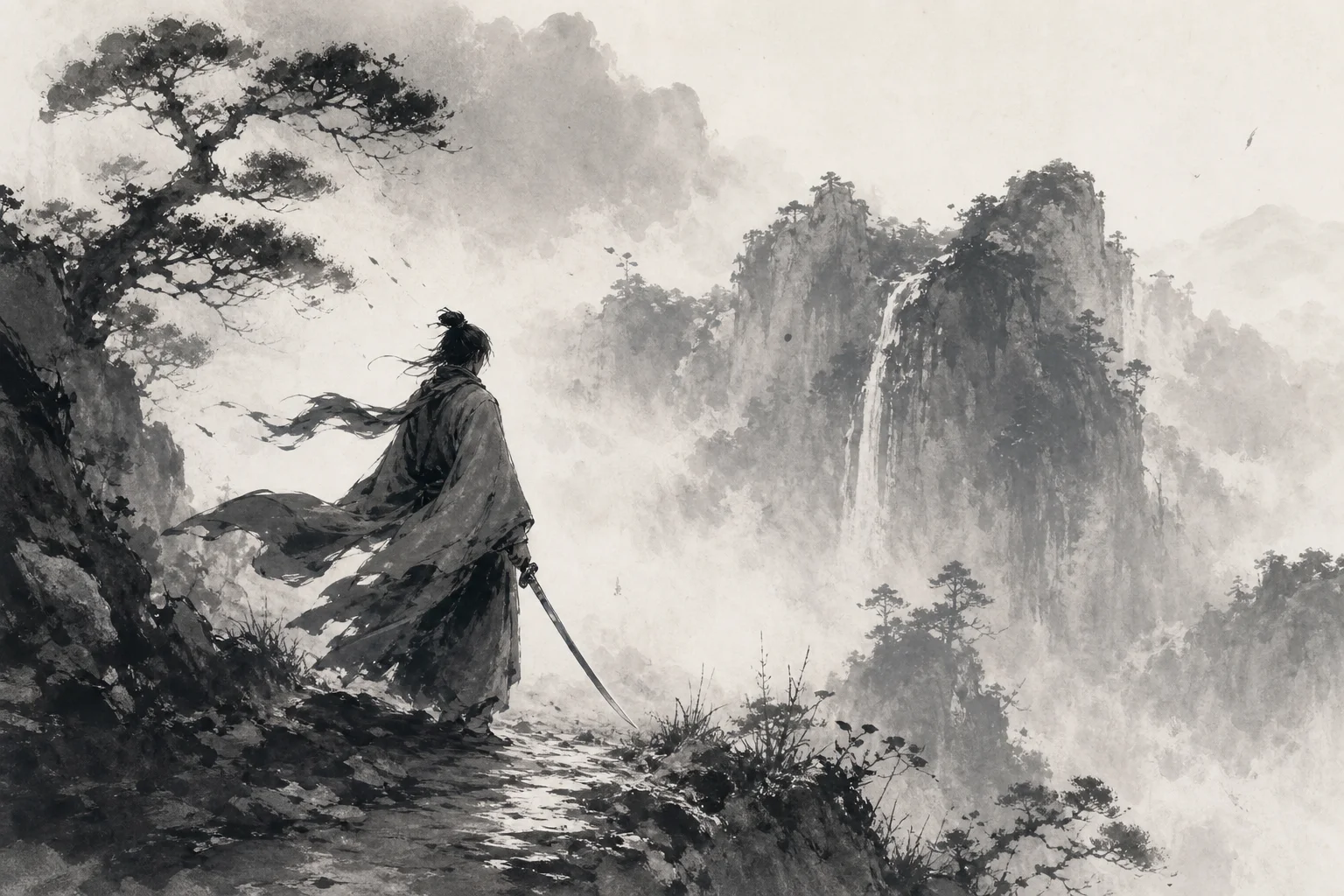
Rainblood 1 in particular became famous for a stark ink-wash (水墨) visual identity unusual for its time in Chinese PC games. PBZ abandons that look for kungfupunk realism and Hong Kong cinema motion capture, but long-time fans still read "Rainblood spirit" as stylish martial tragedy with sharp plot turns, not as "must look like brush painting."
Mirage and the action gene
Rainblood Prequel: Mirage (蜃楼) shifted the series toward side-scrolling action — faster combat, more explicit combo fantasy. PBZ is not a 2D successor, but the through-line is clear: S-GAME has been chasing martial action feel for years, not only RPG menu storytelling. Mirage also expanded the rival faction Mirage Tower (蜃楼) in series lore; whether Shadow Realm reuses that name is a detail to confirm in released story — do not treat mobile-era wiki entries as PBZ canon.
The mobile Phantom Blade chapter — what newcomers should know
After NetEase invested in Lingyoufang (2013), the IP rebranded to Phantom Blade (影之刃) for mobile action games with online economies. These titles kept characters, factions, and martial style fans recognized, but they were built for a different market: ongoing live ops, faster content drops, and touch-first combat.
For Culture purposes, you only need three neutral facts:
- They kept the IP alive at scale and funded studio growth
- They introduced many Chinese players to the name Phantom Blade before PBZ's global push
- They are not required reading — lore branches, time skips, and mobile-only plots do not gate PBZ comprehension
Fan debate vs. player homework: Chinese forums still argue about indie ideals versus mobile commercialization. Overseas players can ignore that history war and treat PBZ as its own 2026 action RPG — while recognizing why some fans feel strongly about the word "Rainblood."
Why Phantom Blade Zero is a return — not a port
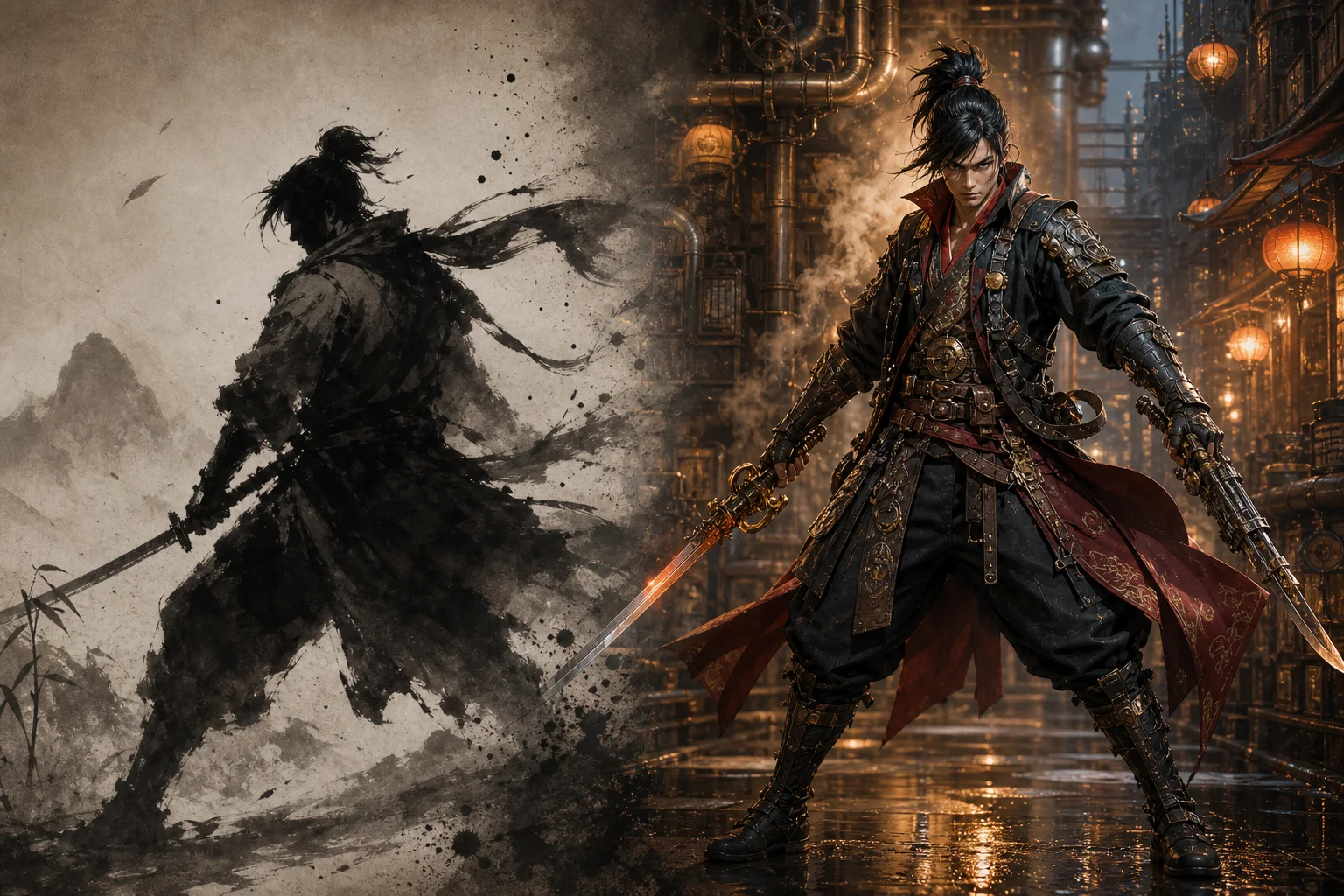
Official store copy and interviews position PBZ as S-GAME's return to standalone premium action: PlayStation 5, Steam, Epic Games Store; English voice acting; dozens of weapons; dual-weapon switching; Phantom Edge system. The story blueprint points back to Dead Town, but the world is now Shadow Realm — kungfupunk, Guai Mian corruption, steam-age machinery. That is reconstruction, not remaster: same authorial obsession (Soul, conspiracy, stylish martial tragedy), new production scale and global audience.
What carries over if you skip the backlog
| Element | Old IP context | PBZ relevance for newcomers |
|---|---|---|
| Soul (魂) | Rainblood protagonist since game 1 | Same name, new Shadow Realm arc — framed master, 66-day clock, comrade hunt |
| Conspiracy jianghu | Organization-era noir politics | Expect betrayals inside martial institutions, not fairy-tale chosen-one plot |
| Phantom / shadow motif | 影之刃 series title | Phantom Edges, Shadow Realm — theft of techniques and layered reality |
| Ink-wash look | Rainblood 1–2 aesthetic | Not carried over visually — replaced by kungfupunk UE5 presentation |
| Mobile gacha plotlines | Phantom Blade 2/3 etc. | Not required — treat PBZ as its own entry point |
How to use this history while playing PBZ
Practical reading paths
- → Zero backlog: Play PBZ cold — our primer series is enough cultural context.
- → Curious about lore roots: Read plot summaries of Dead Town only — skip mobile wiki rabbit holes until after PBZ launch.
- → Returning Rainblood fan: Expect rebuilt Shadow Realm, not a direct pixel remaster; compare themes (Soul, betrayal), not 1:1 story beats.
- → Revisit What Is Kungfupunk? for the new world's aesthetic logic.
Key terms to remember
| English | Chinese | Quick meaning |
|---|---|---|
| Rainblood | 雨血 | Original indie PC series — ink-wash RPG roots |
| Phantom Blade | 影之刃 | Mobile-era rebranded action series |
| Dead Town | 死镇 | Rainblood 1 — stated story blueprint for PBZ |
| S-GAME / Lingyoufang | 灵游坊 | Developer studio founded by Liang Qwei |
| Soul | 魂 | Series hero name since Rainblood 1; PBZ protagonist |
| Organization | 组织 | Secret faction in early Rainblood lore — thematic ancestor to PBZ conspiracy scale |
What Western players often misunderstand
- "Phantom Blade Zero is sequel number zero." It is a flagship standalone reboot/rebuild, not "prequel episode 0" in the mobile numbering sense.
- "I need the mobile games for lore." Official PBZ materials target a global audience without that assumption.
- "Rainblood is a novel adaptation." It is an original game IP — wuxia-influenced, not licensed from a book.
- "Ink-wash means PBZ will look like a painting." Visual identity changed; kungfupunk is the new face.
- "Studio drama equals bad lore." Commercial history explains fan emotions, not in-game canon.
Where to go next
You now know where PBZ sits in a decade-long IP arc — and that you can enter at this game without a backlog quiz. The next article in this series is our living doc on how Phantom Blade Zero uses tradition: which elements come from wuxia genre convention, which from martial or cinematic sources, and which are Shadow Realm originals — updated as trailers and launch materials add detail.