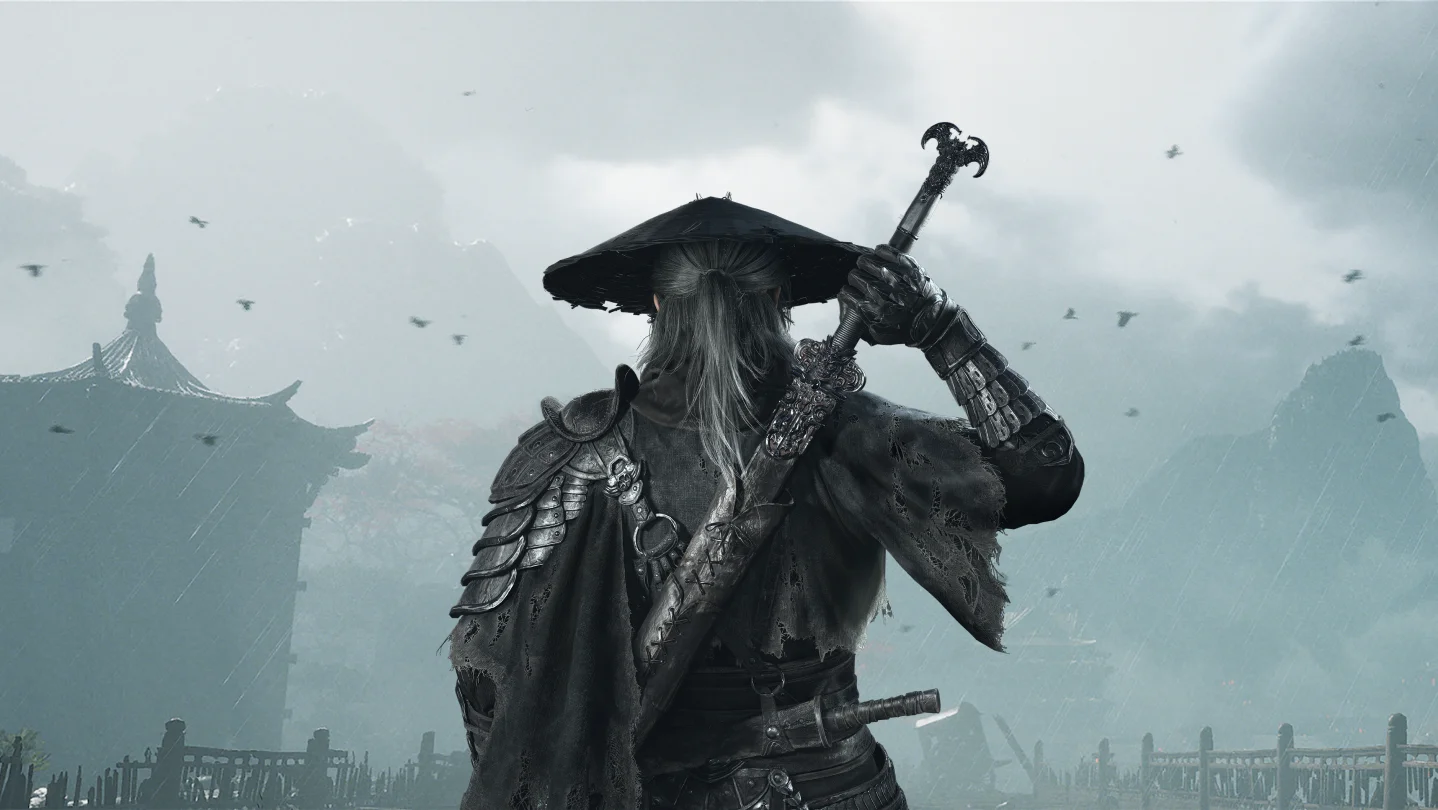
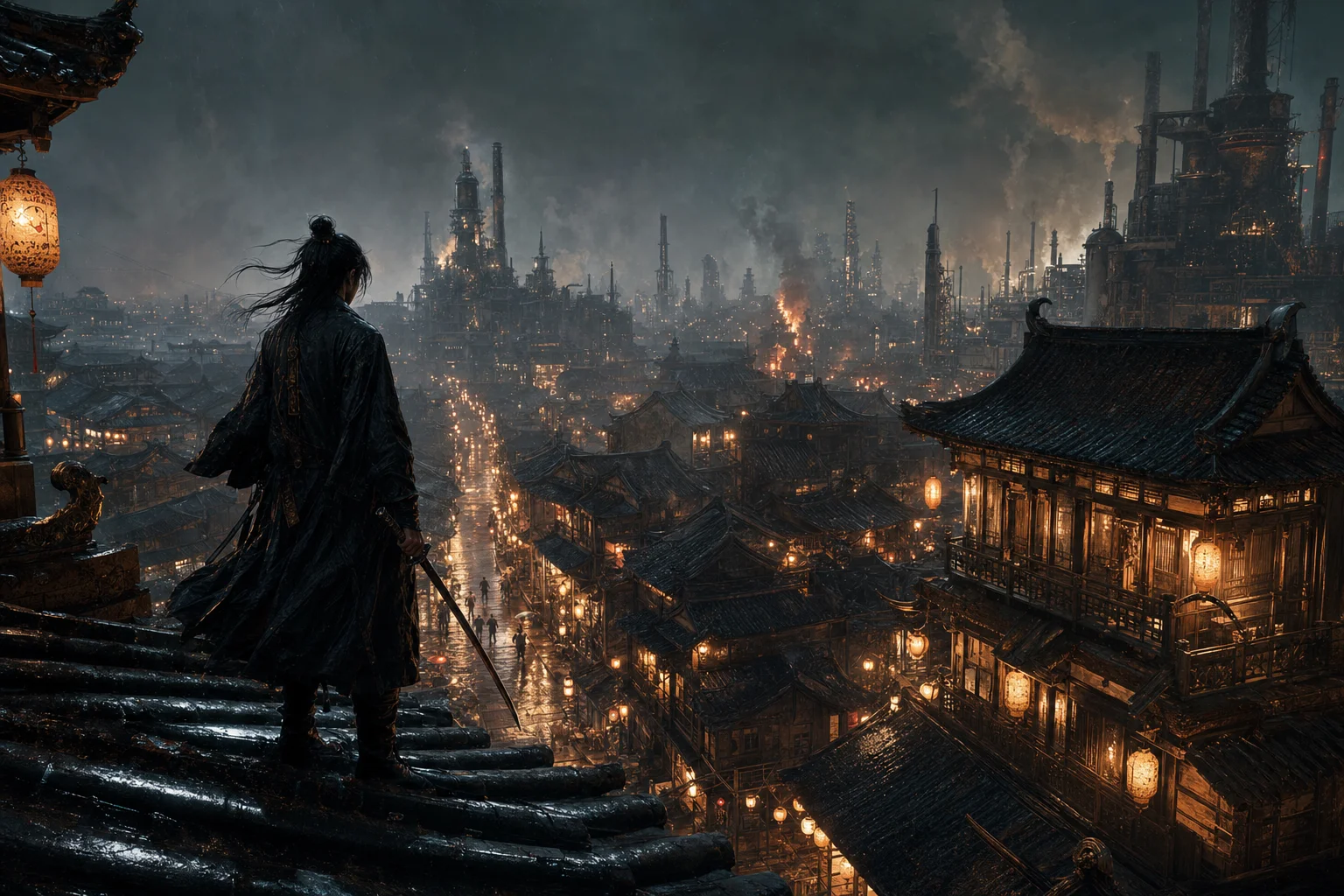
Phantom Blade Zero (影之刃零, Yǐng zhī Rèn Líng) opens inside Shadow Realm (影境) — an original kungfupunk world where you play as Soul (魂), a warrior framed for his master's death, given sixty-six days to live, and hunted by former comrades while a conspiracy spreads through the martial underworld. If you grew up on Western fantasy or soulslike action games, the pitch can feel familiar (swords, bosses, dark atmosphere) and confusing at once (no elves-and-dwarves template, no single novel everyone read in school, social logic that runs on honor and betrayal rather than quest markers). This ten-minute primer gives you the genre grammar behind the blades: what wuxia (武侠) actually is, what jianghu (江湖) actually means, and why S-GAME built a high-speed action RPG around both.
Two words, one world
Chinese players usually treat these as a pair, but they are not synonyms:
武侠 · Wuxia
A genre — stories about martial heroes (wu, 武) and chivalric action (xia, 侠)
江湖 · Jianghu
A social world — the wandering frontier of sects, outlaws, escort guards, and knights-errant outside everyday bureaucracy
In practice
Most wuxia stories are set in the jianghu; PBZ's conspiracy, master–disciple bonds, and comrade hunts all speak jianghu logic
Think of wuxia as the literary tradition — like saying "noir" or "Western." Think of jianghu as the stage — mist over rivers, inns on trade roads, swordsmen who answer to reputation rather than magistrates. Producer Liang Qwei (梁其伟) has compared PBZ's relationship to classic wuxia to how A Song of Ice and Fire relates to The Lord of the Rings: not a direct adaptation, but a story that inherits the grammar while building its own world.
What is wuxia?
Wuxia (武侠) combines 武 (wǔ, martial/military) and 侠 (xiá, chivalry or knight-errantry). At its core, wuxia is fiction about people who solve problems with trained bodies, personal honor codes, and social bonds that the state cannot easily control.
The modern form most readers know comes from 20th-century novelists — especially Jin Yong (金庸) and Gu Long (古龙) — plus decades of Hong Kong martial-arts cinema. You do not need to read any of them to play PBZ, but you will recognize the furniture immediately:
- Master–disciple bonds (师徒) that can define a lifetime — and make betrayal unbearable
- Technique names that sound like poetry turned into violence
- Personal grudges that outlast a single duel
- Codes of face, debt, and revenge that turn allies into hunters overnight
Not a mechanics guide: This series explains cultural context. We are not here to rank weapons, map combo routes, or spoil story beats.
What is jianghu?
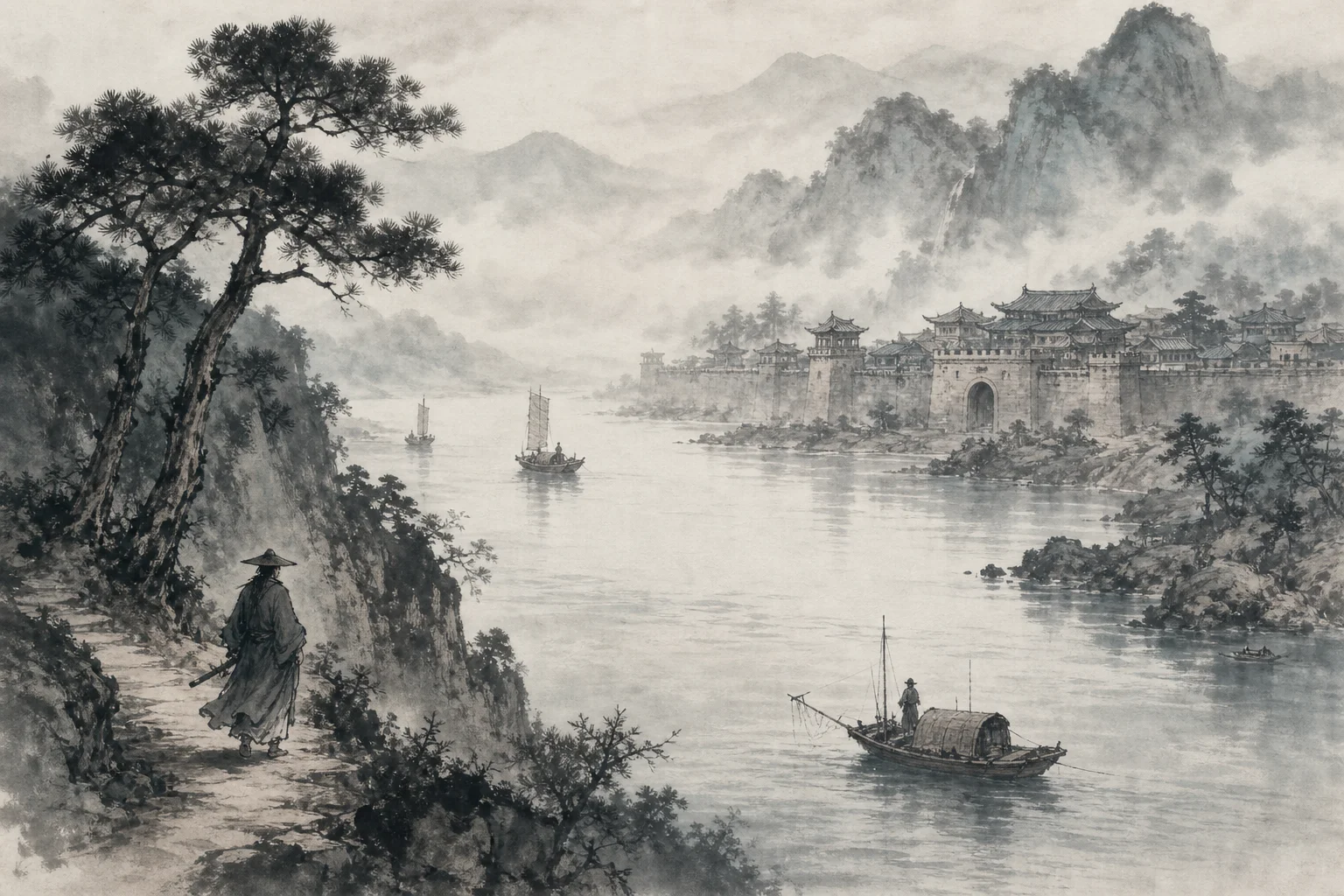
Literally, jianghu (江湖) means "rivers and lakes." By the late imperial period, fiction writers used it as shorthand for everyone who lived between villages and thrones: bandits, monks with secrets, escort guards, ruined nobles, sect disciples, and merchants who know which magistrate can be bought.
Official China in these stories still exists — emperors, exams, tax collectors — but the jianghu is where protagonists actually breathe. Steamships, mechanical augments, and corrupted warriors called Guai Mian (怪面) in PBZ sit on top of that older social layer; the emotional logic remains jianghu logic: who taught you, who you owe, who you humiliated, who now wants you dead.
Who lives in the jianghu?
Sect life
Disciples & masters 师徒
Schools pass down manuals, punish betrayal, and compete for prestige. Soul's fall from grace — accused of killing his master — is classic jianghu catastrophe.
Wandering
Knights-errant 侠客
Freelance fighters who intervene when law fails — sometimes heroic, sometimes self-serving. Reputation is currency; sixty-six days makes every choice urgent.
Comrade ties
Sworn bonds & betrayal 同门
Fellow disciples who once shared training now hunt Soul. In jianghu fiction, the deadliest enemy is often someone who knows your footwork.
Underworld
Outlaws & vendettas 恩怨
Blood feuds, sworn brotherhoods, and debts of gratitude (en, 恩) drive plots more often than abstract evil empires — including the conspiracy PBZ advertises.
Wuxia is not Western fantasy with hanfu
Western fantasy often builds from medieval Europe plus Tolkien's races and a clear epic quest. Wuxia builds from a different toolkit — and PBZ is a wuxia action RPG, not a soulslike reskin:
| Western fantasy / soulslike habit | Wuxia / jianghu habit in PBZ |
|---|---|
| Chosen one saves the world | Personal honor, frame-up, and a countdown may matter as much as "dark lord" scale |
| Races and species define culture | Sect, comrade ties, weapon school, and reputation define culture |
| Magic system with mana bars | Neigong (内功), manuals, poisons, talismans — often framed as training or esoteric art; PBZ adds phantom edges and stolen techniques |
| Tavern quest hub | Inn, teahouse, escort agency, or mountain gate — social nodes with their own rules |
| Good kingdom vs evil empire | Overlapping loyalties; yesterday's ally may be today's pursuer |
| One hero, one build | Weapon identity as character — PBZ advertises 30+ weapons, 20+ phantom edges, and dual-weapon switching |
None of this means PBZ avoids epic stakes — official copy promises a conspiracy that spans the martial world. It means the emotional logic is often social first: who taught Soul, who believes the frame-up, which comrades still owe him en (恩), and whether he can clear his name before the sixty-sixth day runs out.
The genre grammar Phantom Blade Zero keeps reusing
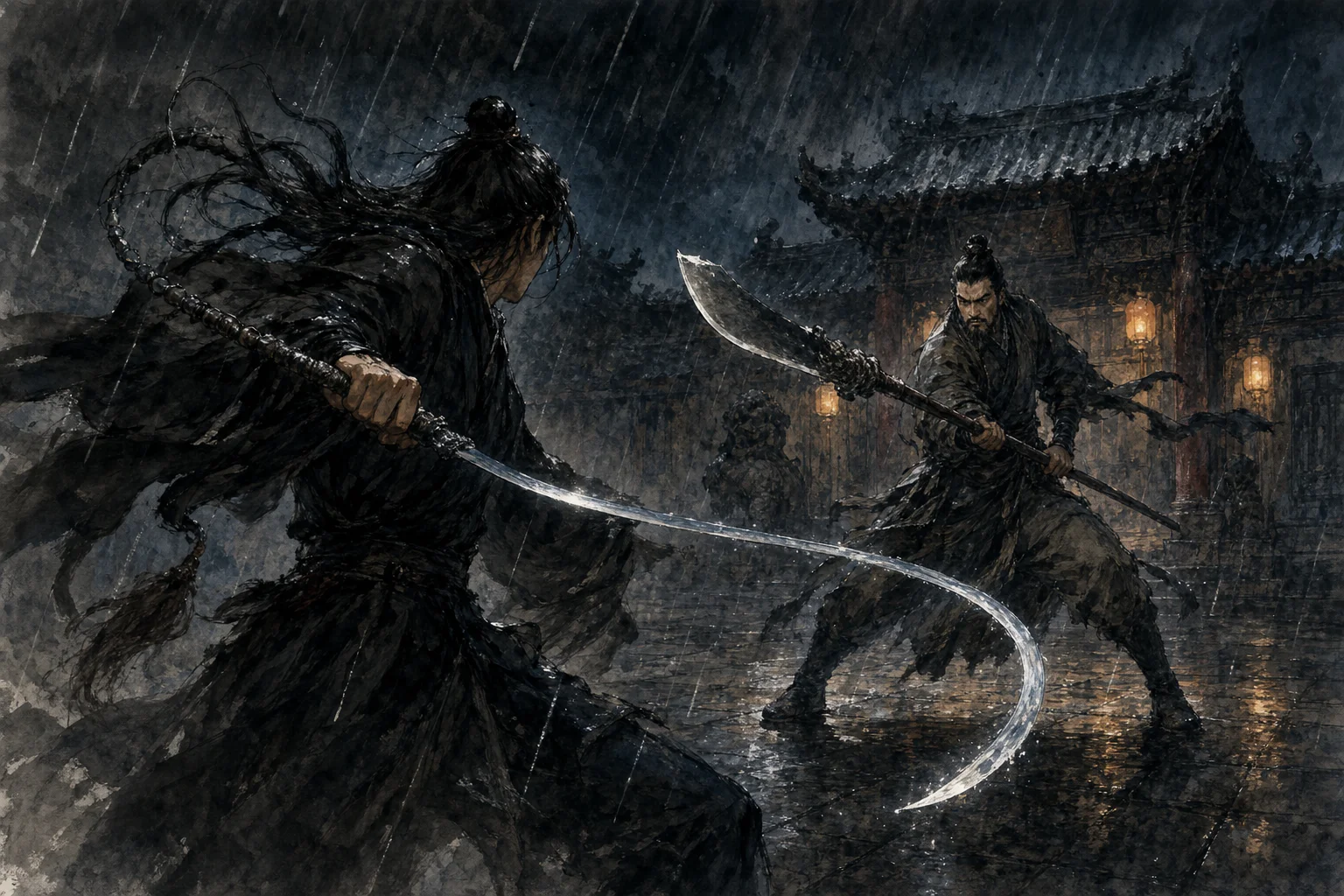
The xia code (侠)
Xia (侠) is not "lawful good." It is a personal code: loyalty to teachers and sworn brothers, willingness to suffer for others, pride that can demand a duel even when running would be smarter. Soul's story — hunted, dying, still pushing into the conspiracy — reads as xia pressure even when the world calls him a traitor. Our later article The Xia Code: Honor, Betrayal & What Makes a Hero goes deeper; for now, read every moral choice as reputation under fire, not alignment-wheel morality.
Master, frame-up, and comrade hunt
Three jianghu nightmares stack in PBZ's official premise: a dead or dishonored master (师), a frame-up that poisons your name across the martial world, and former comrades (同门) sent to finish what the law will not. That triangle is older than video games — it is how wuxia turns personal tragedy into a road movie made of blades.
Grudges, debts, and face (恩怨 · 面子)
En (恩) is a debt of kindness; yuan (怨) is a grievance. Mianzi (面子), "face," is public dignity — losing it can demand blood even when gold would be cheaper. When PBZ shows Soul cut off from allies and chased through Shadow Realm, it is simulating this gossip-and-revenge economy at action-game speed.
Weapons as culture, not just stats
Wuxia loves named moves and weapon personalities — soft swords that bend like whips, mo blades (陌刀) that sweep like infantry lines. PBZ advertises defeating powerful foes to claim their arms and signature techniques through Phantom Edges (影刃). Culturally, that promise signals depth of jianghu life — stealing a rival's art is a plot engine older than loot tables. Our series Weapons, Cinema & Kungfupunk will unpack the martial tradition; here, notice that weapon feel is wuxia logic, not generic hack-and-slash noise.
Where kungfupunk fits — briefly
PBZ is not only classical rivers-and-lakes wuxia. Official materials describe Kungfupunk — Shadow Realm where ancient codes meet machinery, smoke, and body horror. Mechanical augments and Guai Mian corruption add a steampunk / cybernetic layer on top of jianghu society. Think of wuxia as the social grammar and kungfupunk as the visual and technological weather system that sometimes breaks the rules. The next primer in this series explains that fusion directly — what Shadow Realm is, and why S-GAME uses the word kungfupunk instead of "steampunk with swords."
Why this matters for Phantom Blade Zero specifically
S-GAME's pitch is a third-person action RPG built in Unreal Engine 5 with Hong Kong martial-arts cinema motion capture — fast weapon-driven combat in an original IP rebuilt from the Rainblood (雨血) series, not a chapter-by-chapter Jin Yong adaptation. You are not playing a named hero from a famous novel. You are Soul, with a ruined heart, a ticking clock, and a name that may already be too late to save.
That design only clicks if you accept jianghu rules:
- Betrayal can come from inside your own school — and the game makes that the starting gun, not a late twist.
- Allies and enemies may share the same training; combat is personal because the relationships are personal.
- Weapons and techniques carry story weight — PBZ's dual-weapon system and phantom edges are genre promises, not cosmetic loadouts.
- Shadow Realm looks futuristic, but the arguments are ancient: honor, revenge, loyalty, and what you owe the dead.
How to read along as you play
- → When a pursuer fights with familiar footwork, ask what comrade history the animation is implying — not just what loot they drop.
- → When NPCs refuse to hear Soul's side, treat it as face and yuan (怨) logic — a frame-up is a social death sentence in jianghu.
- → Bookmark our upcoming glossary for names and translations.
- → Continue with the next primer on Kungfupunk and what Shadow Realm actually is.
Key terms to remember
Six words will cover most early confusion. Pin this table before your first duel.
| English | Chinese | Quick meaning |
|---|---|---|
| Wuxia | 武侠 | Martial chivalry fiction — the genre tradition |
| Jianghu | 江湖 | The wandering martial world outside court bureaucracy |
| Xia / knight-errant | 侠 / 侠客 | A fighter living by personal honor codes, not state law |
| Master–disciple | 师徒 | The bond that defines training, loyalty, and betrayal |
| Grudge / debt | 恩怨 | The paired logic of grievance and owed kindness |
| Comrade / fellow disciple | 同门 | People who trained under the same master — often the deadliest rivals |
What Western players often misunderstand
- "Wuxia = kung fu skin on a soulslike." PBZ is advertised as a wuxia action RPG with weapon identity and cinematic combat — the social rules matter as much as the parry timing.
- "I must know a famous novel first." PBZ is original fiction with genre inheritance, not a direct adaptation checklist.
- "Jianghu means open-world sandbox." Here it means martial-world social logic — conspiracy, sect ties, and reputation — inside a story-driven action game.
- "Every Chinese game is Journey to the West." PBZ draws on wuxia, Hong Kong cinema, and S-GAME's Rainblood IP — a different shelf entirely.
- "Steampunk means the culture layer is Western." Kungfupunk keeps jianghu ethics; the machines are dressing on the same old arguments about loyalty and corruption.
Where to go next
You now have the vocabulary for rivers-and-lakes society and martial chivalry fiction. The next article in this series explains Kungfupunk — how Shadow Realm fuses wuxia with steam, machinery, and corrupted flesh, and why S-GAME treats that fusion as a cultural project, not a visual gimmick.