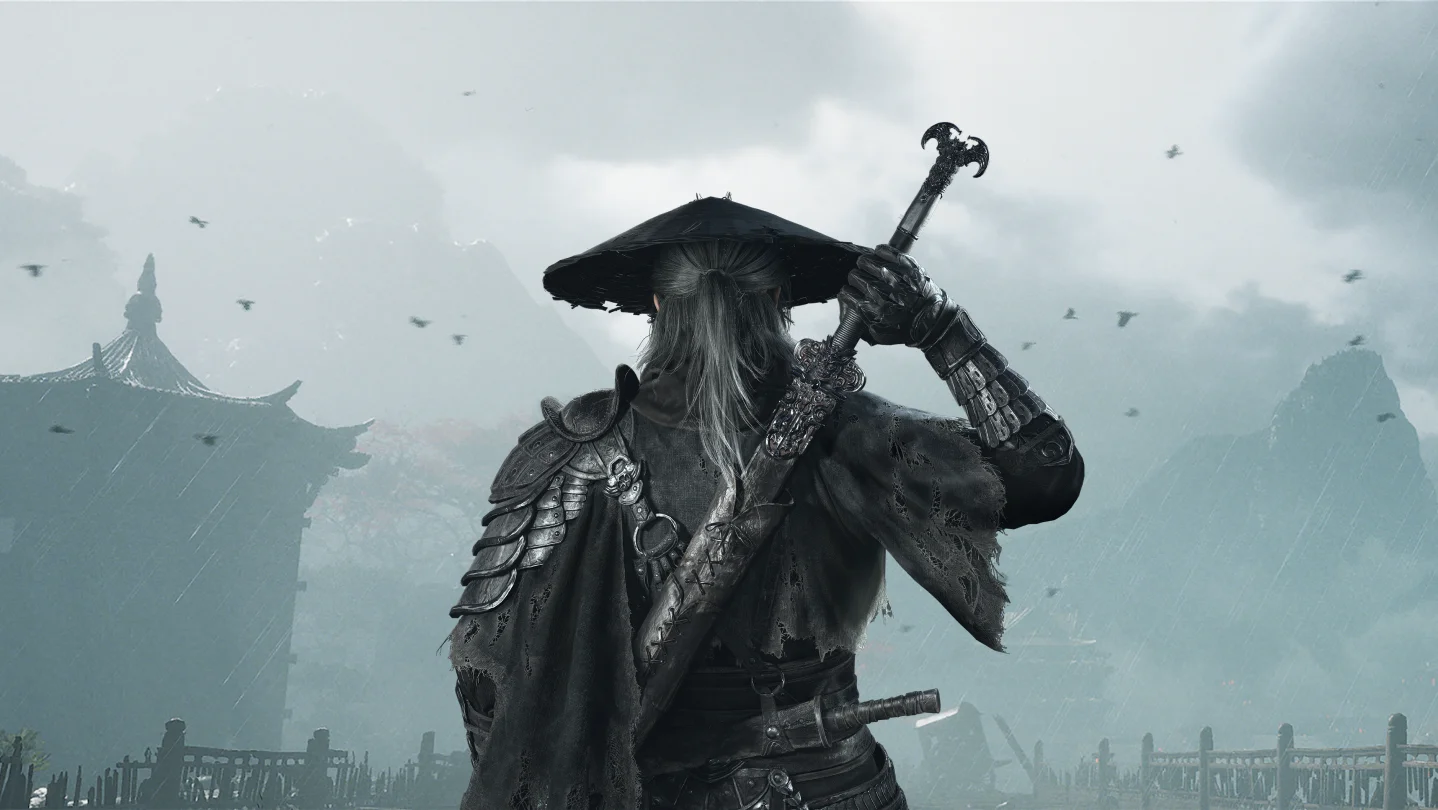
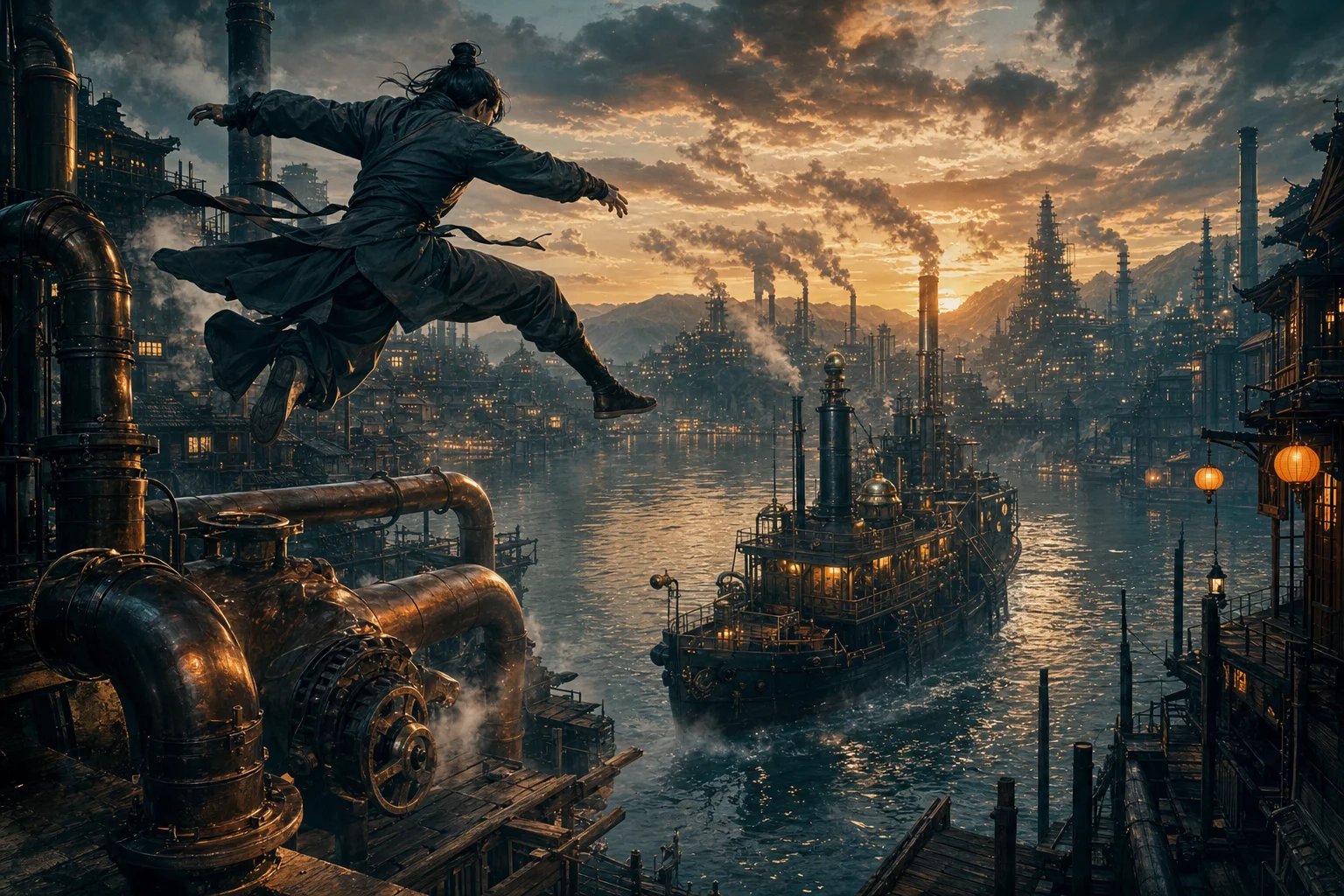
Steamships on misty lakes. Mechanical augments grafted onto martial artists. Swordsmen who still answer to master, comrade, and grudge — even when the city behind them glows like a foundry. S-GAME calls this fusion Kungfupunk (武侠朋克), and the game is set in an original world named Shadow Realm (影境, Yǐngjìng). If you read our jianghu primer, you already know the social grammar. This nine-minute article explains the other half of the pitch: what kungfupunk is trying to be, why it is not "steampunk with a katana skin," and how Shadow Realm stacks wuxia tradition, industrial fantasy, and mysticism into one playable conspiracy.
Kungfupunk in one paragraph
Producer Liang Qwei (梁其伟) has described kungfupunk as a modernization of wuxia spirit — not a costume swap. The game keeps the emotional core Chinese audiences associate with martial heroes: loyalty, rebellion, doomed honor, love and vendetta under pressure. Then it pushes those values through a world where greed also drives mechanical transformation, steam infrastructure, and body-horror corruption — enemies called Guai Mian (怪面, "monster faces") who traded flesh for power. Western players can read it as a cousin to steampunk and cyberpunk, but S-GAME's stated goal is cultural: make the xia (侠) code legible globally without turning the game into a lecture on Chinese history.
武侠 · Wuxia layer
Jianghu society — masters, comrades, frame-ups, conspiracies, weapon schools
朋克 · Punk layer
Steam, factories, augments, industrial ruins — technology that distorts the martial world
影 · Shadow layer
Mysticism, soul/body separation, dreamlike realities — rules that bend when the plot demands it
Why "kungfupunk" and not just steampunk
Steampunk usually imagines Victorian Europe with brass gears and airships. Cyberpunk usually imagines corporate dystopia with neon and neural jacks. Kungfupunk, as PBZ uses the word, anchors itself in Chinese martial culture first:
| Label | Default cultural center | Typical mood | PBZ's relationship |
|---|---|---|---|
| Steampunk | Industrial West, empire, invention | Retro-future nostalgia, class satire | Borrowed machinery — steamships, pipes, foundries in Shadow Realm |
| Cyberpunk | Corporate megacity, networked bodies | Dystopia, identity fracture | Borrowed body replacement — augments, soul/ flesh split in official interviews |
| Kungfupunk | Jianghu, xia ethics, weapon tradition | Honor vs corruption under industrial pressure | The game’s stated identity — wuxia is the grammar, punk is the weather |
That ordering matters for reading the story. When Soul (魂) is framed for his master's death and hunted by former comrades, the conflict is jianghu logic. When a warrior becomes a Guai Mian, the horror is technological greed layered on top of martial-world temptation — closer to "forbidden art /走火入魔" stories than to a random sci-fi zombie.
Non-official framing: "Kungfupunk" is S-GAME's marketing and creative label. This article explains how they use it in interviews and store copy — not a textbook genre term outside PBZ fandom.
What is Shadow Realm?
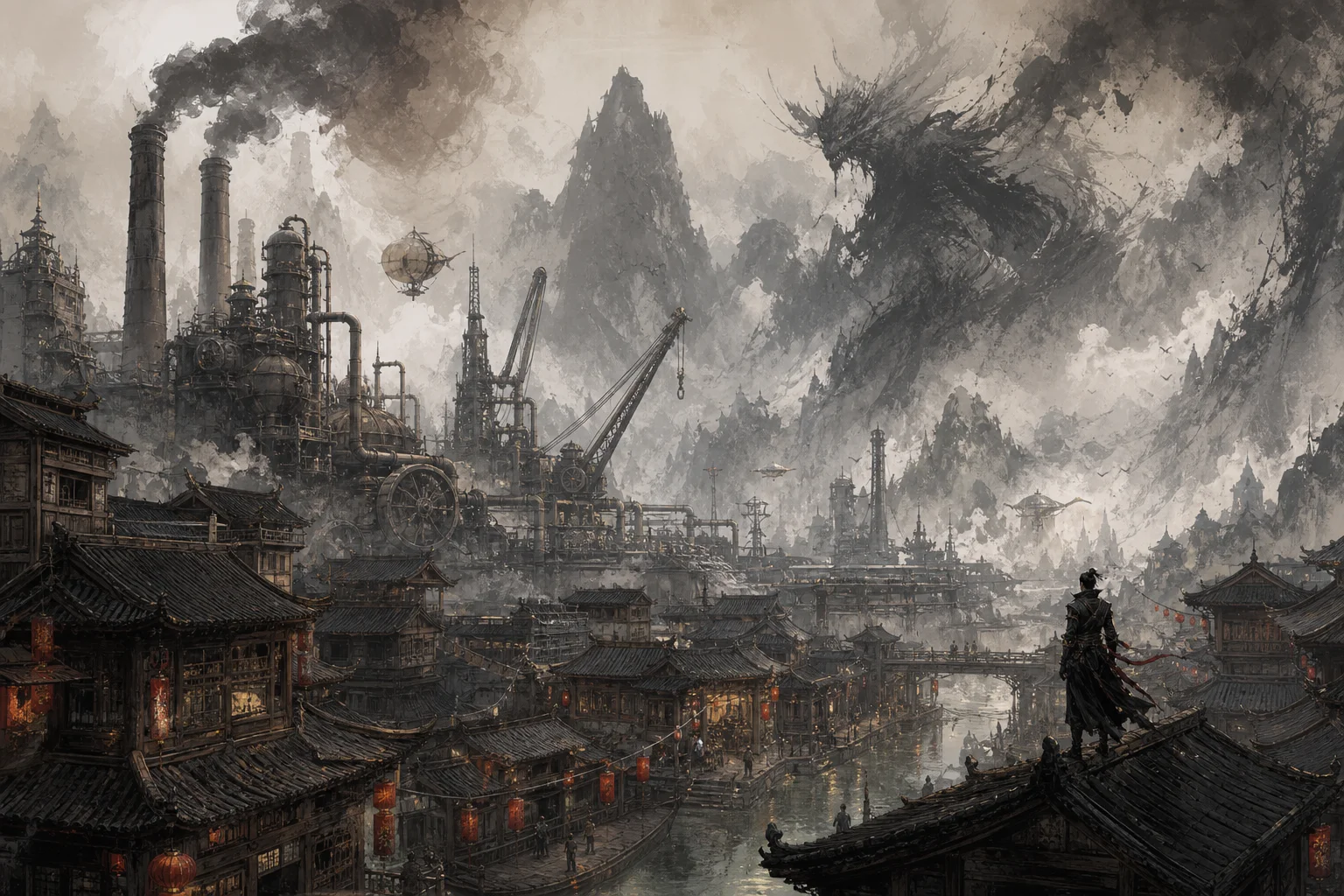
Shadow Realm (影境) is the fictional setting named in Chinese official materials. It is an original world — not a map of Qing dynasty China, not a chapter of Journey to the West. Liang has compared PBZ's relationship to classic wuxia to how A Song of Ice and Fire relates to The Lord of the Rings: inheritance of mood and archetype, not a licensed retelling.
Official descriptions list four ingredient tags: Chinese wuxia, steampunk, mysticism, and jianghu legend. In practice, that means you should expect:
- Recognizable martial geography — inns, sect politics, personal vendettas, weapon schools
- Industrial intrusions — steam transport, mechanical limbs, factory smoke on the horizon
- Esoteric ruptures — soul and body separation, dreamlike or parallel spaces mentioned in interviews
- Horror at the edge — warriors who over-augment until humanity frays (Guai Mian)
The English title Phantom Blade Zero points at the series weapon fantasy — Phantom Edges (影刃) and stolen techniques — while the Chinese title keeps the "shadow / phantom" (影) motif that also names the world (影境). Shadow is not just aesthetic smoke; it signals that reality in this setting may be layered or unstable.
Guai Mian: when the punk layer turns monstrous
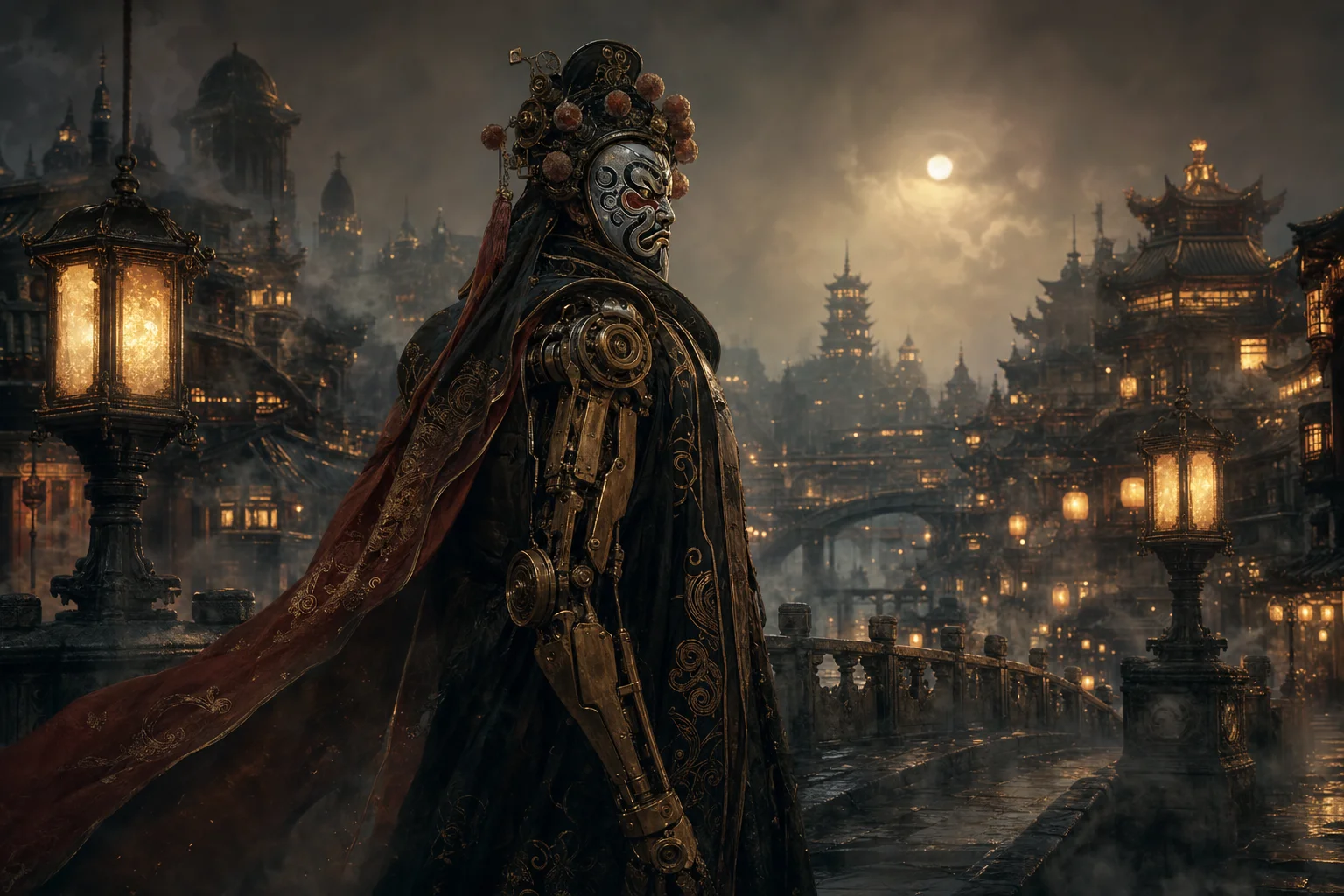
Store copy and interviews describe warriors who, driven by desire, undergo mechanical modification and fall into corruption as Guai Mian. Culturally, read them at two levels:
- Genre trope: the martial artist who pursues forbidden power — a cousin to demonic cultivation, poison arts, or "走火入魔" (qì deviating into madness)
- Kungfupunk image: flesh meeting brass — body horror that makes industrial greed visible on the skin
PBZ's later Culture article Guai Mian: When Warriors Trade Flesh for Power will go deeper once more story is public. For now, treat every Guai Mian as a warning about what Shadow Realm does to people who treat the body as upgradeable equipment — while the jianghu still asks whether they were villains, victims, or both.
What S-GAME says they are building
Global interface, local soul
In interviews, Liang has argued that wuxia themes — chivalry, passion, fate (侠义、情仇、宿命) — need emotional translation, not glossary footnotes. The design goal is recognizable human stakes: protect someone, refuse an unjust order, pay for loyalty with blood. Kungfupunk visuals (steam, neon-adjacent lighting, mechanical silhouettes) are meant to attract players who do not already read wuxia novels, while the plot still runs on jianghu causality: who betrayed whom, and why the martial world believes it.
Weapons before numbers
Another repeated production principle: each weapon should express a cultural fighting idea before it becomes a DPS stat. Soft swords that are hard to block, mo blades that advance like infantry lines — these choices connect kungfupunk back to real martial tradition, not just sci-fi gun replacements. Our Weapons, Cinema & Kungfupunk series will unpack that combat layer.
Hong Kong cinema as motion DNA
PBZ's combat presentation is tied to Hong Kong martial-arts cinema's golden age — films like Blade (《刀》), New Dragon Gate Inn (《新龙门客栈》), and The Legend of the Swordsman (《笑傲江湖之东方不败》) cited in interviews. Unreal Engine 5 motion capture chases the feeling of yielding softness vs sudden hardness — the cinematic grammar wuxia fans call "real-time gambling between fighters." Kungfupunk here is not only environment art; it is also how the camera and timing sell the fight.
Influences that are not canon
Liang has also named anime and manga touchstones — Battle Angel Alita (《铳梦》), Ghost in the Shell (《攻壳机动队》), Berserk (《剑风传奇》), Vampire Hunter D — for soul/body questions, industrial gothic mood, and surreal violence. These are creative influences, not proof that Shadow Realm is set in Neo-Tokyo. Use them to understand why PBZ might ask whether a person remains themselves after their limbs are replaced — a cyberpunk question wearing wuxia clothing.
Three layers to keep straight while you play
Shadow Realm gets confusing when every screenshot looks like a different genre. This table helps:
| Layer | What you see | How to read it |
|---|---|---|
| Wuxia / jianghu | Soul's frame-up, comrade hunts, sect politics, blade duels | Genre convention — social cause and effect |
| Kungfupunk tech | Steamships, pipes, augments, Guai Mian grafts | Aesthetic + thematic — power corrupts through industry |
| Shadow mysticism | Dream spaces, soul/body split, reality shifts in trailers | Game fiction — follow official story releases; avoid fan-theory canon |
Our living doc How Phantom Blade Zero Uses Tradition will track which trailer beats are confirmed lore vs visual metaphor as more gameplay ships.
How kungfupunk shows up in official pitch points
Without spoiling unreleased story, these recurring public elements are safe anchors:
- Soul's sixty-six-day clock — jianghu urgency inside a body that is already failing
- Dual-weapon switching and 30+ arms — martial identity as loadout, not generic fantasy classes
- Phantom Edges — stealing a defeated foe's weapon and signature technique; shadow-as-theft motif
- Industrial backdrops — steam on water, copper machinery, ruined factories beside old towns
- Mechanical lion / folk images re-engineered — tradition visually corrupted by tech (seen in promotional material)
How to read along as you play
- → When a scene looks sci-fi, ask what jianghu sin it visualizes — ambition, betrayal, forbidden power.
- → When combat feels like a Hong Kong film, that is intentional — kungfupunk includes camera and timing, not just set dressing.
- → Revisit Wuxia & Jianghu in 10 Minutes if sect or comrade vocabulary slips.
- → Bookmark the upcoming glossary for Shadow Realm terms.
Key terms to remember
| English | Chinese | Quick meaning |
|---|---|---|
| Kungfupunk | 武侠朋克 | S-GAME's label for wuxia spirit fused with industrial / body-tech punk aesthetics |
| Shadow Realm | 影境 | PBZ's fictional world |
| Guai Mian | 怪面 | Corrupted warriors who underwent mechanical transformation |
| Phantom Edge | 影刃 | Signature shadow-blade system; claim foes' weapons and arts |
| Soul | 魂 | Protagonist — dying, framed, hunted |
| Steampunk (ingredient) | 蒸汽朋克 | Official tag for steam-age machinery in Shadow Realm — not the whole identity |
What Western players often misunderstand
- "Kungfupunk = random genre mash-up." Interviews frame it as wuxia ethics first, industrial fantasy second.
- "Shadow Realm is historical China plus robots." It is an original setting with wuxia inheritance, not a dated alternate history.
- "Guai Mian are just zombies." They are tied to desire, augmentation, and martial-world corruption tropes.
- "Cyberpunk influences mean it is set in the future." Influences ≠ setting; Shadow Realm is its own timeline.
- "Steampunk replaces jianghu." Soul's comrade hunt and master frame-up prove the social layer still drives the plot.
Where to go next
You now have a frame for Shadow Realm: jianghu heart, industrial pressure, shadow mysticism at the edges. The next article in this series traces the Rainblood (雨血) lineage — how a student thesis game became a mobile series and finally this UE5 action RPG — and whether newcomers need to play the older titles first.