
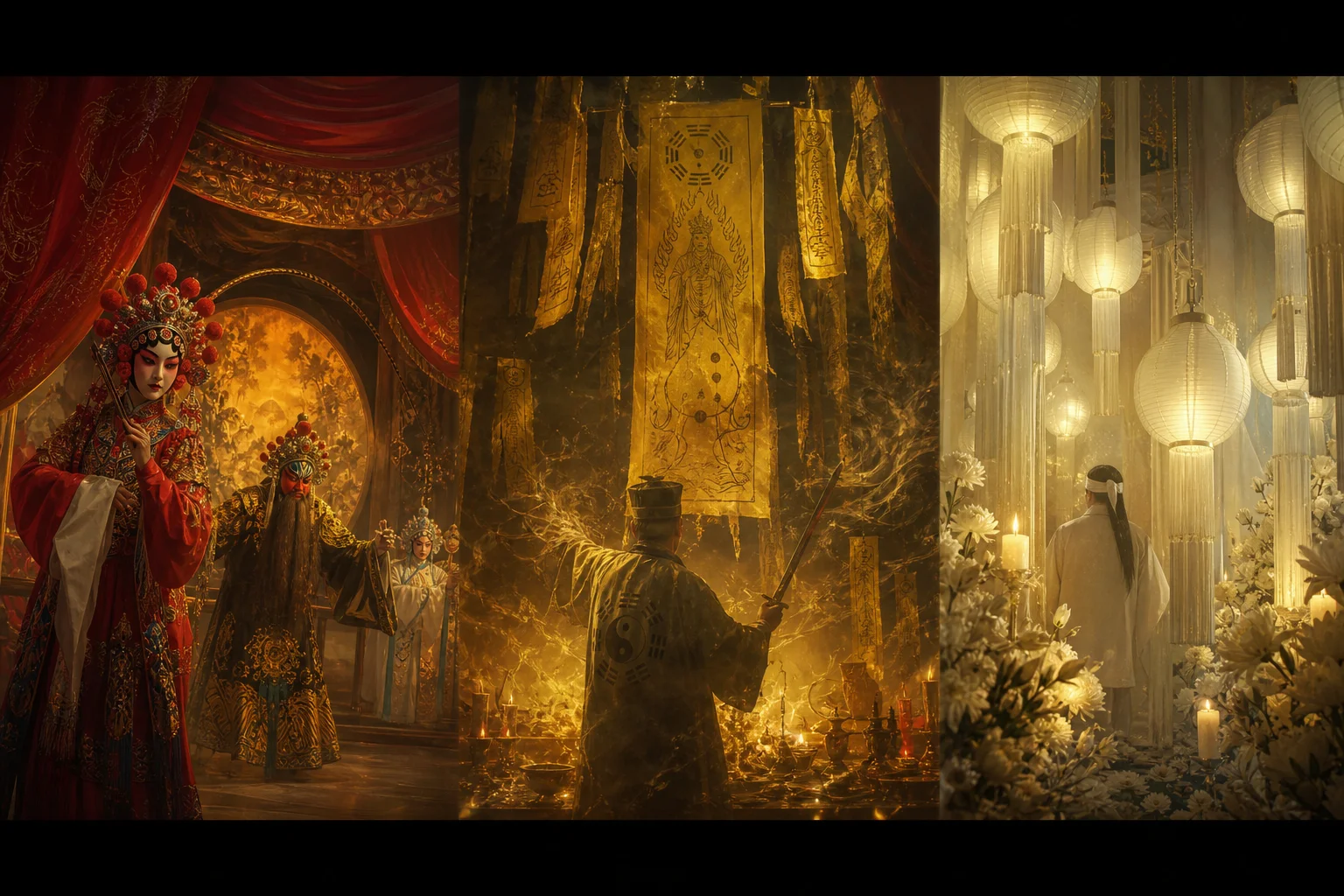
Liyue is not only mountains and contracts. It is also performance: opera on a harbor stage, talismans pasted on doorframes, and a funeral parlor that sells plum blossoms with a wink. Three playable characters map cleanly onto real Chinese cultural trades — Yun Jin (云堇) the opera singer, Chongyun (重云) the exorcist's heir, and Hu Tao (胡桃) the funeral director. This article explains what each role echoes in tradition, how they differ from Xiao's battlefield exorcism, and why HoYoverse gave Liyue its most theatrical mortals.
Light spoilers
Mentions Hu Tao's Wangsheng role, Zhongli's connection to the parlor, and Chongyun's family trade. No full character story quest walkthroughs.
Three trades, one theme: facing the uncanny
Chinese communities historically handled fear through specialists — not everyone banished ghosts or buried the dead. You hired or revered people whose job it was to translate between the living and whatever lay outside ordinary life. Liyue turns those specialists into neighbors you can party with:
Yun Jin
Opera — public myth told on stage
Chongyun
Exorcism — private ritual and yang energy
Hu Tao
Funeral rites — death as social transition
Yun Jin and Chinese opera
Yun Jin (云堇) — her name puns on 云锦 (cloud brocade), silk woven with patterns like drifting clouds — leads the Yun-Han Opera troupe. Her performances adapt classical stories for harbor crowds: history, myth, and moral argument delivered with painted faces and stylized movement.
The closest real-world anchor is Peking opera (京剧) and the broader tradition of xiqu (戏曲) — Chinese staged opera. Key ideas for Western players:
- Role types — sheng (生) male leads, dan (旦) female roles, jing (净) painted-face characters, chou (丑) clowns; each carries fixed gesture vocabulary.
- Face paint — color tells character: red loyalty, white treachery, black blunt honesty — a visual glossary the audience reads instantly.
- Story mining — opera librettos draw from history, novels, and folklore; Yun Jin's habit of rewriting tales for Liyue mirrors real opera adaptation.
- Public culture — opera was mass entertainment and moral education before streaming — a harbor stage is the right metaphor.
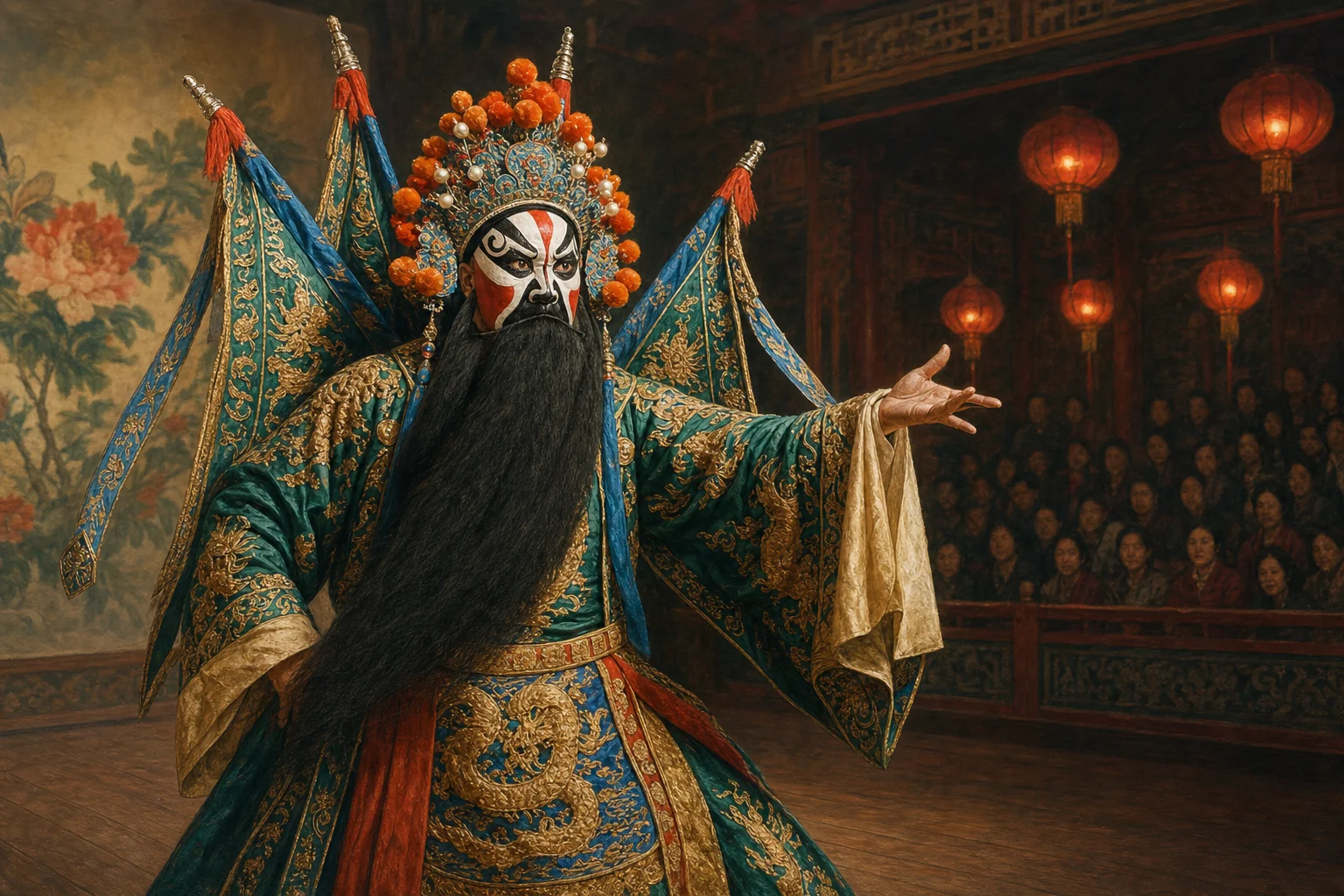
Yun Jin also bridges Liyue and other nations through performance — a nod to how Chinese opera troupes toured, borrowed, and exported stories along trade routes. She is culture as export product, not only heritage in a museum.
Chongyun and the exorcist tradition
Chongyun (重云) comes from a family of fangshi (方士) — ritual specialists who blend Daoist practice, martial arts, and folk demon lore. His "pure yang body" (纯阳之体) is game fiction, but the trade is real: communities once employed experts to clear hauntings, bless homes, and write talismans.
How Chongyun differs from Xiao:
| Chongyun | Xiao | |
|---|---|---|
| Scale | Household hauntings, local monsters | Archon War residue, regional karma |
| Style | Family trade, talismans, youthful zeal | Ancient yaksha war, isolation, masks |
| Tone | Comedy of excess yang energy | Tragedy of endless vigil |
| Root | Fangshi / folk exorcism | Buddhist yaksha guardians |
Talismans (符), incantations, and sword dances appear in both religious manuals and village practice. Chongyun is the friendly face of a tradition that could be as theatrical as opera — and as serious as a funeral.
Hu Tao and funeral customs
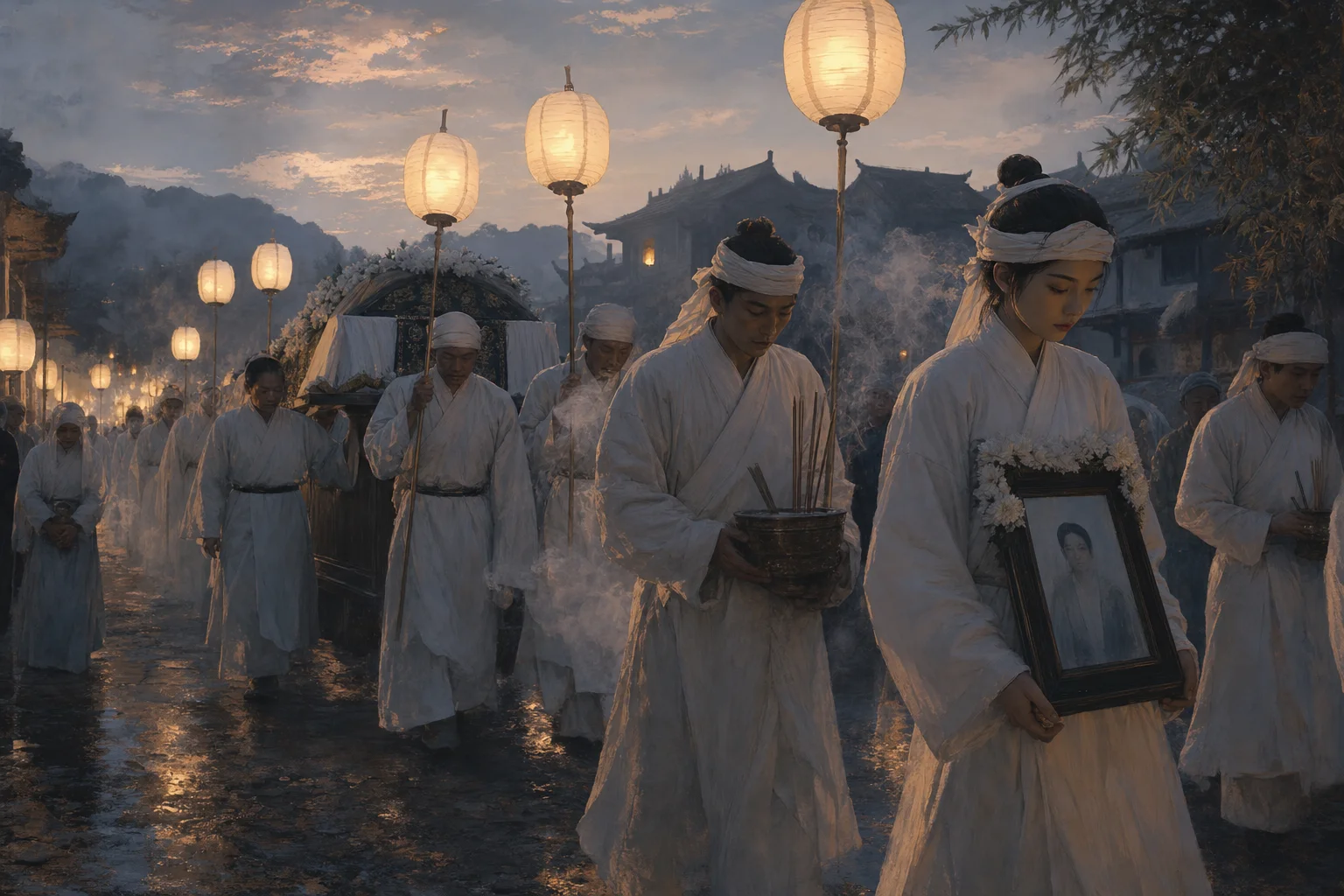
Hu Tao (胡桃) directs the Wangsheng Funeral Parlor (往生堂) — "Hall of the Journey to the Other Shore." The name invokes Buddhist rebirth / Pure Land language: death as passage, not only ending. In real Chinese funeral culture, rites mark that passage for both the dead and the living who remain.
Common elements Liyue echoes (often with playful exaggeration):
- Professional mourners and directors — specialists who manage procedure so grief has a script.
- Offerings and incense — material care for the deceased's status in the afterlife.
- Processions — public movement from home to grave or crematorium; community witnesses the transition.
- Taboo and humor — many cultures use jokes at wakes to bleed tension; Hu Tao pushes this to anime extremes.
Zhongli consulting at Wangsheng links the Geo Archon's contract theme to mortality — who keeps accounts when a life ends? For his layer, see Morax, Zhongli & the God of Contracts.
Why these three belong in one article
Opera, exorcism, and funeral work all manage liminal moments — when normal rules pause and someone must speak for the community:
Stage
Yun Jin 云堇
Makes myth visible — heroes and villains for a paying crowd; fear and virtue at a safe distance.
Threshold
Chongyun 重云
Clears the haunted room — restores daily life when something uncanny breaks in.
Passage
Hu Tao 胡桃
Closes the account of a life — helps the living let go with rites, symbols, and stubborn cheer.
What the game freely invents
HoYoverse compresses centuries of regional variation into three charismatic teenagers and young adults. Not every funeral director sings marketing jingles; not every exorcist has a supernatural yang constitution. Treat these characters as stylized ambassadors of real trades — useful entry points, not ethnographic documentaries.
Key terms
| English | Chinese | Quick meaning |
|---|---|---|
| Yun Jin | 云堇 | Opera star; name echoes cloud brocade (云锦) |
| Chongyun | 重云 | Exorcist heir; fangshi family trade |
| Hu Tao | 胡桃 | Wangsheng director; playful funeral customs |
| Wangsheng Funeral Parlor | 往生堂 | "Passage to next life" hall — funeral rites |
| Peking opera / xiqu | 京剧 / 戏曲 | Traditional Chinese staged opera |
| Fangshi | 方士 | Ritual specialist — exorcism, talismans, esoteric arts |
| Talisman | 符 |
Next in this series: Ganyu, Shenhe & the Adeptus Disciples — half-immortal stewards raised on mountain contracts rather than harbor stages.