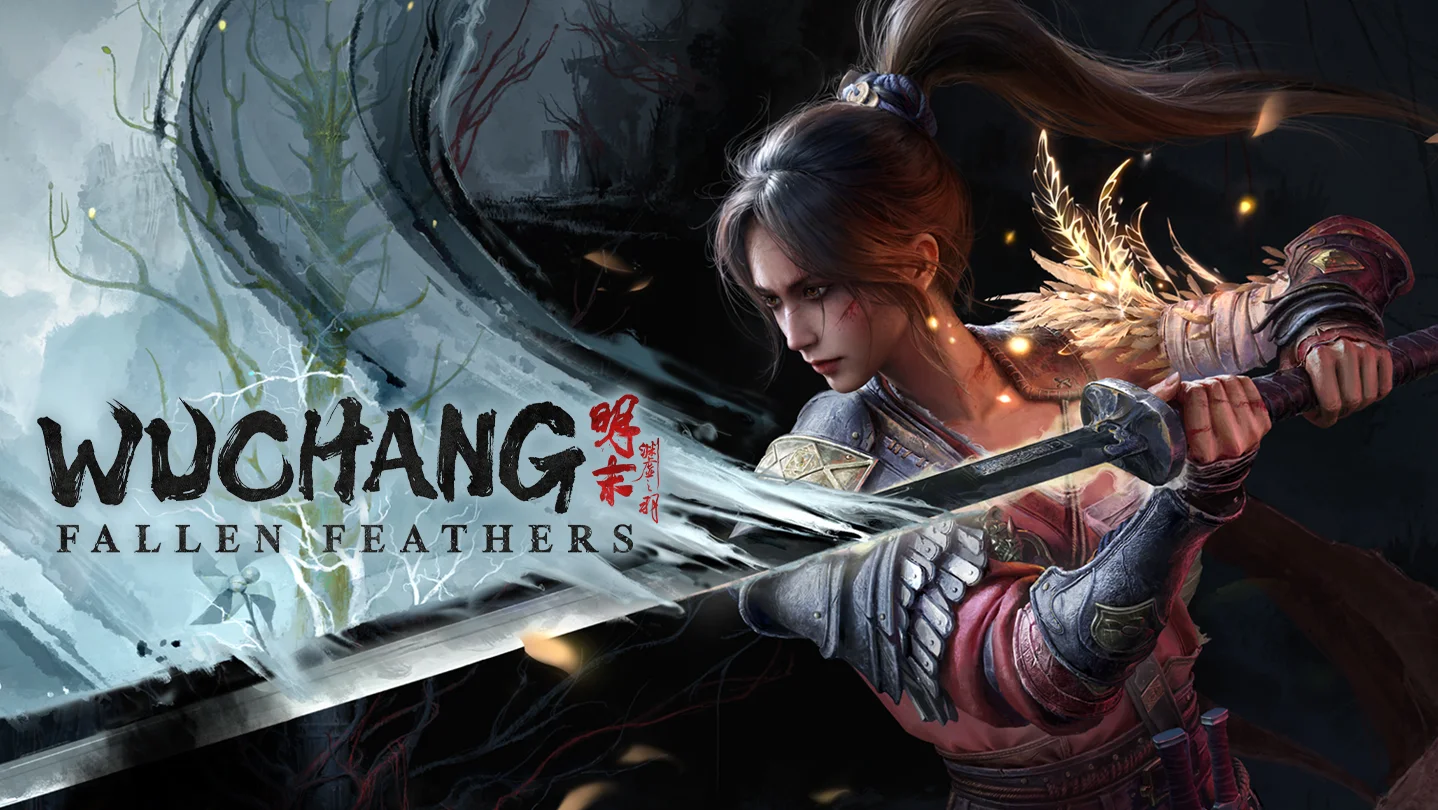
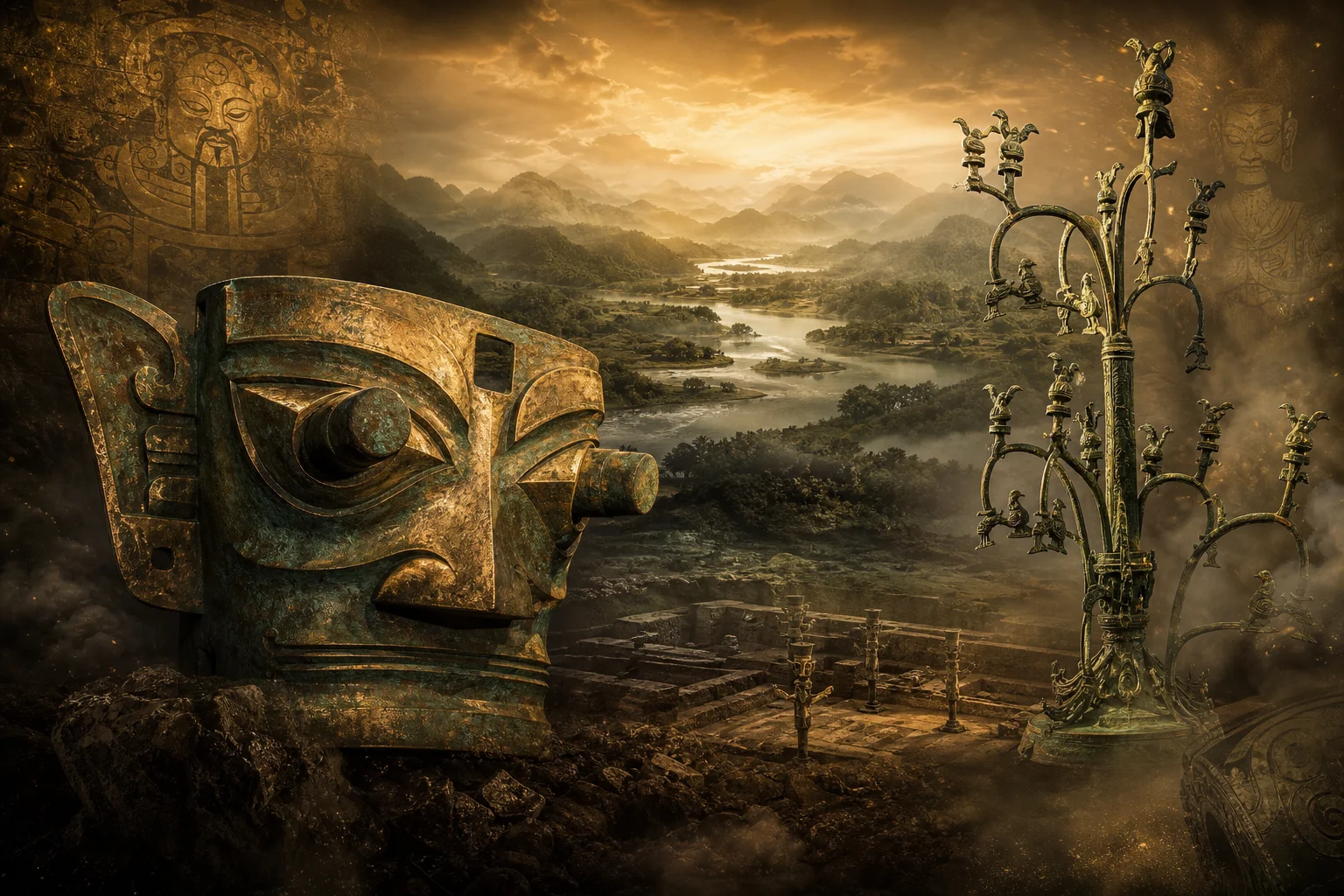
When WUCHANG: Fallen Feathers shows you bronze masks, giant sacred trees, and characters mutating into winged horrors, it is not inventing symbols from nothing. Sichuan carries two overlapping pasts: an archaeological past (Sanxingdui, Jinsha, real bronze workshops from three thousand years ago) and a literary-mythic past (kings who turned into cuckoos, feathered immortals in the Classic of Mountains and Seas, the Bo people of ancient chronicles). This article separates what we can dig up from what we can only read — and shows how the game stacks both beneath its 1647 war story.
Three layers you need to tell apart
Western players often treat "Chinese mythology" as one undifferentiated cloud. For Shu, three categories matter:
Archaeology
Sanxingdui (1986), Jinsha (2001) — bronze, gold, jade, ritual pits; no readable texts from the culture itself
Classical literature
Huayang Guo Zhi, Shu Wang Benji, Shanhai Jing — written centuries later, reshaping memory into narrative
Game dramatization
WUCHANG — merges all of the above with Feathering plague, Red Mercury, and cosmic horror; not official canon for any source
Keep those boxes separate and the game becomes richer, not confusing. A Sanxingdui mask is real. Du Yu turning into a cuckoo is a legend. A boss growing wings from Feathering is the developers' fiction built on both.
What was ancient Shu?
Shu (蜀) originally named the Sichuan Basin and its surrounding mountains — the same geography where WUCHANG is set. In Chinese historiography, "ancient Shu" refers to kingdoms and cultures that flourished here long before the Qin dynasty unified China in 221 BCE.
Shu was never isolated. Archaeology shows trade in bronze, ivory, and seashells; later texts describe routes linking the basin to the Yangtze and beyond. But Shu did develop a visual language that looks unlike contemporary Central Plains culture: protruding eyes, stylized birds, bronze "divine trees," and masks that seem designed for ritual performance rather than portraiture.
By the time of the Han dynasty, Shu was absorbed into imperial administration — but its mythic memory persisted in local chronicles and poetry. When Leenzee builds ruined temples and overgrown sanctuaries in UE5, they are drawing on the idea that Sichuan's ground is layered: Ming battlefields on top, older sacred sites underneath.
Sanxingdui and Jinsha: what archaeology actually found
Sanxingdui (三星堆)
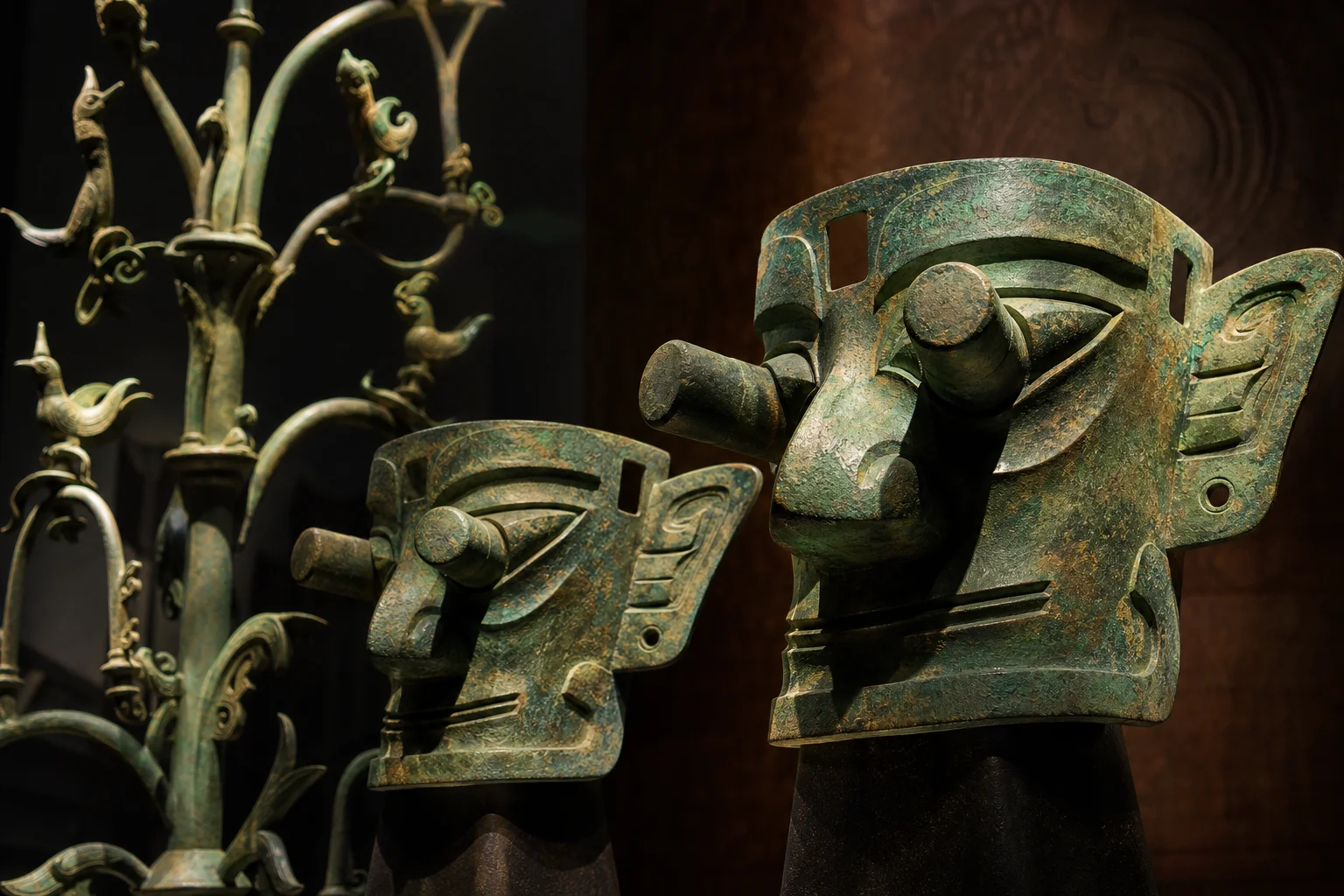
In 1986, workers near Guanghan (广汉), north of Chengdu, uncovered two sacrificial pits filled with bronzes, jades, and gold objects that rewrote textbooks. The Sanxingdui (三星堆, Sānxīng Duī) site dates roughly to the 12th–11th centuries BCE — contemporaneous with late Shang dynasty civilization in the north, but visually distinct.
Signature finds include:
- Bronze human masks with protruding cylindrical eyes and angular features — not realistic portraits, but ritual faces
- Bronze standing figures — some over two meters tall, suggesting temple or pit display
- Bronze sacred trees (青铜神树) — tiered trees with birds perched on branches, often interpreted as cosmological models linking earth and sky
- Gold scepters and bronze zhang 杖 — authority objects whose exact ritual function is still debated
No written documents from Sanxingdui itself have survived. We know how their artists worked bronze at extraordinary scale; we do not know what they called their gods in their own words. That silence is why later legends — and modern games — fill the gap with narrative.
Jinsha (金沙)
In 2001, the Jinsha (金沙) site in Chengdu yielded another cache — including the famous Golden Sun Bird (太阳神鸟金饰), a thin gold foil disk with four birds flying around a central sun. Jinsha culture is related to Sanxingdui; many scholars see continuity or succession between the two. The sun-bird motif appears in modern Chengdu city branding and surfaces again in game environments that mix gold, bronze, and avian symbolism.
Archaeology vs. game: Sanxingdui and Jinsha are real, protected heritage sites with museums and ongoing excavation. When WUCHANG places mask-like enemies or tree-shaped set pieces in ruins, it is quoting these finds — not claiming to depict specific rituals we understand completely.
The Bo people and the kings in chronicles
Later Han and Jin-era texts — especially the Huayang Guo Zhi (华阳国志, Huáyáng Guó Zhì, "Chronicle of the States South of Mount Hua") — preserve stories about Shu kings and the Bo people (僰人, Bó rén), an ancient population associated with the region's deep past. These are not excavation reports; they are literary history written a millennium or more after the events they describe.
Official game materials and community summaries often cite a narrative arc that runs like this: an early Shu ruler teaches the Bo to use a divine power; the power corrupts or weakens the people; a faction led by Bie Ling (鳖灵, Biē Líng) rebels; a sacred tool — the chisel (凿子, záo zi) — breaks into pieces; the righteous king loses immortality and becomes mortal, founding a new life on earth. That plot skeleton matches adapted versions of Du Yu / Bie Ling traditions more than any single archaeological layer. Treat it as mythic backstory the game amplifies, not as a transcript of a Sanxingdui ritual.
Du Yu, Bie Ling, and the king who became a bird
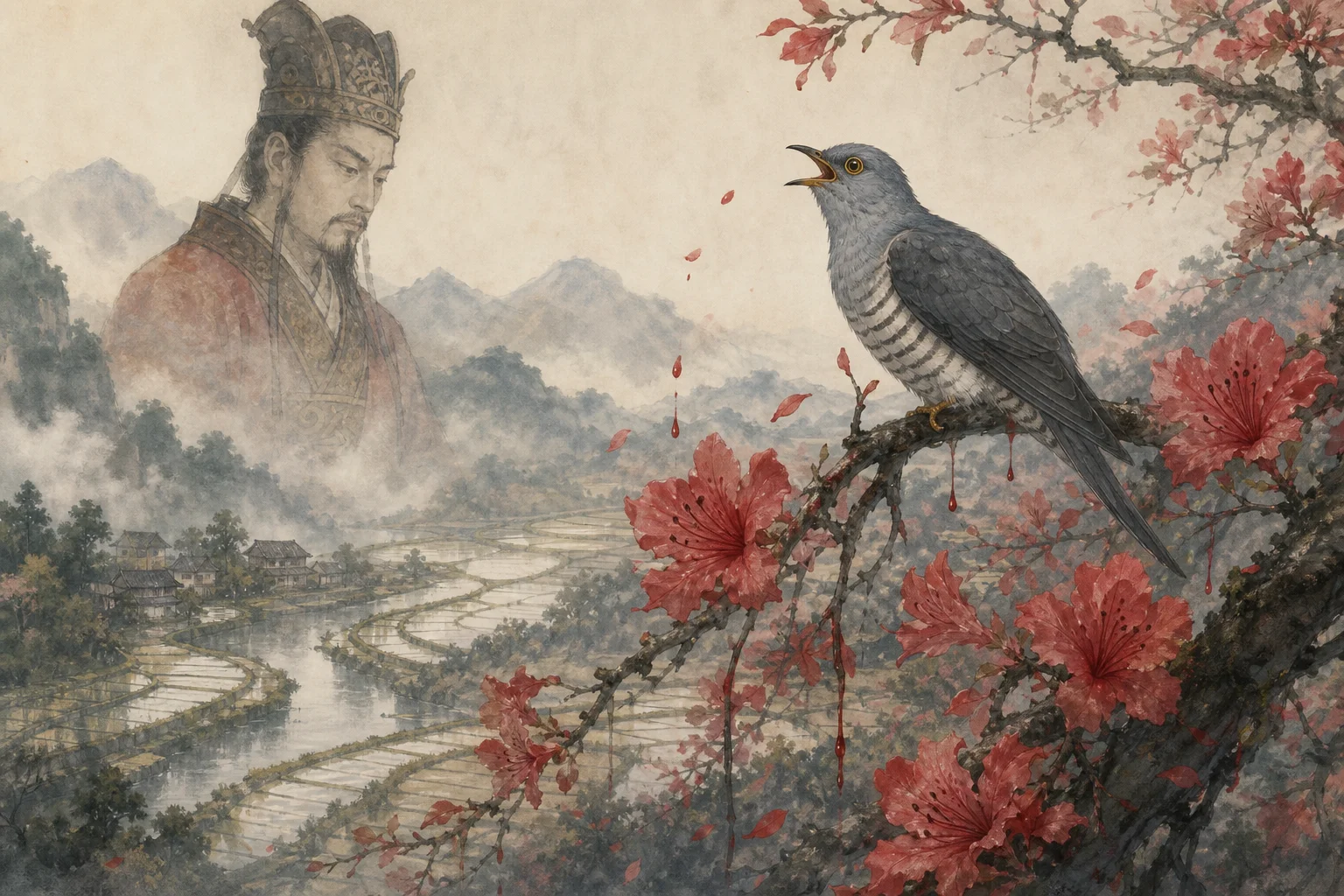
The most famous Shu king in literature is Du Yu (杜宇), sometimes identified with the title Emperor Wang (望帝). According to the Shu Wang Benji (蜀王本纪, "Annals of the Kings of Shu") tradition preserved in later compilations:
- Du Yu ruled Shu and taught agriculture; he was said to have descended from heaven or transformed from a bird
- He later abdicated or was displaced; in one version, he ceded power to Bie Ling, who arrived from the Yangtze gorges
- Unable to bear the kingdom's troubles, Du Yu transformed into a cuckoo — returning each spring to call across the fields
Poets turned this into one of China's most enduring images of grief. The phrase "the cuckoo weeps blood" (子规啼血, zǐguī tí xuè) imagines the bird crying until it bleeds from the beak. Tang poet Li Shangyin (李商隐) folded it into his cryptic masterpiece Broidered Zither (锦瑟): "the spring heart of Emperor Wang entrusts the cuckoo" (望帝春心托杜鹃, Wàngdì chūn xīn tuō dùjuān) — longing, betrayal, and seasonal return compressed into one line.
In WUCHANG, cuckoo calls and blood-red floral imagery are not random mood dressing. They signal that the game's writers are consciously playing in a Shu symbolic register where birds carry memory, loss, and failed kingship — long before Feathering turns humans into monsters.
Feather people in the Classic of Mountains and Seas
Separate from Shu chronicles, classical Chinese geography-mythology text Shanhai Jing (山海经, Shān Hǎi Jīng, "Classic of Mountains and Seas") describes distant peoples with miraculous bodies. Two entries matter especially for feather symbolism:
- Feather People Country (羽民国, Yǔmín Guó) — inhabitants with wings; associated with the ability to fly or with immortality cults in later commentary
- Deathless People (不死民) — peoples who do not die, often linked to elixirs, sacred trees, or extreme south/west geographies
Shanhai Jing is not a single author's atlas. It accumulated over centuries, blending travel lore, fantasy ethnography, and religious imagination. But for game designers, it offers a ready-made vocabulary: human-shaped beings who transcend ordinary flesh by growing wings or refusing death.
Official descriptions of WUCHANG explicitly cite Shanhai Jing alongside Shu chronicles. The connection is thematic, not genealogical: the game is not claiming Sanxingdui priests read this text. It is saying, "In Chinese imagination, feathers mark the boundary between human and something else" — and then it makes that boundary horrifying.
How the game stacks myth onto archaeology
Pull the threads together and the game's deep history looks like this:
| Source layer | What it provides | Example in game atmosphere |
|---|---|---|
| Sanxingdui / Jinsha | Visual icons: masks, trees, birds, bronze ritual grandeur | Temple ruins, mask-faced statues, gold-bronze color palettes |
| Huayang Guo Zhi / Shu kings | Narrative of civil war among immortals, lost divine tools, kings becoming mortal | Legend of the five chisels; Du Yu / Bie Ling backstory framing |
| Shanhai Jing | Feathered peoples, bodily transformation, immortality gone wrong | Feathering disease; winged abominations; "fallen" immortals |
| Tang poetry | Emotional color: grief, spring, blood, cuckoo cries | Ambient audio, environmental storytelling, item descriptions |
The present-day layer — late Ming war in 1647 — sits on top like ash over a buried altar. That is why the world feels simultaneously historical and prehistoric: because the developers designed it that way.
Remember for the game: Ancient Shu gives WUCHANG its masks and birds; it does not explain every boss name or dungeon layout. When a detail matches Sanxingdui, celebrate the archaeology. When a detail matches Du Yu or feather immortals, treat it as myth adapted for horror. When feathers erupt from a soldier's back — that is the game's own plague layer, built on top of both.
Why this matters before you play
Without this context, WUCHANG can look like generic dark fantasy with Chinese props. With it, you start noticing intentional choices: the cuckoo is Du Yu's grief; the mask is Sanxingdui's ritual face; the wing is Shanhai Jing's immortality turned inside out. You also avoid a common mistake — assuming the game is retelling a single ancient text the way Black Myth: Wukong retells Journey to the West. There is no one "original novel" for Shu. There is archaeology, fragmented chronicles, and a constellation of poems.
The next article in this series moves from myth to mechanism: Feathering, Red Mercury, and what the English title Fallen Feathers is doing. Once you know where feathers come from in Chinese culture, the plague that shares their name hits harder.
Next in this series: Feathering, Red Mercury, and what the title Fallen Feathers means in gameplay and story.